Wednesday, October 31, 2018
'Pat of Silver Bush' by L.M. Montgomery
Patricia Gardiner loved Silver Bush more than anything else in the world. She was born and raised in the beautiful old-fashioned house on Prince Edward Island, "where things always seemed the same" and good things never changed. But things do change at Silver Bush--from her first day at school to the arrival of her new own first romance. Through it all, Pat shares her experiences with her beloved friends and discovers the one thing that truly never changes: the beauty and peace she will always find at Silver Bush--the house that remembers her whole life.
MY THOUGHTS:
I've chosen this as my Children's Classic in the 2018 Back to the Classics Challenge, and I'm lucky enough to own a very old edition, although I've no idea where it originally came from. But the publication date is 1934, and since the story was first published in 1933, it must be one of the earliest versions possible. Maybe my mum had it when she was a girl. It's a delight to read something so old.
If you're a fan of Lucy Maud Montgomery, you'd have to be living under a rock not to know that several readers throughout the decades have called Pat Gardiner her worst heroine, but to me she's the best! While favourites like Anne and Emily are easy to admire but pretty unreachable, Pat is the sort of girl anyone can aspire to be. She doesn't have their same drive to excel, but her special talent is simply the ability to love things and people extra hard, including her family home Silver Bush. Other than that she's quite content to be ordinary, with just a few close friends, average intelligence and no burning ambition. To me, that makes her a breath of fresh air in a world of self-promotion.
No Montgomery heroine can escape their own brand of intensity though, and it's the nature of Pat's that make detractors call her silly. She loves things so hard that she can't bear change of any sort, from the chopping down of trees, to people leaving the family nest, to her dad shaving off his moustache. We can guess from the start that she'll be in for one letdown after another, since change is inevitable. The episodes are structured in such a way that one looming change after another threatens Pat's security, until they're either diverted or prove to be not so bad. Except for the few that are heartbreaking. In our era of mental health awareness, it strikes me that this is Pat's form of anxiety, which can manifest in many shapes. So twenty-first century readers who call her nasty names may be missing the point, or lacking in sympathy.
Pat is also the only LMM heroine to live in a reasonably stable traditional family, with both parents and several brothers and sisters. Some family members come across a bit shadowy at times, but that's fine. I'm not concerned with Winnie and Joe, the eldest sister and brother, not having a bigger presence on the pages. My older sister and brother floated around the periphery of my life too, which didn't mean I loved them any the less. I listened to their doings, but they never impacted my personal story, which is where Pat is at with Joe and Winnie. Montgomery has made it clear that the two eldest siblings are living eventful lives of their own, but this is Pat's story. Sid, the brother next in age to her, gets more of a look-in, and the father, Long Alec seems like a decent chap.
A story like this needs strong support characters though, and this one has two. First is Judy Plum, the loving old Irish housekeeper who's been with the family since Dad was a small boy. She's a master storyteller who seems to know something juicy about everyone within a hundred mile radius. Her method of childcare would never be endorsed in any modern text books, as it includes stories of ghosts, murders and wicked fairy folk. The kids all 'get' her though, and enjoy the thrills of her tales. Judy says, 'If ye can't be believing anything, what fun are ye going to get out of life?' I love her.
There's always someone with a sad or dysfunctional family background in LMM stories, and this one belongs to Pat's friend Jingle, aka Hilary Gordon, my favourite character. This boy is an absolute legend. In terms of supportive family members and opportunities for fun, he has nothing going for him. His father is dead and his neglectful mother has dumped him with her brother-in-law, who's equally indifferent. But in terms of appreciation, beautiful heart and sheer good nature, he has everything going for him. He's one of literature's best geeks, who proves that a boy can be gentle and dreamy without sacrificing manliness and strength of character. And if somebody asks which Montgomery episode first springs to spring to mind from any series, I might even choose the occasion when his mother pays a flying visit to sort out his future, and he's thoroughly disillusioned. It wouldn't be the same story at all without Hilary.
The person who falls short for me is 'Mother.' Montgomery never knew her own birth mother, which makes me wonder if that's partly why Mrs Gardiner doesn't spring to life on the pages. She's like a mousy person who creeps around the house without a strong identity. Even Judy calls her 'Mrs Long Alec' rather than 'Mary'. But I didn't like Mother after an episode where Pat was caught dancing around outside in the nude (yeah, truly). The family devises a punishment which a loving mother should never have gone along with. You'll see if you read it. From then on I saw her as not just a wimp but a cruel wimp, the worst sort. Even though we're supposed to think she was a wonderful mother, we are told told and not shown. I'm sorry, Lucy Maud Montgomery, but I hardly liked her any better than I liked Jingle's mother, who was a callous cow, but at least she was a cow with colour.
On the whole, it's great to read a family story full of such magic. It's not the obvious magic of Harry Potter stories, but the sort of hidden, subtle, everyday magic that could fill any of our lives, such as psychic cats, subtle atmosphere changes, and the effect of ravishing beauty and great emotion, not to mention legends of kelpies, leprechauns and other fairy folk.
But most of all, how liberating to come across a heroine full of such enthusiasm for what others consider mundane work, who proves that running a household isn't demeaning but just another valid life option for people who genuinely appreciate the lifestyle. I loved seeing the usual ending scenario turned on its head. In many stories, a girl gets an opportunity to spread her wings, leave the family nest and meet the wide world head-on. But it doesn't have to be that way if there's a better, humbler fit. Pat was nudged out of the nest to spread her wings grudgingly, but expands with joy when circumstances enable her to return home. And that makes me happy enough to give the story full marks.
Update: I've now reviewed the sequel too, Mistress Pat.
🌟🌟🌟🌟🌟
Wednesday, October 24, 2018
'On the Way Home' by Laura Ingalls Wilder
In 1894, Laura Ingalls Wilder, her husband, Almanzo, and their daughter, Rose, packed their belongings into their covered wagon and set out on a journey from De Smet, South Dakota, to Mansfield, Missouri. They heard that the soil there was rich and the crops were bountiful -- it was even called "the Land of the Big Red Apple." With hopes of beginning a new life, the Wilders made their way to the Ozarks of Missouri.
During their journey, Laura kept a detailed diary of events: the cities they passed through, the travelers they encountered on the way, the changing countryside and the trials of an often difficult voyage. Laura's words, preserved in this book, reveal her inner thoughts as she traveled with her family in search of a new home in Mansfield, where Rose would spend her childhood, where Laura would write her Little House books, and where she and Almanzo would remain all the rest of their happy days together.
MY THOUGHTS:
Here's another book you could comfortably read in one sitting. I guess we could consider it the first Laura ever wrote, although it was back when she had no idea she'd ever be an author or become famous. It's a diary she kept on the road as they travelled between De Smet, South Dakota, and Mansfield, Missouri, where they hoped to thrive instead of suffer. I like the line from the song about South Dakota. 'We don't live here, we only stay, 'cause we're too poor to get away.' Well, the Wilder family saved enough to make an escape, along with their friends, the Cooley family.
It's sandwiched between an intro and conclusion by Laura's daughter Rose, who got it all together presumably to satisfy public demand for more Little House stories. She slots explanatory footnotes throughout the text too. When Laura mentions, 'luscious looking fruit I don't know,' Rose tells us they were persimmon and pawpaw.
It's an interesting read, but more of a factual document than Laura's usual lovely storytelling prose. This time she wasn't 'seeing' for her sister Mary or thousands of readers, but just keeping notes for her own records. For anyone who expects another novel, there are lots of gaps and unanswered questions. For example, did the Wilders even like the Cooleys? Rose liked the two boys, but Laura never wrote anything about their parents, such as, 'Frank and Emma are great.' We'll never know what things were really like on the road.
She describes the landscape in terms of crops, water quality, soil consistency and size of farms. There's not much of the usual description of setting Laura became known for. The beauty is summed up in passing remarks, such as their first impressive sight of the Ozarks. 'Manly says we could almost live on the looks of them.' But most likely she didn't have her full heart in the trip. Rose reveals how she mentioned it to her mother years later, and Laura snapped, 'I don't even want to think about it.' Probably the upbeat terseness covered lots of grief at all they were leaving behind.
I'll mention just a few points of interest I noticed.
There's the hundred dollar bill that went missing just when they intended to purchase their dream block of land. Oh whoa, can't you just imagine Laura and Almanzo searching frantically through all the nooks and crannies of the little lap desk? It appears Rose never really forgave her mother for asking whether or not she took it out to look at or play with. She felt angry and insulted because they should've known she wasn't such a baby. Well maybe she wasn't, but I can't help thinking she made no allowances for desperation, which shows her youth anyway. What a relief when they found it.
Some more of Rose's black-and-white memories make me smile, such as the indignation she felt on her friend Paul Cooley's behalf. Whenever they passed through big cities, his mother grabbed the lines of the team he'd been driving. The kids all resent this, since he'd proven himself such a good driver on country stretches.
We see Laura's strong notion of independence which comes through in later books. A friendly family offers to host them for dinner, but it's out of the question. Laura writes, 'Of course we could not stay. We could not be neighbourly to them in return.' It sounds like the mindset she'd acquired from her mother, Caroline Ingalls, but sort of limits people who want to make gracious, random acts of kindness.
She can spot people who aren't hard workers. 'Judging from the weeds in the gardens and fields, the people are shiftless.' Her description of Kansas perfectly matches my concept from The Wonderful Wizard of Oz, although I'll surely never visit. There were three to five inches of dust on the road, which they stirred up and had to breathe all day. And when they got to rocky Missouri, Rose and the Cooley boys always had bandaged toes, since they were stubbing them against half concealed stones underfoot.
Finally, there's the new gimmick Almanzo sells here and there along the road, to help with expenses. To them it was a labour saving wonder tool, but to us it sounds extremely unhealthy. He was peddling asbestos fire mats, which you could heat up knowing they'd turn bright red without burning, so then you could keep your pots and pans hot on them. He says, 'Every woman should have one.' No thanks, Almanzo, I think I'll pass.
This is a great supplement to the series, but I wouldn't recommend that anyone read it first, before the main canon.
Next up will be West From Home.
🌟🌟🌟
Tuesday, October 16, 2018
'Frankenstein' by Mary Shelley
Mary Shelley began writing Frankenstein when she was only eighteen. At once a Gothic thriller, a passionate romance, and a cautionary tale about the dangers of science, Frankenstein tells the story of committed science student Victor Frankenstein. Obsessed with discovering the cause of generation and life and bestowing animation upon lifeless matter, Frankenstein assembles a human being from stolen body parts but; upon bringing it to life, he recoils in horror at the creature's hideousness. Tormented by isolation and loneliness, the once-innocent creature turns to evil and unleashes a campaign of murderous revenge against his creator, Frankenstein.
MY THOUGHTS:
The Classics Club has challenged us all to tackle a classic book of our choice that scares us for this Halloween month of October. Here is their dare. It can be horror, mystery or Gothic, as long as it suits the theme. I chose Mary Shelley's Frankenstein for a couple of reasons. Firstly, this year marks the bicentenary of its original year of publication, 1818. Secondly, it's so impressive that the author of such a masterpiece was a 19-year-old girl. She lived a very sad life too, but left her stamp of genius on the world and no doubt influenced the history of the horror and sci-fi genre for years to come. Reading her book is as close as we can come to saying, 'You go, girl.'
The background alone is interesting. This teenage author was having a getaway at the Lakes District with her fiance, Percy Bysshe Shelley, and their good friend Lord Byron. To pass time, Byron suggested the three of them should have a horror story writing contest, and this novel was Mary's contribution. Surely she must have been the winner, because I couldn't even find whatever the two fellows came up with. (If you know, please tell us.)
Anyway, here's how it goes down. Victor Frankenstein is a talented science student with a great ambition to create a superior life form all of his own. So he pulls lots of all-nighters because he's in the zone, letting his imagination run wild. He forgets to keep in touch with his loved ones at home, since he's so wrapped up in visions of personal glory. 'A new species would bless me as its creator, and many happy and excellent natures would owe their being to me.'
Victor really admires beauty, so he robs graves for the nicest parts he can find. My favourite character in this story is basically a composite of human flesh chunks which Victor dismembers, then gets his needle and sews together. But when he uses his secret method to breathe life into it, the result is a major stuff-up. Instead of a noble super-being, the person he's created looks repulsive and hideous. If we can imagine a revived piecemeal corpse that has recently been rotting underground, it's probably close. Aha, so maybe our boy has just proven why humans shouldn't play God. 'It was such a thing as even Dante couldn't have conceived.' Victor runs out and hopes the thing will just go away. But although he's relieved in the short term, his creation returns to haunt him down the track, of course.
We get the monster's personal story of what happens when he first wanders out to explore the world. He's in the weird position of being fully grown from the start, with no babyhood memories to draw from. But unlike the original Adam, Frankenstein's monster finds himself feared and rejected wherever he goes. Anyone who's ever felt lonely to their very bone and longed to be part of the in-crowd should spare a thought for this poor fellow. 'My heart yearned to be loved by these amiable creatures. To see their sweet looks turned toward me with affection was the utmost limit of my ambition.'
His plea to Victor seems reasonable at first to both of them. He basically says, 'You created me, which means you have a certain responsibility for my welfare. So create a female companion to ease my loneliness, and I promise I'll never bother you again. Or suffer the consequences.' Anyone who's ever procrastinated on a dreaded project should spare a thought for poor Victor too. He said, 'Every thought devoted to it was an extreme anguish, and every word that I spoke in allusion to it caused my lips to quiver and my heart to palpitate.' (Actually, that reminds me of past days when I used to defer work on exam revision, essays or writing synopses.)
Victor's conscience starts to bother him as he considers that he might end up as the curse of mankind, if he carries his promise through, and a spawn of repulsive and malevolent monster babies are unleashed. 'A race of devils would be propogated upon the earth who might make the very existence of the species of man a condition precarious and full of terror. I shuddered to think that future ages might curse me as their pest, whose selfishness had not hesitated to buy its own peace at the price, perhaps, of the existence of the whole human race.' Whoops, it'd be the opposite of the adulation he'd hoped for, so there's still a bit of self-interest there, but at least he's trying to be honourable.
There's something I overlooked, and Mary Shelley herself didn't even seem to consider. I thank my husband for mentioning this, while I was discussing the book with him. Wouldn't any kids of the monster and his missus end up being quite normal? After all, Victor made the monster by collecting deceased body parts and infusing them with life. So since the reproductive organs and their DNA presumably weren't hideous to start with, the offspring themselves could end up quite socially acceptable. They might either think, 'Mum and Dad sure are ugly,' or, 'If Mum and Dad are normal, then everyone else is really gorgeous.' How cool if the plot had gone that way, but Victor abandoned the female project part way through. That spelled the end of his peace of mind from then on.
One of the saddest themes is how quick human nature is to assign bad motives to someone just because he's ugly. Even moments when the monster is intent on preserving life, he's perceived as a threat and his intentions are misinterpreted. All because of first impressions. His tragic life shows how loneliness and bad treatment might drive a person to turn resentful and vengeful in return. The monster dares just one person to push beyond human shallowness, but nobody steps up. 'If any being felt benevolence towards me, I should return them an hundred fold. For that one creature's sake, I would make peace with the whole kind.' It's a powerful line, because even though we don't get to meet Victor's monster in person, we can take his challenge on board and pass the test with other people or creatures society might shun in general.
Even though it's a fairly somber story, there's amazing beauty in Mary Shelley's writing, and many small glimpses of how easy it is to live a good and satisfying life. It all comes down to how we respond to the beauty around us in creation, and appreciate what we're part of. Victor's best buddy Henry Clerval is master of living in the moment. And Victor himself says, 'I was formed for peaceful happiness. If I was ever overcome by ennui, the sight of what is beautiful in nature, or the study of what is excellent and sublime in the productions of man could always interest my heart and communicate elasticity to my spirits.' So there's a direct prescription for those of us who haven't created a monster who's hell bent on destroying our life.
There are morals aplenty, and a range of characters to pick off from the whole Frankenstein family. The monster discovers that revenge isn't all its cracked up to be. 'While I destroyed his hopes, I didn't satisfy my own desires.' As for Victor himself, he was possibly the scarier of the two in several ways! What could be more terrifying than a self-absorbed, immature young student with tickets on himself who suddenly discovers that he can bring inanimate flesh to life? Maybe we could sum up what this poor kid learns in just one sentence. 'Just because you can, doesn't mean you should.'
🌟🌟🌟🌟 ½
Wednesday, October 10, 2018
Stories with Graveyard Incidents
Here's a good list for October, which we all know is Halloween month. Each of these stories contains an incident that takes place in a graveyard. They range from sweet to the macabre, and in honour of the holiday season, I thought I'd count down to award the creepiest of all. I hope you enjoy this virtual trip through these graveyards and cemeteries.
We'll warm up with some nice, sentimental examples. These aren't at all in the running for creepiest, but are designed to make us sigh, 'Aww.'
Anne of the IslandOur heroine fulfills a bittersweet dream when she visits Bolingbroke Cemetery, where her parents lie. Walter and Bertha Shirley died while Anne was still an infant, and were buried together in a single grave. Although they were practically destitute, the local school board erected a tombstone to honor him for his faithful service. Now twenty years later, their orphan daughter pays a visit to lie flowers on their grave, in a touching moment of the story.
Harry Potter (Saint Jerome's Graveyard, Godric Hollow)
This is the burial place of several illustrious witches and wizards. Harry and Hermione pay a visit one snowy Christmas Eve to seek the grave of his parents, and discover that the Dumbledore family and the Peverell brothers of Deathly Hallows fame also lie buried there. Harry weeps with emotion, while Hermione considerately conjures a bouquet to place on James and Lily's grave. And on another occasion, two more teenagers pass by, in a visit from the future. (Time gets very twisted here.) Scorpius Malfoy points it out to his best friend Albus Potter and tells him that in their own time, a memorial statue of baby Harry and his parents has been erected.
The ProfessorThe Protestant Cemetery outside the gates of Louvain is the scene of a happy reunion in this romance by Charlotte Bronte. William Crimsworth is a young English professor whose beloved girlfriend Frances has been banished by the jealous headmistress. He has no idea how to find her. William is taking a leisurely stroll among the tombstones one fine day when he spots Frances paying a visit to the fresh grave of her aunt. It's such a fantastic coincidence, since he'd resigned himself to never seeing her again.
Now the chilling factor starts to heat up a bit. (I know that sentence sounds contradictory.) Are you still holding on? Many of these involve wide-eyed little orphans or earnest young men.
The Graveyard Book
The cemetery is home sweet home for our young hero orphan. A baby boy toddles away from the scene of his family's gruesome murder. Now he's being brought up in the graveyard down the hill by Mr and Mrs Owens, a kindly couple of ghosts who live there. This story takes the typical changeling plot to a whole new level. Young Bod (short for Nobody) has many crazy adventures in both the natural and supernatural realms. He's just not supposed to ever leave the safety of his graveyard home.Great Expectations
It's in the local graveyard where the poor little orphan Pip first meets the desperate fugitive Magwitch, who snatches hold of him right beside his parents' tombstone and demands food and a file. Or else his heart and liver will be eaten alive by a fierce young man. Remember Magwitch's obvious relief when he asks Pip where his parents are, and Pip points down at the grave? I don't blame Pip for being quick to comply with the convict's demand, but he has no idea of the ripple effect he sets into motion, which impacts his life long after he's grown up. (My review is here.)

The Woman in White
Walter Hartwright is anxious to talk to a deranged young woman who's been sending dire warnings to the girl he loves. He has good reason to believe that Anne Catherick, the woman in white, likes to spend her nights in the cemetery, near a specific grave. He sets up camp to wait for her, and sure enough, Anne shows up loaded with scrubbing gear. Her personal mission is to make sure her benefactress Mrs Fairlie's grave is always the sparkliest and cleanest in the graveyard. It's her devoted way of paying her respects.
That incident already sets the atmosphere, but way later on, a grieving Walter visits the grave of his beloved Laura, to find Laura herself creeping up behind him, alive and well. I'll bet he had goosebumps on his goosebumps! Can't you just imagine him looking down at the grave, then up to her face, then down to the tombstone again? (My review is here.)
Hamlet
Graveyards certainly aren't always the quiet places they seem. While a pair of gravediggers are preparing poor drowned Ophelia's grave, they unearth the skull of Yorick, an old jester from Hamlet's childhood. It inspires the young hero to start one of his long, philosophical rants about the nature of mortality, and we know it doesn't take much to set him off. While he's in full flow, Ophelia's brother Laertes arrives with her funeral procession. He sees red at the sight of Hamlet, who he blames for her suicide, and the two young men start a brawl right beside the newly dug grave.
Frankenstein
In a dramatic moment, poor Victor Frankenstein, the hapless young creator, visits the cemetery where all his loved ones lie. Little brother William, playfellow Justine, best friend Henry, beloved Dad and sweetheart Elizabeth. The one thing they share in common is that they've all been murdered by the monster Victor created with his own hands. He kneels among the tombs and vows to bring that fiend down, if it's the last thing he ever does. A diabolical burst of laughter from somewhere nearby greets his outburst, as if to say, 'OK, game on!' (Review is here.)
The Bishop's Girl
This story's melancholy premise revolves around a graveyard in France. Bishop Anthony Shackleton died a hero's death there in 1917, and decades later his admirers are exhuming the grave to take his remains home to England. To their shock, another crudely wrapped skeleton, which proves to be a young woman, has been buried with him. All they can figure out is that she shares his DNA. Her identity becomes the business of Professor Waller and his archivist Jess Morris. (My review is here.)
Now I'll present my hardcore examples for most spine-chilling, hair-raising or outright weird. These are contenders for the winner.
Wuthering Heights
Could the Gimmerton graveyard, out on the icy, bleak Yorkshire moor be the creepiest of all? Halfway through the story, Heathcliff, who's sick with love for Catherine, bribes the sexton to force open her coffin so he can stare at her face. He says it's still recognisable after twenty odd years. It seems that in their climate, she's frozen solid for a great part of every year. Heathcliff gives orders that he must be buried beside Catherine with the sides of their two coffins removed so they can disintegrate into dust together. Or else he'll prove that the human soul is not annihilated at death. Perhaps he proves it anyway, even though they carry out his wishes. Several traumatised villagers report sightings of Heathcliff and Catherine together above ground, doing whatever they used to when they were wild kids who imagined heaven wasn't good enough for them. It would surely be enough to terrify me, since they were both scary enough alive! (My review is here.)For over a century, I'd say Emily Bronte held the title of the author who gave us the creepiest graveyard incident. But then in the early 21st century, J.K. Rowling popped up to dispute that.
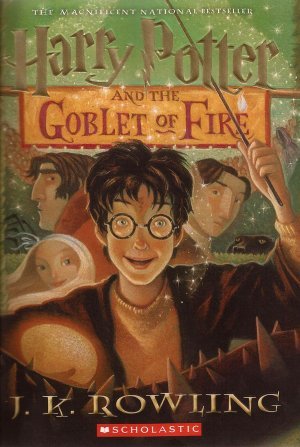
Harry Potter (Little Hangleton Graveyard)When Harry and Cedric both seize the tournament cup to tie for first place, it turns out to be a portkey drawing them to the Little Hangleton graveyard, where Voldemort gleefully awaits. After disposing of the 'spare' (poor Cedric) he orders Harry to be tied up and arranges a horrific potion which includes blood from his enemy Harry, a bone from his own father who's buried in a nearby grave, and the hand of his willing follower Peter Pettigrew. It's enough for the unthinkable to happen. A reasonably able body for Voldemort is produced. Harry's desperate escape back to Hogwarts involves a mad chase around the tombstones and a staggering collision of spells.
Wuthering Heights or The Goblet of Fire? The struggle was real. And because I couldn't choose between them, I decided to throw in a dark horse. My award for most unexpectedly disturbing graveyard incident comes from a reasonably wholesome coming-of-age classic, and wins for its sheer left-fieldedness and originality.

A Tree Grows in Brooklyn
Somewhere in the block of tenement flats lives a person whose favourite game really freaks young Francie Nolan out. It's 'the boy who plays graveyard.' He puts live caterpillars into matchboxes, digs tiny graves and buries them. Next he makes little headstones by writing on pebbles. Then he holds mock funerals in which he beats his breast and sobs. Needless to say, this seriously disturbs her silent reading time. When he's taken to visit his aunt one day, Francie considers his absence as good as a holiday. I thought I'd give that young lad top honour in this blog post, since nobody else probably ever did! I wonder whatever became of him, although I shudder to think.
Did any of your favourites make it on my list? There must be plenty of gaps, especially since I overlook the whole horror genre, which isn't a favourite of mine so I don't know many. Please feel free to add more in the comments, or take my list as a morbid (or bittersweet) springboard for your own October reading.
And do have a look at last year's Halloween list, Famous Headless People, which includes some truly memorable characters who prove they don't even need heads. You might also enjoy my wisdom from the graveyard school, who were a truly awesome group of men who pieced together a great philosophy just from hanging out in cemeteries writing poetry.
Wednesday, October 3, 2018
'A Tree Grows in Brooklyn' by Betty Smith
The beloved American classic about a young girl's coming-of-age at the turn of the century, Betty Smith's A Tree Grows in Brooklyn is a poignant and moving tale filled with compassion and cruelty, laughter and heartache, crowded with life and people and incident. The story of young, sensitive, and idealistic Francie Nolan and her bittersweet formative years in the slums of Williamsburg has enchanted and inspired millions of readers for more than sixty years. By turns overwhelming, sublime, heartbreaking, and uplifting, the daily experiences of the unforgettable Nolans are raw with honesty and tenderly threaded with family connectedness -- in a work of literary art that brilliantly captures a unique time and place as well as incredibly rich moments of universal experience.
MY THOUGHTS:
This book amazed me, at this stage of my life. There is so much to love and relate to, it's like 'me between pages', although set in a way different place and time. I kicked myself wondering how a lifelong bookworm like me could have overlooked this gem when I was the same age as the main character Francie. For all those years, when people have asked about my favourite books, I could've mentioned this one, but just didn't know! And now I want to make up for lost time.
Basically, it's all about the struggle young Francie Nolan and her family face to hold things together when times are really tough. But she eventually manages to enter college without High School, although everything seems stacked against her. Francie (or Frances) lives with her parents Katie and Johnny, and her brother Neeley (Cornelius), a year younger than she is. They are so vivid and vibrant, you can't help distributing a quarter of your heart to all four. The story starts when the kids are 11 and 10 years old, zooms back to the past when their parents first met, takes us through their birth and babyhood, then catches up again and brings them to the brink of adulthood at 17 and 16.
It's a coming of age story in the best sense of the phrase. Not a syrupy sweet kids' story but a life commentary full of cynical, sometimes seamy observations. Betty Smith directs well-aimed digs at bureaucratic people in high places, such as doctors and teachers, who live in a privileged world of their own with no empathy or compassion for the people they supposedly serve. And good for her! Revealing hidden attitudes that stink should be part of a novelist's job when necessary. (Although a certain English teacher of Francie's strongly disagreed.)
Now I'll try to describe how the family touched my heart. The best sorts of stories are those in which the parents take shape as unique individuals with their own depth, rather than just being disciplinary shades in the background.
Oh, Johnny, Johnny, Johnny! The young dad of the family is charming and loving, with a smooth singing voice, natty dress style and knack of making everyone happy. He's their own 'sweet singer of sweet songs.' But we're told his hankering after immortality makes him a useless dreamer, and his freelance singing waiter job is a totally unreliable source of a steady income. His big enemy, alcohol, gets the better of him. Grab your box of tissues before you start.When I think of Katie I want to push back my chair and give her a standing ovation. She's a hero-mother, with a fierce desire to do anything to not only preserve but prosper her family. She's never afraid to roll up her sleeves and work really hard, and for most the book, puts in long hours as a cleaning lady and janitor. Katie brings dignity and finesse to her job, proving that we're not defined by our occupation, but in fact define it. She has no time for self-pity, which distracts her from what needs to be done and doubles the misery. I love how she chooses to ignore naysayers and focuses on what she knows to be the truth in her heart. 'When she spoke, it was truly, with the right, plain words. And her thoughts walked in a clear, uncompromising line.'
Katie's mother, Grandma Mary Rommely, is deeply pious but un-judgmental of others. Her advice to her daughter about raising children is the best. A steady diet of legends and fairy tales is as vital to their health as physical food. Because a person living in the hard, cold world must have a robust imagination to retreat into, or the world will prove to be too much for them. 'Only by having these things in my mind can I live beyond what I have to live for.' It makes sense to Katie, who gets hold of a Bible and volume of Shakespeare, and starts reading a page of each to her daughter and son every night, while they're still babies in their cot.
Francie takes it all on board to carry her through life. She figures out early on that books will always be there for her, filling lonely moments, and becoming the perfect substitute for close friends. One of her first jobs is at a 'clipping bureau', which turns out to be a fascinating relic of bygone days. Basically, these girls were engaged as Google search engines by wealthy clients. They sat perusing newspapers all day to cut out articles for their customers' files, relating to whatever they were looking for. Hey, I can imagine myself doing that, but the downside seemed to be eye-strain and brain-strain, since they were unable to work on auto-pilot but had to concentrate intently around the clock. For Francie, it's one of many stepping stones to where she wants to go.
But family dynamics gets tense at times, as favouritism keeps rearing its head. Katie Nolan knows from the start that she'll prefer her cute and robust son over her more puny and dowdy daughter. She has dreams to make Neeley into a sort of new-and-improved Johnny (which amazingly seems to work). Rather than trying to change her own heart, Katie thinks, 'I'm going to love this boy more than the girl, but I mustn't ever let her know. It is wrong to love one child more than the other, but this is something I can't help.' So with that attitude, how successful do you think she is at concealing it?It got me hopping mad at first, but I came to see it's all part and parcel of the traits I admire about Katie. She's a lady in touch with her own emotions who can't be bothered trying to fool herself with denial. Plus she's an excellent mother to both. But Francie is sensitive enough to grasp the way things are, long before it bursts out into the open in a way that upsets both children. It's family tension at its best, but I'll say no more. Hats off to the children though, for not buying into competitiveness, jealousy and comparison.
The ending comes at an interesting point for Katie and her kids, and I keep wondering what would have happened next. Katie doesn't seem like the sort of person who could function as a lady of leisure. She'd surely crack at the seams. Francie has the romantic dilemma of not loving the guy who's interested in her as much as one who jilted her. Will the emotions gradually make her crack? And Neeley doesn't strike me as the academic type, so will he keep letting the ladies of the family decide his destiny? If he keeps going along with his mother's ambitions for him, will he crack too? Oh Betty Smith, you rounded it off at a nice place, but I still want more! But I guess that's what our imaginations are for.
🌟🌟🌟🌟🌟
Wednesday, September 26, 2018
'The First Four Years' by Laura Ingalls Wilder
This year, I'm hosting a read-along of all of the Little House on the Prairie Books by Laura Ingalls Wilder, which you'll find here. We'd love you to read along and share your thoughts, if you feel so inclined.
Laura Ingalls Wilder is beginning life with her new husband, Almanzo, in their own little house. Laura is a young pioneer wife now, and must work hard with Almanzo, farming the land around their home on the South Dakota prairie. Soon their baby daughter, Rose, is born, and the young family must face the hardships and triumphs encountered by so many American pioneers.
And so Laura Ingalls Wilder's adventure as a little pioneer girl ends, and her new life as a pioneer wife and mother begins. The nine Little House books have been cherished by generations of readers as both a unique glimpse into America's frontier past and a heartwarming, unforgettable story.
MY THOUGHTS:
The manuscript of this story, more the size of a novella, was found in Laura's possessions after her death. It would have been a great discovery for readers who thought it all ended with These Happy Golden Years. 'But wait,' the publishers would say. 'There's more.' My little old Puffin has a terrible looking photoshop job on the cover, but I was still happy to pull it out and get stuck into it again.
The start takes us back to the end of the last novel, when Laura and Almanzo take a buggy ride to discuss their wedding. This time, there's an additional bit that didn't make it into that story. She's decided she doesn't want to marry a farmer after all. (Nice thing to tell a guy when you've been wearing his ring for weeks.) I can understand Laura's train of thought though. It's such a hard life for a woman, because she works so constantly, but is always broke. Meanwhile, the more chilled and relaxed people in town are happily earning money off her family. 'Can't you do something else?' she asks.
Almanzo's reply is along the same lines as his parents' reasoning in Farmer Boy. Farmers are independent, they answer to no man, and have the potential to earn far more than townies if they're willing to work hard. He suggests a three year probation period, and if she's still not happy at the end of it, he'll seek some other vocation. Later he convinces her to extend it to four years. So this little book is all about how it turns out for them.
I like the bold way they begin married life. Laura's courageous nature always impresses me. This five foot tall teenager is game for anything. She scolds a bunch of Indians for standing around in her barn, then hauls off and slaps one in the face. On another occasion she seizes a pitchfork with the intention to scare some howling wolves from their sheep. Luckily the pack has moved further on, but when Almanzo asks her what she would have done, she says, 'Driven them away, of course. That's what I took the pitchfork for.' I wouldn't ever mess with her.
Some more personal, potential personality clashes pop up occasionally, giving the impression that Laura was supporting her position through the pages. Like the time Pa called them crazy for taking newborn Rose out to visit in sub-zero temperature. Laura knows her baby was fine though, because she was well rugged up, and obviously made it unfrozen. She defends herself to generations of readers, whether or not she did to her father's face. At other times she thinks her husband's easy-going nature might be taken advantage of by such people as the neighbour who borrows and wrecks their tools, then fails to return them. More than once, she thinks, 'Oh well, that's Manly's business, and he's not worried.' I can imagine her saying it with an edge to her voice.
Most of all, so many of us relate to her love of books. A kind neighbour brings her a set of Sir Walter Scott's Waverley novels, which Laura credits with helping her through a hard pregnancy. 'She forgot to feel ill at the sight and smell of food, in her hurry to be done with the cooking and follow her thoughts back into the book. She brought some of their magic and music back into the little house with her.' Yes, don't all bookworms know that feeling.
But how about their deal? It seems the great blessing of their daughter Rose's birth is offset by several sudden disasters. A freak hailstorm can ruin a year's good growth of wheat in twenty minutes. When diptheria strikes the family, poor Almanzo exerts himself too soon during convalescence and suffers a stroke that paralyses his legs, so it takes months to regain sufficient flexibility for work. There's the tragic death of their infant son, and a house fire that burns everything to the ground. (Why did that boy die, when he started with such a healthy ten pound birth weight? It was so sad.) Then speeding winds flatten more crops. They've obviously had to fight tooth and claw for every inch they've gained, so how does it all stack up when they reassess at the end of the four year time period?
Somehow, he convinces her to keep going! You might ask how on earth did he do it? Reading between the lines, I think Laura might have caught some of Almanzo's gambling spirit, since their lifestyle is always a bit of a wager. They probably shared an unshakable feeling that giving up might be too soon, since one good year could turn everything right around. Since you never know when that good year might come, you might as well give it a little bit longer. I can see how that sort of gamble could become an addiction. And some people might say that describes all of life.
One thing would've been clear to them, it was nothing personal. Several bad strokes happened to neighbours and complete strangers too, from death to total financial loss, which we hear about in small anecdotes. Although Uncle Sam gave settlers the incentive to go out and tame the rocky, barren country, it was an impossible expectation in many ways. I'm glad I wasn't around to make the attempt in their time and place, but glad they did it, for the sake of reading these books and what we can take on board from them.
And this one sentence is enough to prove that many of the tough times were all worthwhile. 'It was a carefree, happy time, for two people in sympathy can do pretty much as they like.'
Next up will be On the Way Home.
🌟🌟🌟🌟
Wednesday, September 19, 2018
Stories with Chocolate
Books and chocolate are one of those matches made in heaven, but not all the time. I couldn't eat chocolate whenever I read without busting both my budget and waistline. Every so often it's great for your soul to sample both together though, and here is a list of recommendations for those occasions, because many authors and storytellers seem to understand the tantalising pull of delicious chocolate. When I started trying to brainstorm, it occurred to me that stories with chocolate seem to fall into three categories.
Chocolate as Control. In this type of plot, we see the dark side of chocolate, and I'm not talking about dark chocolate! Something so delicious has the potential to be a real bone of contention. It's been used to twist people's arms, bribe them, and even cause occasional violence.
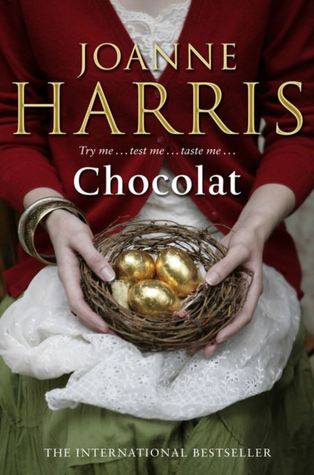
Chocolat by Joanne Harris
There was almost too much chocolate for some of the characters to handle. A young gypsy woman named Vianne sets up a decadent chocolate shop opposite the church in a small French village. Since it's the beginning of Lent, Father Reynaud is trying to keep his flock practicing self-denial. Her arrival is a disaster, and it's clear all through the story that an eventual show-down is inevitable. It's a classic, 'This town ain't big enough for both of us,' scenario, and he was there first. Of course we're drawn to ponder the nature of institutional authority, and question the point behind certain restrictions. The irony is evident, seeing chocolate is now synonymous with Easter, which Lent is leading up to.
The Chocolate War by Robert Cormier
This young adult novel draws us right into conflict with a capital C. An annual school chocolate fundraising sale becomes the scene of a power battle, and eventually outright war. A young student named Jerry Renault dares to stand up to the Vigils, a gang of thugs who try to dictate how many boxes he should sell, for their own agenda. When he refuses to be pushed around, they know their own credibility will be undermined unless they do something drastic and nasty. School politics becomes a mirror for life at large, and chocolate is just the trigger to set it all off.
My Fair Lady
One of the feel-good musicals of all time. When Professor Henry Higgins first accepts his friend's challenge to make a common flower-seller into a genteel lady, Eliza Doolittle refuses to go along with the plan. She's no fool, and realises that almost all of the hard work and frustration will be required from her. But Higgins uses some ingenious, foolproof coercion to make her re-consider. He simply offers her a chocolate. Eliza has tasted enough to have a weakness for this sweet treat, and decides if it's his normal bribe, it might just be worth the hassle of changing her whole persona.
Chocolate as Misunderstanding. I guess it stand to reason that mix-ups can occur in plots about chocolate, since chocolate boxes come mixed themselves.
The Chocolate Tin by Fiona McIntosh
The story is set during World War One, and the Rowntree family have organised a shipment of their famous chocolate tins as morale boosters for the soldiers in the trenches. One day a volunteer packer named Alexandra makes an impulsive, random addition to one of the tins, which comes back to bite her a few years later. I loved the tasty premise, but this wasn't my favourite book. Review is here.Harry Potter
Poor Ron Weasley has a really terrible 17th birthday. Never one to resist a treat, he gets stuck into a box of chocolates in the boys' dorm, but they've been laced with love potion for Harry by one Romilda Vane. And then the antidote itself turns out to have been poisoned, which sends him to the hospital wing lucky to have escaped with his life.

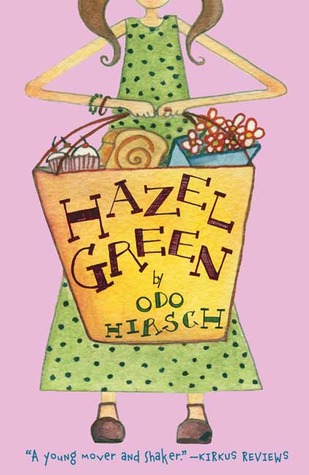
Hazel Green by Odo Hirsch
It's the start of one of my favourite ever kids' series. Hazel's good friend Mr Volio the baker has a top secret recipe he'd like her help to name. It has a shortbread base with toffee, strawberries and custard, all in a delicious layer of chocolate. But when the Chocolate Dipper is christened, he accuses Hazel of leaking his secret to a rival baker, Mr Murray. The evidence against her looks bad, and she must work hard to fix the misunderstanding. Here is my review.
Chocolate as Cure and Treat. This might be the best way to enjoy chocolate in both stories and real life.
Harry Potter
After the chilly, soul-sucking dementors have swept aboard the Hogwarts Express at the start of Harry's third year, the new teacher Professor Lupin has the antidote to drive their awful influence away. Chewing a square of two of chocolate is an instant mood booster. Even muggles understand how dark chocolate contains good endorphins to help fight depression, which has a similar effect to dementors. Wizards and muggles alike are warned to make sure it's used just as a short-term pick-me-up though.
A Tree Grows in Brooklyn
I call this the most touching of all. The night after her beloved husband Johnny dies, Katie Nolan sends their two kids out in the winter night for some fresh air. They return to find she's improvised a hot chocolate treat for them out of practically nothing. It's cocoa and condensed milk made into a paste with boiling water added to it. The loving gesture does make Francie and Neeley feel better, especially when she adds a marshmallow to float in each one. (Review is here.)

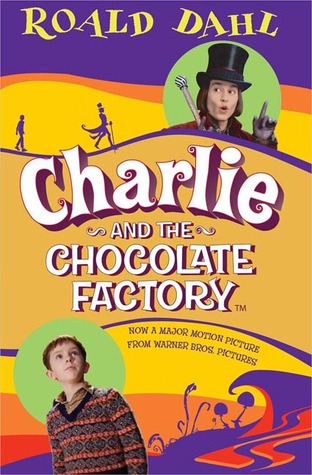
Charlie and the Chocolate Factory
This story must surely be the ultimate celebration of chocolate. The enigmatic Willy Wonka has decided to show five lucky golden ticket winners through his incredible chocolate factory. The tickets are floating around the country in random chocolate wrappers. After the first four are confirmed, Charlie Bucket gets lucky for once in his destitute little life. Later as his four bratty companions are picked off one by one, he and his Grandpa Joe are in for the ultimate chocolaty surprise.
Can you think of any more stories that feature chocolate? That loaded milkshake photo was a creation my daughter made one evening. She offered her brothers a homemade treat, and their eyes popped out of their heads when they saw what it was. Working on this list makes me want to drive to the shop for some right now, but I guess one more incident some of us may choose to forget is that Monty Python scene with the big guy at the restaurant, when they offer him one last after-dinner-mint. If you've seen it, you'll know just what I'm talking about.
Maybe I'll finish with just one more, which was one of my own pet projects. I clearly remember planning this section because I was thinking about chocolate scorched almonds in my car at the time I was working on it, and couldn't get them out of my mind. I decided to write a little bowl of scorched almonds into the plot, as one thing my hero with amnesia tried to jog his memory with. There was something crucial about an incident in which he was eating scorched almonds in the past. But it was too much for him, as he decides everyone loves scorched almonds, so it's not much of a clue as to his identity. As soon as I finished writing the rough draft of this bit, I went to Coles to buy some scorched almonds. (See here for more.)
Subscribe to:
Posts (Atom)