Monday, June 10, 2019

'Our Mutual Friend' by Charles Dickens


A satiric masterpiece about the allure and peril of money, Our Mutual Friend revolves around the inheritance of a dust-heap where the rich throw their trash. When the body of John Harmon, the dust-heap’s expected heir, is found in the Thames, fortunes change hands surprisingly, raising to new heights “Noddy” Boffin, a low-born but kindly clerk who becomes “the Golden Dustman.” Charles Dickens’s last complete novel, Our Mutual Friend encompasses the great themes of his earlier works: the pretensions of the nouveaux riches, the ingenuousness of the aspiring poor, and the unfailing power of wealth to corrupt all who crave it. With its flavorful cast of characters and numerous subplots, Our Mutual Friend is one of Dickens’s most complex—and satisfying—novels.

MY THOUGHTS:
Here's my choice in the Nineteenth Century Classic category of the 2019 Back to the Classics Challenge. By the finish, I was wondering why this particular novel slid under my radar for so long. It ticks all the boxes a brilliant Victorian novel should. After my experience with Dickens so far, I'd summed him up as a guy who never managed to get any real sexual chemistry happening between any of his couples. Whoa, I'll have to beg his pardon after this. The mutually repressed physical attraction of the secondary plot, with Lizzie and Eugene, is sizzling hot, especially in what isn't being said between the lines we read. They're my favourites. And the other romance, with Bella and John, is sort of sweet too. But first things first.

There are several plot threads that converge on each other, not to mention snobs, schemers and scoundrels hatching up blackmail attempts. Enough copies and variations of the same will to verge on comedy, and no less than four very awful villains we're induced to love in a literary sense for their sheer depravity. Plus many bodies recovered from the River Thames, either dead or alive. In fact, the great River flows through the whole story as a common thread.

It's a teeming story to attempt to summarise, proving there's never more than a few degrees of separation between Dickens characters, as the title suggests. The butterfly effect of seemingly unrelated incidents never ends. It all starts with the death of an old miser named Mr Harmon, who built his fortune in the rubbish dump business. His son John, who is set to inherit the empire, is found floating dead in the Thames. This has a life-changing impact on several others, including Bella Wilfer, the girl John was meant to marry, and Mr and Mrs Boffin, the kindly employees  who inherit the estate in the absence of the heir. They also hire a mysterious but eager young man named John Rokesmith as secretary, to help them keep their floundering heads above water.

The ripples keep spreading. John Harmon's body was first discovered by a scruffy old no-hoper named Gaffer Hexam, who makes a sort of dubious living robbing drowned corpses. His gentle daughter Lizzie turns a blind eye to the family 'business' out of loyalty to her dad, although everyone trying to sort things out intuits what's going on. Mortimer Lightwood, the young lawyer who has been hired to take care of the Harmon affairs, is drawn in deeper than he expects. Especially when his best friend, the super bright but apathetic Eugene Wrayburn finds himself attracted to Lizzie before he knows what's hit him.

Although it kindled my imagination, I'm not claiming it's perfect. But since the flaws themselves are worthy of discussion, perhaps they add extra fuel, making it perfect in a different sense. For example, did the great Dickens have some timing lapses in his weaving between romance plots? The thread with Lizzie and Eugene is so urgent, intense and fast-paced in the final third, could Bella and John really have had time to conceive, incubate and deliver a baby in that same block of writing? For that matter, does the Bella and John plot leave you indignant on her behalf? It clearly wasn't meant to make us mad, but I can imagine different readers debating whether or not she was treated completely fairly by those she loved the most. They are the sort of technical and ethical questions I'd love to throw around with other readers. So yes, maybe the huge scope for further discussion does make the book ideal.

There are happily-ever-afters for those with the admirable character and good hearts to deserve them, which always gives me warm fuzzy feelings. It doesn't come across as an unrealistic, simplistic wrap-up though, because although the 'good' guys have happy endings, the more villainous characters wouldn't necessarily envy them or agree they are happy. In other words, the endings are only happy because of their innate integrity. Bella chooses John over the luxuries she thinks she needs for a happy life, and later gets a huge surprise. And Eugene chooses Lizzie, even though he knows it means becoming a social pariah, but he doesn't give a rat's behind. (Honestly, a posh gentleman's son with a law degree choosing to marry the daughter of a thieving, illiterate river scavenger would raise eyebrows even today, so no wonder it rocked the snooty socks off those snobby Victorians! You've got to step back to reflect how shockingly subversive Dickens was for even writing their story in such a way.) Happiness comes to those who are content with little, or who recognise that what seems worthless to others is really hugely valuable.

If I haven't convinced you to read it for the plot, read it for the following wonderful characters.

1) Eugene Wrayburn, who reminds me a little of my two sons. Funny, perceptive and original, but a 'that-don't-impress-me-much' sort of guy. Many readers may call him a lazy-bones, but I preferred to think of him as motivationally challenged.

2) Bradley Headstone, the dense but intense school teacher, who knows what he wants and loathes anyone who might stand in his way. Dickens describes Bradley as 'an ill-timed wild animal, white-lipped, wild-eyed, draggle-haired.' The sort of guy anyone but a consummate smart-aleck might fear to cross. (More about him here.)

3) Jenny Wren, an absolute delight. She's a lame teenager with a drunken dad, and manages to make ends meet by sewing dolls clothes for a living. 'A child in years, but a woman in self-reliance and trial.' She has the cool sort of eccentricity to rise above adverse circumstances, thanks to her imagination and optimism. And whenever she steps into a scene, you expect to end up smiling.

The first part is the slowest, as we need to make allowances for Dickens getting it all set up, but it's well worth it for the way he lets all hell break loose later on. I hope I've convinced you to get hold of a copy ASAP, and if you do, please feel free to discuss the finer points of the plot with me afterwards. I'll always have time for our mutual friends from Our Mutual Friend.

I'm also going to slide it into the European Reading Challenge 2019 as a selection from The United Kingdom. 

🌟🌟🌟🌟🌟

Monday, June 3, 2019

Characters with Insane Jealousy


What do we do with jealousy? It's one of those emotions we never intentionally cultivate, but surges up from seemingly nowhere. Parents express shock when we detect it for the first time in our darling children, yet reflection might tell us we shouldn't be surprised, for we had it in spades too. 

There is actually a fine line of distinction between envy and jealousy. Envy occurs when we covet what belongs to others, while jealousy amounts to fear that what we possess will be taken away by them. I won't press the distinction too hard in this list. It's all about keeping  a close watch on what others have compared to us, no matter what form it takes. 

We ostensibly embrace this emotion, yet it's absolutely no fun. It's a torturous guide that robs our happiness, yet we struggle to figure out how to deal with it. We are never really taught coping skills, because few examples step forward to offer any. It's one of those tacitly unacceptable emotions we prefer never to acknowledge. The world could be full of secret jealousy eating the general public's peace of mind like corrosive acid, but it's the rare soul who'll admit it. So here I raise my hand to having experienced my fair share over the years. How about you?

This list may be a help. I wouldn't suggest it offers a cure, since I don't believe there is one, short of rooting it out like a weed. This is more of a balm to soothe the savage beast, and help it lie dormant. There's nothing like knowing we are in famous company to help quench the flame.

Keep in mind that owing to nature of these lists, there are a few plot spoilers.  

I'll start with some Biblical examples to set the tone.

1) Cain
Adam and Eve's first son hated it that his younger brother got God's thumbs up for offering an acceptable sacrifice, while the motivation behind his own was frowned upon. Cain was a man of instinct. Instead of deciding to try better next time, or even talking it out, he opts for knocking that goody-goody right out of the picture, so he'll never make him lose face again.

2) King Saul 
He was crowned Israel's very first king, but not even the highest of all honours is enough to shut out the green eyed monster.You know you're in a bad way when a guy you hire to calm you down with soothing music sends you into fits of envy and rage every time he steps in with his harp. Saul makes many attempts to end David's life long before he ever looks like becoming his successor. When crowds are heard chanting, 'Saul has slain his thousands and David his tens of thousands,' he can wave goodbye to any peace of mind he has left. Where's the glory in having killed thousands, as long as the one elusive brat who keeps showing you up remains alive?

Now we get to jealousy throughout the classics. I'll start with some of the milder cases, and finish up with prizes for the most insane and destructive. 

190893) Edward Casaubon
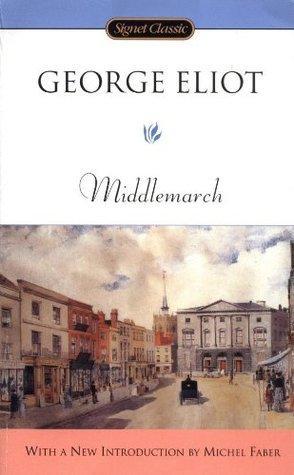
The middle-aged scholar had a beautiful young wife on good terms with a handsome, destitute relative of his, about her own age. Instead of giving their friendship the nod of approval, our man simmers with bitter jealousy that takes its toll on his dodgy heart. It comes to light during the reading of his will, in a very pointed codicil. Dorothea, his wife, will have her inheritance stripped from her if she ever marries Will Ladislaw. Come on man, was it necessary to mention him by name? And does it really matter what the pair of them get up to together, once you've passed on to a better world? I truly believe he might have actually put the idea in their heads. (My review of Middlemarch is here.)

4) Severus Snape
The grouchy exterior of Hogwarts' Potions master is largely formed by years of rampant jealousy. Lily Evans, the girl he always loved, married James Potter, the bully who picked on him. Severus could never let it go. His jealousy leads to reflexive actions that result in the unintended death of his beloved. Even then, he harbours a smouldering grudge against her innocent son, for no other reason than he resembles his dead father. Severus dude, you did keep your promise, but you could have done it with far more grace.

5) Antonio Salieri
Anyone who ever watched the movie 'Amadeus' will remember the playing out of what was represented as a true, historical grudge. Salieri is an accomplished Austrian composer who recognises unbridled genius in his young counterpart, Wolfgang Amadeus Mozart. Salieri's choice of thoughts helps fan a flicker of jealousy into a raging inferno. He just can't move on from demanding, 'Why should God give this magnificent gift to a flippant, cheeky teenager instead of a devotee like me who adores music and works my butt off?' Don't ask impossible questions, Antonio. He ends up driving Mozart to death, and pushing himself to the brink of madness.

6) Uriah Heep
This slimy, smarmy young Dickens villain is driven by pure jealousy. His workhouse origins (or 'umble beginnings, he'd call them) keep him on the lookout for anybody he sees in more favourable circumstances. A steady flame of malice fuels his favourite hobby of slowly but surely ruining people, and taking them down. David Copperfield finds himself on Uriah's hit list. It's not a hobby to be proud of, yet Uriah devotes all his time to it. (My review is here.)

Okay, we've made our way to the big guns. The final pair are my favourite examples because of the sheer obsessive recklessness they employ in their attempts to destroy the objects of their envy.  
7182
7) Isaac Boxtel 
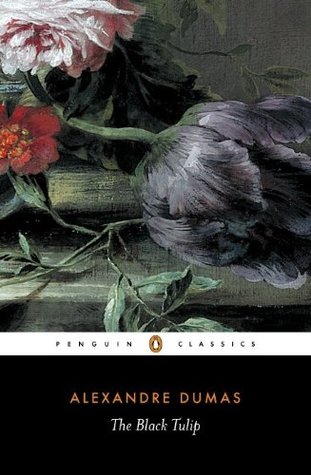
He's mad about the gentle art of tulip growing, but his neighbour Cornelius grows better flowers and has a greater chance of winning a prestigious competition. It should be a clear sign that when you stop pursuing your enjoyable hobby to figure out how to knock out your rival, you've lost touch with what's really important. But Isaac is too far gone to reflect that tulip growing has progressed to attempted murder, continual surveillance, theft and simmering obsession. He really believes these are all just part and parcel of tulip growing. (My review of The Black Tulip is here.)

8) Bradley Headstone
31244This guy could be Charles Dickens' most intense villain, masked with the respectable title of school teacher. He's a cross between a stalker and a mountain troll, driven by jealous adrenaline. Bradley has set his hot-blooded desire on Lizzie Hexam, a young woman within his own humble sphere. But he suspects she yearns for the love of Eugene Wrayburn, a witty young lawyer from an illustrious family. Eugene can dismiss slow-witted Bradley with comedic insults, but underestimates the force of sheer animalistic loathing. Bradley has the grim patience to stalk him, waiting for an opportunity to strike. He's forever mopping passionate perspiration from his brow, and eventually even the thought of Eugene together with Lizzie causes spontaneous nosebleeds. I tell you, Bradley's obsession, and Eugene's careless obliviousness, keeps readers on the edge of our seats. (My review of Our Mutual Friend is here.)

It's such a destructive list. In almost every case, jealousy leads to either intended or actual murder. But each of these insanely jealous guys is destroying his own life most of all. I tend to think the main thing they teach us is to steer clear of following their paths, because from our vantage point, we can see they are heading up hopeless blind alleys. Accepting circumstances, even when they appear unbalanced or unfair, must surely be preferable to driving yourself nuts with paranoia and misery. If it's at all possible to shake off jealousy and wish our rivals well, or at least let them go their own way, let's do it for our own sake. Perhaps the only people we should be jealous of are those who genuinely never experience a jealous moment.   

I know this list is by no means complete, so can you think of any others. Or are any of your favourite examples shown here?       


Tuesday, May 28, 2019

'Strange Case of Dr Jekyll and Mr Hyde' by Robert Louis Stevenson


Strange Case of Dr Jekyll and Mr Hyde is the original title of a novella written by the famous Scottish author Robert Louis Stevenson that was first published in 1886. The work is commonly known today as The Strange Case of Dr Jekyll and Mr Hyde, Dr Jekyll and Mr Hyde, or simply Jekyll & Hyde. It is about a London lawyer named John Gabriel Utterson who investigates strange occurrences between his old friend, Dr Henry Jekyll, and the evil Edward Hyde.

MY THOUGHTS:
This is my choice for the Novella Category of the 2019 Back to the Classics Challenge. Not only is it a very small book (less than 60 pages in my volume) but it's the small book that helped established Stevenson's reputation. That's impressive, considering there are virtually no female characters, and no males who can be considered especially endearing, except for a glimpse of one sweet old gentleman who becomes a victim of the plot.

Here's what happens. A lawyer named John Gabriel Utterson has had brushes with a ruthless crook named Edward Hyde, who roams the streets of London. Hyde's crimes include bashing innocent people for the pure love of violence. But Utterson's old school chum, Henry Jekyll, takes a special interest in the young man, and even makes him the sole beneficiary of his will. Utterson wonders if his good friend is somehow being blackmailed. The truth turns out to be far more bizarre. The very earliest Victorian readers were no doubt gobsmacked by the big revelation, although we of the twenty-first century know what to expect from page 1. Robert Louis Stevenson probably lived to discover one major drawback of being immortalised in the halls of fame. Everyone will always know big spoilers for your story.

Although we get what we expect pretty much, here are a few things I found interesting, which might negate some assumptions we make going in.

1) Henry Jekyll was no helpless victim swept along by the current, or at least not at the start. His skills as a chemist put him in the position of having a choice. You either take the potion at certain times to transform yourself into a heartless raving psychopath, or you don't. He caves in to temptation and chooses to let his Hyde persona have carte blanche ... as long as it's at specific times set aside for him. Maybe Jekyll is a handy representative for many men throughout history who have tried to assume a squeaky clean public face, and keep their more squalid characteristics under cover. The fact that we even hear about several cases to make the comparison indicates that they often don't end well.

2) We can't reasonably expect to keep our good and evil sides isolated from each other for long. The evil will gradually leach in to infect the good, since that's the way it usually works in stories rather than vice versa. Maybe it's the way it works in life too. Stevenson clearly believed we shouldn't even let our bad sides get a look in as far as we can help it, but snip those murky impulses in the bud as soon as our conscious minds detect them. Yet Henry Jekyll goes so far as to create a nice little apartment and stamping ground for his. I guess Stevenson's point might be that we are following Jekyll's example whenever we insist on entertaining certain types of thoughts and habits over and over again.

3) The danger of addiction is real. Jekyll assures Utterson, 'You do not understand my position. The moment I choose, I can be rid of Mr Hyde.' Ha, that's what you think, mate! Before he knows it, he's waking up in the form of Hyde instead of himself, even when he reasons that it shouldn't be happening. It reminds me of statements such as, 'I can stop drinking/smoking/shopping/watching internet memes whenever I choose.' Some may even suggest that our own Mr Hyde may appear as innocent as chocolate, sugar or social media.

4) The description of Hyde's physical appearance is thought-provoking from a symbolic perspective. He's younger, smaller and lighter on his feet than Jekyll, which adds to the pleasure Jekyll feels whenever he assumes his form. Towards the end, other characters speculate reasons for their stature differences. Maybe Hyde had formerly been restrained with not as much room to develop, yet rapidly became more robust as he was allowed lengthy stretches of free reign.

Also, Hyde has a repugnant effect on strangers from first glimpse. People, including Utterson, get the impression of some repulsive deformity without being able to pinpoint exactly what it is. Is Stevenson suggesting that Hyde's might be the face of pure evil made visible?

I wonder who could have predicted that such a short story was destined to become not only a classic but a cliche. Perhaps it pleased two quite different types of Victorian readers; those who liked to be thrilled by a bit of sensationalism, along with those who tended to stick to moralistic tales urging us to be good. In this manner, the story itself could be regarded as a bit of a Jekyll and Hyde. Maybe that was Stevenson's card up his sleeve.

But from my 21st century vantage point, it didn't impress me overly much. There's just no way of saying how awesome the wow factor might have seemed had I been around to read it in 1886 when it was hot off the press. It's still worth a read for some of the brilliant descriptions of London life back then.

🌟🌟🌟

Tuesday, May 21, 2019

Gift of the Gab or Gift of the Pen?


In War and Peace, young Natasha Rostov chafes with frustration when circumstances separate her for a year from her fiance, Prince Andrei Bolkonsky. She sends him letters, but written communication is an utter drag to her, because using a pen as the medium for her thoughts is foreign to Natasha's dynamic nature. It's clunky and tiresome for her. Here is what Tolstoy tells us about Natasha.

'She was no great writer, and found it impossible to set down adequately in a letter the thousandth part of what she was used to conveying by means of her voice, her smile and her eyes. She wrote him a series of dry, formal and identical missives to which she attached not the slightest importance, with spelling mistakes corrected by the countess (her mother) at the rough copy stage.' 

Does that make you nod with understanding and sympathy for her? I've met many people I'm sure would relate to Natasha. They are people whose spontaneous speech I envy. Thoughts seem to bubble instantly to the tips of their tongues, enabling them to express ideas fluently with conviction the moment they enter their heads. To put it another way, their mental conception and verbal expression appear simultaneous. This fortunate pairing often seems to go with extroverted personalities, and I can understand why. When your mind and tongue enjoy such reliable teamwork, it  strengthens your social confidence, as you're unlikely to humiliate yourself by stuttering and scrambling for words. This strikes me as a happy flow circle, as opposed to a vicious circle. And Tolstoy's Natasha belongs in this group. Vivid, colourful, talkative and alive.

I consider myself part of an opposite group who tend to get uneasy in social situations. I think 'mind paralysis' is a good term for the blank panic we experience, when some cruel thumb seems to press the 'Refresh' buttons of our minds just when we want to talk. Our thoughts seem to scoot far from us, and our speech lags even further behind. We are certain this makes us appear more dense and bereft than we really are. We are the folk who rely heavily on our pens and keyboards as the best tools to offer us a way out. After many years of trying to deal with this phenomenon, I've at least learned some info to help us understand why it happens.

Apparently this mind paralysis occurs mainly in introverts (no surprise there) and is because of the depth to which we have to dive for the words we need. Introverts tend to reach down into our long term memories for whatever we want to say, while extroverts have more of a rapport with their short term memories. That's why they often discover that smooth spiel at the tips of their tongues which makes me envious.

With me, and maybe you too, there is often a time lapse, and sometimes a long one. I may have a sketchy idea of something interesting or meaningful to say, but the words don't flow to my tongue on the spot. They can take several seconds. Often I need to mull my ideas over and think them through more carefully before I have anything cohesive to say. Meanwhile people are looking at me and waiting for pearls of wisdom which I fear they won't get. Ever since my childhood, I've practiced training myself out of this awkward reaction, which usually means resorting to second-rate words just to cut short that awkward pause. I'm aware that well-spoken answers will never be reflexive for me, no matter how hard I practice. I know in my heart that whatever I manage to come up with verbally falls far short of what I would write, had I the time.

I understand and sympathise with introverts who dread parties because they fear being put on the spot. Who wants to be that guest with the silly smile and blank mind? We crash when we get home, understandably. Winging it while our brains are telling us, 'I've got nothing,' is exhausting work. While our extrovert friends have been enjoying some pleasant paddling, we've done the equivalent of deep sea diving for several hours.

On top of this, we deal with stress hormones such as cortisol which flood our bodies while we anxiously stand there, unwilling to look like idiots. It's the ancient 'fight or flight' situation, but instead of saber-toothed tigers, we face smiling friends with finger food and cups of tea.

Susan Cain, the author of 'Quiet', tells us that when it comes to writing, the introvert's expression is quite different. Although we are still working with words, they are coming from different neural pathways than our spoken words. Easier pathways which enable the flow to kick in. That's why, unlike Natasha Rostov, my pens and computer keyboard are stimulants rather than handicaps. It's nice to know there's a valid reason why some of us might prefer to choose tapping away on Messenger over picking up the telephone (that tool of interruption!) And why making a blog article out of this feels far clearer than I might come across trying to explain the same thing across the table. Some of us belong to a far quieter group than the first, but writing is a gift that enables us to spend time with you in a more eloquent way than we otherwise might.

I do wish I'd understood all this several years ago, because if there's one thing worth taking away, it's this. We sufferers of mind paralysis may never find ourselves totally at ease in life, but at least we no longer need to mentally beat ourselves up. Since there's a scientific basis for our malady, it's absolutely not a character defect! We aren't dummies with nothing to offer. Nor are we cowards, incapable of overcoming fear. And if we hear that we've been called stand-offish, we can rest assured that it's a mistaken assumption on the part of others who don't understand. We are simply people with more meandering feedback loops, when it comes to communication. Nothing takes the pressure off more than grasping this.

So where do you stand on the spectrum? Are you more of a Natasha or a Paula?

Tuesday, May 14, 2019

'Mary Barton' by Elizabeth Gaskell


This is Elizabeth Gaskell's first novel, a widely acclaimed work based on the actual murder, in 1831, of a progressive mill owner. It follows Mary Barton, daughter of a man implicated in the murder, through her adolescence, when she suffers the advances of the mill owner, and later through
love and marriage. Set in Manchester, between 1837-42, it paints a powerful and moving picture of working-class life in Victorian England.


MY THOUGHTS:
Wow, this has blown me away. I'ts my choice in the Classic by a Woman category of the 2019 Back to the Classics Challenge. After reading Wives and Daughters followed by this debut, Mrs Gaskell now sits at the very top of my Victorian authors ranking. I think she's become my favourite of all, and I've read widely, including Dickens, Collins, the Brontes, Eliot, Trollope, Hardy and Austen (who was a Regency author, but we love to group her with the Victorians). Maybe I love Gaskell because her maternal, caring heart stirs up my own love for my kids. None of those others were actually mothers. Do you think it takes one to know one?

I read way into the early morning hours to finish it, and then the plot still kept whirling around in my head. Few readers might associate the name of Elizabeth Gaskell with nail-biting crime thrillers, but that's just what this social commentary and romance morphs into. For several chapters, there is one 'just in the nick of time' moment after another, that left me breathless.

For a start, it's a murder case. We have a strong heroine on a vital mission to save the hero's life, while time ticks away. That's not something we often see, especially from the Victorian era. But Jem has been condemned to die. He's no weakling in distress, but quite the opposite. He's strong and loyal, willing to lay down his life to protect and save others, when it seems there's no other way out. Mary has the tricky task of preventing the man she loves from making himself a scapegoat, while keeping quiet about another awkward twist that cannot be revealed. What more can we ask for, hey?

 One of my favourite parts of the book is the romance between Mary Barton and Jem Wilson, no thanks to Mary and her vacillation. She and Jem have known each other forever, and she initially hardens herself against his familiar face to focus on Harry Carson, the son of a factory owner. In times of such horrific poverty, I can't fault Mary for wanting to secure her family's future with a rich boy, but she makes the classic mistake of realising the worth of who she's thrown aside too late. It's sort of an, 'Oh dammit,' moment at first, since he's not the one her head tells her is the wisest match. But no girl can keep lying to herself when the truth dawns on her. Especially after a proposal to melt the hardest heart.

Anyway, the instant she makes her mistake, it's all action from there. Since Mary realises she's deeply in love with Jem straight after rejecting his proposal, you might wonder why she doesn't simply tell him. The answer is all tied up with the social expectations of females in the Victorian era. It would have been far too brazen and un-ladylike, so she decides on letting time pass, and hoping he picks up on more subtle clues, such as fluttery eyelashes and sweet smiles. But it turns out that when you tell a guy, 'Once and for all, I'll never marry you,' he might take your statement on face value. If women have changed over the last century, men certainly haven't. I can't help thinking he would have been delighted if she'd told him she changed her mind, and it certainly would have saved him loads of trouble later on. But these characters didn't ask to be born in the Victorian era, and had to operate within the conventional constraints they were given.

This book's background is interesting in itself. Gaskell's husband suggested she try writing a novel to help distract her from grief following the death of their toddler son from scarlet fever. It's a wonderful result from such a sad loss, yet there are several heart-wrenching death scenes. A few times I wondered, 'How could this possibly cheer her up?' and got the feeling it must have been cathartic. Sharing Gaskell's emotional release is our gain, and in the process she shows how fiction can be a more powerful instrument to bring people's attention to social negligence than anything else.

She'd originally intended to call the book 'John Barton' after Mary's father, another crucial main character. Gaskell felt deep pity for the hopeless class of men he represents. But it was probably a wise move not to, since Mary's name embodies the optimistic future, while John's mires us in the hopeless torpor of his bleak present. Yet he's possibly the character who sticks in our minds long after the story is over.

Poor John Barton is a prime example of how a good person might become a criminal. The working class are suffering and starving, and he has the thwarted heart of a kind crusader. His total inability to do anything to relieve the plight of the people he cares for sinks him into the deepest depression. With the fervour of the Trade Union behind him, he decides to lash out at wealthy factory owners, the class that seems directly responsible for the horror that surrounds him. The story really shows how John progresses from harmless family man to dangerous vigilante.

There are several other lovable supporting characters too, including Mary's blind friend Margaret, with her angelic singing voice, and her naturalist grandfather Job Legh, who often steals the scene. Touching father/daughter moments are abundant between Mary and John, not to mention poignant mother/son moments between Jem and Jane Wilson. She's a crosspatch who really grows on us. (Having her live under their roof to share their happily-ever-after would surely be a stretch on their marriage, haha.) And there's Jem's faithful and calm Aunt Alice, who exerts her loving, peaceful influence over everyone else, even when she's out of her right mind. Early on she says, 'An anxious mind is never a holy mind.'

Characters often drop great lines about watching our attitudes, which we can grab hold of. Since their circumstances elicit them on the spot, it never comes across as preaching but clearly wise coping tools and part of the plot. There's such a powerful moral study in a dialogue between three guys towards the end, I'll be reading it over and over again.

I guess Elizabeth Gaskell mixed her genres in a way modern authors are warned not to, the reason being that we need to be clear about our target audiences. But after reading Mary Barton, I think it's a shame we don't blend them this way anymore, because her target audience is clearly anybody with a beating heart.

🌟🌟🌟🌟🌟

Friday, May 10, 2019

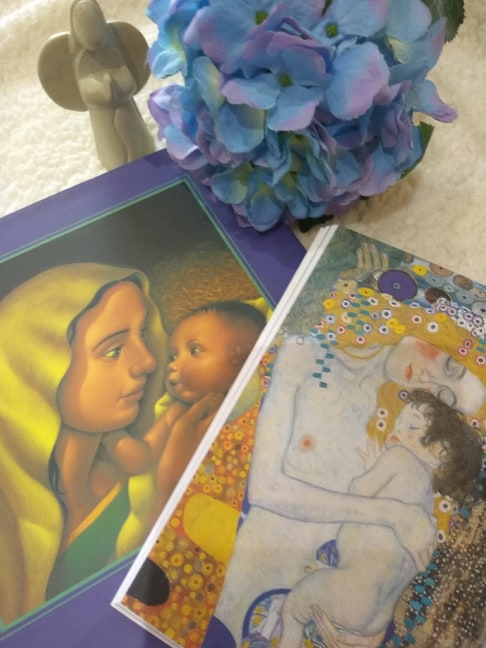
Five Fantastic Mothers


With Mother's Day almost upon us, I'm thinking about the impact we have on our children, lingering in the form of fond memories. I'm afraid that if my kids were asked, they'd remember an incident that happened when they were small. At the end of a long day, I pulled some taco shells from the oven where they were meant to be getting warm, only to find them burned black as cinders and have them slip onto the floor and make me slip over. It was the last straw. So I started stamping the fragments to splinters, hoping the destruction would ease my temper. Suddenly my two eldest kids were there, laughing until they were almost crying. Even now, they'll ask each other, 'Do you remember Mum's taco stomp?' or tell their youngest brother, 'You should have seen it!'  

These other ladies have more illustrious things to be remembered for. This Mother's Day, instead of honouring fictional mothers, I'll share some tales I've heard about real life mothers from history.  

1) Saint Monica
She was Saint Augustine's mother, and also a saint in her own right. I once owned a little old book of saints which told her story. For years, her son was a party-goer who loved getting wasted and never spared a thought for the people he might be hurting, or his own destiny. Monica never gave up praying for Augustine, even when such a lot of time passed that other mothers might have abandoned the effort as a lost cause. It seems praying for her son was her main claim to fame.

2) Susannah Wesley
This remarkable lady bore almost 20 children and raised them in a tiny house with an absentee husband (although he must have shown up often enough to have fathered 19 children). The story goes that whenever the children saw her sitting at the kitchen table with her apron raised over her head, they knew not to bother her. It was her quiet time in which she reflected and prayed. I've heard this anecdote told to convince us that it's never strictly true that we can't get a moment to ourselves. Just spare a thought for Susannah and plug on.

Wikipedia tells us that even though she never wrote a book, preached a sermon or founded a church, she's still known as the mother of Methodism. This is because two of her sons, John and Charles, became famous. One was a great evangelist and the other a renowned hymn writer. We all like to think our good influence rubs off on our kids.

3) Nancy Matthews Elliot
She was Thomas Edison's mother. You might have seen this gem floating around on social media. The story goes that young Tom brought home a sealed note from his teacher. When his mother read it, she shed some tears and told him they'd decided he was such a genius, they'd run out of resources to teach him. She taught him at home instead, and years after her death, the famous inventor found the note among her old papers. What it really said was that he was so addled in the head, they refused to let him attend school anymore.

There are claims that the truth was tampered with, and that Edison was well aware of their low opinion of him. His mother was still a champion on his behalf, making a beeline into school to claim that he was not a dunce. Rather than being expelled, she pulled him out of school, since she saw that he'd never thrive among their limited and judgmental attitudes. In my opinion, this makes her just as much of a hero as the first tale.

Edison always claimed that his mother was the making of him, and her steady confidence in him made him always want to live up to it. It's a terrific tribute from a son.

4) Henrietta Seuss Geisel
I read somewhere that this lovely lady used to hold down a part time job at a bakery when her children were small. She was expected to memorise all the specialty pies to rattle off to customers, and used to practise in front of young Theodor, making up wacky tunes that made him laugh. She also encouraged his juvenile artistic efforts, giving him permission to practice drawing animals on his bedroom walls. Of course, young Ted grew up to be the beloved Dr Seuss. If my kids would remember me for this sort of quirky help and encouragement, I'd be more than happy. Especially if my own weirdness helped them to tap into their own specific skills. 

5) Hannah
Her story is told in the Biblical book of 1Samuel. Struggling with infertility and being taunted by her husband's other wife, she promised God that if ever she bore a son by some miracle, she'd make sure he grew up to be a godly man, and what's more, she'd dedicate him for temple service as a babe. That's exactly what happened, and each year when she made the pilgrimage to the temple with her family, she'd bring Samuel a handmade robe, a size larger each visit. And her son grew to be one of the illustrious Old Testament prophets, instrumental in crowning Israel's first two kings. 

I wish all fellow mothers, potential mothers, mentors, and any lady who has ever cared deeply for children, a very happy Mother's Day on Sunday. It's not always an easy role, and our purpose may seem to be the butt of jokes as often as it is offering wisdom. I'd like a dollar for every time I've heard something like, 'Hey, guess what Mum just said. She's so out of touch.' But it's all part of the job description, and proves that we need a sense of humour. 

If you can think of any other historical mothers (or hysterical in my case) who deserve recognition, please let us know.  

Tuesday, May 7, 2019

How Great Stories go Viral


When it comes to keeping stories alive, nothing really beats word of mouth. 'The grapevine' gets a rough wrap sometimes, because things like secrets, slander and rumours tend to multiply to plague proportions. Scandals are like weeds. They begin in some small corner of the garden, but before long, they've choked the good plants and everyone knows all about it.

But I'm sure we've all heard the saying, 'Why should the devil have all the good music?' In a similar way, we could ask, 'Why should the gossipers monopolise the grapevine?' When we use our tongues and pens to share good stuff, it's like cultivating a vineyard. Encouragement, beauty and inspiration have a chance to grow. Maybe when we look at it this way, we could even think of it as a responsibility.

Here's how I've seen the grapevine work within fiction itself, from a few random examples.

157993The Little Prince
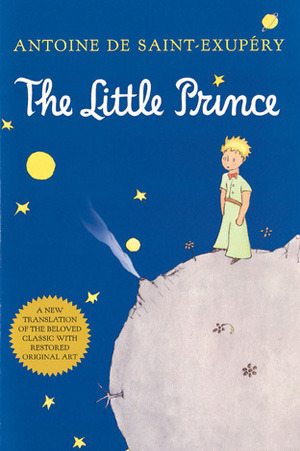
A beautiful desert fox tells the small title character a great secret with which to approach life. In turn, the Little Prince passes it on to the narrator of the story, who he befriends when the man's small plane crashes. And then the narrator writes it in his book, and therefore tells us all. (To know more about the secret, see my review of The Little Prince.)

Emily Climbs
During a walking trip, the young heroine stays overnight with some acquaintances, to dodge wet weather. An elderly relative of theirs tells a story from her long gone past, about a time she worked as a nanny in a palace, and smacked the six-year-old heir to the throne for being naughty. Emily asks permission to write it as a story for a magazine. Weeks later, a famous writer and journalist named Miss Royal reads the story, and contacts Emily to offer her a job. So the tale of 'The Woman who Spanked the King' travels further than the young palace employee ever imagined.

35031085Frankenstein
The poor, tragic monster has been sewn together from random body parts. He manages to track down his creator, young Victor Frankenstein, and insists on telling him the story of the horrible rejection he's experienced since Victor first breathed life into him. Although Victor wants nothing to do with him, he agrees that he owes the monster the courtesy of listening. Then way later, he repeats the story to his new friend, sea captain Robert Walton, on whose vessel he's been rescued. It's such an incredible story, Robert includes it in the letters he sends home to his beloved sister Margaret. She presumably tells her husband and children. The message that we should treat people with kindness regardless of their initial appearance stays alive each time it's passed along. (Here's my review of Frankenstein)
6185
Wuthering Heights
Catherine Earnshaw confesses her love for Heathcliff to the housekeeper, Nelly Dean. More than eighteen years down the track, Nelly repeats it to the convalescing Mr Lockwood, while she entertains him with the tale of his gruff landlord's personal history. Lockwood writes it in his personal journal and voila, more of the cosmopolitan people he rubs shoulders with have the potential to hear this tale of great love, and the folly of denying your own heart for social and monetary gain. (See my review of Wuthering Heights)

*    *    *

Although none of the stuff I've written online has ever gone viral, I'm always aware that we never know the full extent of how our spoken or written words might impact others. Between 2000 and 2014, I wrote nine novels which sold thousands of copies that disappeared into the ether. Every so often, I receive sudden welcome messages, as if from nowhere, about how one of them has been greatly appreciated by someone. It's always great to get feedback about older novels which have been read and enjoyed recently. Books and stories really are timeless.

So I'd like to encourage us all that this might be one of the simplest way to help change the world. We could write reviews about great works others have written, which is what this blog is all about. I also enjoy visiting the blogs of several other book reviewers. We can easily share stories and incidents, that have come across our path from others and lifted our hearts. Maybe our favourite questions could be, 'Can I share that?' or 'Would you mind if I tell my small group of friends?' or 'Could I incorporate that into an article I'm writing, if I give you credit?'

Let's keep the good grapes growing.