Tuesday, May 8, 2018

'Emma' by Jane Austen


Beautiful, clever, rich - and single - Emma Woodhouse is perfectly content with her life and sees no need for either love or marriage. Nothing, however, delights her more than interfering in the romantic lives of others. But when she ignores the warnings of her good friend Mr. Knightley and attempts to arrange a suitable match for her protegee Harriet Smith, her carefully laid plans soon unravel and have consequences that she never expected. With its imperfect but charming heroine and its witty and subtle exploration of relationships, Emma is often seen as Jane Austen's most flawless work.

MY THOUGHTS:
This is a classic with a single word title, and my choice for that category in the 2018 Back to the Classics Challenge.. Great classics don't always have a lighthearted nature, so it's a bonus when they do. This story is all about matchmaking. The title character thinks she has enough insight to decide who would be perfect together, and considers it an excellent personal hobby to promote their happiness. But from her lofty, know-it-all stance, Emma fails to take into account that they may be keeping their own agendas, blind spots and secret lives concealed from her. It makes for a comedy of awkward mix-ups, a bit like Shakespeare's 'A Midsummer Night's Dream.'

Jane Austen needed a range of complex characters to carry it off, all living deeper lives than Emma sees on the surface. The execution is great, because Austen was always master of the whole spectrum. The reader is hoodwinked too, although when all is revealed, we can turn back and see that she did leave a trail of clues. The characters were all brilliant creations so I'll focus on them, although I'll leave Emma herself for a separate discussion. There's just too much to say about this main character to squeeze in here. (Here is my update: Why do we love such a snob?)

I think this novel has some of Jane Austen's coolest men, who stand out for either their goodness or badness. There's Mr Weston, a male Pollyanna, always latching onto the brightest way of regarding setbacks. His antithesis is Emma's dour brother-in-law, John Knightley, who can be counted on to deliver some cynical comment. I really like John, which is a bit of a worry, since they say it takes one to know one. Worst of all is Mr Elton, the oily-tongued flatterer who carefully crafts his behaviour to look after himself. And then there's Mr Weston's tricky son, Frank Churchill, the hot young stud who may accidentally trample over a few ladies' hearts in his effort to keep his own secret. But the overall hero is the novel's voice of wisdom and integrity, Mr George Knightley, the only man who will ever admit to seeing faults in Emma. In fact, he's usually right about everything. While other characters are blinded by the fog of their mistaken hopes and assumptions, Mr Knightley sees so clearly, he's like the Sherlock Holmes of romance.

The females are great too and one who fascinated me is Harriet Smith, the sort of girl to be swayed by the first busy-body who claims to know what's best. She is always looking for cues from others as to how to think and behave. She's so indecisive, she can't even say which address to have her packet of ribbons delivered to. I got mad at one point, when Mr Knightley said that a blank slate like Harriet needed a good man like Robert Martin to shape her opinions. No, come on George, she needs encouragement to think for herself, not a boss to tell her what to do! It was a relief later on, when he decides he'd been too hasty to judge Harriet as totally devoid of character. Hopefully the end of her story, when she accepts something as huge as a marriage proposal off her own bat, is the beginning of a stronger, more confident young woman.

Even characters we rarely encounter on the page in person come across more 'real' than many characters from other authors who get heaps of exposure. I'm thinking of the modest and sensible Robert Martin, who does a great service for young farmers without having to say a word. Through him, Austen is telling her readers not to make snappy judgments about an entire class of people. I liked him so much, I wanted to see more of him on the pages. At the other end of the spectrum is the autocratic Mrs Churchill, who uses her position at the top of the social ladder to fill others' lives with misery. We never see either of them, but they're still large as life.

The thought of that lady begs the question, 'Who is the biggest tyrant?' Mrs Churchill or Mr Woodhouse? They are obviously opposite in personality. One is bossy and selfish while the other is caring and loving. But their impact is similar. Mrs Churchill keeps her 23-year-old nephew on a ridiculously short leash, but Mr Woodhouse does the same to virtually everyone he knows, although his intention is different. His misguided sense of fear and protection means that his guests have delicious food pulled from beneath their noses, people must give up pleasure trips to keep him company, and Mr Knightley feels forced to move out of his own magnificent house, because he knows there's no other way he'll be free to marry Emma while the inflexible old worrywort lives. That's one of Jane Austen's incidental lessons. Control freaks come in all shapes and sizes, and don't have to be malicious to fit the bill.

Another thing I love is the treasure trove of clever dialogue. There's nothing quite like the wit and excellent points made in fictional conversations, where the author has had time to sit down and fine tune them, to give the illusion they're completely spontaneous. Here are my favourite three.

1) Emma and Harriet discuss the possibilities open to an unmarried woman of means. (It was so convincing, it was almost a shame Emma did get married. What a powerful role model in busting stigma she could have been.)
2) Emma and Mr Knightley debate the character and duties of a true man.
3) Emma speculates with Frank Churchill over the anonymous giver of Jane Fairfax's piano. 

This time round, I love the frequent revelations that the small things in life are really the big things. Gifts to Mrs and Miss Bates of hog meat from Hartfield and apples from Donwell Abbey really help them to make ends meet. No wonder they are so greatly appreciated. These acts of kindness are not just the fiddly extras it may be tempting to read over, but the whole fabric of life. The reason why they get such prominence in the novel is because they deserve to. The ending delivers the perfect mix of working out exactly as many readers hope (it is a romance after all), and delivering some super surprises, which turn out to be true to character after all. Never assume you can predict the inner lives of anyone :)

Now, do stay tuned for my musings about Emma's character, coming soon.

🌟🌟🌟🌟½

Friday, May 4, 2018

Books for Star Wars Day


In case you didn't know, today's date is the unofficial, tongue-in-cheek Star Wars celebration day. If you wonder why, just say out loud, 'May the 4th be with you.' And now to celebrate, I'm about to give you this challenge. The rules are simple. Just choose a book to fit each of these categories, based on Star Wars characters. I once did it as an Instagram challenge, but would love to share it on the blog too to mark the occasion. Click on the links to see my write-ups and reviews. Here goes. 

LEIA: A book that splits your heart in two.

I choose The Light Between Oceans for that one. It made me 'ugly cry' so hard, I had tears pouring down my face. Although I love home-grown Australian stories, I refused to go to the movies to see the film, because I knew the same thing would surely happen in the cinema.

HAN SOLO: A book you didn't want to read but loved.

The Brothers Karamazov. I had to choose a Russian classic for last year's 2017 Back to the Classics Challenge, but I'd never read any before and felt daunted. Well, it impressed me so much, I'm now on a quest to hunt down more Russian classics to read.

PADME: A book where the character fell in love with the wrong person.

Wives and Daughters, with which I kicked off this year. I'm thinking particularly of Roger Hamley and his love for Cynthia Fitzpatrick, who wasn't really on his wavelength at all. It would've been a terrible match, to the extent that I wished I could get involved and tell them both to wake up.

KYLO REN: A dramatic character we all love.

I'm going with Mark Watney from The Martian for this one. Everyone who reads or watches this resourceful castaway on Mars can't help cheering him on. Who else could keep himself alive by drawing on such flimsy threads, including his own self-made fertiliser and a huge roll of duct tape that seems to never run out? And he does it with such an attitude of generosity towards those who stuffed up, and sense of humour.

REY: A strong female character.

Well, I can never go past Hermione Granger when I face a question like this, but I'll also go for Mary Yellan from Jamaica Inn, who had a horrible, heartbreaking and scary year, facing what would make many 23-year-old girls in her position crumple. But she still held her head high and made sound decisions.

FINN: A couple you shipped but didn't happen.

Whoa, I have a whole list here. Why not have a look at them all? But to single out specifics for this, I'll say Luna Lovegood and Neville Longbottom. They were mutual outcasts, sympathetic to the same cause who could have been great together. And the thing is, we just don't know enough about each of their real future spouses to atone for our disappointment.

YODA: A book with a different chronological order.

That sounds tricky to pin down, but I'll choose Wuthering Heights. The story begins at a specific point in time, then delves back into the past, when the first narrator, Lockwood, asks Nelly Dean to relate Heathcliff's history. And also The Time Traveler's Wife, in which the hero Henry's whole life was one mixed-up, chronological disaster, the poor guy.

JAR JAR: A book you found boring and abandoned.

There have been a few but I'll choose On the Road by Jack Kerouac. It fit the bill so much that I don't even have a link to it. I gave it a good try, hoping for the philosophical masterpiece its reputation promised, but got lost somewhere in the sordid morass of people partying and getting drunk with not much else happening. I wanted out.

So those are my choices, and now I'm wondering what yours might be. If you agree with mine or have any alternative suggestions for one or all, please let us know in the comments. And also tell us if you celebrate Star Wars Day in any particular way. I have to say I normally don't, but couldn't resist this challenge.  

Tuesday, May 1, 2018

My super Russian hero


I get a kick out of creating lists about why my favourite heroes deserve our love, and this man became super special to me. It's Konstantin Dmitrievitch Levin from 'Anna Karenina.' Perhaps it's because he does far more than just make us admire him, but provides hard-earned tools we can take on board for living a good, meaningful life. He's definitely my main reason for persevering with the book, and here are my reasons why. 

1) He tones down his idealistic tendency.
It's presented as one of Levin's major faults, if you can call building lofty standards in your mind a fault. Reality always falls short for Levin, as it does for many of us dreamers. He idealises his notion of the model family, his impression of Kitty Scherbatsky as the perfect woman, and his concept of the ultimate working environment for land-owners and peasants alike. Castles in the air tend to hurtle to the ground, but Levin handles disillusionments well. Instead of griping when things don't meet his expectations, he chooses to flow with what he gets. He decides in effect, 'I thought I'd prefer A, but B is turning out to be pretty good too.' Levin comes to see that the life he gets isn't necessarily inferior to the life he thought he wanted. It's just different. And it even contains its share of happy surprises that take him off guard. A good example is his reaction when Kitty cares so much about things which don't interest him in the least, such as home decor, and when she sees fit to argue with him about things he wouldn't normally waste his breath on. She's annoying, but also sort of charming. (See here for my article about Kitty and Dolly, and why they make the book so memorable too.)

2) He proves that a quiet life can be extremely full.
Whenever Tolstoy chooses to show the beauty of pastoral Russia, Konstantin Levin is bound to be in the scene. He brings the appeal of a quiet country life alive for us. After reading long sections about the two-faced, hedonistic, fashionable lifestyles of other characters, we need a frequent Levin break. His closeness to nature always comes as a breath of fresh air. Immersing himself in the great outdoors always makes him happy, and his dealings with the peasants often have a lyrical, 'Fiddler on the Roof' sort of feeling about them. It's a great balance for the rest of the book.

3) He doesn't let others stop him being happy in his own way.
 Levin loves the physical challenge of mowing his own property, although he knows he's being laughed at by all around him. The peasants sneer because other landowners never bother, and his own class sure aren't into getting up close and personal with the land. But our boy decides to ignore what both sides say, simply because he enjoys mowing. He doesn't have to do it but he really wants to. And having fun is a good enough reason to do something productive. Those who follow their own hearts don't have to waste energy keeping up an act. Even his condescending older brother Sergey can't help admiring Kostya for his action. 'He was disinclined to be parted from his brother, who seemed positively beaming out freshness and energy.' Yeah, we get it through the page, Sergey, and I hate to be parted from him too!

4) He's good with kids.
It's presented as the sign of a very decent bloke. Stiva and Dolly's children, who don't know Levin all that well at the start, respond to his lack of hypocrisy, which sets him apart from other adults in their estimation.

5) He gives us some of the best romantic moments in literature.
This is a big claim, because I've read my fair share of classics and other literature. Other readers of this book will remember Levin's cryptic second marriage proposal to Kitty, which she figures out with very sparse clues, but that's not all I'm thinking of. Before that, there's the moment when Levin is walking along in the dawn, set on the idea of living with the peasants, when he suddenly spots Kitty through a coach window. One glance at the girl who rejected him convinces him to drop the peasant notion, because 'there are no other eyes like those in the world.' I was jotting little hearts all over my notes <3

6) He has an unflagging craving to be a better man.
It's an extension of my first point. Nobody can be as idealistic as Kostya Levin without feeling that they personally don't measure up. It's obvious early on that self-esteem is not his strong point. He compares himself with the impressive achievements of his peers and rates himself 'a fellow with no ability, doing what according to the eyes of the world is done by people fit for nothing else.' When Kitty rejects his proposal he's not surprised, because all along he'd wondered what could possibly give him the nerve to think she'd ever accept him. I had a feeling he'd have to come to some sort of peace with the idea that he had nothing going for him, and kept looking forward to finding out how he'd come to it.

Furthermore, I started off with the mistaken notion that he's stodgy and plain, and imagined him that way, because it was how he chose to think of himself. Yet I stood corrected when I saw him through the eyes of other characters, such as Kitty and Dolly. To them, he's actually quite handsome, charming and attractive. OK, so now I'm with it.

7) His feelings about bureaucratic red tape ring true.
We are all forced to jump through bureaucratic hoops, but Levin's way of expressing the frustration makes me grin. He considers it, 'a feeling of misery akin to the helplessness one feels in dreams when one tries to use physical force.' Also, he can't figure out whose interest it is to keep stuffing him up and causing the roadblocks. If he could understand why they exist he'd find it easier to be patient, but nobody can even explain why the hitches were ever created. Yep, I've been there.

8) He's a true introvert.
This one may appeal mostly to those of us who can relate to him. I'm definitely on his page. Small talk drains him and intense social focus exerts a great weariness on his spirit. The challenge to take things in directly as they happen is taxing on his attention span, and he could really benefit from the chance to step back and process it all. But social events aren't designed to let us do that. The mental fatigue of trying to behave like the more extroverted personalities all day sometimes causes him to say inane things he later regrets. And at one point, he feels a flash of disappointment to see that the people he's socially obligated to call on are at home, as he'd hoped they'd be out. Now all he can do is try to figure out the social cues to disappear as soon as he can. Gotta love him.

9) His final epiphany gives us permission to be ourselves.
Konstantin realises he's been over-thinking far too much, for far too long. When he simply lives his life and immerses himself in his daily routine, he's happy enough. But he comes unstuck whenever he starts agonising over the meaning and value of his own life. His realisation at the end of the story stikes a double blow, at both his low self-esteem and the agnosticism he's been struggling with. He's been straining his brain to understand something which can really only be accepted by faith. God's got it all sorted and we haven't. There's a point where human struggles to delve into the deepest mysteries bring us up against a brick wall, because faith and reasoning are totally different from each other. Letting go of a need for a rational explanation for belief in God's presence and our own worth is a vast relief for him, freeing him up to enjoy his family, work on the land, and dealings with his workers, without the angst of feeling obliged to justify it all. I love how Kostya himself chooses to put it. 'I've been living right, but thinking wrong.' It's an excellent loophole for those of us who've been sucked into the trap of doing similar things.
 

Tuesday, April 24, 2018

A Great Pair of Sisters


This Russian classic is one of those books you can easily keep mulling over long after you've finished. But since you've put in so many hours to read it in the first place, you owe it to yourself to prolong the experience anyway. In my original review of Anna Karenina, I promised to feature my favourite character, Konstantin Levin. (Update, you'll find that here) But I've also been thinking about all that we can take on board from the Shcherbatsky sisters. And since it's polite to put ladies before gentlemen, I'll have my ramble about them first. These girls lighten my heart a lot more than the title character, Anna Karenina. The more I think about it, the more sure I am that it's all about their attitudes. Taken together, what a great pair of sisters. It's a good challenge to pleasure to describe why.  


Kitty
She's recuperating with her parents after a long illness, at a German Spa, and beginning to take an interest in the events around her. There's plenty of time for reflection, and more than anything, Kitty wants to live a worthy life. She befriends a girl named Varenka, who loves to help others and do as much good as she can. With such a great example, Kitty immediately sets out to do the same, assuming that if she copies Varenka's behaviour, she'll become a person with the same goodness and charm. Instead, she finds herself burnt out, and her awesome intentions stir up some awkward trouble.

I applaud Kitty for realising her mistake at a young age, since some people never do. Without giving away the catalyst, she comes to see that her show of mercy and goodness was 'all a sham.' She sincerely wanted it to be true, and hoodwinked herself as much as others, but deep down, her activity was all an effort to impress people, God, and even herself.

It sounds harsh to call her a phony since she was acting with the sincerest intentions she could muster in her heart, but it's just being honest. I know, because I performed some similar role-playing at a similar age, trying to convince myself it was really coming from my heart. I went around with a list of patients to visit at the city hospital, given to me by an Anglican chaplain. I wanted to make my life count for something, but it sort of ground to a stop when they wanted me to hop into the contagious ward :) Ah, no thanks, I'm actually pretty busy with Uni stuff.

Efforts which aren't a good fit sometimes come to light, even if it's just in the form of stress and deep fatigue. Yet sometimes they don't. This sort of self-deception can keep well-meaning performers exhausted in a lifelong effort to convince themselves that it's really their style. It seems tragic to me now, to think of productive people worn out because they're always living somebody else's best life without even knowing it.

So Kitty is a great example to be ever vigilant for self-deception in our lives. I'm sure we can unwittingly keep it up to our dying day, but it's much better for peace of mind to shrug it off so we can live our own best life. Kitty's not a good fit as a philanthropist, but eventually becomes a fulfilled and satisfied wife, mother and household manager. The narration puts it this way. 'She felt all the difficulty of maintaining herself without hypocrisy on the pinnacle she wished to mount.' I'm glad Tolstoy created her, because if Kitty's plight strikes a chord with any of us readers, we should get off our own exhausting mountains we're trying to scramble up. It's much better to leave that to those with a genuine desire to ascend to the top.

So she's a great example for all of us accidental phonies and hypocrites with good intentions.

Dolly
I felt deep empathy for this poor lady in the book's opening chapters, when she discovers that her husband, Stiva, is a hopeless womaniser who's been having multiple affairs. Devastated, Dolly (or Darya) dreams of leaving him, but knows she's trapped. Everyone loves her husband, because he's one of those smarmy Mr nice-guys who present a fantastic face but lives for his own pleasure. He's president of a Moscow government board purely because of his fortunate connections. Of course he's popular with all he comes in contact with. Dolly feels that moving back with her brood of children to her parents' house is impossible. All she can do is make threats she's in no position to carry out.

So she does what many feminists have probably deplored her for, and decides to major in what she can control, which is being a loving mother. She only dresses well for the sake of fitting in with her gorgeous children and not causing them shame. I suppose you could argue her identity is being swallowed up with her total consent. As you read, you can't help wondering if empty nest syndrome will some day hit Dolly hard. At one stage, she sits in a coach, seriously wondering if she's wasting her life.

Being a parent is an existence of anxiety, poverty, sacrifice and occasional heartache, all for the meager satisfaction of raising a few decent, well-functioning human beings. Dolly even wonders if the beautiful Anna Karenina, who has chosen life on her own terms, is not to be envied. But after a day in Anna's empty, hollow household, Dolly thinks differently.

All the aspects of motherhood she found frustrating now seem so appealing she can hardly wait to get back. 'The world of her own seemed to her now so sweet, so precious.' I guess she embodies a great lesson in perspective. You have to observe the inside scoop in someone else's life before you can deem it desirable. She decides that on no account would she spend an extra day outside of her own little world. And I love her for that conclusion, because it invites us to examine the benefits of our lives, regardless of our lifestyles and occupations. If a hard-working lady who knows her husband for a scoundrel can find joy, then maybe there's also some for us.

These lovely sisters become heroes of changing what they can. There's not a lot they're in a position to do, but they seem to stumble upon the key to a contented life. Thoughts may seem like small, intangible things on the surface, but they're really all we need to lift our lives. They seem to demonstrate that changing our thoughts, rather than being the cop-out move, is more powerful than changing our circumstances after all. Hurrah for Dolly and her little sister Kitty, and for more of these two, you only need to get stuck into Anna Karenina.  

Tuesday, April 17, 2018

'On the Banks of Plum Creek' by Laura Ingalls Wilder


This year, I'm hosting a read-along of all of the Little House on the Prairie Books by Laura Ingalls Wilder, which you'll find here. We'd love you to read along and share your thoughts, if you feel so inclined. I haven't included a sign-up sheet of any sort, but kept it all very informal. Here we're up to the month of April.
*    *    *
Based on the real-life adventures of Laura Ingalls Wilder, On the Banks of Plum Creek is the Newbery Honor-winning fourth book in the Little House series, which has captivated generations of readers. This edition features the classic black-and-white artwork from Garth Williams.

The adventures of Laura Ingalls and her family continue as they leave their little house on the prairie and travel in their covered wagon to Minnesota. They settle into a house made of sod on the banks of beautiful Plum Creek. Soon Pa builds them a sturdier house, with real glass windows and a hinged door. Laura and Mary go to school, help with the chores around the house, and fish in the creek. Pa’s fiddle lulls them all to sleep at the end of the day. But then disaster strikes—on top of a terrible blizzard, a grasshopper infestation devours their wheat crop. Now the family must work harder than ever to overcome these challenges.
MY THOUGHTS:
We catch up the with the Ingalls family for their very next move after leaving Indian Territory, where they might have just escaped with their lives. (See Little House on the Prairie.) Pa's newest big idea is to settle in Minnesota and harvest a fine crop of wheat, which he's certain will bring them unprecedented wealth. Their list of dreams keeps being added to. It includes a new buggy, fine horses, silk dresses and candy every day. Also salt pork, gravy and fresh beef for regular meals. It's great fun to have all this to look forward to from their temporary home, a dugout in the ground.

Pa gets so excited that he starts borrowing money before he even harvests the wheat, to have some luxuries early. They purchase Sam and David, their beautiful horses, along with lumber to build their best house yet. Pa really splashes out to add metal door hinges, shingles, glass windows, china door knobs, and the boss of all cook stoves to surprise Ma. He says, 'Don't worry about the expense. Just look through the glass at that wheat field.' And Laura thinks how brilliant it is that they have the wonderful house just because the wheat is growing.

The girls start school for the first time. I remember being aghast as a kid that 9-year-old Mary and 8-year-old Laura could hardly read at all. Literacy snuck up on me from a very early age, and the same thing happened with my kids, who we homeschooled. (In all honesty, I can't say I taught them much before they were off on their own.) This re-read of Plum Creek shows that it was less to do with any fault in Pa and Ma as role models, and more to do with complete lack of opportunities to read. They owned just a handful of adult books and lived in a world with no sign posts, newspapers, adverts or computers. When you're not inundated unconsciously with letters and words almost every waking moment, you don't read. This speaks as much about our era as theirs.

How sad to think that Ma had only one novel to tide her over through the years. I haven't read Millbank but hope it was good, because they had to get a lot of mileage out of it. They obviously did. It turns out Laura knew swaths off by heart, just from hearing Ma read it to Pa.

777072In spite of lack of the written word, there was plenty of opportunity to learn good life lessons. The creek in which Laura almost drowned taught her that some things just can't be controlled, and an old badger possibly saved her life. Because, 'once you begin being naughty, it is easier to go on and on, and sooner or later something dreadful happens.'

Laura's descriptive writing skills bring the books alive. Nobody gives nature personality the way she does. For example, the storm 'seemed angry' that they'd managed to fetch two loads of wood behind its back. After a much needed rainfall, 'the air was cool and the earth was damp and grateful.' And in a terrible three-day blizzard, 'the voices in the storm howled and giggled and shrieked.' It's so subtle, but she makes features of the great outdoors seem like extra characters, without us even realising.

My very favourites are the bits that simply highlight the joy of being alive. The best happiness is in simple pleasures, after all.

We see it in insects. 'Bees and hornets stood thick along the cracks (in the plums) sucking up the juices with all their might. Their scaly tails wiggled with joy.'

And it's the same with dogs. 'Jack looked up at Laura and a waggle went from his neck to his stubby tail.' 

And with people. 'Pa was sitting on the wagon seat. His face was one big shining of joy.'

But life has its fair share of heartache too. The wheat field becomes a loss, when a plague of grasshoppers of biblical proportions show up. They really show the power in numbers, but you feel like wringing their millions of rotten little necks, one after the other. I was so sorry for Pa, to have to walk hundreds of miles in his shabby old boots to earn enough money to pay back what he owed. At this stage, readers might start thinking, 'I hope this poor man's hopes and dreams won't be crushed near the end of every book.' But he's a product of his times, and knows how to take the bad with the good. 'There's no use protesting. What must be done is best done cheerfully.' Another one of his ideas he couldn't quite pull off, just like the move to Indian territory.

There are great descriptions of the town, which seem like a pioneer village in action. I used to adore the chapter with the Christmas tree in the church. (More about that incident here.) And we're introduced to Laura's nemesis Nellie Oleson, one of the snobbiest, brattiest girls in literature. (See my list of famous mean girls.)

We get to take in our fill of lazy summer holiday incidents, with the swimming hole, the creek bank, the dusty tablelands and the ripe plums. Let's soak in the sunshine while we can, because The Long Winter isn't too far off. But just before that, and next up will be By the Shores of Silver Lake

🌟🌟🌟🌟🌟

Tuesday, April 10, 2018

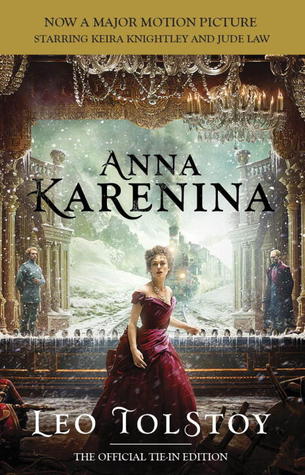
'Anna Karenina' by Leo Tolstoy


Acclaimed by many as the world's greatest novel, Anna Karenin provides a vast panorama of contemporary life in Russia and of humanity in general. In it Tolstoy uses his intense imaginative insight to create some of the most memorable characters in literature. Anna is a sophisticated woman who abandons her empty existence as the wife of Karenin and turns to Count Vronsky to fulfil her passionate nature - with tragic consequences. Levin is a reflection of Tolstoy himself, often expressing the author's own views and convictions.

Throughout, Tolstoy points no moral, merely inviting us not to judge but to watch. As Rosemary Edmonds comments, 'He leaves the shifting patterns of the kaleidoscope to bring home the meaning of the brooding words following the title, 'Vengeance is mine, and I will repay.


MY THOUGHTS:
To start off with, this is my choice for the Book in Translation in the 2018 Back to the Classics Challenge. I'd never read any Russian literature before beginning these challenges, and I'm loving it.

It's taken me well over a month to read and process, but it's been worth every second, and I was sorry it wasn't even longer. It's sad that I let intimidation get the better of me for so many years, but I thought I had good reason. A massive epic about a tragic love affair that drags on for almost 1000 pages didn't sound like much fun. But references to it have popped up so often in other novels, from characters who have loved it. Name dropping and fandom within fiction is always very hard to resist. Then I found out that in 2007, Times magazine deemed it the greatest book ever written. Well, that was it, I felt motivated to at least give it a try.

The first thing you might notice, if you stop to tally them all, is that there's about 230 chapters. Don't let that put you off, because they're all fairly short and easy to power through. It might be a meaty book, but it's not heavy. The characters are all so relatable, and many-faceted, I could easily blow this review into several pages, but thought I'd better focus mostly on Anna this time round. Other characters will definitely get their turn down the track. (Especially Levin, my favourite.)

Anna starts off as the woman who has everything going for her. Great beauty, a friendly manner that bubbles over with merriment and life, a highly respected husband and a sweet 8-year-old son. She also has a knack with small talk that makes whoever she's talking to feel special. When her brother Stepan's marriage seems heading for the rocks, she's the person he calls on to smooth things over with his wife, Dolly.

Then happy Anna meets Count Alexey Vronsky during her visit, and suddenly all she has is no longer enough. Practically overnight, her husband becomes a repulsive bore, and her social life is tedious and false. All she can think about is this gorgeous man who pursues her and fascinates her. (Those people and things haven't really changed at all, of course. It's just her attitude about them.)

I think there are two main ways readers can approach this novel, depending on how the main character strikes them. 1) Anna is a woman of personal integrity who refuses to live a lie. She realises that life is too short not to make a desperate bid for personal fulfillment and joy. She has the guts to reject the falseness and artificiality pressing her in from all sides, and take a stand for true love, even though she gets shunned by society and branded an immoral woman for doing so. 2) Anna is a selfish rebel who brings trouble upon herself and grief on those closest to her, all because she turns her back on the good in her life, without seeing it as such. Basically, she ditches her husband because someone hotter comes along. She demands freedom and acceptance without considering the claims of those who are made miserable in the process.

Readers on those opposing sides might as well be reading a different novel from each other. Many of us understand both points of view and fall somewhere in the middle. I was interested to see where Tolstoy would take the consequences of Anna's decision to leave her husband and son. To me, his story shows that making an attempt to bulldoze every obstacle in the path of your desires creates its own problems. When trying to design your perfect life involves breaking established 'rules' and upsetting others, all sorts of unforeseen problems pop out.

Anna's admirers might explain her slide into paranoia by blaming society's treatment of her. She'd sacrificed her son and her good name. Vronsky was all she had left, so naturally she was desperate to cling to him. But her critics could argue there's more to it than this. I imagine a hidden fear of some sort of karma or retribution might haunt Anna. Deep down, she can't shake off the sense that she did the dirty on her husband and son, so feelings of guilt and shame keep her edgy and wear her down. Since she's deserted those she should hold most dear, she's more likely to be alert for signs of similar behaviour in others.

Especially Vronsky, who was her partner in crime, so to speak. He left Kitty, his former love, to chase Anna, so what's to stop him from a repeat performance? Anna knows he had no scruples in his pursuit of her, so therefore no matter how well he treats her, she can't shake her concept of him as a person she can't trust. It's easy to understand why his personal history is always at the front of Anna's mind.

There was all sorts of negative psychology going on. Both Anna and Vronsky walk around with the attitude, 'Look at all I've given up for you.' That exerts a sort of 'You owe me,' pressure which isn't the best glue for a relationship. I wasn't a Vronsky fan at the start, for breezing in to wreck a family, just because he fell for a married woman. He regards Karenin, her husband, as a pig or dog sullying up the waters he wanted to enjoy himself! Well, who'd have guessed that getting exactly what he wanted would turn back to bite him on the butt? By the end, I even felt sorry for him.

Anna's predicament makes her impossible to please, as her dealings with her husband proves. When Karenin lashes out at her, she loathes him. Yet when he has a change of heart and chooses forgiveness, she hates him still, for showing her up! The poor guy can't win. When he finally asks, 'Look, what do you want from me?' she finds it impossible to answer. She wants both Vronsky and her son, Seryozha, yet they're mutually exclusive, because for Seryozha to live with his mother and Vronsky would ruin his future social and career prospects. So no wonder Anna's frustration helps change her personality. But it's for the reader to decide to what extent she's responsible for it.

Although I've padded this review out with talk of Anna and Vronsky, their shenanigans alone wouldn't have held me for 900+ pages. Other characters are really the ones who kept me hooked, especially Levin, Kitty, and Dolly who I'll discuss in more detail in other blog posts. (See A Great Pair of Sisters featuring Dolly and Kitty.)


15823480But just as a teaser, Kitty is the girl who fancied herself in love with Vronsky, and refused a heartfelt marriage proposal from Levin. Then when Vronsky jilts her to chase Anna, Kitty realises that she loved Levin all along. She considers her life in ruins, because she'd told him, 'It can never be.' And he's a humble, self-effacing fellow who'd laid everything on the line to propose to her. Now he's retreated back to his home in the country, to handle his rejection with grace and peace. I kept turning the pages for more of the terrific chemistry from these two, whether they're together or apart. (See here for Levin, my super Russian hero)

Perhaps a good quote to end with is Vronsky's, 'I can give up anything for Anna, but not my manly independence.' Little does he know that Anna will demand this along with everything else. I see why this book is loved by many people, from highbrow, literary types all the way down to normal folk like me. There's lots of reflection about politics, economics and philosophy, and different readers may take it all on board differently, but there's more than enough for us all to mull over in our own particular way. 

On the whole, I get the strong impression that Leo Tolstoy really wasn't in favour of people leaving their spouse when someone hotter comes along. Yet at the same time, his sympathy for Anna and lack of condemnation shines through. I've heard several suggestions that Anna Karenina is the sort of novel that may help reveal the meaning of life. If that's true, I wouldn't be surprised if there are as many interpretations as there are readers. But I'm happy to go with Levin's conclusion, that overthinking it only brings misery, and we're probably wisest when we do our simple daily tasks with the knowledge that we'll never fathom the heart of God, who makes everything tick.

🌟🌟🌟🌟🌟

Tuesday, April 3, 2018

Enchantments and Depression


One of the best things about reading novels is occasional sudden insights into issues that might crop up in our own lives. While non-fiction delivers straight talk about how we should tweak our thoughts and behaviour, fiction has a more indirect way of inviting us to make the connections ourselves. Not only is it potentially easier to swallow, but might even stick with us for longer.

For example, fantasy stories often present magical enchantments, and one day it dawned on me how very similar they may be to normal human depression and anxiety. Both grip our minds with half-truths and distortions, and send us spiraling into morbid ruts.

In Jonathan Strange and Mr Norrell, the entire household staff of politician Sir Walter Pole was under a fairy enchantment, and nobody had a clue. There were elusive strains of music and occasional peals of faraway bells. Some of the servants tried to describe their feelings to Stephen Black, the butler, and here's what he managed to piece together. 'The effect of the fairy bells was to bring vividly to mind everyone they'd ever known who had died, all the good things they'd ever lost, and every bad thing which had ever happened to them. Consequently they had become dejected and low, and their lives were not worth living.'

We readers nod along and think, 'It's no wonder they're feeling blue, when their minds are being manipulated like this.' We know just what's going on later, when hero magician Jonathan Strange has a close call himself, almost falling victim to the weird but compelling fairy music. It almost defeated him at the level of his thoughts. Here's how the book expresses it.

'He heard music that described his whole life, and realised for the first time how full of sadness his existence was. He knew now that every angry thought he had ever had was justified, and that every generous thought was misplaced.' Wow, I've had similar moods to that, haven't you?

Luckily, poor Jonathan twigged what was happening in some lucid edge of his mind, and managed to claw himself back to straight thinking in the nick of time. On the spot, he disputed the intrusive thoughts and acknowledged that while they were attacking his mind, he didn't have to own them. Next he replaced them with more wholesome thoughts of his choice, which strengthened with focus. He remembered his wife, Arabella, and her excellent mental qualities that attracted him to her. He loved her ability to find charm and wit in the most commonplace situations, and this sort of healthy thinking turned out to be an effective antidote against the bad fairy charm.

One author who knows all about depression is J.K. Rowling, who has explained how she drew upon her own horrific experience to create the menacing dementors, whose effect on everyone is to create a sick chill and suck every trace of happiness from any by-stander, to the extent of sucking their souls outright with the 'dementor's kiss.'

Harry Potter fans will surely also remember poor Ron's plight in The Deathly Hallows, when he takes his turn to wear the dreadful horcrux locket around his neck. He seems to be particularly susceptible to its influence of despair and hopelessness, to the extent that he bails out of their mission, tells Harry and Hermione where to go and storms off! Of course he comes to his senses the moment he's away from it and manages to return to his friends. But the horcrux fights dirty to the bitter end, taunting Ron with terrible twisted images about his own worth and everyone else's rock bottom opinions of him. It's all noxious garbage, but the scary thing is that Ron knows he was harboring germs of those sad reflections, and the enchantment in the horcrux managed to hone into them and exaggerate them into something malicious and potentially soul-crushing. His simple impulse is to stand around listening, but he must heed Harry's shout to, 'Kill it! Kill it!' These supreme moments are the way a great story can help us slay our own monsters too.

Our books offer hope that we can deal with our personal monsters in the way these great characters deal with their enchantments. Imagine if we could just slay the crazy 'all or nothing' thinking that makes us consider ourselves losers, and the fearful catastrophising, second-guessing, and misfortune telling. What if we could crush those erroneous conclusions that would have us assume that everything we don't like is a personal affront against us, and the distorted negatives which seem to make it all but impossible to acknowledge positives in our lives. I've harboured all of these at different times. It's wonderful to think that good fiction, as well as merely entertaining us, offers a possible way out of bad thinking traps. It challenges us to replace bad thoughts with better ones, and dispute them as if they're just the sort of pesky fairy enchantments that fictional characters must face.

It's not easy, but our beloved stories give us no illusions that it will be. The only effective way to repel dementors and cast a protective Patronus charm is to instantly summon your happiest memories, when you felt on top of the world. Even though you're quaking with terror as the horrible creatures are swooping down on you, and upbeat thoughts seem light years away, if you do manage they'll surely be forced to flee. I love the challenge.

You might also enjoy, Reading with Depression and Melancholia, the happy side of sadness.