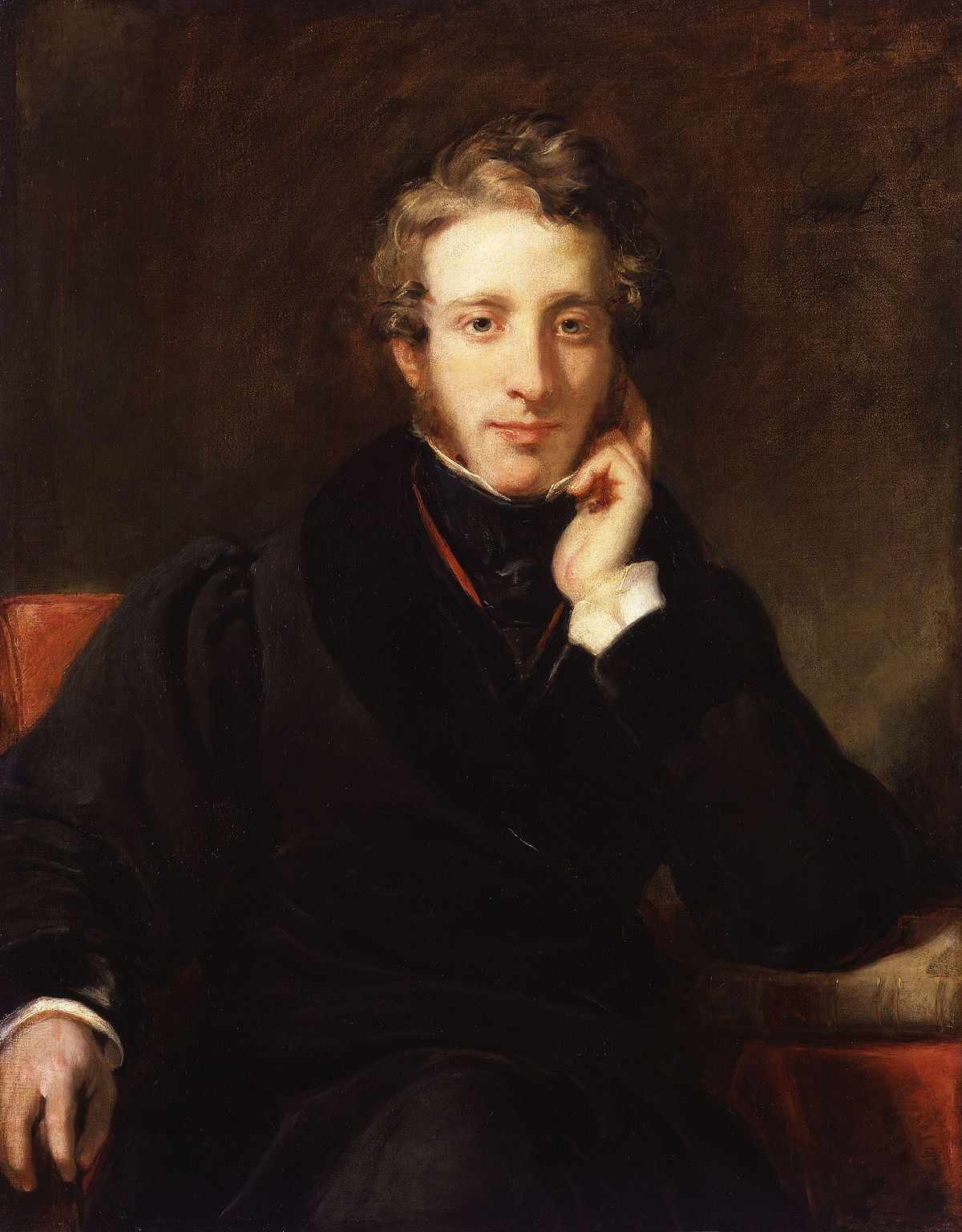
Tuesday, January 21, 2020

Autobiographical Author/Character Match-ups


I think most authors roll their eyes whenever they hear the inevitable question, 'Are your characters based on yourself?' The answer is usually a resounding, 'No way!' However, anyone who cares enough to compare the parallels may decide that the question, although a bit trite, is a reasonable one. So much so that the term 'autobiographical fiction' isn't even remotely considered an oxymoron. 

So why do they do it? For every straight talking memoirist, there could be dozens of dissembling fiction authors revealing their life stories, but adroitly ascribing them to some made-up alter-ego. My theory is that writers are a private bunch who feel far more comfortable hiding behind the shelter of somebody else. They may retreat at any time with hands up declaring, 'Nope, I never owned that!' Our feelings may prove to be more confrontational, bizarre or brutally frank than we'd care to admit. Transferring them to a make-believe person who can't challenge us on it may be the ideal solution. 

So here are ten historical examples of writers who probably opted to stand behind the, 'No, that's not me,' facade, while their friends and acquaintances winked and said, 'If you say so.' 

1) Charles Dickens is David Copperfield
This story was Dickens' own personal favourite, which is possibly because of all the meaningful parallels he created between his hero's life and his own. David's working life takes a similar trajectory to Charles', including his earliest stints in law offices to his writing career. The coincidences extend to more delicate issues too. Both Charles and David marry pretty women who turn out to be super childish and offer their husbands no intellectual stimulation, at least in Charles' opinion. When David shares his feelings about his unexpected success in fiction writing, we can rest assured that he's speaking for two men. Their inverted initials, CD and DC were probably no accident either, piling up the evidence that these two were essentially one and the same. (Review is here.)


2) Louisa May Alcott is Jo March
Louisa's publisher had been urging her to write a wholesome book for girls, but she refused for a long time because it didn't interest her. At last she agreed, to get him off her back (and no doubt for the money 💰) After stressing a bit, Louisa decided to model the story after the four girls she knew best; herself and her three sisters. Not only is tomboyish, gauche, bookish Jo a faithful copy of Louisa, but Meg, Beth and Amy are supposedly dead-ringers for Anna, Elizabeth and Abba-May. She drew on their childhood games for ideas, and stayed reasonably true to their destinies, including Anna's homebody lifestyle, Elizabeth's death, May's experiences in Europe, and her own rise as a bestselling author. She did make some concessions to the demands of the general public by creating a husband for Jo, although spinster Louisa refused to marry her off to the rich, dashing Laurie. She chose instead a modest, threadbare Professor who ticked no boxes for romantic stereotypes. (Reviews start here.)


3) Charlotte Bronte is Lucy Snowe
This must have been a wishful and cathartic exercise indeed, since Charlotte possibly formed Lucy to be an improved version of herself. They started on the same footing as modest, quiet English teachers in Belgian boarding schools, each teeming with sassy and passionate inner lives. But while Charlotte's dishy professor Constantine Heger didn't return her feelings, Lucy hit the jackpot after a rough ride. And Monsieur Paul Emanuel was single as a bonus 😉 In many instances throughout the story, Lucy was collected and bold enough to deliver responses Charlotte might have made to several people in retrospect. In reality we never get the chance to go back and say what we wished we had, but fiction authors have a good opportunity to tamper with the memories, putting words in their substitutes' mouths. (Here is my review.)

4) Betty Smith is Francie Nolan
I think it's generally accepted that thoughtful, imaginative Francie's underprivileged childhood in turn-of-the-century Brooklyn was a duplicate of Betty's own. They shared several incidents which stood out in Betty's memory, not to mention the same grinding early jobs. That's why Francie's work in the clipping agency, where she was basically a human search engine, was described in vivid, on-the-spot detail by Betty. Sadly they also shared some more unfortunate features in common, such as having brothers who were obviously favoured by their mothers, although it was covered up as much as possible. But throughout her novel, Betty left us all in no doubt! (Check out my review.)

5) William Makepeace Thackeray is Captain William Dobbin
Whether or not his friends agreed it was a totally accurate representation, it would seem that at least on some level, the author honestly pictured himself as this stodgy, awkward plodder with the heroic and gentlemanly nature. Both Williams were madly in love with someone else's wife for many years. Perhaps William the author was using William the character as a means to purge some of his own intense feelings. Later on, he created an entirely new character, Arthur Pendennis, who might have been even more of a substitute for himself. Both Vanity Fair and Pendennis are thick enough to contain a lot of soul-searching. (See my review.)

6) Harper Lee is Scout Finch
This one-book-wonder's workmates gifted her a fully paid year off to work on a novel. She made the most of every moment, basing the plot of To Kill a Mockingbird on a sorry event that happened in her own childhood. Although it's purely conjectural whether Lee purposely set out to model the precocious and perceptive Scout on herself, it can't be denied that like her young heroine, she did have a lawyer for a dad and an older brother who she trailed after and aimed to impress. It's more widely accepted that Harper Lee's childhood playmate, Truman Capote, was the inspiration for Scout's buddy Dill Harris. That adds at least a little credence to the suspicion that she herself was Scout. And just for the record, her dad Amasa Lee totally bought into it, and signed autographs as Atticus Finch. (More on Harper Lee here.)

7) Anne Bronte is Agnes Gray
This one seems to be a fairly straightforward case, which we hardly needed to have confirmed by the author's sister Charlotte. For five years, Anne lived a downtrodden life as a governess to snooty rich families in the Victorian era, and intended her story to be an expose about their rough and thankless lives. When creating incidents for Agnes to handle, Anne drew heavily on her own experiences in other people's houses. Her own employers, the Inghams and Robinsons, appear to be perfect counterparts for Agnes' Bloomfields and Murrays. Their two stories diverge toward the end, when Agnes marries a young Anglican curate named Edward Weston. But perhaps even that's intended as a best case scenario of Anne's life, since it's rumoured she was in love with her father's own curate William Weightman, who later died of cholera. Poor Anne had no easy life. (Re-read and review coming soon.)

8) Leo Tolstoy is Konstantin Levin
Levin is an absolute legend, and my favourite of all the characters Tolstoy created. However, we needn't look far before we begin suspecting Tolstoy of a vested interest in making Levin so appealing. Throughout the novel, Levin is Tolstoy's own mouthpiece. Whenever our modest and socially inept young hero opens his mouth, he's bound to spout something Tolstoy has spent hours considering himself. Serf welfare and a personal desire to get up close and personal with the land drives each of these landowners. They share the same idealism, existential angst, and even identical religious epiphanies. With all this in mind, it comes as totally no surprise that Levin's charming romance with Kitty is a counterpart of Tolstoy's own relationship with his wife Sophia. And to cap it all off, the fact that Leo's Russian name translate to Lev is surely no coincidence either. (My review is here.)

9) Lucy Maud Montgomery is Emily Byrd Starr
Montgomery had been getting burned out on her long-running Anne series, but fans were still demanding more. She thought she'd be tied to that 'tiresome' redhead forever, and gradually attempted to wean herself in another direction when she felt she'd taken Anne as far as she could. She refreshed herself by creating a main character she considered a closer match for her own personality. Emily shares Lucy's intense calling to become a writer, even without her family's support. Both girls had deep, brooding natures, and reputations for being somewhat aloof and inscrutable. They were both brought up by stern relatives in the absence of their parents. Lucy experienced some transcendent moments of ecstasy when she felt as if a thin layer separated her own world from a more spiritually rich one. She referred to them as 'the flash' and transferred the phenomenon to Emily.

10) J.K. Rowling is Hermione Granger
Okay, this is a more fun example which obviously can't be strictly proven, since there's nowhere on earth like Hogwarts School of Witchcraft and Wizardry. But in this case the author is still alive and has actually agreed at times that she has a soft spot for this young witch because Hermione was very much like herself as a schoolgirl; highly intelligent, somewhat unkempt and with the reputation for being a bit of a nerd. I don't know for sure whether Rowling shunned the company of other girls to hang around with a couple of misfit boys, but I wouldn't be at all surprised. We know her life hasn't always been easy, with a broken marriage that stimulated her desire to give writing a shot. At this stage she's come into her own brilliant career, like Hermione, and we trust that she's enjoying life with her own Ron Weasley. 

Are any of your favourites on this list? Do you believe I'm correct in my conjectures? And as always, please add any more to the comments.

Tuesday, January 14, 2020

'Choose your own Adventure' famous classics


Have you ever wondered what's up with the endings of Great Expectations or Villette? They are both very ambiguous, and you might assume that brilliant authors like Dickens and Bronte could've been clearer, especially so close to the end of their careers. But as it turns out, they were both purposely obscure, so that readers could choose whichever alternative they preferred. Just like the modern Choose your own Adventure books as we know them.

Warning: If you don't like spoilers, read no further. The nature of this discussion makes them inevitable, but I doubt these spoilers will spoil the fun of reading the novels. Here goes.


Great Expectations
If you've read the book and would like a quick recap, here it is. After all that went down in the story, eleven years passed. Pip and Estella accidentally chose the same evening to revisit creepy old Satis House, now a deserted husk. She has been softened by her sorrow. It wasn't easy being married to mean Bentley Drummle. Estella earnestly asks Pip to consider her his friend, even though they're about to part ways again. As they stroll out of the gates together, he reflects to himself that he 'sees no shadow of further parting from her.' And then it ends. Is that sentence enough for us to assume they get married, or is Pip still jumping to conclusions as he did in their youth? If Dickens was still alive, I'd be among those fans requesting more information.


Wait, there is more though. The afterword at the back of my novel told me that he'd once written a completely different ending, and a Google search confirmed it. In Dickens' original draft, Estella had married a country doctor after her disastrous marriage to Drummle. One day, she happened to encounter Pip on the street before they went their separate ways. And Pip thought, 'She looks pleasanter than she used to. Perhaps time has softened her attitude.'

That ending is a bit anti-climactic, and Dickens was talked into changing it. He went to stay a few nights with his good friend Edward Bulwer-Lytton, who was also a well-known Victorian novelist. Dickens showed him the rough draft, and Bulwer-Lytton complained that the ending would be far too disappointing for fans after all they'd been through with Pip. So Dickens scribbled out the last few pages and re-wrote them. He posted Bulwer-Lytton the new ending to see if he approved. It evidently got the nod, because it's the ending we have now.

Yet we still don't know for sure. Did they marry or not? I think Dickens was telling his friend in effect, 'I've worked it so everyone'll be happy. Sentimentalists like you can cling to the hope that Pip and Estella do tie the knot. But at the same time, realists and pragmatists don't have to buy into it, if they choose not to.'
I think Edward Bulwer-Lytton was the real hero of this true anecdote. Off the topic, a bit more research on him shows that we owe this guy more than you might think. He turns out to be one of those writers we often quote without even knowing it. The phrase, 'the pen is mightier than the sword,' was first coined by Bulwer-Lytton, although I might have guessed Shakespeare. He also came up with 'in pursuit of the almighty dollar' and 'dweller on the threshold.' But perhaps his biggest claim to fame might be his immortal opening line, 'It was a dark and stormy night.' He might have been happy enough to let his ownership of that one slip into obscurity :)

Here's my review of Great Expectations.
I've also written this rave about Pip.

Villette

The ambiguity is compressed into the last page, but here's a recap of the lead-up. After providing heroine Lucy Snowe with her own little school and making her independent, the hero Paul Emanuel has been overseas taking care of business. Lucy, who loves him with all her heart, awaits his return. But the weather across the sea turns nasty, and she prays hard for his safety. A wild south-west storm whips through and doesn't cease until 'the Atlantic is strewn with wrecks.' That's the end. But wait, it doesn't mention whether or not Paul's ship was among the casualties. What game is Charlotte Bronte playing here?

A bit of research indicates that the ending was clear in her gloomy mind all along. Monsieur Paul perished, naturally. It seems Charlotte designed Lucy's life to be a sort of carbon copy of her own, and since she was feeling fruitless, tragic and unfulfilled at the time of writing, there was no way she'd let Lucy off easy. In addition, an early chapter about Lucy's former employer Miss Marchmont could be a foreshadow. The lonely old dame's backstory includes the death of her beloved fiance in a freak accident, which was possibly meant to be a prophecy of Lucy's fate.

Image result for reverend patrick bronteBut Charlotte Bronte read the manuscript to her old Dad, and he objected. The Reverend Patrick Bronte insisted on a happier ending than the drowning of Monsieur Paul. It was hardly fair on soft-hearted readers like himself. Not to mention super-abrupt. So like a dutiful daughter, Charlotte didn't change her own plan but re-worked the ending to be more ambiguous. The glossary in my edition puts it this way. 'While keeping to the ending she'd imagined, she made it more metaphoric in order to allow Monsieur Paul's survival for those who needed a sunnier ending.'

I love this excerpt Charlotte wrote in a letter to her publisher too.

'With regard to the momentous point - Monsieur Paul's fate - in case anyone in future should request to be enlightened thereon, they may be told that it was designed that every reader should settle the catastrophe for himself, according to the quality of his disposition... Drowning and matrimony are the fearful alternatives. The merciful will of course choose the former and milder doom, drown him to put him out of pain. The cruel-hearted will on the contrary pitilessly impale him on the second horn of the dilemma, marrying him without ruth or compunction to that person, that individual, Lucy Snowe!'

Here's my review of Villette

Do Pip and Estella get married?
Does Monsieur Paul perish or survive? 

I watched a Great Expectations Netflix series that clearly went for the marriage option, but I wasn't a big Estella fan, and think Pip could do far better. Although, he was a bit of a duffer throughout the book, he didn't deserve the fate of winning her hand. Sure, she was manipulated and exploited by her unscrupulous guardian, yet she'll always be a mean girl to me.

As for Villette, I'm disturbed by the number of contemporary readers who talk about Paul's death as a given! Come on people, the Reverend Pat gave us a loophole, and I'm going to take it. I was totally invested in their relationship, so of course he returns to Lucy!

So where do you stand?

Tuesday, January 7, 2020

'Death Comes for the Archbishop' by Willa Cather


Willa Cather's best known novel; a narrative that recounts a life lived simply in the silence of the southwestern desert.

MY THOUGHTS:
This is a wonderful read, so don't be put off by the title. I think the faintly ominous overtones are unfounded. That looming appointment does catch up with main character Father Latour by the end, but only in his twilight years after a long productive life, and it comes across as far more of a triumph than a loss. He faces it in a super reflective, peaceful and calm state of mind. 'I shall not die of a cold, my son,' he tells his young protege. 'I shall die of having lived.' His death is written like a final victory, and you feel like cheering him rather than being sad.

The book is set during a fascinating period of history. It starts in 1851 when the state of New Mexico has been recently annexed to the USA. (I'm an Aussie and had to consult a map. It's down south between Texas and Arizona.) New Mexico is considered a Catholic area since it was evangelised by Franciscans in the 1500's, but the population, consisting greatly of cowboys and Indians, has been bumbling along essentially uninstructed for 300 years. The chiefs at the Vatican decide to send someone to crank up the faith, but it'll have to be a special guy. 'That country will drink up his youth and strength as it does the rain.' Still, they decide a young man named Father Jean Marie Latour might fit the bill, along with the assistance of his boyhood friend Father Joseph Vaillant.

The story is made up of a string of beautifully written incidents which reveal a lot about human nature, the influence of the landscape, and the interplay of both. It's such a challenge for the pair of friends, because their Catholic mission field is slap bang in the middle of Protestant America, and since it's mostly unconnected by railway and rivers, they have to rely on their trusty mules to slowly get around.

The differences in the ways the best friends operate is an interesting study, based on their personality styles. Father Joseph is a people-loving, folk-focused extrovert who pushes past the barrier of a weak physical constitution driven by concern for the needs of others. Rash and impulsive, he's never afraid to ask for what he wants to the point of cheekiness. Yet because he makes his generous heart so evident, people are willing to give him whatever it is.

Latour is more the studious, academically inclined introvert whose fuel is reflection and thought. He has moments of wrestling with the black dog, but uses the same contemplative bent that gives it to him to get out of it.

I love all the sections told from Father Latour's point of view because he has such a gentle, refreshing head space in which to find ourselves. He's impeccably polite, even while lost and parched with thirst in the desert, and treats animals with a degree of care and respect reminiscent of Saint Francis. Any reader used to glossing over providence and simple miracles surely can't maintain that view if they're looking through Father Latour's eyes. Being him for the duration of the book is a faith building experience. He's so steeped in wonder of his tradition, and the certainty that things happen as they should. 

The quiet success of Latour's life stems from his deep respect for the ancient traditions of the land's natives. Never once does he attempt to stamp out the colourful culture he finds, just because he's presenting something different. Father Latour can put himself in other people's shoes. He understands that a person's identity is more than bone deep, and offers his Catholic faith as a precious alternative or extra. He accepts that there are rich veins to their spiritual make-up that he has no idea about, and courteously declines to probe where he isn't welcome. Even the New Mexican way of embracing Catholicism is spiced with their long-established character. 'Religion is necessarily theatrical to these people.' Latour realises that the European memories that shaped his own psyche are not transferable to their minds. He follows the thought through to its logical conclusion that generations of their own unique lore is similarly untranslatable to him.

Overall, the land is the book's real main character. The beautiful descriptions are often no more than a sentence, such as, 'Elsewhere the sky is the roof of the world, but here the earth was the floor of the sky.' The natives relate to the land in a sensitive way, respecting its character enough to pass through gently and quietly, leaving no trace, while white settlers always wish to assert their presence by making changes. Even Father Latour succombs to the seductive desire to leave a legacy for himself by building a cathedral. It's very interesting to reflect that the egos we battle with and try to whip into shape might be very much a western construct we've taken on board. There have been others in the world brought up without that emphasis on the need for personal expression. It seems as necessary as breathing in our day and age, so we declare it's a God-given characteristic, which rings true, but do we take individuality and self-expression to an extreme never intended by either God or nature? It's a weird but sort of freeing question.

I don't really know why I'm taking off half a star, except that maybe because such a long period of time is covered in a reasonably short book, it feels like a bit of a surface skimmer at times. I would have happily read much more of the same material we're offered. I guess that's a good reason to take off half a mark.

You might like to compare this book to another I've reviewed, about an overbearing missionary with a very opposite spirit, who crashed and burned. You'll find it here.

🌟🌟🌟🌟½


Tuesday, December 31, 2019

My Wisdom Challenge for 2020


I decided to complete this challenge as we move into a brand new decade. Without thinking about it too hard, we must quickly brainstorm 20 personal ideas, or general pearls of wisdom. I wasn't sure I had many at all, let alone 20, but here's what I came up with. Once I started scribbling, I got on a roll. Would you like to read along and play along too? 

1) Life may not deliver our dreams, but it does deliver small, unexpected delights that catch us by surprise. Wendell Berry's main character Hannah Coulter was right when she put it this way. "I began to trust the world again, not to give me what I wanted, for I saw that it could not do that, but to give unforeseen gifts and pleasures that I'd not thought to want." In retrospect, many of the specific outcomes I've prayed for over the years haven't happened. If I was to plot prayer results on a pie graph, I suspect the short term disappointment might appear to be way more than the 50% we'd expect from head/tail probability mathematics. That discouraged me for years, but now I think a better way to operate is to trust that when we don't get what we badly wanted, it probably wasn't right for us anyway. Aesop's fox decided those delicious grapes he couldn't reach must have been sour. He gets a bad profile, but I think his attitude might contain a bit of sense too. When I remember some things I've set my heart on in the past, I think it's probably lucky I didn't get them. (Review of Hannah Coulter coming soon.)

2) A life of curiosity is an interesting and varied one. Elizabeth Gilbert is right. In Big Magic, she says, "You may end only with the satisfaction of knowing you passed your existence in devotion to the noble human virtue of inquisitiveness. That should be more than enough for anyone to say that they lived a rich and splendid life."

3) Many, if not most worries are just future projections fueled by fear without a grain of substance in them. It's best to live our lives in day tight compartments. The Israelites were instructed to collect enough manna for a single day, and those who decided to store up enough for two or three found it filled with worms and weevils. We're given enough grace to face the day we're in, and not grapple with those ahead. That's why worryworts have no rest. My imagination has gone sprinting ahead of me so often, I've lived many days under black clouds of fear, waiting for disaster to strike, when all along there was no need to. Dennis Merritt Jones' mother was right when advised him, 'Don't borrow trouble from tomorrow, son.'

4) We shouldn't get our habits mixed up with our essential nature. We can change the first, but not the second. I can stop eating dairy because I'm lactose intolerant, but I can't stop being a shy introvert because I want to be more social. After fifty years on this planet, the awkwardness, social fatigue and mind blanks are as strong a part of my psyche as ever. I've wasted a lot of time either in denial or trying to eradicate them. It doesn't work. Any time we declare personal war on intrinsic characteristics because we don't like them is wasted time! We're far better off polishing up our obvious strengths.

5) 21st century blessings like Paracetemol, Ibuprofen and sunscreen are miracles of our era, so we should use them gratefully as required. It's sometimes good to remember former generations who had to be more drastic, such as those who used laudanum for pain relief. In other words, we're happier when we don't take for granted lifestyles which would have been beyond our ancestors' wildest dreams.

6)There's no point in trying to second guess people. We are probably often wrong, and even if we're right about their nastiness, hostility or rudeness, it's better all round to give them the benefit of the doubt. Let's make up our minds that they meant nothing personal. Grudges and simmering resentment use a lot of energy that could be released elsewhere. The fellow who said, 'Keep your temper, nobody else wants it,' was right.

7) We should lower the bar for what qualifies as special. Captain Chris Hadfield was right. It's far better to enjoy hundreds of satisfying moments in our lives rather than dismiss everything except two or three awesome occasions spaced far apart. I was happy when I got married, had three babies, and won some literary awards, but when I know there's a good book for me waiting to be picked up from the library, the happiness is also present then. An expensive holiday is grand, but so is a stir-fry with a new sauce cooked by a spouse. Front row concert tickets are great, but so is listening to your favourite song on the radio as you drive to work. I'm sure you can get the picture and keep this rolling. Chris Hadfield said, "Life is a lot better when you feel you're having ten wins a day, rather than a win every ten years or so."

8) The ordinary should be embraced, including ourselves. People trying hard to be outstanding and special are pretty common. The evidence is all over social media. Fledgling businesses, new book reviews, and gorgeous, touched-up photographs greet us whenever we scroll down. Maybe Alice Average is paradoxically the really outstanding person, for accepting her humble station and just getting on with her day. The Ordinary Princess struck it lucky when a wise fairy gave her the gift of being nothing out of the box. Her parents were aghast, but she grew up with a level of contentment her ambitious, brilliant, highly admired sisters lacked. And that was probably worth more than gold.

9) Books are great. Socrates was right. Reading helps us take on board easily and thankfully a lesson some other person has learned through hard experience. Matt Haig was right too. When we're feeling depressed, let's turn to books, and replace our doleful mindsets with the words of someone in a more cheerful head space at the time of writing. It just might help us recover quicker.

10) Hearing somebody get highly praised isn't intended as a reproach of you. That's a hangover from my try-hard childhood and youth. We really have nothing to prove, and it's pointless trying to show or impress others anyway. Their minds tend to be set like cement and opinions hard to change.

11) There is more supernatural support under-girding our limited view of the world than we might ever think or believe possible. In recent years, I've felt increasingly that what is invisible to our natural five senses is surely even stronger than what we can see, hear, touch, taste and smell. I wrote a discussion paper for Uni earlier this year, and explained it like this. "The Bible informs us that God, from a spiritual plane invisible to our natural senses, formed our physical world with his spoken word. Those of us with a sound concept of Shalom or peace in our own lives may rest confident that the vast, unseen realm is more powerful than the everyday world we detect with our natural senses. It's easy to assume it's the other way around, since we rely on our natural senses to inform us what's 'real' and solid. Therefore, to really embrace the concept of Shalom, we may make a decision that once we've prayed to our loving God, we are safe to rely on the soundness of whatever plays out."

 I was delighted to read the words of Father Latour from Death Comes for the Archbishop. He explains to his best friend, Father Vaillant, why he doesn't bother to go chasing miracles. 'Where there is great love there is always miracles. One might almost say that an apparition is human vision corrected by divine love. The Miracle of the Church seems to me to rest not so much upon faces or voices of healing power coming suddenly near to us from afar off, but upon our perceptions being made finer, so that for a moment our eyes can see and our ears can hear what is there about us always.'

12) Yet at the same time, all that we have for our five senses certainly isn't paltry. The character of Dad in The Solitaire Mystery is spot on. I'll quote him directly. "People would have gone absolutely wild if astronomers had discovered another living planet. They just don't let themselves be amazed by their own. All this bursts through each spring. Tomatoes and lemons, artichokes and walnuts, tons of greenery. How do you think this black earth pumps it all out? When people are interested in the supernatural, they suffer from a remarkable blindness. They don't see the most mysterious thing of all, that the world exists. Our lives are part of a unique adventure. Nevertheless, most of us think the world is 'normal' and are constantly hunting for something 'abnormal' like angels or martians. But this is because we don't realise the world is a mystery. I don't need to visit cold castles to go on a ghost hunt. I am a ghost myself." Bravo! Let's not be counted among those who are only impressed by angels, martians or ghosts.

13) It's fine to be open-minded but not double-minded. If we're always prepared to change our minds about the big, important things, we're never at rest. Statements such as, 'It's a purposeful universe,' or 'God cares for us,' should be unequivocal when we decide to believe them. In my wonky moments, I've felt the need for constant reassurance about the same old issues. I can understand why people get exasperated with me, since I do the same when people agree with my comforting thoughts one moment, then change their minds and race around panicking again the next. If a sound concept brings conviction and peace one day, don't drop it the next, out of fear it isn't true after all. James the Apostle was right. People like this are like tossing waves.

14) Hold lightly to both censure and praise. My first semester back at full time study was full of assignments ranging between 72% and 94%, yet I tried equally hard all round. I have to believe the differences may be a reflection of the marker as much as myself. The great philosophers who say it's wise to let it all go are right. Positive feedback feels really great though, so I suggest we enjoy the initial surge of elation, but then don't cling to it. In the same way, when something disappointing lets us down, we can recover quicker when we remember that it's temporary, and not the end of our story.

15) Time really does hurtle us through space at breakneck speed. It's an illusion whenever it feels sloth-like and meandering. If we realised how fast the years slip past on the abacus of our lives, we'd be breathless. So let's not waste them in depression but have our remedies in place to help us through through those undesirable moments. Mine are books, walks and pottering about. The Graveyard Poets were right when they said to accept our mortality and enjoy life while we can.

16) Perhaps your mind operates at a slower speed than others. Villette's Lucy Snowe was right when she decided she couldn't work on demand, because she freezes under the pressure of exams or any surveillance. When spontaneity really isn't your thing, you can't fabricate it. I rarely ask questions in class situations. It's partly because I'm shy, but also because my introvert, pondering mind doesn't process things on the spot as quickly as my classmates' do. I need to take time to review all the facts and notes in my own time later, before I have anything tangible to ask or offer. That's just me, and I have to accept it.

17) Don't rely on Angel Thoughts. This is an interesting concept I'm just beginning to put into practice now, with the help of an anxiety counselor who told me about the terminology. 'Angel thoughts' are those knee jerk reactions to the 'devil thoughts' which suddenly send our peace of mind flying! We scurry to piece together desperate evidence that our worst fears aren't true. This can involve seeking reassurance from friends or the internet. Sometimes angel thoughts take the form of affirmations we recite between clenched teeth. "I'm not sick at all. I'm the picture of health. I'm not a waste of space. I'm a perfect expression of love and creativity." The problem is, we can never pep talk ourselves out of severe depression or anxiety. Those reassuring angel thoughts never seem to loom as huge as the devil thoughts we're trying to shoot down.

Instead of relying on ineffective angel thoughts to shield me, which never works, I'm now simply waiting those devil thoughts out. Angel thoughts mean well, but they're really just compounding the problem. When we sit with devil thoughts for long enough, with a "Yeah, whatever," sort of attitude, they are more likely to subside of their own accord, until next time. And their severity lessens over time with longer periods between them. I'm already finding it seems to be a sound approach with those dreaded hang-ups which have seemed to hang on through the decades. 

18) Thinking about what we read is a real stand against the age of shallow skimming in which we find ourselves. So if you've borne with me thus far, congratulations. Reading anything from long articles to brick sized classics is a good, rebellious stand against all those modern voices that seem to clamour at us to hurry up. It helps us to deepen our focus, attention and the quality of our reflections. I'm sure it spills over to the physical aspects of our lives too, and steady our nerves and blood pressure.

19) It isn't our job to impress others. Really? I always thought it was, from the time I was a little kid. At home I was the baby sister, and at school I was the butt of mean bullies. I thought that meant I had to prove to all of them, and ultimately myself that I wasn't only worthy of taking up space, but also capable of some good, impressive input in the world. It was a waste of time, because each achievement turned out not be the end. I had to keep raising the bar higher, and keep a furtive eye on what my peers were doing. And do you know what? I was running myself ragged, and people don't really even pay much attention anyway. We need to chill out and live life out of enthusiasm for what we're doing. Not a relentless need for positive feedback before we can allow ourselves to relax. Plus, Sir Thomas Browne, one of the Graveyard Poets, wrote, "The duty of an honest Christian is to make an impression not in the record of man but rather in the register of God." To me, that's a tip to get my white-knuckled grip off imression management, social media stats and all those things which can tie us in knots.

20) Maybe John, Paul, George and Ringo were right. All we need is love. It's easy to take short pithy maxims as cheesy nonsense, and this lyric of the Beatles is no exception. But the most profound truths are often the very simplest to wrap our heads around. We're told that God is love, which makes sense since love sparks our impetus for the most meaningful relationships and activities in our lives. It's presence in whatever we do is possibly a sure sign that we're on the right track.

Whew, that was actually quite challenging and fun to do. Now I'd like to hear some of yours. If you'd like to commit to coming up with 20, please let me know. Even if only a couple spring to mind, please feel free to add them in the comments, and make them an extension of this list. I'd love to read them. 


Wednesday, December 18, 2019

Christmas Highlights in Stories


Christmas is that time of year that brings everyone together. The idea of our divine God being willing to enclose himself in flesh and enter the world through birth, just like every other bub, is mind-blowing. His entry into our world also serves to shatter barriers of time and place for that one day of the year. It doesn't matter if we're in London or Brooklyn, or even Hogwarts or Narnia. Nor does it signify if we're living in 1800, 1930 or 2019. On December 25th, we are one and the same, observing the birth of our saviour wherever and whenever. I've done a brainstorm, and here are eight stand-out incidents from some of my favourite novels that unite real folk like us with some beloved fictional story characters. 


1) Fred and George unknowingly hit Voldemort in the kisser
During Christmas season at Hogwarts, the Weasley twins bewitch several snowballs to bounce off the back of Professor Quirrell's turban. Little do they know whose face they're pelting back there. Go Fred and George! Meanwhile, Harry receives a Weasley jumper knitted by kind-hearted Molly, and an anonymous invisibility cloak. (Here's more about Harry Potter)


2) Santa brings gifts to Narnia
The horrible freezing spell that the wicked queen holds over the land is finally weakening. There had been perpetual icy winter with no Christmas for several years, but now a sleigh pulled by reindeer heralds the arrival of Santa Claus bearing gifts. He has a shield and sword for Peter, a bow and arrow for Susan and a flask of healing cordial for Lucy. Nothing for Edmund, who's away from them at the moment, regretting his traitorous move.


3) Pip slides out of a sticky situation
Young Pip's stern sister has prepared a festive Christmas dinner for their guests, but he's robbed the pantry of a succulent pork pie, to feed a convict who threatened him out on the marsh. Pip is biting his nails and dreading her discovery of its absence every minute, but fate steps in to save his butt from a bad thrashing. (See my review of Great Expectations)


4) The March sisters decide to be generous
It's the lean Civil War era, and after grumbling because they're so poor, Meg, Jo, Beth and Amy make a pact that they'll spend their bit of money on their mother, instead of buying treats for themselves. And then on Christmas Day, they impulsively decide to take their breakfast to treat a suffering family who live not far away. (See my review of Little Women)


5) Francie and Neeley catch a Christmas tree
The Nolan family are too poor to buy a spruce tree of their own. At midnight on Christmas Eve, unsold ones are tossed out into the crowd, along with the challenge that whoever is strong enough not to buckle beneath their weight can keep them. The tiny sibling duo are up for it. 'Me and my brother are not too little together,' says Francie. The tree cracks her head and scratches Neeley's face, but they have victory! Even undecorated, it's the best tree ever. (Here's my review of A Tree Grows in Brooklyn)


6) Matthew gives Anne puffed sleeves
Dear old Matthew Cuthbert has noticed that their girl Anne is more plainly dressed than her friends, thanks to Marilla's no-frills approach to her upbringing. He spends an embarrassing ten minutes in the store attempting to order one, before calling on Mrs Rachel Lynde to help sew up a treat. So Anne gets the 'perfectly exquisite' puffed sleeve dress of her dreams on Christmas Day. (Here's more about Anne of Green Gables)

7) Mr Edwards meets Santa Claus and saves Christmas for the Ingalls family
Ma and Pa Ingalls have told Mary and Laura there's no way Santa Claus can cross the wild, flowing river to bring them Christmas presents. But their kind friend Mr Edwards manages to swim across with tin cups, candy canes and shiny coins for the girls. And he tells them the wonderful tale of how he met Santa Claus back in town, who entrusted him with the job of delivery. 'He was too old and fat to make the attempt himself.' (See my review of Little House on the Prairie)

8) Scrooge learns his lesson
Charles Dickens was an expert Christmas yarn spinner, and his most famous of all is about the grouchy old miser who has three supernatural visitors whizzing him to different moments of his life. He comes to his senses in time to join his nephew and the Cratchit family for a wonderful Christmas dinner like only the Victorians could throw. (Here's my review of A Christmas Carol)

Those are mine, and together they make a lovely patchwork quilt of Christmassy moments. If you can think of any extras, I invite you to mention them in the comments. And I'll also add that while all this is going on between the pages of books, I'll be spending a hot Christmas hopefully wading at the beach at some stage of the day, in Adelaide, Australia. How about you?


Wednesday, December 11, 2019

'Villette' by Charlotte Bronte


With her final novel, Villette, Charlotte Brontë reached the height of her artistic power. First published in 1853, Villette is Brontë's most accomplished and deeply felt work, eclipsing even Jane Eyre in critical acclaim. Her narrator, the autobiographical Lucy Snowe, flees England and a tragic past to become an instructor in a Belgian boarding school in the town of Villette. There she unexpectedly confronts her feelings of love and longing as she witnesses the fitful romance between Dr. John, a handsome young Englishman, and Ginerva Fanshawe, a beautiful coquette. The first pain brings others, and with them comes the heartache Lucy has tried so long to escape. Yet in spite of adversity and disappointment, Lucy Snowe survives to recount the unstinting vision of a turbulent life's journey - a journey that is one of the most insightful fictional studies of a woman's consciousness in English literature.

MY THOUGHTS:
This is a re-read for me. My first time through, as a Uni English student, was very sketchy in my mind. It's based on Charlotte Bronte's time as an English teacher at a girls' boarding school, or 'pensionnat' in Brussels, and her alter-ego is a serious and reflective young woman named Lucy Snowe, who falls for two men within the pages of the story. First is John Graham Bretton, a young doctor she knew when they were both in their teens, and second is Monsieur Paul Emanuel, the professor of literature at the school.

To use an exercise simile, this book is like a gym workout. It takes effort, but leaves us feeling fitter in our mind and spirit. We should keep away from Charlotte Bronte's books when all we want is a quick and leisurely read. This is no stroll in the park. Nor is it the sort of book we pick up to knock off a few chapters in our down time. I'm sure our benefit in reading it is in direct proportion to the amount of time we're prepared to pause and reflect on Lucy's word choices, and the apt imagery she draws from all sorts of places, including scripture and mythology. She invites us to consider how her frequent cultural and literary analogies apply to her life, and by extension, our own.

I'd go so far as to say that I wouldn't even take seriously the review of anyone who gallops through, because speed is evidently not the spirit in which Charlotte wrote it. You'd miss too much of what it's really all about. Yet that's exactly how I approached it as a teen at Uni, because we all just wanted to get abreast of our huge mountain of texts and churn out the essays required. This time around, I appreciated it one hundred percent more than I did the first time. 

Most fascinating to me is Lucy Snowe's character. She's so repressed and restrained, which makes her one of the best examples of lonely characters with rich inner lives I've come across. Lucy is great at slamming the door on any pleasure that tempts her, because her experience in life thus far has taught her that fun surely isn't for the likes of her, a solitary girl with no family who has to work hard to earn a living. She thinks it's so fleeting, letting down her guard would make her way too vulnerable to heartache and disappointment. Yet every so often, others are stunned by a glimpse of Lucy's true feelings before she crams the lid on them again.

Reading the book feels like being a recipient of huge trust, because we can't help but appreciate the tremendous sacrifice and effort it must take Lucy to bare all, as she's evidently doing. Reviewers who criticize her personality possibly don't realise that people similar to them are part of the reason why she finds it so hard to venture out of her shell in the first place. She might be super-reserved, but Lucy is definitely no coward. This girl can control a class of sassy teenage girls, and even attempts to touch a ghost.

Then there's the Monsieur Paul factor! Wow, to make me end up liking this guy shows Charlotte Bronte's skill with the pen. It takes just a moment to sum him up as a choleric, despotic little bossy pants, who is out of line a countless number of times. He calls Lucy brazen and bold when she's nothing of the sort, orders her to move away from a particular 'immodest' painting at the art gallery, and throws a tantrum when she doesn't offer him flowers on his special day along with everyone else. (That was actually sort of funny.)

 In the spirit of Lucy Snowe herself, reason would say he can go take a running jump. Yet this guy's earnestness and energy has a way of growing on us, and he delivers some great lines, such as, 'My establishment of servants number ten,' as he holds up his fingers. And of course, he's the one guy who sees through Lucy's facade to her real depth beneath. Monsieur Paul is a good example of how weaknesses and strengths may be one and the same, depending on how you look at them. By the end of the novel, I think overbearing and horrid  have morphed into straightforward and unpretentious to us as well as to Lucy. He's the sort of person who makes me think we should just put the best slant on someone's personality in the first place.

Here's a quick tip to get the most out of reading Villette. Make sure to get hold of a copy with a glossary or footnotes that translates all Paul's French dialogue to English, because Charlotte Bronte tends to have him rant in his native tongue when he's especially indignant or excited. My first edition didn't have it, and I was pretty sure his carrying on would be hilarious, if only I could understand it. Other characters, such as Ginevra and Madame Beck, tend to do the same. I've just splashed out on a copy that does have a glossary, but going through looking for them in retrospect isn't quite the same.

The supporting cast of characters make a great study too, starting off with the furtive Madame Beck, who keeps her staff under such sneaky surveillance. Then there's Graham, who is just a nice guy who treats everyone well, with no idea how hard poor girls like Lucy might fall for him. Yet he's the type to choose a girly girl, which is exactly what he does. His love interest Paulina is even described like a pretty little lapdog, and I did roll my eyes a bit at this pampered princess and her helicopter dad.

I liked the lightweight Ginevra Fanshawe, who is street smart and canny in her own fun loving way. Early on, she realises that trying to live up to Graham's lofty assumptions about her goodness would be too much for her. Good on you, Ginny! Best leave him for someone who's up to the task of wrapping her whole identity in his, which is just what happened. Although Ginevra and Lucy have different ideas about the ideal man, I can't help thinking Ginevra and her future hubby Alfred would probably be fun people to hang out with.

The ending open a whole can of worms for discussion, especially the final page, but since this review has grown long enough, I'll leave that one for another time. (Update: It is here.)

Overall, I adored this book! I can see why George Eliot and her husband, George Henry Lewes spoke so highly of it. At the outset I thought, 'It'll have to be pretty darn good to live up to yours, George,' and sure enough, the more I read, the more I found something very Middlemarchy about it, especially the depth to which it plumbs Lucy's character. Maybe it's even pushed Wuthering Heights off its pedastal as my favourite book from the Bronte sisters, and if someone like George Eliot agrees that it's even better than Jane Eyre, I won't be afraid to come right out and say it too.

This counts toward my 2019 European Reading Challenge as a selection set in Belgium (The city of Villette and the nation of Labassecour clearly stand for Brussels and Belgium)

🌟🌟🌟🌟🌟

Thursday, December 5, 2019

Iconic Moments in Stories


I can't help wondering if novels which are considered favourites by many readers have a simple, not so secret ingredient. I've read many books throughout the years, and although I have fairly good recall, some eventually get added to a general sort of story sludge in my mind. But the special ones keep bobbing to the surface because they have specific scenes that stick to the sides of my memory. It's a good sort of stickiness like toffee apples floating at the top of a tub. It stops them from sinking into that hazy, nether-world of books we've read but forgotten. When we remember one or two stand-out incidents, often with clear picture quality, it's far easier for the rest of the plot to slide back into our minds too, because that's how the memory works. So I'd encourage authors to make their books unforgettable by giving us sticky spots. As soon as readers can say, 'Oh yeah, that's the one where (fill in the blank),' that book has more of a chance of being widely recommended, well loved, and maybe even being a classic.

No way is this list exhaustive, but here are some of mine. Just for the fun of the proof, I'll see how many may be recognised without alluding to them directly. Most of them are books I've reviewed on this site. There are a couple of obscure ones for red herrings which you probably won't get.

Example 1
A small, freckled girl with long, red plaits sits eagerly waiting at a lonely train station, clutching the frayed handles of an old carpet bag. Way later in a fit of anger, that same girl smashes her school slate over the head of a brown-haired boy who calls her Carrots. The author of this book surely knew all about the power of sticky incidents, because I can think of many more too.

Example 2
A huge storm lashes a lighthouse with sea spray, and a huge half giant with a bushy brown beard introduces himself to a small bespectacled boy with a jagged scar on his forehead. The big man is the first person to drop the news, 'Don't you know yer a wizard?' This defining moment has become iconic for all of us Muggles who wish the same thing had happened to us.

Example 3
A ragged, exhausted young orphan approaches a stern elderly lady who's doing a bit of gardening. He shocks her almost speechless when he announces that he's the great-nephew she'd disowned at his birth, when he turned out to be a boy and not a girl. She even drops her pruning shears.

Example 4
A young landowner decides to help mow the grass on his vast property, just because he loves the challenge and the pure enjoyment. He doesn't really need to do it. In fact, he knows the peasants are laughing at his clumsy methods, and his fellow gentry think he's plain weird. But he's decided not to care what people think, as long as he's having fun and hurting nobody.

Example 5
A young girl and her tiny dog step out of their house, which has just landed after being caught up in a cyclone. To her horror, a knobbly pair of feet poke out from beneath the foundation. Her house has accidentally killed someone!

Example 6
The young hero has an unusual dad whose favourite hobby is collecting jokers from decks of cards. It appeals to him because they represent himself, and the way he perceives his role in the world.

Example 7
The fuming, jealous school teacher has been after the smug young lawyer for a long time, and at last he manages to catch him totally off-guard and thrash him within an inch of his life! Now the lowly heroine has the chance to step up and really show her true colours.

Example 8
The haughty young heroine is made to feel heartily ashamed of herself. The man she's always admired more than anybody else has called her up for giving a well-meaning old spinster a saucy put-down comment. 'That was very badly done,' he says. And she even sheds tears of shame.

Example 9
An elderly pastor is driving home along a windy road at night, when a shadowy, long-haired figure darts out in front of him. He slams on his brakes, but can't help colliding with the Gothic looking young man.

Example 10
A frazzled young mother, worn out from her cleaning job, doesn't hesitate when a paedophile is makes a lecherous move on her terrified young daughter. She grabs the family gun, takes aim at the creep's crown jewels, and has good reason to believe she strikes her mark. That one is a very shocking and sticky incident indeed. Later on, the same mother shocks her children in another way when she decides to send her son to school, denying her daughter the opportunity. They're both furious, because he hates studying and she dearly loves to learn.

The answers, in scrambled order.
Emma, The Wonderful Wizard of Oz, A Tree Grows in Brooklyn, Harry Potter and the Philosopher's Stone, Anna Karenina, David Copperfield, Anne of Green Gables, The Solitaire Mystery, Our Mutual Friend. (For the tenth and final, I've slipped in one of my own because it's title is Best Forgotten, a name which ironically suits this challenge, because I hope the incident I chose is a sticky one which won't be forgotten.) See how you go matching them up. And if you feel like joining the fun, you might like to suggest a mystery iconic incident in the comments, and see if we can figure out where it comes from.