Tuesday, December 22, 2015
To Swear or not to Swear
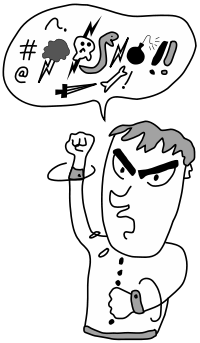
First, I want to make it clear that I don't take offense at such things easily. I'm not the sort of reader who will throw a book aside if one or two swear words slip through, no matter how much I've been enjoying it. If the story and characters are good, it will keep me hooked. However, the more I think about it, the more I believe that swearing and profanities are never needed in literature, no matter how sparse or thick. Since words are well known to be containers of power, why sully your work by choosing negative or crude ones? It may be argued that they add emphasis, but so do thousands of other descriptive words that could be used in their stead.
I hate it when they are spread thickly all through the book, several times per page, with f-bombs gushing forth whenever a character opens his mouth. This is what I've sometimes found from popular best sellers I've picked up on impulse. Not only is it an overload of crassness and vulgarity, but it quickly gets old. Even if a character uses an innocuous word such as 'awesome' or 'amazing' in every sentence, I feel the same. The English language is vast, and this person is seriously limited in the way he uses it. Can't he pull anything else out of the bag?
Yet when they are used less frequently, or only in heated moments by characters under great stress, it still doesn't really work either. I think this is because a swear word from a character who rarely uses them hits me like a smack in the face. By the time I've finished blinking and thinking, 'Whoa, that's strong language for Fred,' my attention has been pulled from the flow of the story. It may be only a fraction of a second, but still needs to be drawn back.
I certainly get it when authors say, 'It's a matter of authentic characterisation and Mr X is a character who would swear like a trooper.' It's a challenge to get the feeling of a character across without the use of swearing, but I've often seen it done. Nobody puts in every 'uh' or 'um' a character would use in reality, so it's the same with bad language. The speech in novels has an illusory quality about it at the best of times. It's very possible to give the impression that someone is desperate, rough, cut-throat or furious without filling their mouths with foul language. Christian or children's fiction, for example, has some of the cleanest mouthed thugs, villains and desperadoes to be found anywhere, but they still work if the description and plot are sound.
During the last election, we were discussing political candidates around the dinner table. Some of our family members were put off a particular fellow because he swears. 'I wouldn't want a gutter-mouthed person as our leader, no matter what his policies are.' Whether or not this attitude is short-sighted, it would seem like an easy thing for a politician to fix if it bothers a substantial group of people. It's probably safer for them not to swear at all, if they want to pick up as many supporters as possible, and not that big a sacrifice. Sure, he has many supporters who don't mind his bad language and use it themselves. But they are unlikely to decide, 'I'm not going to support this candidate because he doesn't swear enough!' That's a ludicrous thought. He's most likely to pick up the maximum number of supporters by keeping his mouth clean.
I believe it's the same with the language used in novels. You hear people say, 'I don't read this author's books because I don't like all the swearing in them.' But it's pretty rare to hear, 'I don't read this author's books because his characters don't swear.' If you can pick up the maximum number of fans by keeping it clean, you'd be crazy not to do it.
Thursday, December 17, 2015
'The Blue Castle' by L.M. Montgomery
Because it was L.M. Montgomery's date of birth a couple of weeks ago, I got nostalgic and pulled a book from shelf I haven't read in years.
Valancy lives a drab life with her overbearing mother and prying aunt. Then a shocking diagnosis from Dr. Trent prompts her to make a fresh start. For the first time, she does and says exactly what she feels. As she expands her limited horizons, Valancy undergoes a transformation, discovering a new world of love and happiness. One of Lucy Maud Montgomery's only novels intended for an adult audience, The Blue Castle is filled with humour and romance.
MY THOUGHTS:
I just noticed that the Goodreads blurb called this one of Montgomery's only novels for an adult audience, and I agree with that. In spite of the recommendation at the start of my paperback, and how quick it is to read, I believe this book may be more special for adult women than girls around 12. I read it when I turned 13, and have just re-read it now. It was far more meaningful the second time. Although I enjoyed it, Valancy's plight didn't pack the same punch at that age. I was able to understand it with my head, but I'm sure it took more life experience under the bridge to grasp it with my heart.
We may think of Valancy's dreadful Stirling clan as the type of funny caricature LMM knew how to write so well, but the funny thing is we recognise people out there like them! Walking, talking, one-sided caricatures, in our families, workplaces and communities. And many of us are taught from a young age to put such a lot of faith in what say about us and how they treat us.
I love the way Valancy approaches her transformation. She knows what to focus on. People's opinions of her were part of what caused her narrow, henpecked life, but she knows better than to attempt what so many of us think is logical, to fix things by changing people's opinions. She makes the more wise move, and decides that as we have so little control over other people's opinions, she'll simply shrug them off and live a life more true to her inner values.
Sometimes we need to ask for what we want. I'd forgotten the way Valancy did that. She didn't dare change her life until she believed she had nothing to lose.
Barney Snaith is full of appeal from our first glimpse of him. He's genuinely content and happy, despite the way people look down their noses at him and invent a horrifying reputation, while Valancy has been miserable her whole, squeaky clean, obedient life. By the end, I was thinking he deserves to be ranked up there with literature's great, romantic heroes. I had to laugh when I read what another reviewer wrote, that his lack of acclaim might be to do with his stodgy name (although in recent years we have Barney Stinson from 'How I Met Mother sitcom, whose name is similar, and has enjoyed a lot of popularity). Anyway, I'm sure Barney Snaith wouldn't even want to be on a list with the likes of Edward Rochester, Fitzwilliam Darcy and Rhett Butler, so he might be glad people didn't put him there.
Monday, December 14, 2015
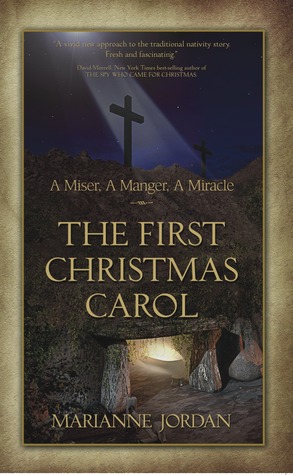
'The First Christmas Carol' by Marianne Jordan

2015 Reading Challenge, Week 50, A Book set during Christmas time.
And this marks the end of my challenge this year. Yahoo!!
Matthew, Mark, Luke, and . . . Dickens?
In an interpretive retelling of this familiar Christmas story the author asks: What if there was room at the inn? The First Christmas Carol combines a timeless work of classic literature with the first documented Christmas story. As darkness cloaks the hills of Bethlehem three angels visit an unscrupulous innkeeper, revealing his past, present, and the miracles yet to come.
Not the story you've read. Still the stories you know.
MY THOUGHTS:
This is a blend of the traditional Christmas story with Charles Dickens' 'A Christmas Carol', which translates to ancient Palestine quite easily.
Ebenezer is the cranky, money-hungry inn-keeper who's doing his utmost to turn the census situation into a personal profit. He'll rip travelers off with exorbitant prices and refuse to give any charity, now matter how needy those who may come before him. Of course, we all know who's going to show up with the donkey, exhausted and with the birth of a baby approaching.
Ebenezer's employee Aaron, this story's Bob Cratchit character, takes pity on the couple and guides them to the stable, at the urging of his lame son, Timothy. And Isaac is Ebenezer's well-meaning nephew, who he's always rejected because the boy's birth caused his sister's death.
While Mary and Joseph are settling down in the stable, Ebenezer is being visited by three angels who have some things to show him. It's a fun Christmas read. I've been reading it with my eleven-year-old son, who isn't familiar with 'A Christmas Carol' yet, as Dickens' language has seemed a bit lofty and wordy so far. It's fun to see him enjoy the story in an easy flowing setting.
4 stars
Thursday, December 10, 2015
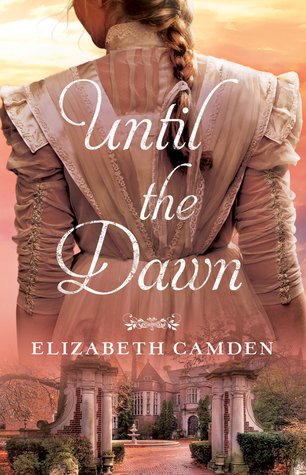
'Until the Dawn' by Elizabeth Camden
A volunteer for the newly established Weather Bureau, Sophie van Riijn needs access to the highest spot in her village to report the most accurate readings. Fascinated by Dierenpark, an abandoned mansion high atop a windswept cliff in the Hudson River Valley, Sophie knows no better option despite a lack of permission from the absent owners.
The first Vandermark to return to the area in sixty years, Quentin intends to put an end to the shadowy rumors about the property that has brought nothing but trouble upon his family. Ready to tear down the mansion, he is furious to discover a local woman has been trespassing on his land.
Instantly at odds, Quentin and Sophie find common ground when she is the only one who can reach his troubled son. There's a light within Sophie that Quentin has never known, and a small spark of the hope that left him years ago begins to grow. But when the secrets of Dierenpark and the Vandermark family history are no longer content to stay in the past, will tragedy triumph or can their tenuous hope prevail?
MY THOUGHTS:
This is the type of plot where the main characters start off at odds, but we can understand both sides. Sophie has been involved in the caretaking of the property, Dierenpark, since she was a child, and is just doing what she's always done. Quentin is aghast at what appears to be the exploitation of his family's misfortune by those who work on the property. We know there are bound to be fireworks, but I loved the deeper aspects which kept being introduced.
There's the historical aspect. The story is set when weather predictions were in their infancy, and Sophie is one of many volunteers across the country who collect data, helping the Weather Bureau to fine-tune their accuracy. It's interesting to see the dedication behind something we now take for granted.
Then there's the psychological aspect, getting us pondering about the nature behind a good mood. Both protagonists have had rough experiences, but Sophie chooses to focus on the benevolence in the world, while Quentin intially hones in on his hard knocks. We've each got to make up our minds whether we choose to regard the world as a friendly or hostile place. That's at the bottom of many lively exchanges between Sophie and Quentin.
That leads to the supernatural aspect. The property, Dierenpark, is regarded as a beautiful, fertile haven because of some sort of blessing taking place in a hidden realm, challenging even Quentin to wonder whether or not something is happening just beyond the reach of his senses. Even the oysters show signs of prosperity here, although I don't fancy swallowing them straight from the shell, as so many of these characters love to do.
The attitudes of all the different characters help make this book. Quentin is all about realism and science, evident in the lesson he keeps trying to pound into his son. Kid characters don't always come across believably or sympathetically in novels, but Pieter is great. Grandpa, Nickolaas, is into all sorts of weird, spiritual theories, with the money to chase them up. Then there's Sophie, with her attitude which strikes Quentin as so naively cheerful. He could have called her a Pollyanna, if those Pollyanna books had been written back then.
My only gripe was a few loose ends which I wish had been tied up, including a fairly intense argument between Sophie and Quentin, which we're left to assume was simply brushed under the carpet or forgotten about. I wished it hadn't happened, at that stage in their understanding. Even the matter of the bee hives wasn't really returned to. I won't say more, for fear of plot spoilers.
Anyway, I had to laugh when Sophie grouchily reflected that all Quentin had going for him was intelligence and a sense of humour, to which she couldn't help adding the obvious good looks and wealth. In the eyes of many ladies, surely that would be enough! It shows just how much a sour, cranky attitude can overshadow, and how easy it was to become a Quentin fan when he started dealing with it.
Thanks to Bethany House and Net Galley for my review copy.
4.5 stars
Monday, December 7, 2015
'The Fruitcake Challenge' by Carrie Fancett Pagels

2015 Reading Challenge, Week 49 - A Book you started but didn't finish
I started it in December last year, but then after Christmas, I set it aside and forgot about it. To get into the spirit of the season, I read it over from the start, and finished it this time around.
When new lumberjack, Tom Jeffries, tells the camp cook, Jo Christy, that he’ll marry her if she can make a fruitcake, “as good as the one my mother makes,” she rises to the occasion. After all, he’s the handsomest, smartest, and strongest axman her camp-boss father has ever had in his camp—and the cockiest. And she intends to bring this lumberjack down a notch or three by refusing his proposal. The fruitcake wars are on!
MY THOUGHTS:
This story is set in a lumberjack camp at which the heroine, Jo's father is the boss. Tom seems to be one of the more educated and refined of the bunch, which gives her the idea that he has tickets on himself. As it nears Christmas, he issues a challenge. He'll propose marriage to any lady on the camp who can make a fruitcake as good as his mother's. Annoyed by the way the others jump to it, Jo determines to make the best fruitcake if it kills her, just so she can have the pleasure of turning him down. That's a cute premise to get anyone in the spirit of the season.
This is a cruisy little holiday read which gets you hungry at times, as tastes and smells are described. There's a bit of humour too, as the guys at the camp banter with each other, including the boss' big, tough sons who tend to be over-protective of their sister.
The book has a countdown quality to it, as time ticks away to the finale which occurs at Christmas. Stories in which everything ends up neatly to the benefit of everyone are probably easiest pulled off at this time of year. It has its share of coincidences and cute, tricky maneuvres.
Now I feel like going to try and bake a fruitcake.
3 stars
Saturday, December 5, 2015
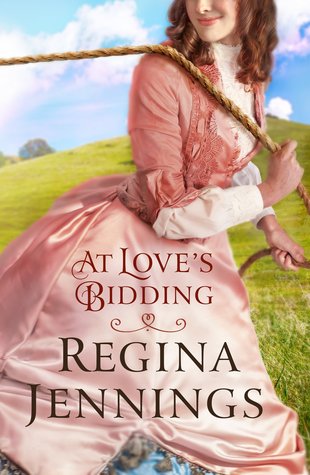
'At Love's Bidding' by Regina Jennings

After helping her grandfather at their Boston auction house, Miranda Wimplegate discovers she's accidentally sold a powerful family's prized portrait to an anonymous bidder. Desperate to appease the furious family, her grandfather tracks it to the Missouri Ozarks and makes an outlandish offer to buy the local auction house if they promise not to sell anything until he arrives.
Upon their arrival, however, they discover their new business doesn't deal in fine antiques, but in livestock. And its manager, ruggedly handsome Wyatt Ballentine, is frustrated to discover his fussy new bosses don't know a thing about the business he's single-handedly kept afloat. Faced with more cattle than they can count--but no mysterious painting--Miranda and Wyatt form an unlikely but charged partnership to try and salvage a bad situation getting worse.
MY THOUGHTS:
It's a comedy of errors. There's one mix-up on the heels of another, and so on. The Wimplegates are a respectable, working class family of auctioneers facing big trouble. They accidentally sold the wrong item, and need to find the missing painting quick smart for the owners. Miranda accompanies her grandfather to follow the slight lead they have, but they don't expect to end up in hillbilly territory, where there are dangerous bandits as well as sweeping beauty.
The romance is thoroughly enjoyable. I'm sure many girls would be willing to travel to remote country towns to find some manly backwoods boy like Wyatt, but unfortunately, that doesn't seem to be the way it works, in real life or novels either. Guys like him only seem to drop into the lives of girls who aren't looking for them. Miranda has a long held family understanding with Cousin Cornelius, the phrenologist who loves examining the bumps and contours on people's skulls.
I appreciate this type of novel, because sometimes it takes a good comedy to highlight the ridiculous aspects of life that we buy into with all seriousness. First, people rely on social standing, job status or other titles to feel good about themselves. Even though it may be more subtle in our era, the pressure still exists. Wyatt's fluctuations in fortune during the course of this novel pack a punch. He's in the perfect position to learn first hand how silly it is to wait for cues from others before you give yourself permission to consider yourself OK.
Grandfather Wimplegate's condition is touching. Nobody calls it by any of its modern terms in this historical novel, but it's clear what ails him. Miranda grapples with the reasonable seeming question of why. If God is supposed to add wisdom with increasing years, what's the deal here? In spite of the poignant aspect, Grandfather's condition adds many of the comic moments to the story.
I'm looking forward to reading more novels in this whimsical, funny series.
Thanks to Bethany House and Net Galley for my review copy.
4.5 stars
Thursday, December 3, 2015
I wasn't bored, but thought I was
My favourite thing to do as a kid was something with no name that I knew of, so I made one up. It was 'acting out books', a sort of cross between reading and role playing. I'd choose a character to identify with, then become that person, walking around with a book in front of my nose, using things around my house and neighbourhood as props. As we were suburbanites, my bike stood in for a horse more times than I can count. Somehow I managed to look out for obstacles as I read.
Among my favourite books to act out were magical adventures written by Enid Blyton. I'd be Bessie climbing the Faraway Tree (aka Dad's big wooden trellis) or Mollie flying over fantastic landscapes in the Wishing Chair. One of Blyton's most common themes seemed to be, 'As you carry on with your ordinary, everyday life, you never know what might happen.' These children were simply exploring their local woods or buying a present for their mother, when voila! They were accidentally sprung into the most surreal other-worlds that seemed to hover just behind a curtain. Same with Lucy, hiding in a wardrobe in the old country house and accidentally discovering Narnia. It was great fun pretending to be these characters, but then I'd be called back to real life.
It made my little Primary School heart a bit grouchy and cynical. I'd grumble, 'I wish something good like that would happen to me, but it never will. My life is just full of boring school and being asked to tidy my room, day after day.' Standing on the end of the supermarket trolley while my parents bought groceries seemed to be the most exciting thing that ever happened to me. I was setting myself up for an attitude of discontentment it was hard to shake off later.
One of the books I read recently, The Solitaire Mystery, brings out my attitude in a unique way. The young hero's father often remarks that ours is a brilliant and amazing planet on which to live, and those who get jaded and look for interest elsewhere are short-sighted. He shakes his head over the people he sees dashing around seeking excitement on some different plane. In his opinion, the angel whisperers, ghost hunters and Martian seekers just don't get it. They miss the point that they are already included in the pinnacle of God's creation, for if anybody ever discovered another place like our earth, we'd all be bowled off our feet to put it mildly.
Imagine the excitement in the media, if scientists discovered a distant world populated by beings like us, who build cities, write books and create art. Even if it just had our vibrant colour and ecology, diverse flora and fauna, we'd be staggered. What if it had our ideal climates for human life, and thousands of different taste and smell experiences to offer? People would soon be talking about ways to get there. It begs a question from him, which he's surprised so many others don't seem to ask. 'If you'd be amazed by that, then why aren't you more impressed by your own surroundings, and what our world has to offer every day?'
Only in retrospect as an adult did I realise that those hours spent on my own were as magical as I could get. I was totally immersed and happy acting out books. In fact, it was probably better pretending to have those adventures than really having them. Far safer with no real risk of danger. I hadn't come across Helen Keller's quote, 'Life is either a daring adventure or nothing,' but my experience proved it quite true, only when I looked back. As I said, I wasn't bored, but thought I was.
Maybe Robert Louis Stevenson summed up the subject in his Happy Thought, 'The world is so full of a number of things, I'm sure we should all be as happy as kings.'
Subscribe to:
Posts (Atom)