Saturday, March 28, 2015

'Divine Applause' by Jeff Anderson

 22223311
How will God make himself known to you?

How do we have a relationship with a God we can’t see? There must be more to the Christian life than silence, and more to God than a vacant stare.
 
Divine Applause weaves together biblical insights and personal stories that illustrate the surprising ways God connects with us. Let Jeff Anderson show you how to use your spiritual senses to experience God.
·         Sense God’s personal attention in unmistakable ways.
·         Cultivate a constant awareness of God’s presence.
·         Enjoy the reward of secrets between you and God.
·         Take risks to break out of a status-quo life and connect more directly with God.
·         Discover the intensity of God’s interest in you.

You don’t have to settle for a distant walk with God. He wants you to know that He notices—and that He delights in you.

 
MY THOUGHTS:

This book draws us in with a question we've surely all pondered. How do you form a father/child relationship with somebody who we can't detect with our five senses? The title appealed to me because we all hunger for feedback. I know many people hope to hear, 'Well done, good and faithful servant' in their next life, but what if there are ways we can detect divine applause in the lives we're living? I'm always interested to read about such things. As feedback has proven to be a powerful motivation tool for humans, it's probably not unreasonable to think God has given us means to be attuned to his.

I like the way Jeff Anderson explains that we must learn to see things differently. He has a hearing difficultly, and had to learn different approaches in receiving information at school, which didn't involve his ears. In the same way, we need to stop relying on our physical senses when it comes to God, and learn other techniques when it comes to hearing from him. These involve attuning our spiritual senses, and is what this book is all about. Thinking of it as learning a foreign language makes the whole concept a bit easier.

As a father of young children, Anderson uses frequent anecdotes of life with his family to lead into general principles about our lives with God. At times, the book seemed to drift into other subjects, such as giving and fasting, because these were subjects around which he felt he experienced some of his greatest revelations. For others, they will be different.

One of my favourite aspects of the book is the emphasis that our original purpose was not to evangelise the world but to simply share God's delight. When you think about it, people who successfully do the second may be best at doing the first anyway. Overall, we're encouraged to sharpen our spiritual senses by expecting good things from God.

Thanks to WaterBrook Multnomah and Blogging for Books for my review copy.

3.5 stars


Friday, March 27, 2015

'A Field Guide to Happiness' by Linda Leaming

  20701949
In the West, we have everything we could possibly need or want—except for peace of mind.

So writes Linda Leaming, a harried American who traveled from Nashville, Tennessee, to the rugged Himalayan nation of Bhutan—sometimes called the happiest place on Earth—to teach English and unlearn her politicized and polarized, energetic and impatient way of life.

After losing her luggage immediately upon arrival, Leaming realized that she also had emotional baggage—a tendency toward inaction, a touch of self-absorption, and a hundred other trite, stupid, embarrassing, and inconsequential things—that needed to get lost as well.


MY THOUGHTS:
I enjoy reading happiness literature, and this one has some special features coming from the author's direct experience. She lives in Bhutan most of the year, but returns to America often enough to notice sharp contrasts in general styles of living and attitudes. Maybe these cognitive cultural differences help explain why one group has a high happiness ranking and the other is much lower. It was a very convincing read.

Leaming explains how living in an ancient culture has shaped her to think differently from the way she was programmed growing up. In Bhutan, just getting food and water and keeping warm and dry is more challenging than in the western world, and a bigger source of satisfaction when she pulls it off. As her husband is a native of Bhutan, she has a lot of fun trying to view America through his fresh viewpoint. There are 22 chapters, each focusing on a different approach to happiness. I'll mention some which impacted me most.

1) Western thinkers have rigid expectations. Some of mine look a bit like this. 'It takes this long to get from A to B,' or 'My special brand of tea is always available from this shop,' or 'I'll just take ten minutes to phone Centrelink.' The Bhutanese know better than to think each day will run like clockwork. They consider hitches to be part of a normal day, which is probably closer to the way the world runs. (I realised how deep my expectation tendency runs soon after reading that chapter, when I caught myself praying, 'Please let today go smoothly' and realised it's actually one of my most frequent prayers.)

2) Smiling in the face of annoyance really is powerful. I've sometimes thought this advice comes across as trite and simplistic. This book has been most successful at convincing me that the opposite is true. We're taught to stick firm to our points of view and not allow ourselves to be walked over, but on many occasions, smiling and shrugging is simply the easiest way to get along. 'If you can embrace the absurdity that is all around us, you'll be so much happier and prettier,' she says.

3) Things generally always work out fine one way or another. Some cultures call it karma while others prefer to consider it God's orchestration. I've often made the mistake of behaving as if this isn't true, and that everything depends on me, getting myself anxious and worked up into a state.

4) We westerners try to cram far too much into our days, causing excessive pressure. Leaming says that in Bhutan, she considers it a busy week if she has three things to do, whereas in America, she usually has three things to do between breakfast and lunch. Our culture may have us believe that the person who crams most productivity into a day is the person who has lived the most. Yet what if the opposite is true? These are the sort of people who whiz through life so fast, they miss all sorts of great, unobtrusive wonders. Others who live at a slower pace, doing one thing at a time, are the ones who notice the wonderful details, and end up living the fuller life.

Thanks to NetGalley and Hay House for my review copy   

5 stars

Monday, March 23, 2015

'The Eyes of the Heart' by Embassie Susberry

24004326

2015 Reading Challenge, Week 12 - A Book Written by someone under 30.
I discovered this book because I follow the author's review blog. I had no idea what to expect, but I was pretty confident there would be romance, as she gives the books she reads a romance rating. I enjoyed this story, and admire the way in which a writer in her twenties is able to bring a historical period from long before her birth to life. 

Second-Place Winner of the 2011 Women of Faith Writing Contest!
Set in a small Mississippi town during the heart of the Civil Rights era, The Eyes of the Heart is a story about forgiveness, love, fear and hate. It is also a story about Edith Holden, a young woman living in the deep south who finds herself unwillingly confronted with racism, social injustice and her love for a man she is unsure she will ever have.


MY THOUGHTS:

This is a story about two African-American sisters set in the Civil Rights period of the twentieth century. It follows the fortunes of Eddy (Edith) and her sister, Sylvia, from their childhoods to adulthood. It's set in the deep south, Mississippi.

The narrator, Eddy, is in love with Robert, a handsome man with a heart for social justice. She faces the heartache of feeling that she's not his first choice, and the ever-looming threat of danger his path involves. Her sister, Sylvia's story was even more compelling for me, like a modern 'Romeo and Juliet.' She's in love with Nathan, who returns her feelings, but a future together seems utterly out of the question, for he is the son of the wealthy, white land-owner whose mansion their mother cleans.

This novel brings several things to light for me.
1) Even years after the American Civil War, these poor folk had to put up with appalling treatment, keeping them on edge at the best of times, and fearing for their lives at the worst.
2) It's amazing that young people like the Holden sisters were able to grow up with a sense of dignity and self-respect, when being treated with contempt was all they'd ever known. I found it sad that the reflex of ducking for cover was natural from the time they were tiny.

Their story reminded me of reminiscences told by my mother, about what she and her sister used to get up to. They were similar ages in the same decade, and also struggled to make ends meet, but my mother and aunt had it way easier in comparison to Eddy and Sylvia, as they were white girls living in Australia. These similarities just reinforced that no young women should have had to live under the shadow of this novel's heroines.

In spite of the weighty theme, this is an easy story to read, with plenty of lighter moments. At one stage, I thought their mother, Dottie, showed remarkable patience. The girls were supposed to be helping her clean the mansion, but seemed to have a lot of time for reading, chess, play-acting and discussion with Nathan. However, I suppose that can be explained by Dottie's own high regard for the young master of the property, who was unlike any of his relatives.

Having a story told in first person from one character always has its limitations, but Eddy is an astute and wise storyteller who notices lots. I think her voice does restrict all that we can find out about Sylvia and Nathan's romance (as Eddy, of course, wouldn't have been present at every moment of their courtship) but not so much that we don't get the picture and find ourselves emotionally invested.

On the whole, this book brings a significant phase of history to life, showing what previous generations went through so current ones are able to benefit, which is what I like in a story.

4.5 stars

Saturday, March 21, 2015

'Slowing Time' by Barbara Mahany

21992173

Invites readers to discern the divine in the ordinary moments of everyday and live an examined life where everything is a form of prayer.

MY THOUGHTS:

This book is written like an almanac, giving us plenty to ponder month by month. There are lists of blessings, notifications of ancient religious festivals with suggestions of how to observe them, quotes, recipes, and personal reflections. They are designed with the intention to draw our attention to great, but unobtrusive blessings which we may otherwise overlook.

It reminds me a bit of '1000 Gifts' by Ann Voskamp. It's not always the easiest style of writing to get my head around, being something like a cross between poetry and prose, but is well worth making the effort. I think I find the style a bit difficult to get into at times, because as a fiction writer, I've been taught that our aim is to make any literary techniques totally unobtrusive, so the story flows. This style, however, seems to be written to draw attention to literary devices so we can't help but look at them. It's beautiful, and definitely suits this genre, but is just not what I'm used to.  

I also feel I need to give a caution to readers like myself, from the Southern Hemisphere, before picking up this book. The almanac quality doesn't work for us, as the seasons are back to front. Our summer falls between December and February, and winter between June and August. Although we can always dip into different places to suit our current seasons, this is still a bit of an issue as Barbara Mahany has written it carefully so that readers ought to be shivering at the start of the year and sweltering in the middle.

Thanks to Abingdon Press and NetGalley for my review copy.

3 stars

Wednesday, March 18, 2015

Let's Bloom where we're Planted

I live in Australia, which as many know, tends to be an obscure country when it comes to the media. Lots of celebrities in the arts have moved overseas to try to 'make it' in places where they believe more is happening. When you look at Australia's situation at the bottom of the globe, it's easy to understand why this may be so. It takes a glance at the whole picture to show how far removed from the rest of the world we are. (Apart from our Oceanic neighbours, such as New Zealand and Papua New Guinea, who share our plight.) It's all very well to say we're surrounded by ocean on either side, but words alone don't paint an adequate picture of just how much Pacific Ocean there is to our east, and Indian Ocean to our west.

Okay, having established that, I remember an interesting message my pastor once gave, about how our position in the world is basically an arbitrary choice made by the world's map makers throughout history. Our planet is out in space, so it could have just as easily been flipped upside down in our Atlas, which would put Australia high in the north. It wasn't done that way though. We are far south in everyone's minds, which has connotations of being 'down there'. We have deserts, kangaroos and blokes slouching around in tank tops and thongs. That's us, in the world's eyes.

So having established that, my state, South Australia, is probably one of the most obscure states in an obscure country. This hit me hard once when I was part of a group of Aussie Christian authors who were talking live online to several American readers. We asked where they would like to go if they were able to visit Australia. The answers, although not surprising, were overwhelming.

'I'd like to see the beautiful eastern coast... Sydney and the Harbour Bridge... the Gold Coast with all the theme parks... it would have to be the Queensland tropics with the Great Barrier Reef... Ayers Rock. How beautiful... I've heard that Tasmania is lovely, with all its produce.' South Australia was mentioned just once, and that was by a lady who had relatives living in Adelaide, who had told her how beautiful it is.


Once I acknowledged that I'm living in the most overlooked state of the most overlooked country, other things began to slot into place. I remember asking my dad, 'Why didn't your father ever become more famous?' He had such a successful boxing career that he'd been asked to retire, to let younger men have a fair go. Yet if you search for my grandfather on the internet, hardly anything comes up. 'Why isn't Red Mitchell's name as widely recognised as Les Darcy's,' I asked.

I took Dad's answer on board without a thought at the time.

'He was only South Australian.' That said it all.


I finally got it when people started suggesting that I might want to change the settings in my books. 'They won't get anywhere if you keep using South Australia. You should make it Sydney. At least the rest of the world has heard of it.'

I don't know about that though. It might not be wise because I'm a South Aussie girl all through. The blood of several generations of others flows through my veins. Some were Germans who wanted to flee religious persecution in their own country, and others were Brits who wanted a brand new start away from the mid-nineteenth century poverty they'd struggled with. They all became South Australians. Although I'm not one of those people who couldn't possibly live anywhere else (such as Emily Bronte and her Yorkshire moors or Heidi with her Swiss Alps), I'm so familiar with my home that the South Aussie authenticity can't help slipping accidentally into my stories. It probably wouldn't work if I tried to adopt another setting.

I use words such as 'Fritz' and 'Fruchocs' assuming that everybody will know what I'm eating. I use long R sounds, pronouncing 'castle' as 'carsel' instead of 'cassel', and 'graph' as 'grarf' instead of 'graf.' I know all about Beehive Corner, the Silver Balls of the Rundle Mall, and the State Bank Christmas pageant without having to research these things. I've always thought of using my own environment for my novels as putting my stamping ground on people's radars. My South Aussie settings have been my trademark, not because I'm doggedly stubborn, but because I'm not sure I could easily change if I tried.

I'm not really sure I'd even want to sacrifice my setting, as it really is a beautiful corner of the world. South Australia has four very distinct seasons. If you were to see a photo of my Adelaide Hills, you'd be able to tell whether it was summer, winter, autumn or spring. When we speak about going to the beach, we're often talking about safe, warm gulf waters which have lost the Southern Ocean chill. It's been a pretty good home for me. At the moment, even though it is the most obscure place in the most obscure place, I tend to think I'll probably keep using it for the time being at least. I'll finish up with this photo, taken in Adelaide last week, of me with the statue of Catherine Helen Spence, a very illustrious South Australian lady who became an author, journalist, politician and well-known suffragist, all from the obscure spot of South Australia. She bloomed where she was planted, and so can we.

Monday, March 16, 2015

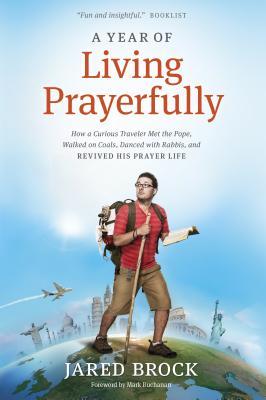
'A Year of Living Prayerfully' by Jared Brock

22798877 

2015 Reading Challenge, Week 11 - A Memoir

Memoirs differ from autobiographies in that they usually cover just a section of the author's life, rather than a broad account from birth onwards. They are often written around a particular theme. This one is a great read for those of us who would travel more if we were in the position. Reading helps us to be good armchair travelers.  
 
  
Although up to 90% of us pray, very few of us feel like we've mastered prayer. A Year of Living Prayerfully is a fascinating, humorous, globe-trotting exploration of prayer that will help you grow your own prayer life.

While filming a documentary about sex trafficking, Jared and Michelle Brock felt a deep need for prayer in their personal lives. In an effort to learn more about prayer, the couple traveled the globe, exploring the great Judeo-Christian prayer traditions: in mountains and monasteries, in Christian communities and cathedrals, standing up and lying down, every hour and around the clock.

Jared's witty reflections on his fast-paced journey will both entertain and inspire you to think about your own prayer journey.

Join Jared on a rollicking modern-day prayer pilgrimage... you'll never pray the same again.


MY THOUGHTS:
Jared Brock and his wife, Michelle, wanted to be more effective in their prayer lives. He claims to have been more of a dwarf sapling than the giant spiritual oak he wanted to be. What follows is a fascinating pilgrimage around the world to locations of several prayer greats, some living and some dead. If there were any secrets to a powerful prayer lifestyle along the way, Jared was determined to find them. What he offers us is not another 'how to' book on prayer techniques, but a candid series of interviews and research in which he finds out what has worked best for others.

I enjoyed this book, especially because it's the sort of trip I'd love to take myself. Jared draws us into his own experiences in such a way that we might have tagged along on his travels. It's easy to trust him to be the ideal guide, because of his obvious earnestness to cut through any waffle and commercialism to the gems beneath.

Some of the places he visited I wouldn't be able to get to anyway, such as the Greek Orthodox community of Mount Athos, where no females are allowed. Others I might not want to explore, such as North Korea, Westboro Baptist Church and some of the more militant parts of Israel. In fact, Jared Brock was seriously worried for his own safety at times. Firewalking at a Tony Robbins convention was the least of his danger.

Some of his highlights include a face-to-face meeting with Pope Francis at the Vatican, walking the famous Camino de Santiago in Spain, which incorporates the Apostle James' resting place, and discovering the site of Brother Lawrence's monastic kitchen in France. He also went to Dr David Yonggi Cho's enormous Yoido Full Gospel Church in Seoul. All this is just scratching the surface.

He ended up with several eye-opening and thought-provoking takeaways from this smorgasbord of destinations. Some are in his frequent, amusing footnotes. The book is interspersed with quotes from well-known people. On a more prosaic note, I was shaking my head over the number of significant landmarks which turned to be unexpectedly closed when Jared arrived, or access was denied for whatever reason. The fact that I'm not the only person this sort of thing repeatedly happens to is a revelation in itself.

With so many vastly different philosophies and habits to examine, he was looking for recurring themes or major breakthroughs. Jared was no unbiased reporter. He's always ready to give his personal opinions in his wrap-ups. He lets us know when he's amazed or aghast, and most times, his feelings coincided with mine.

There are so many saints and prayer greats to quote from, but I'll finish with a quote from Jared Brock himself to sum up this book. 'A lot of people, myself included, are guilty of treating God like a self-help guru. Prayer is our mantra, a way to bolster our confidence and psych ourselves up for whatever challenges lie ahead. To some extent it works. But prayer isn't a mind game. It's not a pseudoscientific technique for achieving success in life. It's a deeply intimate form of communication with the lover of our souls. Prayer isn't about self-improvement. We don't gain confidence. We enter God's. We don't become a better person. God conforms us to the image of His Son. We don't attain perfection. We're covered by the spotless Lamb.'

I'm so glad that, as he made the effort to make this pilgrimage, he didn't keep the experiences and insights to himself.

Thanks to NetGalley and Tyndale House for my review copy.

5 stars

Friday, March 13, 2015

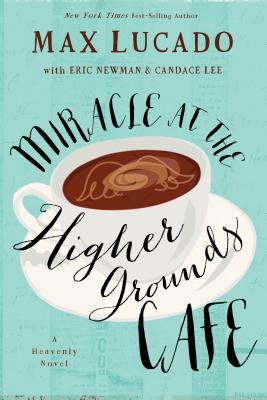
'Miracle at the Higher Grounds Cafe' by Max Lucado

22503252
What if you could ask God anything? What would you ask? And how would he answer?

Chelsea Chambers is on her own. After a public split from her NFL superstar husband, Chelsea takes a bold step out of the limelight and behind the counter of the Higher Grounds Cafe, an old-fashioned coffee shop in dire need of reinvention. But when her courage, expert planning, and out-of-this-world cupcakes fail to pay the bills, this newly single mom finds herself desperate for help. Better yet, a miracle.

Then a curious stranger lands at Chelsea's door, and with him, an even more curious string of events. Soon, customers are flocking to the Higher Grounds Cafe, and not just for the cupcakes and cappuccino. They've come for the internet connection to the divine. Now the cafe has become the go-to place for people in search of answers to life's biggest questions.


MY THOUGHTS:

Chelsea Chambers has many hassles. She's inherited her mother's cafe, which had been a family business for generations, but discovered an $86000 debt. This comes on the heels of separating from her husband, who has cheated on her, and trying to deal with the confusion and grief of their two young children. But business takes a sudden boom with the arrival of the 'God Blog' on her premises; a direct internet line to God, who offers to answer the heartfelt prayers of any customers. Chelsea's staff are more than meet the eye too.

The story kept reminding me of movies. It had elements of 'Bruce Almighty' and 'Evan Almighty' but overall, I found it to be more like one of those Hallmark inspired movies, maybe a bit too kitsch and cute. The characters seemed to fall into stereotypes. Frazzled, hard-done-by, beautiful young mother, troubled prepubescent son, adorable daughter, and estranged, sports star husband who has seen the error of his ways. Then there is Manny, the quirky, lovable employee, who is really an angel, and Dennis Darling, the smarmy business man 'friend' with his own agenda.

I was surprised not to find many of Max Lucado's heart-stirring passages which he's so well-known for in his non-fiction. I started this book thinking that fiction may give him another great outlet to do what he does best, but there seems to be much less. I have to say that even though I love his non-fiction and even his kids' books, I'm not a great fan of his adult fiction based on this book.

However, I think his aim of highlighting hidden, spiritual realities was achieved. As we're told, 'prayer moves God, and God moves angels.' There is more going on in the hidden realm around us than meets the eye. Prayers are heard and responded to in their perfect time. They are never wasted or useless. And we never know what may result in the lives of ourselves and our loved ones when we dare to persist in praying for them.

Thanks to NetGalley and Thomas Nelson for my review copy.

2.5 stars