Thursday, February 20, 2020

'Bleak House' by Charles Dickens


Bleak House opens in the twilight of foggy London, where fog grips the city most densely in the Court of Chancery. The obscure case of Jarndyce and Jarndyce, in which an inheritance is gradually devoured by legal costs, the romance of Esther Summerson and the secrets of her origin, the sleuthing of Detective Inspector Bucket and the fate of Jo the crossing-sweeper, these are some of the lives Dickens invokes to portray London society, rich and poor, as no other novelist has done. Bleak House, in its atmosphere, symbolism and magnificent bleak comedy, is often regarded as the best of Dickens. A 'great Victorian novel', it is so inventive in its competing plots and styles that it eludes interpretation.

MY THOUGHTS: 
Here is my choice for a Classic with a Place Name in the Title in the 2020 Back to the Classics Challenge. It's always a pleasure to return to Dickens' London, where fog and mud reign supreme and we know that whenever any character bobs to the surface we're bound to see them again later, possibly under surprising circumstances. He pulls so many divergent threads together, which puts me in awe of his genius when I consider that his long novels were originally published as magazine serials. It means he obviously had it all planned in his head before Issue 1 hit the newsstands.

Dickens' major gripe in this novel is the frustration of court cases that drag on forever, driving some people to put their lives on hold while waiting for a verdict that may have the potential to change everything. The problem is, decisions are so prolonged that successive generations inherit all the angst. It's these non-criminal, inheritance sort of spats that absorb costs to help lawyers feather their nests, but merely break the hearts of the clients concerned and send them bankrupt.

The long-running court case in this story is Jarndyce versus Jarndyce, and the current Mr Jarndyce chooses to stand aloof from all the uncertainty and take three needy young people to live beneath his roof. Richard Carstone and Ada Clare are distant cousins whose interests are also caught up in the court case, and Esther Summerson is a young orphan he invites to keep house for them all. Esther narrates great swathes of the story. Dickens has given us many, many super-sweet, good girls, but she is the only one we are ever allowed into the actual head space of. And she's such a great point of view character!

Esther was brought up by a stern, unloving aunt who taught her that she was born as a disgrace. When Mr Jarndyce becomes her kind benefactor, she's stoked. All of Esther's comparisons are in a positive direction, since she's trained herself to choose gratitude over grumbling every time, and never grows sour or jealous of the bounty of others. She's a perfect example of how mood management should work, and succeeds in setting contentment as her default. The irony is that Esther's existence has been so hush-hushed, since she's the most admirable person in the whole book (with the exception perhaps of the guy she eventually marries.)

An intriguing underlying mystery concerns the identities of Esther's parents. It's easy for the reader to figure both out early on, and then the fun comes from watching it dawn on others as the story unfolds.

There's a very cool cast of characters across the board. It includes freeloaders like old Mr Turveydrop and the parasitic Harold Skimpole, who is surely one of the most despicable leeches in literature. It appears Dickens based his character on a fellow Victorian author, Leigh Hunt, and everyone who knew them both instantly recognised Hunt in Skimpole. The two writers were sort of friendly before Dickens wrote Bleak House, but definitely not afterwards!

There are dysfunctional families like the Jellybys and Smallweeds, and those who have chosen numbness over feeling. The scenes in which Lady Dedlock and her lawyer Mr Tulkinghorn have conversations with huge stakes, yet both apparently try to outdo each other for nonchalance and languidness are very well done. There is so much intense under-reaction from both, the air is charged with it.

This story hasn't knocked Our Mutual Friend and Great Expectations from the top of my Dickens favourites list. I think there's a little too much of poor Richard's plight and Skimpole's dodgy shenanigans for that. But it's well worth a read, especially for the success in which Dickens pulled off a first person female point of view in Esther, who is definitely one of my favourite characters.

🌟🌟🌟🌟

Wednesday, February 12, 2020

Guys who were refused, then later accepted!


Leading up to this Valentine's Day, I noticed an unusual trend in classic novels. It often occurs that men who propose to the women they love are rejected at first, and then accepted by the same lady down the track. What are we to make of this? I don't think it's meant to encourage guys not to take no for an answer, nor is it to suggest that girls don't know their own minds. The best spin I can think of is that there's always room for hope. True love is shown to be an unpredictable phenomenon, because feelings may be in a state of flux at crucial moments. Fellows, if your romantic dream has been crushed, you're in great company. Take heart from these rejected chaps and hang in there.

Warning: Of course this list contains plot spoilers, so feel free to skip over any you don't wish to know. 

1) Fitzwilliam Darcy
What a superb wake-up call for this haughty individual! He tussles with the wisdom of proposing to a girl whose connections are far beneath his, and whose immediate family members are major embarrassments on legs, as far as he's concerned. Then when he finally proposes to Elizabeth Bennett anyway, he tells her his misgivings! And she tells him that he's a proud, pompous prat she'd never consider marrying in a fit! Definitely not the reaction he expected. Luckily for him, she's open-minded enough to regret her own prejudice later, and allow his better nature to work on her. 

2) Frederick Wentworth
This poor young sailor proposes to the girl he loves, and who he knows loves him back. But alas, Anne Elliot lets her trusted mentor talk her out of accepting. All he can do is skulk off to sea heartbroken, but little does he know, she's been kicking herself for her foolishness for a decade. He's let a lot of bitterness and resentment strangle his romantic feelings throughout those years, but are his barriers up to the challenge of seeing her again? This is one of my favourite, 'maybe it's not too late,' stories.

3) Gilbert Blythe
He's loved Anne Shirley from the time he was a young boy, and when she rejects his marriage proposal and suggests they just remain friends, he knows the compromise will never work for him. But in this case, it turns out the heroine truly doesn't know her own mind. It seems to be a common failing with Lucy Maud Montgomery's heroines. Gilbert is wise not to latch onto any other admirer on the rebound, and I'd suggest that clueless Anne was luckier still that he didn't.

You may enjoy my Battle of the Book Boyfriends, where I pitted Darcy and Gilbert head to head. 

4) Konstantin Levin
What a shemozzle! This shy young farmer draws on every ounce of courage he has to propose to the girl he adores, but his timing is most unfortunate. Kitty Scherbatsky is deeply infatuated with another man, Alexei Vronsky, and tells Levin she can never possibly marry him. Eventually she wakes up to herself, especially when Vronsky jilts her for Anna Karenina. Kitty realises that Levin is indeed the man she truly loves. But our hero has retreated back to his country property with his tail between his legs, resolved never to stick his neck out again. The way in which she prevails on him to have another try makes one of my favourite romances. (See my review.)

5) Edward Beverley
He's the main character of one of my favourite YA classics, Children of the New Forest. Edward proposes to Patience Heatherstone, the daughter of his employer, and she refuses, thinking her father would hate to her marry below their station. However, Superintendent Heatherstone has sussed out his protege's noble birth, and helped orchestrate that proposal. Ooops, it backfires all round, especially for Patience, when Edward rushes off into the army to nurse his broken heart. She has to live up to her name for years, while he decides if he'll ever return to have another crack. (I've reviewed it here.)

6) Fred Vincy
Oh, his girlfriend Mary Garth loves him dearly, but she's far too sensible to accept his first proposal. Fred is an unreliable spendthrift with no desire to buckle down and work, so she's compelled to give him an ultimatum. 'This'll only happen if you shape up.' Fred is so set in his ways, it's tantamount to a refusal. The way in which he makes it happen, aided by Mr Featherstone, who's a sort of rival for Mary's affection, is a touching read. (See my review of Middlemarch.)

7) Gabriel Oak
This humble young shepherd loves his neighbour Bathsheba Everdene very much, but she values her independence and likes him too little to accept his proposal. It takes a disastrous marriage to the feckless Captain Troy, and unfortunate entanglement with intense Farmer Boldwood for her to reconsider her opinion of Gabriel. Only then does Bathsheba realise the value of steadiness and loyalty. It's a great example of hanging in there, and my favourite story by Thomas Hardy.

8) Robert Martin
Perhaps his proposal to Harriet Smith would have been accepted right off, if not for the influence of her friend, Emma Woodhouse. Snobby Emma has decided that no pal of hers will ever settle for a mere farmer, and Harriet is like putty in her hands. Only after a disastrous set-up and another dead-end crush does Harriet realise that her first choice was actually the best. At least the awkward mistakes help her to think for herself. (See my review of Emma.)

9) John Harmon
He's a bit sneaky, because he knows his father made a condition in his will for him to marry Bella Wilfer, and he wants to test her true feelings for him first. So he proposes to her in the guise of a poor man, and Bella instantly knocks him back. She is too familiar with the effects of privation and self-denial, thanks very much. It falls on John to figure out a way to work on her better nature without revealing his true wealth. I had my reservations about this plot thread, but loved the book. (See my review of Our Mutual Friend.)

10) Jem Wilson
Whoa, this is one instant when the heroine refuses a heartfelt proposal, then regrets it the second he steps out the door. Mary Barton faces the stark truth that of course she's in love with Jem, and not flirty Harry the mill owner's son she's been encouraging. Without wanting to admit her blooper outright, she tries more subtle methods to make him try again, but Jem has taken her statement, 'I'll never marry you,' as absolute truth. Shocking circumstances mean that Mary has to prove in a big, big way that she's in love with Jem. (See my review of Mary Barton.)

These are my ten favourite examples, but the list is surely not exhaustive. Are any of your favourites among them, and as always, can you suggest any others? 

Friday, February 7, 2020

'Hannah Coulter' by Wendell Berry


Hannah Coulter is Wendell Berry's seventh novel and his first to employ the voice of a woman character in its telling. Hannah, the now-elderly narrator, recounts the love she has for the land and for her community. She remembers each of her two husbands, and all places and community connections threatened by twentieth-century technologies. At risk is the whole culture of family farming, hope redeemed when her wayward and once lost grandson, Virgil, returns to his rural home place to work the farm.

MY THOUGHTS:
I'd heard plenty of praise about Wendell Berry's pastoral novels set in the quiet American town of Port William, but it's hard to find copies in Australia. So when I came across a kindle version of Hannah Coulter on Amazon, I grabbed it.

I found it lived up to my expectations taken on board from other reviewers. It's a simple story told in flashbacks by an old lady who could easily represent any one of a million senior citizens. Not a lot happens in the way of storyline, yet there are pages of quotes any reader can take to heart from the lessons Hannah learns in the school of hard knocks, and just doing her duty.

The husband of her youth, Virgil Feltner, goes missing in action during World War 2, a matter of months before his baby is born. Hannah deals with her grief, then finds new love with another man. Nathan Coulter, a returned young veteran longing for home, is delighted to begin afresh with Hannah and her little girl, Margaret. Two boys are added to the family unit, as Hannah and Nathan work hard, watch their family grow, then try to support them through their own hard knocks, or deal with their unexpected choices. That's really all there is to it, but it's a dignified and strangely mystical read. 

The story presents many cameos of people who were probably similar to our own forebears, living the best they could before passing from this earth. There's Hannah's grandma, a hardworking lady who shaped her granddaughter's life without knowing how it would turn out. Hannah reflects about her early years in retrospect, 'It was a good enough life. After it was over I realised that it was happier than I had known.' It's possible for the perceptive reader to make similar connections about our own lives, while we're still living them.

Male authors who write in first person from female points of view aren't common, and Berry nails Hannah's womanly character. For example, there's this reflection when her daughter, Margaret, is born. 'To know that I was known by a new living being who had not existed until she was made in my body, by my desire, and brought forth in the world by my pain and strength. That changed me.'

It's a book to honour normal, everyday, non-celebrity people. In fact, I suspect celebrities and big-names might even miss the quiet rhythms and simple pleasures in lives such as Hannah's, and ours if we take notice. Because, 'members of Port William aren't trying to get someplace. They think they are someplace.'

Berry's satisfaction in a farming lifestyle is evident, since he's known to be a man of the land and conservationist himself. But my one gripe with the story is that Nathan and Hannah are so stuck in their ways, they're skirting close to regarding their sons as failures, just because they opt not to follow their farming footsteps. Yet Matthew (or Mattie) studies IT and becomes 'CEO of an info processing company whose name is made of letters that don't spell anything' and Caleb chooses to teach agriculture and farming rather than inherit the farm and practice it. I can understand the Coulters' sense of sadness, since they couldn't relate to the tangents their boys' lives took, but there's not much of a sense they were proud of them anyway. Hey, these two were no slouches! A big CEO and a Uni lecturer! I'd be thrilled to settle for that, if these two were my sons.

As I say, I get where Nathan and Hannah were coming from, but if Mattie and Caleb were to call them backwards, narrow-minded old hicks with no idea how the world ticks, well I'd understand where they were coming from too.

Overall, I'm glad I read it, to get the reinforcement that small, forgotten actions are often hugely heroic and big-hearted. Such as Hannah deciding to forgive the stepmother who made her life miserable, and Nathan taking Virgil's daughter Margaret to his heart as his very own, and caring for her so deeply.

By the end, if you're like me you'll have jotted down a patchwork quilt of quotes Hannah has figured out, which could surely just as easily be applied to the rest of us.

'I began to trust the world again, not to give me what I wanted, for I saw that it could not be trusted to do that, but to give unforeseen goods and pleasures that I'd not thought to want.'

Here's one for homebodies. 'The house, its furnishings and surroundings, took on the appearance given it by my ways of work and my liking, and as our work shaped our workplaces, our workplaces shaped our days.' She's talking here about the satisfaction of keeping house, working in the garden and raising chickens.

I'll finish off with this tribute to her neighbours, Danny and Lyda Branch, a salt-of-the-earth type of couple with a big family, always there for the Coulters too. 'They plan and provide as much as they need and take little thought for the morrow. They aren't going places, they aren't getting ready to become anything but what they are, so their lives are not fretful and hankering.' I so want to adopt that as my philosophy, because often whenever I'm stressed and miserable, I can trace it back to some sort of ambition or dream of being different to what I am.

Overall, not an exciting read, but full of nuggets of wisdom for those who can stay awake long enough to look.

🌟🌟🌟🌟

Friday, January 31, 2020

'The Harp in the South Novels' by Ruth Park


Since it was first published in 1948, this compassionate novel has become a favourite with generations of Australian readers.

The Harp in the South is a nostalgic and moving portrait of the eventful family life of the Darcys of Number Twelve-and-a-Half Plymouth Street in Surry Hills, a Sydney slum. There grow the bitter-sweet first and last loves of Roie Darcy, who becomes a woman too quickly amid the brothels and the razor gangs, the tenements and the sly-grog shops.


Ruth Park is a classic storyteller. In this novel she brings to life a community where, despite the odds, life is always exuberant and full of promise.

MY THOUGHTS:
I can't go past these great novels for the Classic about a Family category of this year's Back to the Classics Challenge. I'm talking specifically about Harp in the South and Poor Man's Orange, which were on my English syllabus at High School. They rescued the subject from being a grind and helped me get full marks for my Year 12 exam. Now whenever anybody mentions Australian classics, they spring instantly to mind. It was well and truly time for a summer re-read.

To me, this is the perfect Aussie version of A Tree Grows in Brooklyn. The Darcy family are among the battlers of Irish descent who live in Sydney's Surry Hills in the 1940's. There is no way of eliminating rats, mould and bed bugs without blowing up the whole suburb, and any attempt is like trying to stop a tidal wave with a band-aid. Yet Ruth Park manages to squeeze every bit of beauty possible out of such a sordid setting.

The dad, Hughie, drinks to drown the suspicion that his life is a futile joke. His wife, Mumma, whose Christian name has long been swept aside, manages to keep her loving heart abreast of her rough old world. There was once a little son named Thady, who disappeared without a trace from the front yard when he was six. The two daughters each try in their own way to reconcile their love of romance and truth with their grim environment, and end up realising that to a large extent, they themselves have to be the sensitivity and goodness they seek.

Roie (short for Rowena) is the eldest, and falls for Tommy Mendel, an exotic looking boy with a lame foot and huge chip on his shoulder, and also Charlie Rothe, a tranquil young man who has taught himself to magnify the good that can be found in life. We're told Roie's heart is full of sweet, timid yearning for security, protection and love.

Dolour, the youngest, finds it easy to latch onto uplifting trivia, and has ambitions to excel at school and study her way to a better life. Circumstances, including some serious eye problems, seem to conspire to keep her pinned in her place. In theory those who work hard can surely create the better life they hope for, but Dolour's story helps us question the legitimate truth of that. She is a strong, upright character who really grapples with the fact that a person's background may always stand in the way of their best intentions.

We readers grow to love the Darcy family, and many others who feature in their lives, because it's obvious that Ruth Park is so fond of them herself. The narrator volunteers to do for these Surry Hills dwellers what they can't do for themselves, because they've been denied education and opportunity. That is, she describes their plight eloquently and empathetically. We're told that Roie and Tommy, in their young attraction, 'wanted to say words that were not crude and banal but their imaginations fell flat, unsupported by education and intuition.'

Then later, Hughie lets forth a torrent of self righteous abuse to a man he believes deserves it, but his limited mode of expression does him no favours. The narrator says, 'he didn't have a particularly obscene mind, but the words he used needed adjectival qualifications, so he filled the expressions he knew into the vacant places.'  There are many examples of the narrator using her own skill to give the characters a boost, because they simply had no means to.

The bridge between their scruffy, sorry existences and a nobler reality is often provided by those characters who represent their precious Catholic faith. Father Cooley and Sisters Theophilus and Beatrix probably consider themselves hard-working clergy, pouring out their lives as an offering in a rough and thankless neighbourhood. Yet perhaps they never truly realise all their presence means to people like Mrs Darcy and her daughters.

They embody the dignity and beauty of a spiritual world that might be dismissed as mere legend but for their presence. Even though no thanks may be forthcoming, the higher vantage point we get as readers indicates that their sacrifice doesn't fall on barren ground, but is soaked up by people it means the whole world to, giving them a reason to plug on with their own tough lives day after day.

I love these books, notwithstanding some plot jolts we don't foresee which are like kicks in the guts. But romance and loyalty makes us cheer all the louder when they arrive, because they seem that more heroic in such a setting. During a trip to Sydney in recent years, I made sure we drove through Surry Hills especially because of the Darcy family. In the 21st century, it's now the place to be, full of suave, hipster real-estate, and none of those slums. I'd love to see what Hughie, Mumma, Charlie and the girls would make of it. 

🌟🌟🌟🌟🌟

Tuesday, January 21, 2020

Autobiographical Author/Character Match-ups


I think most authors roll their eyes whenever they hear the inevitable question, 'Are your characters based on yourself?' The answer is usually a resounding, 'No way!' However, anyone who cares enough to compare the parallels may decide that the question, although a bit trite, is a reasonable one. So much so that the term 'autobiographical fiction' isn't even remotely considered an oxymoron. 

So why do they do it? For every straight talking memoirist, there could be dozens of dissembling fiction authors revealing their life stories, but adroitly ascribing them to some made-up alter-ego. My theory is that writers are a private bunch who feel far more comfortable hiding behind the shelter of somebody else. They may retreat at any time with hands up declaring, 'Nope, I never owned that!' Our feelings may prove to be more confrontational, bizarre or brutally frank than we'd care to admit. Transferring them to a make-believe person who can't challenge us on it may be the ideal solution. 

So here are ten historical examples of writers who probably opted to stand behind the, 'No, that's not me,' facade, while their friends and acquaintances winked and said, 'If you say so.' 

1) Charles Dickens is David Copperfield
This story was Dickens' own personal favourite, which is possibly because of all the meaningful parallels he created between his hero's life and his own. David's working life takes a similar trajectory to Charles', including his earliest stints in law offices to his writing career. The coincidences extend to more delicate issues too. Both Charles and David marry pretty women who turn out to be super childish and offer their husbands no intellectual stimulation, at least in Charles' opinion. When David shares his feelings about his unexpected success in fiction writing, we can rest assured that he's speaking for two men. Their inverted initials, CD and DC were probably no accident either, piling up the evidence that these two were essentially one and the same. (Review is here.)


2) Louisa May Alcott is Jo March
Louisa's publisher had been urging her to write a wholesome book for girls, but she refused for a long time because it didn't interest her. At last she agreed, to get him off her back (and no doubt for the money 💰) After stressing a bit, Louisa decided to model the story after the four girls she knew best; herself and her three sisters. Not only is tomboyish, gauche, bookish Jo a faithful copy of Louisa, but Meg, Beth and Amy are supposedly dead-ringers for Anna, Elizabeth and Abba-May. She drew on their childhood games for ideas, and stayed reasonably true to their destinies, including Anna's homebody lifestyle, Elizabeth's death, May's experiences in Europe, and her own rise as a bestselling author. She did make some concessions to the demands of the general public by creating a husband for Jo, although spinster Louisa refused to marry her off to the rich, dashing Laurie. She chose instead a modest, threadbare Professor who ticked no boxes for romantic stereotypes. (Reviews start here.)


3) Charlotte Bronte is Lucy Snowe
This must have been a wishful and cathartic exercise indeed, since Charlotte possibly formed Lucy to be an improved version of herself. They started on the same footing as modest, quiet English teachers in Belgian boarding schools, each teeming with sassy and passionate inner lives. But while Charlotte's dishy professor Constantine Heger didn't return her feelings, Lucy hit the jackpot after a rough ride. And Monsieur Paul Emanuel was single as a bonus 😉 In many instances throughout the story, Lucy was collected and bold enough to deliver responses Charlotte might have made to several people in retrospect. In reality we never get the chance to go back and say what we wished we had, but fiction authors have a good opportunity to tamper with the memories, putting words in their substitutes' mouths. (Here is my review.)

4) Betty Smith is Francie Nolan
I think it's generally accepted that thoughtful, imaginative Francie's underprivileged childhood in turn-of-the-century Brooklyn was a duplicate of Betty's own. They shared several incidents which stood out in Betty's memory, not to mention the same grinding early jobs. That's why Francie's work in the clipping agency, where she was basically a human search engine, was described in vivid, on-the-spot detail by Betty. Sadly they also shared some more unfortunate features in common, such as having brothers who were obviously favoured by their mothers, although it was covered up as much as possible. But throughout her novel, Betty left us all in no doubt! (Check out my review.)

5) William Makepeace Thackeray is Captain William Dobbin
Whether or not his friends agreed it was a totally accurate representation, it would seem that at least on some level, the author honestly pictured himself as this stodgy, awkward plodder with the heroic and gentlemanly nature. Both Williams were madly in love with someone else's wife for many years. Perhaps William the author was using William the character as a means to purge some of his own intense feelings. Later on, he created an entirely new character, Arthur Pendennis, who might have been even more of a substitute for himself. Both Vanity Fair and Pendennis are thick enough to contain a lot of soul-searching. (See my review.)

6) Harper Lee is Scout Finch
This one-book-wonder's workmates gifted her a fully paid year off to work on a novel. She made the most of every moment, basing the plot of To Kill a Mockingbird on a sorry event that happened in her own childhood. Although it's purely conjectural whether Lee purposely set out to model the precocious and perceptive Scout on herself, it can't be denied that like her young heroine, she did have a lawyer for a dad and an older brother who she trailed after and aimed to impress. It's more widely accepted that Harper Lee's childhood playmate, Truman Capote, was the inspiration for Scout's buddy Dill Harris. That adds at least a little credence to the suspicion that she herself was Scout. And just for the record, her dad Amasa Lee totally bought into it, and signed autographs as Atticus Finch. (More on Harper Lee here.)

7) Anne Bronte is Agnes Gray
This one seems to be a fairly straightforward case, which we hardly needed to have confirmed by the author's sister Charlotte. For five years, Anne lived a downtrodden life as a governess to snooty rich families in the Victorian era, and intended her story to be an expose about their rough and thankless lives. When creating incidents for Agnes to handle, Anne drew heavily on her own experiences in other people's houses. Her own employers, the Inghams and Robinsons, appear to be perfect counterparts for Agnes' Bloomfields and Murrays. Their two stories diverge toward the end, when Agnes marries a young Anglican curate named Edward Weston. But perhaps even that's intended as a best case scenario of Anne's life, since it's rumoured she was in love with her father's own curate William Weightman, who later died of cholera. Poor Anne had no easy life. (Re-read and review coming soon.)

8) Leo Tolstoy is Konstantin Levin
Levin is an absolute legend, and my favourite of all the characters Tolstoy created. However, we needn't look far before we begin suspecting Tolstoy of a vested interest in making Levin so appealing. Throughout the novel, Levin is Tolstoy's own mouthpiece. Whenever our modest and socially inept young hero opens his mouth, he's bound to spout something Tolstoy has spent hours considering himself. Serf welfare and a personal desire to get up close and personal with the land drives each of these landowners. They share the same idealism, existential angst, and even identical religious epiphanies. With all this in mind, it comes as totally no surprise that Levin's charming romance with Kitty is a counterpart of Tolstoy's own relationship with his wife Sophia. And to cap it all off, the fact that Leo's Russian name translate to Lev is surely no coincidence either. (My review is here.)

9) Lucy Maud Montgomery is Emily Byrd Starr
Montgomery had been getting burned out on her long-running Anne series, but fans were still demanding more. She thought she'd be tied to that 'tiresome' redhead forever, and gradually attempted to wean herself in another direction when she felt she'd taken Anne as far as she could. She refreshed herself by creating a main character she considered a closer match for her own personality. Emily shares Lucy's intense calling to become a writer, even without her family's support. Both girls had deep, brooding natures, and reputations for being somewhat aloof and inscrutable. They were both brought up by stern relatives in the absence of their parents. Lucy experienced some transcendent moments of ecstasy when she felt as if a thin layer separated her own world from a more spiritually rich one. She referred to them as 'the flash' and transferred the phenomenon to Emily.

10) J.K. Rowling is Hermione Granger
Okay, this is a more fun example which obviously can't be strictly proven, since there's nowhere on earth like Hogwarts School of Witchcraft and Wizardry. But in this case the author is still alive and has actually agreed at times that she has a soft spot for this young witch because Hermione was very much like herself as a schoolgirl; highly intelligent, somewhat unkempt and with the reputation for being a bit of a nerd. I don't know for sure whether Rowling shunned the company of other girls to hang around with a couple of misfit boys, but I wouldn't be at all surprised. We know her life hasn't always been easy, with a broken marriage that stimulated her desire to give writing a shot. At this stage she's come into her own brilliant career, like Hermione, and we trust that she's enjoying life with her own Ron Weasley. 

Are any of your favourites on this list? Do you believe I'm correct in my conjectures? And as always, please add any more to the comments.

Tuesday, January 14, 2020

'Choose your own Adventure' famous classics


Have you ever wondered what's up with the endings of Great Expectations or Villette? They are both very ambiguous, and you might assume that brilliant authors like Dickens and Bronte could've been clearer, especially so close to the end of their careers. But as it turns out, they were both purposely obscure, so that readers could choose whichever alternative they preferred. Just like the modern Choose your own Adventure books as we know them.

Warning: If you don't like spoilers, read no further. The nature of this discussion makes them inevitable, but I doubt these spoilers will spoil the fun of reading the novels. Here goes.


Great Expectations
If you've read the book and would like a quick recap, here it is. After all that went down in the story, eleven years passed. Pip and Estella accidentally chose the same evening to revisit creepy old Satis House, now a deserted husk. She has been softened by her sorrow. It wasn't easy being married to mean Bentley Drummle. Estella earnestly asks Pip to consider her his friend, even though they're about to part ways again. As they stroll out of the gates together, he reflects to himself that he 'sees no shadow of further parting from her.' And then it ends. Is that sentence enough for us to assume they get married, or is Pip still jumping to conclusions as he did in their youth? If Dickens was still alive, I'd be among those fans requesting more information.


Wait, there is more though. The afterword at the back of my novel told me that he'd once written a completely different ending, and a Google search confirmed it. In Dickens' original draft, Estella had married a country doctor after her disastrous marriage to Drummle. One day, she happened to encounter Pip on the street before they went their separate ways. And Pip thought, 'She looks pleasanter than she used to. Perhaps time has softened her attitude.'

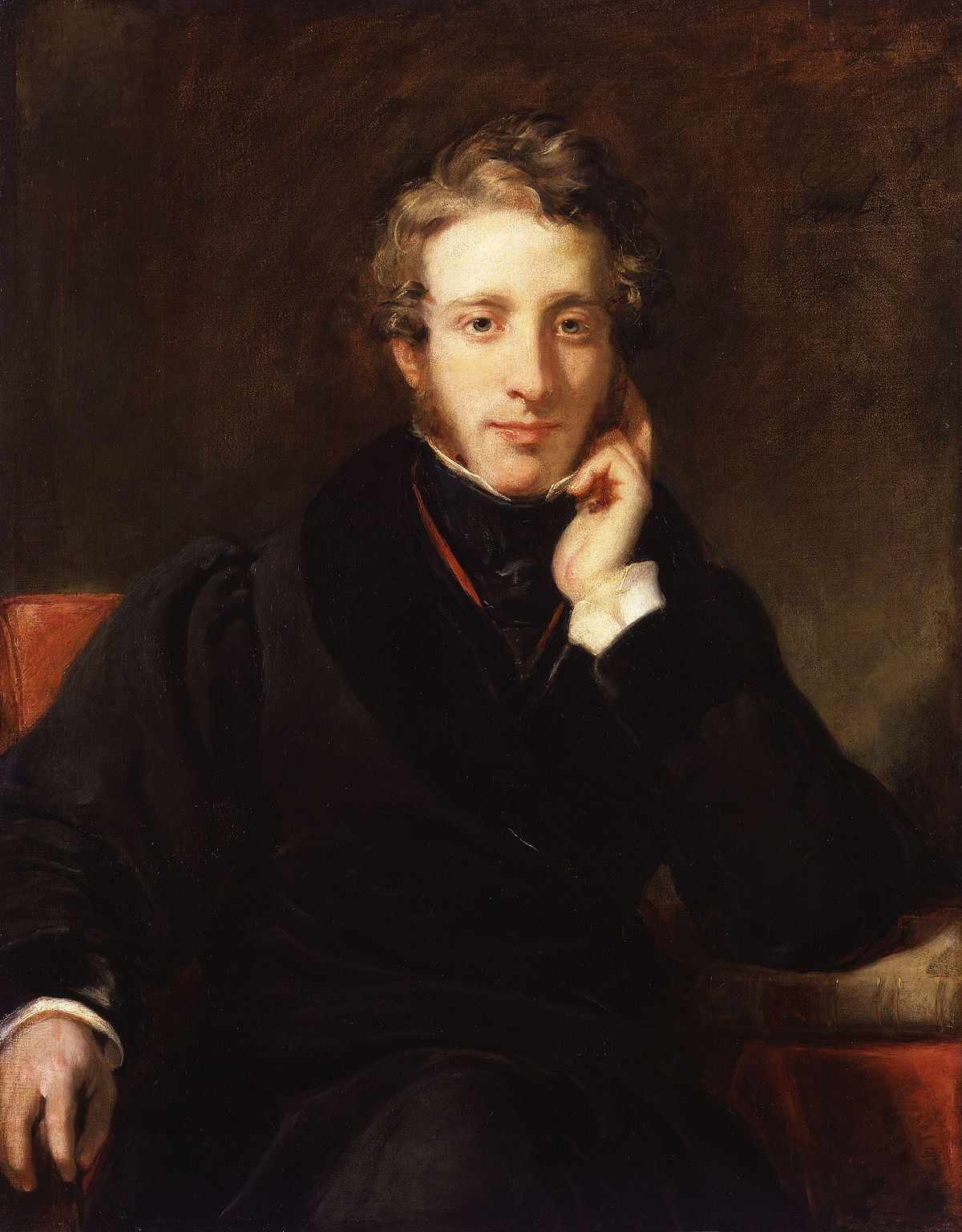
That ending is a bit anti-climactic, and Dickens was talked into changing it. He went to stay a few nights with his good friend Edward Bulwer-Lytton, who was also a well-known Victorian novelist. Dickens showed him the rough draft, and Bulwer-Lytton complained that the ending would be far too disappointing for fans after all they'd been through with Pip. So Dickens scribbled out the last few pages and re-wrote them. He posted Bulwer-Lytton the new ending to see if he approved. It evidently got the nod, because it's the ending we have now.

Yet we still don't know for sure. Did they marry or not? I think Dickens was telling his friend in effect, 'I've worked it so everyone'll be happy. Sentimentalists like you can cling to the hope that Pip and Estella do tie the knot. But at the same time, realists and pragmatists don't have to buy into it, if they choose not to.'
I think Edward Bulwer-Lytton was the real hero of this true anecdote. Off the topic, a bit more research on him shows that we owe this guy more than you might think. He turns out to be one of those writers we often quote without even knowing it. The phrase, 'the pen is mightier than the sword,' was first coined by Bulwer-Lytton, although I might have guessed Shakespeare. He also came up with 'in pursuit of the almighty dollar' and 'dweller on the threshold.' But perhaps his biggest claim to fame might be his immortal opening line, 'It was a dark and stormy night.' He might have been happy enough to let his ownership of that one slip into obscurity :)

Here's my review of Great Expectations.
I've also written this rave about Pip.

Villette

The ambiguity is compressed into the last page, but here's a recap of the lead-up. After providing heroine Lucy Snowe with her own little school and making her independent, the hero Paul Emanuel has been overseas taking care of business. Lucy, who loves him with all her heart, awaits his return. But the weather across the sea turns nasty, and she prays hard for his safety. A wild south-west storm whips through and doesn't cease until 'the Atlantic is strewn with wrecks.' That's the end. But wait, it doesn't mention whether or not Paul's ship was among the casualties. What game is Charlotte Bronte playing here?

A bit of research indicates that the ending was clear in her gloomy mind all along. Monsieur Paul perished, naturally. It seems Charlotte designed Lucy's life to be a sort of carbon copy of her own, and since she was feeling fruitless, tragic and unfulfilled at the time of writing, there was no way she'd let Lucy off easy. In addition, an early chapter about Lucy's former employer Miss Marchmont could be a foreshadow. The lonely old dame's backstory includes the death of her beloved fiance in a freak accident, which was possibly meant to be a prophecy of Lucy's fate.

Image result for reverend patrick bronteBut Charlotte Bronte read the manuscript to her old Dad, and he objected. The Reverend Patrick Bronte insisted on a happier ending than the drowning of Monsieur Paul. It was hardly fair on soft-hearted readers like himself. Not to mention super-abrupt. So like a dutiful daughter, Charlotte didn't change her own plan but re-worked the ending to be more ambiguous. The glossary in my edition puts it this way. 'While keeping to the ending she'd imagined, she made it more metaphoric in order to allow Monsieur Paul's survival for those who needed a sunnier ending.'

I love this excerpt Charlotte wrote in a letter to her publisher too.

'With regard to the momentous point - Monsieur Paul's fate - in case anyone in future should request to be enlightened thereon, they may be told that it was designed that every reader should settle the catastrophe for himself, according to the quality of his disposition... Drowning and matrimony are the fearful alternatives. The merciful will of course choose the former and milder doom, drown him to put him out of pain. The cruel-hearted will on the contrary pitilessly impale him on the second horn of the dilemma, marrying him without ruth or compunction to that person, that individual, Lucy Snowe!'

Here's my review of Villette

Do Pip and Estella get married?
Does Monsieur Paul perish or survive? 

I watched a Great Expectations Netflix series that clearly went for the marriage option, but I wasn't a big Estella fan, and think Pip could do far better. Although, he was a bit of a duffer throughout the book, he didn't deserve the fate of winning her hand. Sure, she was manipulated and exploited by her unscrupulous guardian, yet she'll always be a mean girl to me.

As for Villette, I'm disturbed by the number of contemporary readers who talk about Paul's death as a given! Come on people, the Reverend Pat gave us a loophole, and I'm going to take it. I was totally invested in their relationship, so of course he returns to Lucy!

So where do you stand?

Tuesday, January 7, 2020

'Death Comes for the Archbishop' by Willa Cather


Willa Cather's best known novel; a narrative that recounts a life lived simply in the silence of the southwestern desert.

MY THOUGHTS:
This is a wonderful read, so don't be put off by the title. I think the faintly ominous overtones are unfounded. That looming appointment does catch up with main character Father Latour by the end, but only in his twilight years after a long productive life, and it comes across as far more of a triumph than a loss. He faces it in a super reflective, peaceful and calm state of mind. 'I shall not die of a cold, my son,' he tells his young protege. 'I shall die of having lived.' His death is written like a final victory, and you feel like cheering him rather than being sad.

The book is set during a fascinating period of history. It starts in 1851 when the state of New Mexico has been recently annexed to the USA. (I'm an Aussie and had to consult a map. It's down south between Texas and Arizona.) New Mexico is considered a Catholic area since it was evangelised by Franciscans in the 1500's, but the population, consisting greatly of cowboys and Indians, has been bumbling along essentially uninstructed for 300 years. The chiefs at the Vatican decide to send someone to crank up the faith, but it'll have to be a special guy. 'That country will drink up his youth and strength as it does the rain.' Still, they decide a young man named Father Jean Marie Latour might fit the bill, along with the assistance of his boyhood friend Father Joseph Vaillant.

The story is made up of a string of beautifully written incidents which reveal a lot about human nature, the influence of the landscape, and the interplay of both. It's such a challenge for the pair of friends, because their Catholic mission field is slap bang in the middle of Protestant America, and since it's mostly unconnected by railway and rivers, they have to rely on their trusty mules to slowly get around.

The differences in the ways the best friends operate is an interesting study, based on their personality styles. Father Joseph is a people-loving, folk-focused extrovert who pushes past the barrier of a weak physical constitution driven by concern for the needs of others. Rash and impulsive, he's never afraid to ask for what he wants to the point of cheekiness. Yet because he makes his generous heart so evident, people are willing to give him whatever it is.

Latour is more the studious, academically inclined introvert whose fuel is reflection and thought. He has moments of wrestling with the black dog, but uses the same contemplative bent that gives it to him to get out of it.

I love all the sections told from Father Latour's point of view because he has such a gentle, refreshing head space in which to find ourselves. He's impeccably polite, even while lost and parched with thirst in the desert, and treats animals with a degree of care and respect reminiscent of Saint Francis. Any reader used to glossing over providence and simple miracles surely can't maintain that view if they're looking through Father Latour's eyes. Being him for the duration of the book is a faith building experience. He's so steeped in wonder of his tradition, and the certainty that things happen as they should. 

The quiet success of Latour's life stems from his deep respect for the ancient traditions of the land's natives. Never once does he attempt to stamp out the colourful culture he finds, just because he's presenting something different. Father Latour can put himself in other people's shoes. He understands that a person's identity is more than bone deep, and offers his Catholic faith as a precious alternative or extra. He accepts that there are rich veins to their spiritual make-up that he has no idea about, and courteously declines to probe where he isn't welcome. Even the New Mexican way of embracing Catholicism is spiced with their long-established character. 'Religion is necessarily theatrical to these people.' Latour realises that the European memories that shaped his own psyche are not transferable to their minds. He follows the thought through to its logical conclusion that generations of their own unique lore is similarly untranslatable to him.

Overall, the land is the book's real main character. The beautiful descriptions are often no more than a sentence, such as, 'Elsewhere the sky is the roof of the world, but here the earth was the floor of the sky.' The natives relate to the land in a sensitive way, respecting its character enough to pass through gently and quietly, leaving no trace, while white settlers always wish to assert their presence by making changes. Even Father Latour succombs to the seductive desire to leave a legacy for himself by building a cathedral. It's very interesting to reflect that the egos we battle with and try to whip into shape might be very much a western construct we've taken on board. There have been others in the world brought up without that emphasis on the need for personal expression. It seems as necessary as breathing in our day and age, so we declare it's a God-given characteristic, which rings true, but do we take individuality and self-expression to an extreme never intended by either God or nature? It's a weird but sort of freeing question.

I don't really know why I'm taking off half a star, except that maybe because such a long period of time is covered in a reasonably short book, it feels like a bit of a surface skimmer at times. I would have happily read much more of the same material we're offered. I guess that's a good reason to take off half a mark.

You might like to compare this book to another I've reviewed, about an overbearing missionary with a very opposite spirit, who crashed and burned. You'll find it here.

🌟🌟🌟🌟½