Wednesday, November 30, 2016

'Beyond the Orchard' by Anna Romer

31341454

A haunting story of yearning, love and betrayal from the bestselling author of Thornwood House

Lucy Briar has arrived home in turmoil after years overseas. She’s met her fiancĂ© in London and has her life mapped out, but something is holding her back.

Hoping to ground herself and find answers, Lucy settles into once familiar routines. But old tortured feelings flood Lucy’s existence when her beloved father, Ron, is hospitalised and Morgan – the man who drove her away all those years ago – seeks her out.

Worse, Ron implores Lucy to visit Bitterwood Estate, the crumbling historic family guesthouse now left to him. He needs Lucy to find something– an old photograph album, the very thing that drove Ron and his father apart.

Lucy has her own painful memories of Bitterwood, darkness that has plagued her dreams since she was young. But as Lucy searches for the album, the house begins to give up its ghosts and she is driven to put them to rest.

And there, held tightly between the house, the orchard and the soaring cliffs, Lucy uncovers a long-hidden secret that shattered a family’s bond and kept a frightened young girl in its thrall ... and Lucy discovers just how fierce the lonely heart can be.


Genre: Australian contemporary/historical thread fiction, mystery, Gothic. 


MY THOUGHTS:
I've already come to expect dark family mysteries with dual timelines from Anna Romer.

In this one, Lucy Briar is summoned from her new home in London by her grandfather, Edwin. He promises to spill a family secret which has been concealed for many years if she'll return home to Australia. Alas, he dies before she gets there, but is her chance of learning it completely gone? The story peels back layers of the past as Lucy begins to search through Edwin's old artifacts with the help of Morgan, the man she's always been secretly in love with. Readers know it'll have something to do with the body hidden in the ice house at the beginning.

The characters through the generations take shape. Just as mystified as Lucy is her father Ron, a lovable author of twisted fairy tales who argues that bad guys never get a fair go. And appearing all through the past is the elusive Orah, a young shipwreck survivor who turns out to be a huge mystery, as nobody has a clue where she fitted in with the Briar family. Stories like this always seem to contain hope for the current generation, at the expense of heartache for their ancestors. (This one has its fair share of ladies who met horrible, watery ends. I suppose that's the treacherous southern coast of Australia for you.)

The passive, tragic figure of Edwin stayed in my mind. He was so peace-loving and affectionate, yet life seemed to have a way of trying to knock the stuffing out of him. I think part of his problem was not being forthcoming. He found it difficult to express the depths of his heart, so always opted for saying nothing. His keeping the peace policy had the opposite effect with his volatile family members. His son even cited his aloofness as the main reason for their not getting along.

Without the author needing to mention it, it's easy for readers to trace inherited traits in generations of the Briar family who have never met each other. There's Clarice and Ron's tendency to sink into depression, and Lucy sharing a habit with her grandmother of bolting at the first sign of trouble or discomfort.

I loved the beautiful little snippets of early twentieth century Australian life. They worked hard at Bitterwood, but it was meaningful, rewarding work. They kept a guesthouse, did lots of cooking and bred silkworms, all good, repetitive, worthwhile things. I might be a bit biased here because the setting holds good memories for me. I love driving along the Great South Ocean Road on summer holidays, and also seeing Australian settings brought to life so evocatively. It's been good to see the beautiful cover of this book in shops around my area recently.

Altogether, country Australia is a great setting for wistful, Gothic stories like this one.They remind me of similar novels by Kate Morton. And if anyone has read or seen the Aussie best seller The Light Between Oceans, look out for parallels. I'd be interested to discuss them with you.

Thanks to Simon and Schuster (Australia) and Net Galley for my review copy.

4 stars

Monday, November 28, 2016

Book Boyfriends through the Generations


Today's post is in honour of my two guests. This month they both celebrate significant milestone birthdays which include the numeral 8. My daughter turned 18 on Remembrance Day, and my mother turns 80 tomorrow. I thought I'd return to the theme of our favourite men from books, examining whether or not readers' tastes and preferences may shift with the passing years.

MY MOTHER, VALERIE - THE BUILDERS
This is the name of the generation that was born before about 1942, and she was born in 1936. They're probably our most elderly living generation, and deserve to be listened to. Hard work was a fact of life for them, and they gave a lot without expecting an easy ride in return. Getting lost in a book was likely one of their only forms of leisure, and here are some of her favourites.

1) Mr Darcy
My Mum doesn't remember names easily, but his identity was clear from her description. 'That lovely chap who realised how snobby he was being and changed his ways, because he loved his lady so much. And he was also very handsome in that TV show.' I think Colin Firth had as much weight on her choice as Jane Austen, but it's easy to imagine the author had just such a face as his in mind for her main man when she wrote the story in the Regency Era.

2) Edward Rochester
I remember reading her this story in my teens, when I went through my Bronte phase. Every couple of lines she'd stopped to rhapsodise about how wonderful the leading man was. He'd been knocked around by life, turned cynical, but still had the warm heart to fall for the modest charms of a no-frills little heroine like Jane. Even when he made grouchy remarks, Mum loved him, so when he gave his famous declarations of undying love, she responded just how we're supposed to.

3) Gilbert Blythe
This was clear way back in my childhood, because my mother was the person who strongly recommended the Anne series to start with, and this boy was one of the reasons why. 'There was a lovely lad called Gilbert who teased her once, and she hated that, but she ended up marrying him.' Mum wasn't ever careful about hiding plot spoilers. That was something I had to learn on my own down the track.

Incidentally, I feature two from her list in the battle of the book boyfriends.  
It just goes to show that some charm is timeless.


ME - GENERATION X
I'm one of those people who can remember being tiny in the 1970s. Scarier still, I attended High School in the 80s! I felt like a goldfish in a pool of sharks, and doubt I managed to make it out unscathed. Those felt like cutthroat times. As I often say, at least I had my books. Here are my favourite book boyfriends growing up.

1) Almanzo Wilder
The Little House on the Prairie TV series with Melissa Gilbert and Michael Landon was popular all through my growing years, but I loved the books most of all, devouring them time after time. Almanzo stole my heart when I was about 12. What's not to like about a cute, hard-working farmer boy who knew how to be romantic, although it wouldn't have been among the survival tips his father taught him. He set the bar high for future book boyfriends because you can't beat strong, thoughtful and sweet.

I remember a certain blistering heatwave when I visited the Flinders Ranges with my parents. I sat in the back of the car reading that episode from 'The Long Winter' when Almanzo and his best friend Cap dodged between dangerous blizzards, risking their lives to fetch the wheat that stopped the town from starving. I appreciated their heroics but also wished they could send a bit of ice and snow our way.

2) Hareton Earnshaw
I latched onto 'Wuthering Heights' when I was 15, but the person who intrigued me most was not Heathcliff but his rough-around-the-edges sort-of-adopted son. Although Heathcliff vowed that he'd bring the boy up the same harsh way he'd been treated to spite his old enemy, it really ticked all my boxes to see Hareton retain some generosity and compassion. It was as if Heathcliff was proving himself wrong with every demeaning trick he tried. As well as loving Hareton himself, I appreciated the irony of that.

3) Mart Belden
Don't laugh, but yes, I had a crush on Trixie Belden's teasing, goofy brother. I thought he was so smart, with his long words and provoking sense of humour. I probably started rubbed my hands together with anticipation whenever he walked into a scene. In later years when I revisited the Trixie Belden mysteries, Mart came off as an annoying, attention seeking show-off. But hey, he worked for me in my tweens.

MY DAUGHTER, EMMA - THE MILLENIALS
There's a sort of overlap with Gen Y, but being born in 1998, she fits both. This generation comes across a bit intimidating to mine at times, as they seem to be born both tech-savvy and decisive. They make quick judgments about matters of taste, and back them up with complete confidence in their own discernment. Here are some of her favourites.  

1) Jon Snow
This 'Game of Thrones' hero is her clear winner, which says a lot for him since her walls and shelves are covered with fandom from far and wide. When I ask why she'd place him so high, she rattles off a list of instant praise. He's brave, caring, strong, considers underdogs, and is ruggedly handsome to boot. He also had an unfortunate start as a baby, so is himself an underdog in many ways. All of this refutes argument. This man is the total package for her.

2) Peeta Mellark
The modest, unassuming young hero from 'The Hunger Games' also makes it on my daughter's list. There's something about quiet devotion and a sacrificial nature which appeals to the young women the series was aimed for. I once commented that perhaps Peeta's rival in the romance stakes, Gale Hawthorne, is arguably the nicer looking of the pair (being a Hemsworth). Was I cut down to size! 'I'm glad I'm not as shallow as you are, Mum,' Okay, it's good to see that character is still a major priority for this generation.

3) Spiderman
She makes it clear that she's talking specifically about the version played by Andrew Garfield. It seems this young actor added a certain flair to the role, in her opinion. He wasn't just the standard, perfect super hero. He was funny, and also the type of person who makes nerdiness cool. And the romance in the movie was just the right amount.

MY CONCLUSION
So what are we to make of all this? Do fashions in book boyfriends change or not? On the strength of this, I really don't think they do. Their faces change, but the attributes which make our heroes lovable remain constant. People from earlier generations didn't have characters like Jon and Peeta, but when you compare them to those who were around, like Gilbert or Almanzo, they were similar types of fellows.

I know you'd have to ask more than three people for a complete study, but here are some findings which stand out to me. To qualify as a book boyfriend, a fictional character ought to be thoughtful toward others, and possess a certain amount of altruism. Being in the powerful position to be able to act on his good-hearted urges ranks high. Other traits which help include funniness, smartness, fairness and quick wits. They often display a redemptive arc during the story. And although good looks do earn ticks, a quick glance down this list shows that they aren't absolutely necessary. I'm sure those still to come in future generations will fit into the mold.

Have you any favourites of your own who may deserve to be added to this list of nine?
If you'd like more, see my earlier list of true heroes.
Or if you're a fan of enigmatic villains and redemptive arcs, you might like bad boys with depth.

Friday, November 25, 2016

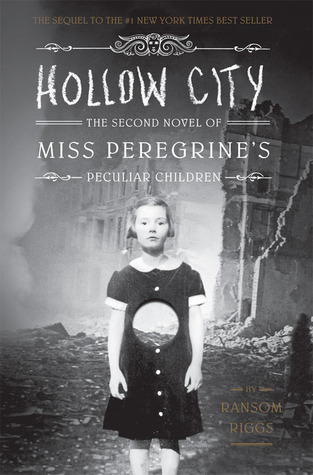
'Hollow City' by Ransom Riggs

23164983

Miss Peregrine’s Home for Peculiar Children was the surprise best seller of 2011—an unprecedented mix of YA fantasy and vintage photography that enthralled readers and critics alike. Publishers Weekly called it “an enjoyable, eccentric read, distinguished by well-developed characters, a believable Welsh setting, and some very creepy monsters.”

This second novel begins in 1940, immediately after the first book ended. Having escaped Miss Peregrine’s island by the skin of their teeth, Jacob and his new friends must journey to London, the peculiar capital of the world. Along the way, they encounter new allies, a menagerie of peculiar animals, and other unexpected surprises.

Complete with dozens of newly discovered (and thoroughly mesmerizing) vintage photographs, this new adventure will delight readers of all ages.


Genre: YA fantasy, history, bestsellers. 

MY THOUGHTS:
I love this novel! Basically it's a mad race against time, and the company of these delightful kids makes it a super quirky read. I'd highly recommend it to anyone who loves The Amazing Race and other quest scenarios.

You must read Book 1 of the series first. The peculiar kids from Cairnholm Island are back again, still without a clue what they ought to do when their time loop is destroyed, and now a ticking time bomb factor is added to the mix. If they don't hurry to find another ymbryne to help Miss Peregrine, she'll be stuck in her bird form forevermore. Not to mention wights and hollowgasts are on their trail every step of the way. I'll say no more about the twists of this plot, except that they cross different places and times.

On one level, the whole story is really crazy. It reminds me of a creative writing exercise where the teacher asks you to write a story based on random photos plucked from a hat. It's obvious that's pretty close to what Ransom Riggs does, but his cool writing style manages to pull them all together. I was even getting interested in the science concerning hollows and wights, and had to remind myself, 'Hey, this isn't really true,' several times.

Jacob Portman's reflections are still just as good as before. There is always tension between what he knows the others expect from him, and what he feels himself to be deep down, which is a bit of a try-hard and fall-short. He comes to see that peculiar qualities are not a deficiency, as the rest of the world would have them believe, but normalcy is. It's a great story for readers whose peculiarities are not as startling as theirs, yet may still tend to make us feel self-conscious and inferior. What an indulgence for anyone who admires eccentricity.

Jacob's friends steal the show for me. The only people I love as much as the girls, Emma, Bronwyn, Olive, Fiona and Claire, are the boys, Millard, Horace, Enoch and Hugh. What a gang! They come across so innocent and vulnerable, in spite of their great powers. The sarcastic humour and droll understatements keep flying non-stop. I wonder what the subjects of the original photos would think of the characters inspired by their poses.

Sometimes, I just stopped to admire the craftsmanship of the sentences. For example, there's this observation Jacob made as they walked through the war ravaged London of 1940. 'Through a bombed cemetery, long forgotten Londoners unearthed and flung into trees, grinning in rotted formal wear.' These touches of Halloween macabre are delivered in his matter-of-fact way. And I love how he mentions, 'a steady drip of adrenaline, keeping my exhaustion at bay.' You just can't predict what will happen next, and now I'm intrigued to find out how the final book of the trilogy will wrap up these incredible adventures.

5 stars

Tuesday, November 22, 2016

Female heads of children's homes


I recently paid a visit to the old Redruth Gaol, near the South Aussie town of Burra. It was a rainy day without another soul in sight, adding to the spooky atmosphere. I discovered that between 1897 and 1922, the place was used as a Girl's Reformatory School. The stories posted up all over the walls made a wild and wacky read. Some girls were sent there because they fell pregnant, and one tried to commit suicide with rat poison from the kitchen. One group of girls managed to climb onto the roof and perform an impromptu strip tease for passers-by. Another bunch locked themselves into a room and attempted mutiny, unless their demands for a particular member of staff to leave were met. And a couple of girls escaped for a short time, something none of the grown men in bygone years had ever managed. They posed as boys and scoured the district searching for work.

One wall was filled with extracts from letters by the female supervisor to several parents, reporting all the stress and mischief their daughters were causing. Those girls had amazing imaginations when it came to cooking up trouble, and I didn't envy that lady her job one little bit. In fact, I left the place with a new respect for the female heads of institutions. Having to be in charge of several others without losing their respect or your own control is something I'd never be able to pull off. It started me reflecting how many of these admirable women show up in the stories we love, so today's list is meant to be a sort of tribute to them.

I'll start with those who may be considered more along the lines of 'normal', and they'll gradually grow weirder. I'll stick to nice, or well-meaning examples, because it's a post with the intention to honour, so no Trunchbulls or Umbridges here. They deserve a post of their own some day. Here goes.

1) Miss Clavell
 MadelineShe was the director of the old house in Paris all covered with vines, where little Madeline and several other girls lived happily together. Since Miss Clavell was possibly more motherly and kind than several of the parents who sent them there, it's no wonder they all got along so well together. We used to watch the TV series based on the books all through the '90s. Does anybody else remember how the little girls used to chant, 'We love our bread, we love our butter, but most of all we love each other'? See my review of Madeline.


2) Jo Bhaer
Jo's Boys (Little Women #3) Did you follow the life of Jo March from Little Women through the next three books, as she got married and set up a boarding school with her husband? They named it Plumfield, and several of their students were orphaned or destitute boys. The students gave Jo and Frederick some challenges, but they weathered them and and made exemplary young men out of (almost) all of them. Louisa May Alcott made it clear that the flops weren't Jo's fault. One of the biggest themes was how the younger generation came to rely on her wisdom and sound advice. Her manner with them may come across a bit overbearing or condescending at times, but that's the nineteenth century for you.

A Home for My Heart3) Sadie Sillsby
This one is a more obscure choice. She's a young woman who was offered the job as matron of an orphan home, but it means she won't be able to marry her sweetheart. There are some good, behind-the-scenes glimpses of the skill and effort it takes to run such a place. I already knew it'd never be the job for me, but this novel just reinforced it. See my review of A Home for my Heart.

4) Miss Emma Stranje
A School for Unusual Girls (Stranje House, #1) She comes across as a tartar who promises parents that she'll soon whip their recalcitrant daughters into submission. Secretly, she intends to nurture their eccentricities, which enables them to help in the war effort against Napoleon. Each of the girls in her care grows to appreciate her and willingly go along with the ruse that they're completely under her thumb. See my review of A School for Unusual Girls


5) Professor McGonagall
Harry Potter and the Cursed Child, Parts 1 & 2 All through the Harry Potter series, I had the impression our wise old friend Minerva would have been a great headmistress. She's totally fair and wise, balancing genuine affection for the students with a clear knowledge of their weak spots. She was clearly a better choice for the position than Umbridge, Snape or the Carrows, and I even felt she could have given Dumbledore a run for his money in many ways. It's good to see her finally get her chance in The Cursed Child. At this stage she was pretty ancient, but still proves that she has what it takes. See my review of Harry Potter and the Cursed Child.

6) Miss Alma Peregrine
Miss Peregrine’s Home for Peculiar Children (Miss Peregrine’s Peculiar Children, #1) This lady gave every drop of blood, sweat and tears she had for her beloved charges, prepared to do anything to keep them safe. Fortunately for them, her skill sets are astounding, to say the least. She nurtures the kids in a special time loop which protects them from the perils of bombs and bullies alike. Given the choice to sacrifice herself for their safety, she doesn't hesitate to put her life on the line. Later, she finds herself in the unenviable position of having to rely on the charges she'd always taken such good care of to rescue her. For these reasons, as well as being one of the strangest female heads, she's also one of the best. See my review of Miss Peregrine's Home for Peculiar Children.

So you see they're a motley bunch, with talents far out of my reach. The last two even have the ability to turn themselves into different animals, a cat and a bird respectively, and I can't help wondering whether pulling something like that out of the bag should be a pre-requisite for such a tough and thankless job. As always, I'd love to hear your thoughts about these, or suggestions if you have any more. Or maybe you've had experience with being in charge of children yourself. 

Sunday, November 20, 2016

'Barefoot' by Sharon Garlough Brown

32670676

The women of Sensible Shoes face unexpected turns in their spiritual journeys in Barefoot, the third book of the Sensible Shoes series. Having been challenged to persevere in hope, can they now embrace the joy of complete surrender?
Mara: With two boys at home and a divorce on the way, can she let go of her resentment and bitterness and find a rhythm of grace in her "new normal"?

Hannah: With Nathan by her side, can she let go of expectations—and even her reputation—as she charts a new course?
Charissa: As her approaching due date threatens to collide with new professional opportunities, can she let go of her need for control and embrace the unknown future with trust?
Meg: With disappointment over broken relationships and unfulfilled dreams, can she let go of her fear and worry in the face of even greater challenges that lie ahead?
Join the women of the Sensible Shoes Club in a poignant story that reveals the joy that comes from laying our lives at the feet of God and standing barefoot on holy ground.

Genre: Women's contemporary fiction, spirituality

MY THOUGHTS:
This novel concludes the trilogy about these four women who met when they decided to attend a sacred journey workshop, and ended up forming their own Sensible Shoes club. You might need to grab a box of tissues for this one. It crosses over into the sort of story I don't usually choose to read (because there's enough emotionally draining happenings in any person's life without adding to it by getting heartbroken over the plights of fictional characters we've grown fond of), but since I'd become so invested in the lives of these four already, I thought I might as well finish it.

Once again, I was struck by lessons we learn from the experiences of others.

The story deals more with what it calls socially acceptable forms of idolatry. There's Charissa's thirst for honour and recognition in the academic world, and Hannah's clinging to the Protestant Work Ethic because of her longing to be appreciated and affirmed. It's good to bring these things to the light of day and recognise them for what they are. Perfectionism and helps ministries are clearly easy to regard as good, but not if they're rooted in how we think others perceive us.

There are probing questions about how we deal with difficult family members. Hannah wonders whether to mention painful aspects of her past to her parents (and I was glad by her conclusion), Meg deals with outright rudeness from her sister and daughter, as well as having her beliefs treated with contempt, and Charissa copes with pressure from a mother-in-law whose mindset is poles apart from hers.

Then there's poor old Mara's rejection issues, which she's finding take longer to put behind her than she expected, even though she's acknowledged them. Her first hand lesson about bitterness makes an interesting twist to the tale, and maybe a whack in the gut for any of us who might be dealing with condemnation from others, as well as condemning others in our hearts at the same time.

Some interesting extras are worth making a note of too. Who knew there's a longer version of the Serenity Prayer? Most of us probably only know the first little bit, but it's written in its entirety in the story. There's also an impacting, short little parable about a man who curses and praises the dead.

The finish wraps up some things and leaves others open, especially concerning the fates of secondary characters. What does Nathan do about Laura? The Becca and Simon issue is still unresolved. And how about Mara's attitude toward her youngest son, Brian? I was noticing unconscious resentment from her toward him in the previous books, so I'm glad this one picked up on it. I don't mind having these things left to our imaginations, since the books are a slice of life, and that's what life is like.

Altogether, even though it dealt with themes which I wasn't prepared for, it still gets high marks from me because of the thought it evokes.

Thanks to Net Galley and Authentic Media for my review copy.

4 stars
Wednesday, November 16, 2016

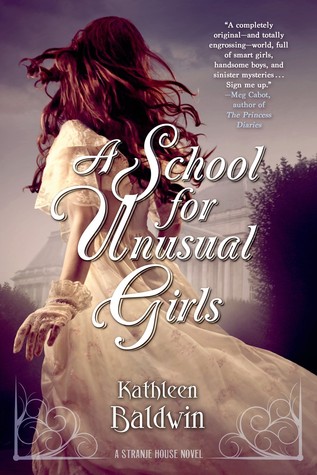
'A School for Unusual Girls' by Kathleen Baldwin

22238184

It’s 1814. Napoleon is exiled on Elba. Europe is in shambles. Britain is at war on four fronts. And Stranje House, a School for Unusual Girls, has become one of Regency England’s dark little secrets. The daughters of the beau monde who don’t fit high society’s constrictive mold are banished to Stranje House to be reformed into marriageable young ladies. Or so their parents think. In truth, Headmistress Emma Stranje, the original unusual girl, has plans for the young ladies—plans that entangle them in the dangerous world of spies, diplomacy, and war.

After accidentally setting her father’s stables on fire while performing a scientific experiment, Miss Georgiana Fitzwilliam is sent to Stranje House. But Georgie has no intention of being turned into a simpering, pudding-headed, marriageable miss. She plans to escape as soon as possible—until she meets Lord Sebastian Wyatt. Thrust together in a desperate mission to invent a new invisible ink for the English war effort, Georgie and Sebastian must find a way to work together without losing their heads—or their hearts…


Genre: YA historical fiction, comedy, romance. 

MY THOUGHTS:
This is a lighthearted YA novel set during the Napoleonic Wars. Georgiana Fitzwilliam is a source of shame to her parents because she persists in following her interest in chemistry and shuns the activities they believe young gentlewomen should pursue. So they drag her in disgrace to the school of Miss Emma Stranje, who promises families that she'll be able to make their headstrong, eccentric daughters unexceptional.

Georgie's parents approve of the solitary confinement chambers and torture devices they see, but little do they realise it's all a front. Miss Stranje's real intention is to nurture the brilliant girls under her care, and enlist their help in the war effort. While Georgie's parents are horrified that she almost burned down their barn, Miss Stranje knows that she was working on a recipe for invisible ink when it happened.

There are more books in the series being written with a focus on the other pupils, which I'd recommend depending on how much cheesy satire you feel you can take. This book has its fair share of slapstick moments, with larger than life characters. There's handsome Lord Sebastian Wyatt, the young rake who knows how to press Georgiana's buttons, and Lady Daneska, the cold-hearted, beautiful villain who actually used to be one of the girls. They're fun characters but not exactly new, multi-layered or unpredictable. Still, the book never pretends to be anything it's not. If after the first couple of chapters you wonder if the tone will change or get a bit more realistic, the answer is no, it doesn't really.

There are so many convenient nooks and crannies for people to eavesdrop in Stranje Academy, and there'll probably be even more in the sequels. I can't help wondering if this story might be the modern counterpart of the Gothic novels young girls used to love reading during the time period this was set. You might have heard that the best stories aim to hide the fact that they're stories and come across like reality. Well, this story seems to have the opposite aim; use every literary device or cliche, no matter how corny, to remind us that it's funny fiction.

There are a few poignant reflections from Georgie along the lines of following your own inner compass, even when it points straight to misunderstanding and rejection. They're not subtle, either. 'If only I could rip out my overactive curiosity and trade it in for an interest in embroidery, maybe then my mother's friends would smile at me. Maybe then my mother would love me.' Of course the implication is that this would be too a big a sacrifice for her to make. Later, she considers that the lure of 'what if?' when it comes to science experiments, carries a cost. 'No approving smiles, good girl pats on the head or nods of approval.' I think this theme, that what's in us shouldn't be suppressed, might be the best thing this book has going for it.

Overall, I think I'll pass on actively seeking the sequels, although if someone offered them to me, I might have to think. (The answer would probably still be no thanks.)

3 stars

Monday, November 14, 2016

Battle of the Book Boyfriends - Gilbert and Darcy


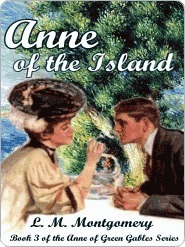
1885I've been talking to females of all ages about their favourite book boyfriends. I've also done internet searches of online polls, and two particular characters seem to have their names pop up more often than any others. They are Gilbert Blythe and Mr Darcy (whose given name was Fitzwilliam, but it was only ever mentioned twice in Pride and Prejudice). 

It initially surprised me, since my first reaction is that Gilbert beats Darcy hollow. Come on folk, he's the superior guy in every possible way. But then it occurred to me that since these are literary characters, Darcy might have one ace up his sleeve to catch Gilbert at the homeward stretch. So I'll start with my reasons why I don't think there should even be any competition. Then I'll finish up with Darcy's one possible trump card.


1) Both ladies are initially repelled by rude first impressions
I would've found Anne's grievance easier to put behind me than Lizzy's. I used to forgive boys at school for calling me names all the time, and poor Gilbert only ever did it once! We readers are quick to understand that his true motivation for teasing Anne was a simple ploy for her attention. If Anne had been wise to the subtlety of school behaviour, she might have realised his 'Carrots' taunt could be taken as flattery in a way. However it was all new to her, so she took his action on face value.

Darcy, on the other hand, was being sincere when he told his friend Bingley, 'She's tolerable but not pretty enough to please me.' We don't get to see him as a boy, but that remark is enough to indicate that he was most likely a pompous, privileged little snob who looked down his nose at others. A grown man would come out with something like that only after years of thinking in a similar manner. Bingley was evidently used to his friend's stuck-up qualities, because he simply rolled his eyes and said, 'You're impossible' as if he'd heard many similar things from him before.

What sort of gentleman would even say, 'You are dancing with the only tolerable girl in the room' anyway? What a shallow thing for him to say.
So far, the score is Gilbert 1, Darcy 0


2) Gilbert was shown to be intelligent and hard-working. Darcy was mainly shown to be rich.
8196668The Prince Edward Islanders were presented as farming families who had to watch every dollar carefully, and the Blythes were among these battlers. Gilbert worked hard to put himself through years of college to become a doctor. He was a bright lad, being the only peer group member Anne couldn't beat at school work. During his college years, he almost destroyed his health, because he was run down from working so hard.

Darcy inherited his lap-of-luxury lifestyle from his family. He didn't have to do a scrap of work to acquire Pemberley, since he grew up knowing it would be his in due time. He had a huge independent fortune. An internet search showed me that his annual income of £10 000 in 1803 would equate to almost £800 000 today. No wonder he was free to go swaggering around the countryside, making snide remarks about the backward qualities of country towns and his perception about the attractiveness of young women. What a lifestyle!
Gilbert 2, Darcy 0

3) Darcy couldn't help making a snobby marriage proposal, but Gilbert wasn't a snob.
Remember that cringe-worthy proposal, when Darcy told Elizabeth, 'I've been trying to talk myself out of this rash move but I can't help it. I love you.' Then when she stuns him with her refusal, he retaliates with, 'Do you expect me to rejoice because your connections are so inferior to mine?' (I realise he was thinking in a normal manner, considering the place and time in which he was born, but can't help bringing my own place and time to bear on his attitude.)

On the other hand, Gilbert didn't have a clue about Anne's family connections, yet that didn't matter to him. He, like everyone else, knew she was a destitute orphan who Marilla and Matthew Cuthbert adopted. For all he knew, her background could have contained all sorts of unsavoury characters, but he didn't hesitate to propose. He loved and appreciated Anne for the person he knew she was.

Incidentally, both these guys had to make two proposals before they were accepted, but I'm sure readers would probably be unanimous in agreeing we cheered for Lizzy's initial refusal, and groaned for Anne's. See my post on literature's most awkward marriage proposals.
Gilbert 3, Darcy 0

4) Gilbert's sacrifice arguably cost him more personally.
At the end of Anne of Green Gables, Gilbert was offered the position as teacher at Avonlea School, but willingly gave it up to work at White Sands, which was further away and would have cost him more for boarding and travel expenses. He did it because he wanted the school board to offer Avonlea School to Anne instead, knowing it would suit her to be close to Marilla after Matthew's death.

Darcy's intervention to save Lydia Bennett's reputation and arrange her marriage to George Wickham was a generous gesture for Elizabeth's sake, and she knew it. Even though he and his younger sister had their own awkward history regarding Wickham, he put it aside and stuck his neck out to save the family honour of the woman he loved. Yet I doubt it really cost him as much personally as giving up the school cost Gilbert. Darcy didn't have to alter his own lavish lifestyle, or go without anything, except maybe putting himself through the potential annoyance of having to face Wickham at future family gatherings.
Gilbert 4, Darcy 0

5) Darcy's good mood catches Lizzy off guard
Remember when she visited Pemberley with her aunt and uncle Gardiner, and was embarrassed to find Darcy at home? To her surprise and relief, he behaved like a gracious and welcoming host. To me, that's more evidence that in her deepest heart, his aloof, grouchy, brusque demeanor was the one she expected as 'normal'. If somebody surprises you by being nice, it's a fair indication that this isn't their usual way of coming across.

In Gilbert's situation, the roles were reversed. He was almost always friendly and kind to Anne, and she was the one who returned his good intentions with snubs and hostility for year after year. On the afternoon when she stepped forward to thank him for giving up Avonlea School for her sake, she was the one who caught him off guard. He would have stopped his cheerful whistling and passed her with a polite nod, since he expected her to treat him as coldly as normal. He showed his good heart by instantly accepting her olive branch and becoming friends, after the way she'd always treated him.

I prefer Gilbert's version of 'normal' to Darcy's, by far.
Gilbert 5, Darcy 0

But that brings me to the big question. Why, in spite of all the overwhelming proof of Gilbert's superiority, is Darcy still up there with him in favourite book boyfriend polls for year after year?

Darcy's trump card! We are often suckers for bad boys who show good character development.

How often do you hear comments such as the following?
'I couldn't stand this man to start with, but by the end of the story, I loved him.'
'Wow, his total turn-about was fascinating.'
'How could she resist him when he underwent such a complete change for her?'
'For somebody to turn his back on all he'd ever known, shows an exceptional character.'

This is more than a fair point. Darcy had lived for 28 years as a male with an independent fortune in the early nineteenth century. He'd been brought up to believe in the superiority of his birth and the commonness of families like the Bennetts. For him to notice and fall for Elizabeth's charms is remarkable, when you think about it. We relish his change of heart. And we know full well that other wealthy gentlemen in his situation would never have done likewise.

As for Gilbert, well, he was such a sweetheart to start with, he simply didn't need as much character development as Darcy. Apart from a moment of immaturity when we first saw him, he was the same, warm-hearted guy all the way through the series. It's a shame to be pulled down in the book boyfriend battle because you're too nice, but that's the nature of fiction for you. It's especially tough when character development alone is worth five points, but there we have it.
Gilbert 5, Darcy 5 

It turns out to be a draw. I guess these two guys will be charming the hearts of readers for generations to come. Do you have a clear favourite from the pair of them?

If you want more, see my post on bad boys with depth. 
Or check out my review of Anne of Green Gables, my daughter and me by Lorilee Craker.