Monday, July 31, 2017

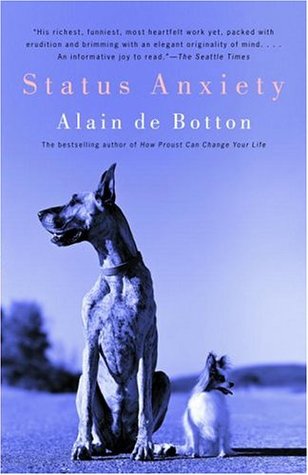
'Status Anxiety' by Alain de Botton


Anyone who’s ever lost sleep over an unreturned phone call or the neighbor’s Lexus had better read Alain de Botton’s irresistibly clear-headed new book, immediately. For in its pages, a master explicator of our civilization and its discontents turns his attention to the insatiable quest for status, a quest that has less to do with material comfort than with love. To demonstrate his thesis, de Botton ranges through Western history and thought from St. Augustine to Andrew Carnegie and Machiavelli to Anthony Robbins.

Whether it’s assessing the class-consciousness of Christianity or the convulsions of consumer capitalism, dueling or home-furnishing, Status Anxiety is infallibly entertaining. And when it examines the virtues of informed misanthropy, art appreciation, or walking a lobster on a leash, it is not only wise but helpful.


MY THOUGHTS:
This book takes a really interesting look at a common phenomenon which was never much of an issue until the early nineteenth century (although we do see examples as far back as the New Testament). You'd think that ushering in an era of equal opportunity for all, regardless of race, gender or background, would have to be a good thing, right? Well, it would seem every sparkling rainbow might have a cloudy lining, to twist a popular proverb around a bit. In this case, the beast that raised its ugly head is called meritocracy.

In a nutshell, when people used to be born into fixed social positions, their destinies were out of their control, so they just made the best of the hands fate dealt them. But now, most western individuals are born into a society in which there are far more life options than ever before, and theoretically, somebody born in a ghetto or slum has the potential to become rich and famous. Now that we are all held responsible for shaping our own individual stories, the silent implication is that if we fall short of our goals, or miss some social measuring stick, then we're losers and flops.

In the first half of this book, Alain de Botton takes a closer look at meritocracy and some of its nasty relatives, including snobbery and expectations. The second half studies ways in which people have tried to neutralise these over the years, so that status anxiety is no longer an issue. These include philosophy, art, politics, Christian tenets and Bohemian theories. I really like de Botton's eloquent way of writing, and the photos he's including to push home the points he makes.

His section on the arts includes the writing of great novels. So often, these aim to turn narrow social assumptions upside down and provide voices for marginalised people. They do it in a very persuasive, descriptive and fascinating way, which is partly why I've always loved reading them. Visual artists do similar things when they present humble scenes or modest people as some of the loveliest we can lay our eyes on.

23425There's a really thought-provoking thread in the Christianity section about how quickly all things pass away, putting all the energy we may expend to look good and impress the right people in a sort of perspective. It gets us wondering whether we should redefine what we consider a worthwhile pursuit or a waste of time. The photos of nature, ruins and antiquities just pushes home the point. This book is a keeper, which I'll put on my shelf to dip into at other times.

Some great quotes that stand out.

'We may be happy with little when we've come to expect little. And we may be miserable with much when we've been taught to expect everything.' William James

'The price we have paid for expecting to be so much more than our ancestors is a perpetual anxiety that we are far from being all we ought to be.' Alain de Botton

'Other people's heads are a wretched place for true happiness to have its seat.' Arthur Schopenhauer

And finally there's this sentence, which might be worth a ponder. 'Cynics are only idealists with awkwardly high standards.'

🌟🌟🌟🌟½

Thursday, July 27, 2017

Famous Story Book Tea Parties


There's no get-together quite like an afternoon tea party. Not only are they delicious but also elegant. You get to wear your loveliest clothes and eat beautiful looking finger food, which also tastes good, since plenty of it is loaded with sugar. And if you're into socialising, it's the perfect venue for showing off your refined manners without being out of place. What's not to love?  

I suppose morning tea could be included here too, but it doesn't have quite the same charm as afternoon tea. Morning tea is more likely to be some generic biscuit from a packet dunked into a cup of instant tea or coffee in a foam cup, before knuckling back down to work. It doesn't have the decadence of afternoon tea, after which we can go home at our leisure and have a good excuse not to cook an evening meal, because we're still full of afternoon tea. 

So without further ado, here are some of my favourite afternoon tea parties from the pages of stories. 


1) Alice in Wonderland
Alice's Adventures in Wonderland & Through the Looking-Glass She doesn't realise what a mad tea party it will turn out to be until she gets there. It appears civilised enough, set up outdoors at the March Hare's house, with the Mad Hatter and a sleepy Dormouse in attendance. Alice is affronted by being told there's no room for her, since there's obviously plenty of space. She's offered a glass of wine, but there isn't any in sight. Then the March Hare dips his watch in a cup of tea. The conversation quickly gets ridiculous. Alice decides to leave soon after realising that she's crashed a perpetual tea party, because the others think it's permanently 6 o'clock. More on Alice here.

Anne of Green Gables (Anne of Green Gables, #1)
2) Anne of Green Gables
In a generous mood, Marilla offers to let Anne host a tea party for Diana. Anne plans to serve cherry preserves, fruit cake, cookies, snaps, and raspberry cordial. But alas, that's not the only red hued beverage Marilla stores in the pantry. The drink which Diana declares the best cordial she's ever tasted turns out to be currant wine, and her three large glassfuls have catastrophic results. Poor Marilla hasn't made any wine for years, since finding out the minister doesn't approve. 'I just kept that bottle for sickness,' she says, but the damage is done. More on Anne here.

Jane Eyre3) Jane Eyre
A positive event brightens poor little Jane's early days at the harsh old Lowood School. Nice Miss Temple invites Jane and Helen into her private office, which has a cosy fire. She treats them to a surprise tea table with china cups and a bright teapot. Mrs Harden, the dour housekeeper, refuses to supply more bread and butter, but it's okay, because Miss Temple has a delicious seed cake hidden in her chest of drawers. It's like nectar and ambrosia to the girls. My review is here.

The Magic Faraway Tree (The Faraway Tree, #2)4) Enid Blyton's Faraway Tree
The children love climbing to Moonface's house at the very top of the Faraway Tree, where they share some most intriguing food. There are pop biscuits, which do just as they say; toffee shocks, that swell until your mouth can't contain them and then burst; hot cold goodies, with changing temperatures, and google buns, with massive amounts of sherbet packed inside currants. Enid Blyton's name isn't always the first we think of for fantasy stories, but she had some excellent, edge-of-the-seat tales. And she used the name 'google' for these buns long before it became popular for large numbers and search engines.

5) Harry Potter
Harry Potter and the Philosopher's Stone  On their way to school on the Hogwarts Express, the students always take the opportunity to indulge in tea parties in their carriages, supplied from the amazing delicacies sold by the trolley witch. On his very first trip, Harry had intended to stock up on Mars Bars, but then he discovers Bertie Bott's Every Flavour Beans, Chocolate Frogs, Pumpkin Pasties, Cauldron Cakes, Licorice Wands and all the other tasty things. He buys up big with his newfound wealth, which is most significant in cementing the friendship with his new best friend Ron, who is quick to shove aside his boring old sandwiches from home.

The Lion, the Witch and the Wardrobe (The Chronicles of Narnia, #1)
6) The Lion, the Witch and the Wardrobe
When Lucy first arrives in Narnia, she's invited to share afternoon tea with a quaint little faun named Mr Tumnus. For such a strange new world, he tempts her with very British sounding treats, including lightly boiled brown eggs, sardines on toast, toast with honey, and sugar topped cake. The afternoon tea turns out to be a bait, so he can summon the wicked queen of Narnia, who has always been on the lookout for boys and girls. But Mr Tumnus changes his mind in the nick of time, since he's taken a shine to Lucy.

7) Little Women
Little Women Amy wants to treat the girls in her drawing class to a tea party. Apart from plain old cake, sandwiches, fruit and coffee, she insists on the addition of cold tongue and chicken, french chocolate and ice-cream, because that's what her guests are used to. But after all the expense and preparations, only one girl bothers to show up. I would have liked to be in her place, except for the cold tongue, which I don't fancy the sound of at all. Reviews are here and here.

Around the World in Eighty Days
8) Around the World in 80 Days
Although it doesn't happen quite the same in the book, one scene sticks in my mind from the old movie with David Niven. Phileas Fogg and Passepartout are drifting in their hot air balloon through some European alps, enjoying a leisurely afternoon tea in the basket, including a good drop of wine. The acrobatic Passepartout manages to scoop some snow from a passing branch to ice their bottle. I've reviewed it here.

9) Hazel Green
Hazel Green (Hazel Green, #1) She's from one of my favourite kids' series. Hazel needs to ask an urgent favour of Yakov, the strange new boy who has moved into her apartment building. She doubts he'll be easy to convince, especially since she's always shunned him in the past. Luckily she has a friend named Mr Volio who is the best baker in town. Together they bring a mobile tea party to Yakov's house, including all sorts of delicious cakes and pastries. Reading these stories are enough to make my mouth water. I've reviewed them here. Not many people I've met have read Hazel Green, but the situations she finds herself in are fantastic for kids and adults alike!

The Milly-Molly-Mandy Storybook10) Milly-Molly-Mandy
It's the type of book series we love when we're tiny, then revisit when we have little girls of our own. Uncle gives Milly-Molly-Mandy a cute dolls' tea set, and she gets permission to invite her little friend Susan to share afternoon tea. But halfway to Susan's house, the girls meet up with the exact same story. Susan's father has given her a tea set too, and she wants to invite Milly-Molly-Mandy. It takes their friend Billy Blunt to solve the dilemma. He suggests that they combine the tea parties, as long as he can stay to share the 'special little cake, proper little loaf, tiny little tart', some bread and jam and lots of dripping.

11) Strange the Dreamer
This may be one of the most surreal tea parties ever. Lazlo Strange and his lover, Sarai the 'muse of nightmares' can only meet in his dreams at night. His gentle and colourful dreams become an oasis from the real world, which is full of strife and danger. On one night, he treats her to a tea party beside her dream river, and they both try to conjure up a lovely flavoured cake unsuccessfully, because neither of them have any gauge to base it on. He's never tasted cake at all, and her last treat was as an eight-year-old. However, they manage to do a pretty good job, also with pouring of tea from the dream teapot.

Do you enjoy living it up at the occasional tea party yourself? Looking down my list, I think the most significant thing about them is friendship. All the politeness and refinement is really just an excuse to strengthen bonds and create memories. If you can think of any other good tea parties, or if any of the ones I've mentioned strike a chord with you, please share your thoughts in the comments. And if I could, I'd treat you all to afternoon tea at my place. 

Monday, July 24, 2017

'The Phantom of the Opera' by Gaston Leroux


The Phantom of the Opera is a riveting story that revolves around the young, Swedish Christine Daaé. Her father, a famous musician, dies, and she is raised in the Paris Opera House with his dying promise of a protective angel of music to guide her. After a time at the opera house, she begins hearing a voice, who eventually teaches her how to sing beautifully. All goes well until Christine's childhood friend Raoul comes to visit his parents, who are patrons of the opera, and he sees Christine when she begins successfully singing on the stage. 

MY THOUGHTS:
This is my choice for a classic in translation, in the 2017 Back to the Classics Challenge.. It's a famous French story set mostly within the walls of the Paris Opera House. I'd never come across the original version, or Gaston Leroux, until I picked this up at a second hand shop. To be honest, if anyone had asked me who wrote Phantom of the Opera, I would have guessed Andrew Lloyd Webber. So it was very interesting to read about the charismatic French author in the foreword. Did I like his story though? Hmmm, well, it started off promising but went downhill quickly.

Basically, it was written as a supernatural thriller. A ghost is rumoured to haunt the Opera House. The chief scene shifter, who claims to have seen him, is found hanging dead from the rafters. And rumours that the ghost looks hideous are circulating. The theatre's ex-managers have resigned because they're spooked, but their replacements aren't warned what to expect until the night of the swap-over. They treat the haunting like a big joke, at least to begin with.

It turns out to be a bossy, tyrannical type of ghost who wants to run the whole show. When people ignore his demands, he makes sure something terrible happens. He wants a specific theatre box permanently reserved just for himself, and a regular sum of cash left for him in an envelope. Why would a ghost need money? You may well ask. All of his aggressive notes are signed O.G. for Opera Ghost.

His biggest agenda seems to be to advance the career of a young singer named Christine Daae, who believes he's the Angel of Music. While still alive, her deceased father promised to send him to her, a bit like a muse. At first, Christine laps up the ghost's personal attention and dreads the thought of ever losing it, but she comes to learn the spine-chilling cost of being his favourite. Especially since he's the jealous type and she's fallen in love with an old friend from her childhood; a young man named Raoul.

The sinister theme is the best thing the story has going for it. An innocent person is seduced by somebody who initially comes across like an angel, but when they find out he's the opposite, it seems too late to escape the fix they're in. How easily a well-meaning person like Christine can open themselves up to disaster and calamity, when they welcome with open arms something bad, because they believe it's good. Although I appreciated this, I was still getting tired of the novel toward the end.

First, it would have been nice if the story's hero had been a worthy contrast to the phantom, but Raoul is a spoiled brat. He's gullible and believes everything he's told. He overreacts with hissy fits whenever Christine is about to tell him something important, pays her out with cranky remarks, and rushes in whenever he loses his temper, without a thought of treading carefully. He doesn't hesitate to use emotional blackmail by bursting into tears because he's not getting his own way. And he asks the same, self-focused questions as the phantom. Raoul's first thought is always something like, 'If he were handsome, would you still love me?'

 Raoul and the phantom come across like temperamental twins to me, yet Raoul's lucky enough to be the better looking of the two. In fact, since the phantom has the whole tragic, 'I just want someone to love me for myself' thing going, a bit like Frankenstein's monster, some may even think that gives him a bit of an edge. (But come on dude, do you think being ugly is really a reasonable excuse for killing innocent people who have never hurt you?) Christine could have done very well without either of them. They're a pair of male drama queens and prima donnas, but since it's set in the opera house, I guess that makes sense.

Although this has nothing to do with the actual story, the blurb on my dust jacket was a great disappointment, because it gave a major plot spoiler, revealing the ghost's identity! Whoever wrote it must have assumed we're all familiar with the story by now, but I'd never seen it on stage, and if I'd seen the movie, my memory was sketchy. I can overlook honest spoiler mistakes from reviewers like myself, but coming from a professional blurb writer, it's a bit hard to swallow.

I would've preferred to see the stage version than read this book. I'm even humming 'The Music of the Night' as I type. Some of the unfolding explanations for the plot events seem way over-the-top and melodramatic to take seriously in a novel, yet they'd work if we've paid money to be thrilled with stunning stage effects and brilliant music. I noticed Leroux wrote other books too, with titles such as 'The Perfume of the Lady in Black' and 'The Man who came back from the Dead.' Based on this one, I'm happy to give them a miss. I read somewhere that even Andrew Lloyd Webber thought this novel a promising story, with a terrible execution.

I often like to add a good quote or two from whichever book I'm reviewing. Okay, this one made me grin. 'They felt the sort of dismay which men would have felt if they had witnessed the catastrophe that broke the arms of the Venus de Milo.' An extravagant, arty quote from an extravagant, arty book. I think I'll send it back to the goodwill shop where it came from.

🌟½

Friday, July 21, 2017

'Flaneuse' by Lauren Elkin

23984074

'Flâneuse [flanne-euhze], noun, from the French. Feminine form of flâneur [flanne-euhr], an idler, a dawdling observer, usually found in cities.

That is an imaginary definition.'


If the word flâneur conjures up visions of Baudelaire, boulevards and bohemia – then what exactly is a flâneuse?

In this gloriously provocative and celebratory book, Lauren Elkin defines her as ‘a determined resourceful woman keenly attuned to the creative potential of the city, and the liberating possibilities of a good walk’. Part cultural meander, part memoir, Flâneuse traces the relationship between the city and creativity through a journey that begins in New York and moves us to Paris, via Venice, Tokyo and London, exploring along the way the paths taken by the flâneuses who have lived and walked in those cities.

From nineteenth-century novelist George Sand to artist Sophie Calle, from war correspondent Martha Gellhorn to film-maker Agnes Varda, Flâneuse considers what is at stake when a certain kind of light-footed woman encounters the city and changes her life, one step at a time.


MY THOUGHTS:
First off, I found the title and cover very misleading. I'd expected this book to help get us in the frame of mind for walking and exploring, and give us tips for noticing things along the way and maximising our experiences. I guess I thought it would be more of a hobby guide, so to speak. Instead, it turns out to be a re-telling of the lives of different academic women throughout history, majoring on their social and feminist agendas. One thing they had in common is that they liked to walk the streets of their big cities, yet the book doesn't say all that much about their walking at all, considering the title.

I think the author meant to tie it all together. At the start she mentions how the flaneur (or male aimless pleasure walker) got a bit of attention and recognition in the nineteenth century, but not his female counterpart, because many people denied the existence of such a thing as a flaneuse. Lauren Elkin set out to show that although they were hidden, they really were there. At this stage it seemed the book would turn out to be a bit like a thesis or doctorate; an intellectual social commentary about walking, rather than a book encouraging us all to get out and walk more. I was still OK with that. But then as I said, it diverged in all sorts of different directions unrelated to walking at all.

The small snippets Elkin did say about the subject were great. It can be considered mapping an area with our feet, and we notice that the names a city bestows on its streets and landmarks reflects the values it holds. She also says that walking reminds her of reading, because we feel as if we're temporarily a part of lives and conversations that are unrelated to us, and form a sort of unspoken comradeship with a wider whole. I like that sort of reflection, but there weren't enough of them.

If you're looking for a text book on the lives of Jean Rhys, George Sands, Virginia Woolf, Martha Gelhorn and Agnes Varda, this might fit the bill. Yet if you want a book focused of walking, well, this is not so much. I found it hard to hold my attention several times.

Overall, it's a dense book with hours of hard work crammed into it, and plenty to reflect on, but it wasn't what I thought I was ordering. In this case, I didn't want heavy and rich, but light and easy to digest. It was like having the wrong dish from the kitchen placed in front of me, and I'm going to rank it as such :(

Thanks to Net Galley and Farrar, Straus and Giroux for my review copy

🌟🌟

Wednesday, July 19, 2017

Did Charles Dickens write the first Choose your own Adventure novel?


Warning: Plot spoilers for Great Expectations

I ask this question in case you ever wonder what's up with the ending of Great Expectations. You might find yourself asking, 'Hey, does Pip actually marry Estella?' Because it's a bit ambiguous, and you might assume a brilliant author like Dickens could've been clearer, especially so close to the end of his career. I believe it was his last novel.

If you've read the book and would like a quick recap, here it is. After all that went down in the story, eleven years passed. Pip and Estella accidentally chose the same evening to revisit creepy old Satis House, now a deserted husk. She has been softened by her sorrow. It wasn't easy being married to mean Bentley Drummle. Estella earnestly asks Pip to consider her his friend, even though they're about to part ways again. As they stroll out of the gates together, he reflects to himself that he 'sees no shadow of further parting from her.' And then it ends. Is that sentence enough for us to assume that they tie the knot, or is Pip still jumping to conclusions as he did in their youth? If Dickens was still alive, I'd be among those fans requesting more information.


Wait, there is more though. The afterword at the back of my novel told me that he'd once written a completely different ending, and a Google search confirmed it. In Dickens' original draft, Estella had married a country doctor after her disastrous marriage to Drummle was behind her. One day, she happened to pass the time of day with Pip on the street before they went their separate ways. And Pip thought, 'She looks pleasanter than she used to. Perhaps time has softened her attitude.'

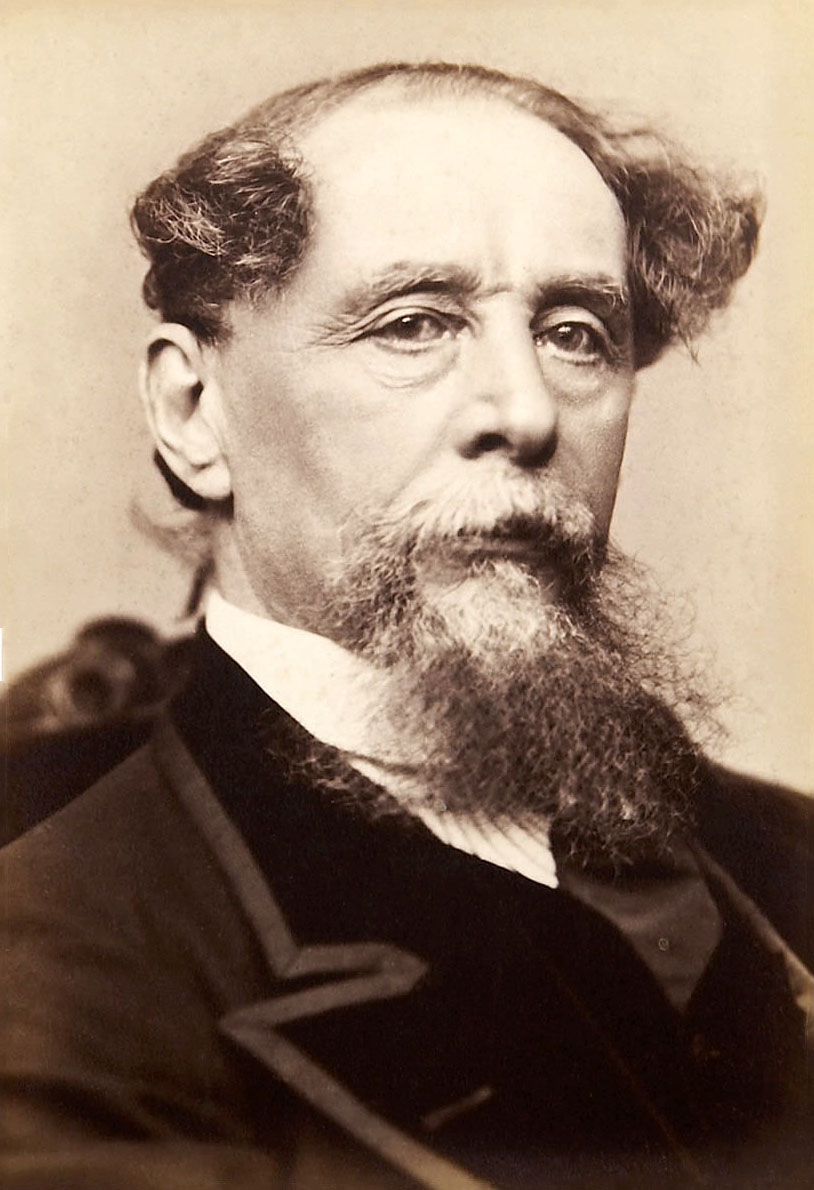
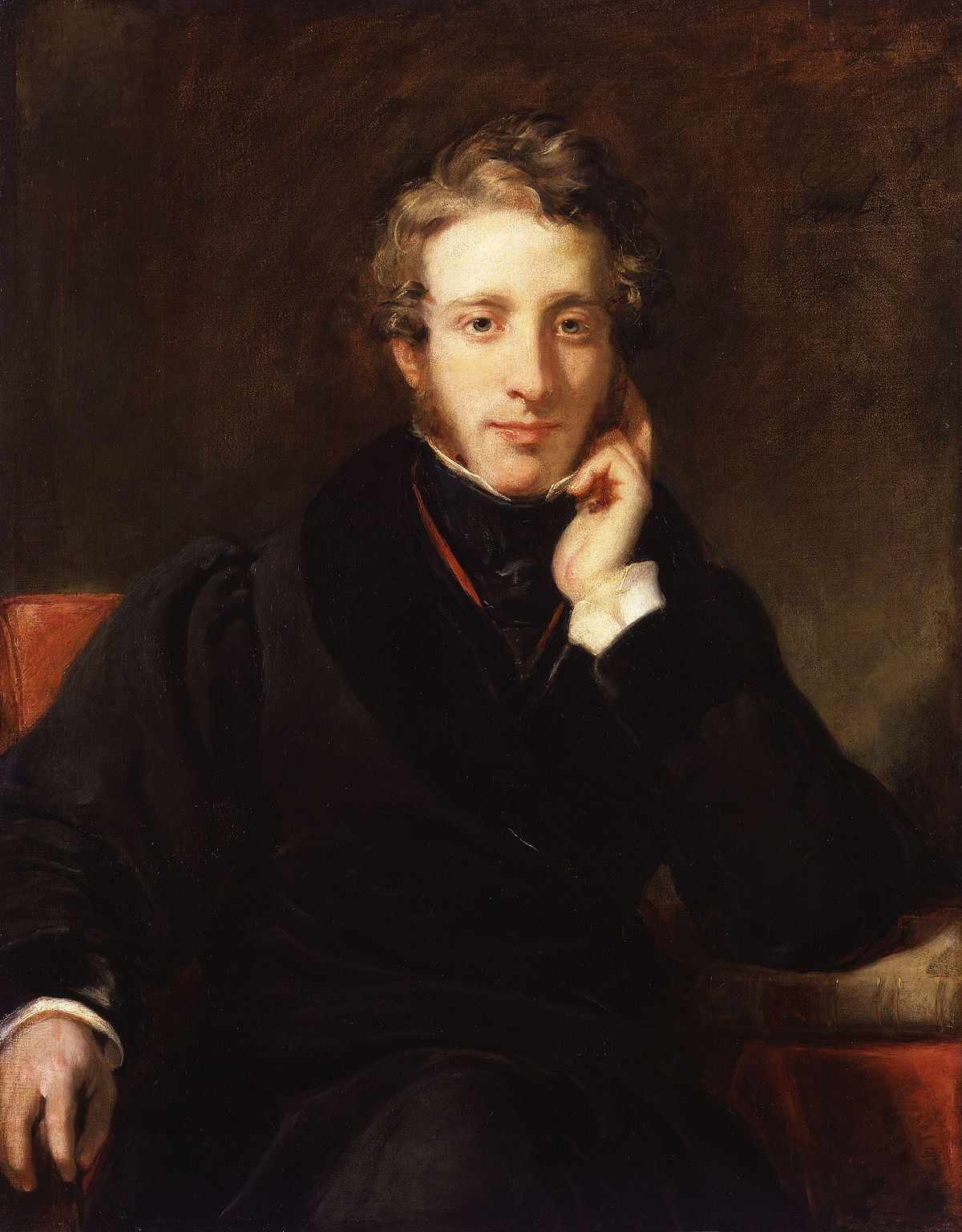
I like that ending even less, and thankfully Dickens was talked into changing it. He went to stay a few nights with his good friend Edward Bulwer-Lytton, also a well-known Victorian novelist. Dickens showed him the rough draft, and Bulwer-Lytton complained that the ending would be far too disappointing and anti-climactic for fans, especially after all they'd been through with Pip. He was a wise man. So Dickens scribbled out the last few pages and re-wrote them. He posted Bulwer-Lytton the new ending to see what he thought. It evidently got a nod of approval, because it's the ending we have now.

But you might say we still don't know for sure. Did they marry or not? I think Dickens was telling his friend in effect, 'Now I've worked it so everyone'll be happy. Sentimentalists like you can cling to the hope that Pip and Estella do get married. But at the same time, realists and pragmatists don't have to buy into it, if they choose not to. A good solution for everyone all round.'

What do you think? Was that clever of him or what? Dickens really did come up with a 'choose your own adventure' scenario, over a century before the concept took off. The netflix series I watched recently clearly went for the marriage option, and I was happy to go along with it.

 I think Edward Bulwer-Lytton was the real hero of this true anecdote, and I'll always be grateful to him for his bit of proof-reading. A bit more research on him shows that we owe this guy even more than you might think. He turns out to be one of those writers we often quote without even knowing it. The phrase, 'the pen is mightier than the sword,' was first coined by Bulwer-Lytton, although I might have guessed Shakespeare. He also came up with 'in pursuit of the almighty dollar' and 'dweller on the threshold.' But perhaps his biggest claim to fame (or infamy) might be his immortal opening line, 'It was a dark and stormy night.' He might have been happy enough to let his ownership of that one slip into obscurity :)

Here's my review of Great Expectations.
I've also written this rave about Pip.

Which of the alternate endings of Great Expectations do you prefer? 

Monday, July 17, 2017

'Gilead' by Marilynne Robinson


Twenty-four years after her first novel, Housekeeping, Marilynne Robinson returns with an intimate tale of three generations from the Civil War to the twentieth century: a story about fathers and sons and the spiritual battles that still rage at America's heart. Writing in the tradition of Emily Dickinson and Walt Whitman, Marilynne Robinson's beautiful, spare, and spiritual prose allows "even the faithless reader to feel the possibility of transcendent order" (Slate). In the luminous and unforgettable voice of Congregationalist minister John Ames, Gilead reveals the human condition and the often unbearable beauty of an ordinary life.

MY THOUGHTS:
This 2005 Pulitzer Prize winner was one of the books I picked up during a recent second hand shop trip. Probably one of the prizes of the haul.

77-year-old Reverend John Ames has been told by his doctor that his days are surely numbered due to a congenital heart defect. The old minister had married late in life, and has a much younger wife and 7-year-old boy. He decides to spend part of his remaining days writing down all the important things he believes he won't be around to tell his son as he grows up. So this book is like a stream of consciousness, or long letter written to the future young man. At least this way the boy will inherit something of his father's heart. And needless to say, a book with this intention is bound to be honest and selective about what the author chooses to share.

John's mind frequently wanders to the men of his own family, who were also pastors. He grandfather was a supposed visionary with a stern, Old Testament outlook and passion for the notion of purging war. Yet his son (John's father) was a pacifist whose ideas about grace were quite different. And then there was John's smart older brother Edward, who received a collection from the congregation to send him to a seminary in Germany. Yet he returned home an atheist. And interestingly, their collective generational experiences crossed three wars, starting with the Civil War and ending with World War Two.

John's childhood stories may appear a bit meandering and random on the surface, but there's always a sense that if they've stuck in his memory all those years, there's no doubt some significance for us too. It's a bit like listening to your own grandfather reminisce, and hopefully inspires readers who still have the opportunity to do so in reality. Hey, anyone who still has a grandfather or elderly father, go and visit him!

It's not all a hodge-podge of memories. There's a gentle plot brewing as well, especially when John reflects on current town events. His godson and namesake, Jack Boughton, is back after years of making mischief and breaking hearts. Why does old John Ames, who has shown himself to be broad-minded, kind and tolerant, have trouble forgiving Jack for something from the past which we don't know? It seems to verge on personal, and he admits he has trouble thinking charitable thoughts about him. We want to know why. It's the sort of book that can stir our nosy human nature for a bit of juicy gossip.

Jack is one of my favourite characters. The story makes us feel empathy for him, all the while we're reading disapproving words. I think it's partly because deep down, we get the feeling John cares deeply for him too. And reformed bad boys with mysterious secrets make intriguing characters. Jack's behaviour is often too quiet and dignified, and sort of weary and sad for a person who is presented as mean all through from his childhood. And he drops lines like, 'I always seem to give offence. I don't always intend to.' And we do eventually discover those bits of his background.

The way matters of faith come across in this novel really impressed me. It's not technically a Christian novel, yet John's words about his personal faith make it more convicting to me than many I've come across that are. He never writes or speaks as if he has an agenda to preach or proselytise. It's simply the justification of his life's work in his own mind, at a crucial time of his life. There are several quote-worthy lines, so I'll finish off with some of the ones which stuck out to me.

His reasons for writing. By the time you read this, I'll know most of what there is to know about being dead, but I'll probably keep it to myself. That seems to be the way of things.

Further thoughts about what heaven will be like. I think Calvin is right to discourage curious speculation on things the Lord has not seen fit to reveal to us.

On being awakened accidentally from a sound sleep (by poor Jack, of course). I felt just as I imagine the shade of poor old Samuel must have felt when the witch dragged him up from Sheol.

On seeking proof. My advice is this. Don't look for proofs. They are never sufficient to the question, and they're always a little impertinent, because they claim for God a place within our conceptual grasp. (Wow, if only we remembered that one more often.)

On being unable to find the right words. My failing the truth could have no bearing at all on the Truth itself, which could never conceivably be in any sense dependent on me or on anyone.

On changing times. The same words that carry a good many people into the howling wilderness in one generation are irksome and meaningless in the next.

On keeping resentments and grudges. It is worth living long enough to outlast whatever sense of grievance you may acquire.

And my favourite quote of all. The Lord is more constant and far more extravagant than I seem to imply. Wherever you turn your eyes, the world can shine like transfiguration. You don't have to bring a thing to it except a little willingness to see.

(Update: See here for further thoughts from a re-read almost ten years later.)

5 stars

Friday, July 14, 2017

'Blood Crystal' by Jeanette O'Hagan

35517394

There's something very special about today's review, because it's part of a blog tour. It was started off by the author, Jeanette O'Hagan on her own blog here. Over the next couple of weeks, Blood Crystal will be featured on a variety of different blogs. There will be interviews, reflections and competitions. My stop is the second in line, with this review. At the end, have a look down the bottom of this blog post for Scavenger Hunt details and next blog on the list. 


MY THOUGHTS:

This novella is the sequel to Heart of the Mountain, which I also enjoyed. It takes off right where that story ends. The area in which the action takes place reminds me of a microcosm of our world. Racial differences and tensions between the cave dwellers and above grounders are intense and fun to explore. In each case, it's easy for readers to immerse ourselves in their contrasting customs and attitudes, putting us in a position where we can easily understand both mindsets. That's an interesting place to be, since they're opposite in many ways.

This time, twins Delvina and Retza discover that the future of their people is at risk, since the crystal heart technology which gives them light, warmth and life is losing its strength. There are some ancient instructions but they're too cryptic to fathom. In the face of this calamity, Delvina remembers their new friend Zadeki, who has come through for them before.

He in turn struggles with being a junior member of his own tribe and family, especially when he knows he's capable of giving so much more than they're willing to acknowledge from him. Perhaps the urgent challenge from his new friends will help him raise his status. But they have to find him first.

It was great to return to another story of these guys. I especially love the twins. Their character differences make for some entertaining dialogue, just like before. Delvina is the more idealistic of the pair, while her brother is more cautious and tentative. You trust they'll always end up on the same page, but sometimes wonder how. Once again, the possible necessity for a blood sacrifice seems to be required, making it vital for everyone to search their deepest consciences. It's another blend of intense action and heart-searching from Jeanette O'Hagan.

Oh, and this introduces some new characters to the mix, with an agenda of their own, who I trust we'll see more of down the track.

AND THERE'S A SCAVENGER HUNT


Blood Crystal Scavenger Hunt will run throughout the  Blood Crystal Blog Tour.  Each blog will have a reflection or memory related to themes within Blood Crystal – and a related question. The first person to answer all NINE questions  right will win a $50 Amazon voucher. The runner up will receive copies of both Heart of the Mountain and the sequel Blood Crystal.
Follow each post on the blog tour to find the questions & list your answers in the comments on the final blog post of the tour on 28 July. 
OK, for my part of the Scavenger Hunt, I thought I'd keep going with the underground theme. In 2009, I had a novel published named 'A Design of Gold'. It's a contemporary drama set around parts of my own environment, the Adelaide Hills. Stranded on the outskirts of the country town of Callington, my two young heroes plunge suddenly into a deep, dark hole. It turns out to be an old, abandoned mine shaft, because it was once a copper area. But this shaft was overlooked and nobody is even aware of its existence. Since the two young men are miles from anywhere, and they haven't mentioned their whereabouts to anybody, they're in a nasty fix. Hunger, thirst, exposure and injuries are beginning to get the better of them. How can they save themselves from certain death, when they've never been in a more seemingly hopeless situation?
My question for the Scavenger Hunt is 'What mineral used to be mined in the Adelaide Hills town of Callington?  
The next stop on this tour will be the blog of Aussie YA fiction author Lynne Stringer, which you can check out here. I encourage anyone to follow the rest of the blog tour, and also read both Heart of the Mountain and Blood Crystal, which won't take you very long and will intrigue you for more.