Friday, December 16, 2016

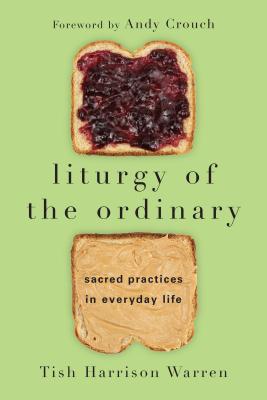
'Liturgy of the Ordinary' by Tish Harrison Warren

30010106

Many of us go through the day feeling like we don't have time for God. But God can become present to us in surprising ways through our everyday routines. Framed around one ordinary day, this book explores daily life through the lens of liturgy, small practices and habits that form us. Each chapter looks at something making the bed, brushing her teeth, losing her keys that the author does in the day. Drawing from the diversity of her life as a campus minister, Anglican priest, friend, wife, and mother, Tish Harrison Warren opens up a practical theology of the everyday. Each activity is related to a spiritual practice as well as an aspect of our Sunday worship. Come and discover the holiness of your every day.

Genre: Christian devotional, self help, personal development

MY THOUGHTS:
This book was just what I needed.

I love its emphasis on rhythms, routines, cycles, rituals, or whatever else we like to call those things we repeat over and over again. Our lives are full of daily, monthly, seasonal and annual repetition. Tish Harrison Warren sets out to explain how there's holiness and dignity in what we easily dismiss as mundane and tedious.

It's structured in the form of a random, typical day from her calendar, beginning with waking up and ending with going to sleep again. She presents fresh ways of thinking of all these moments, and I'll mention just a couple.

In the chapter on bed making, she describes how she used to begin each day checking emails and social media. (That looks very familiar, before my feet hit the floor.) Then she realised that she'd set herself up to expect stimulation and entertainment from the get-go. If you're like me, we're gently encouraged to welcome a bit of quiet sameness, and not to bolt away from mild boredom the moment we get a whiff of it.

There's a chapter on cleaning teeth and all those other mindless rituals which remind us that we're temples of the Holy Spirit. She delivers some good, straight talk here. Using our bodies for false worship is akin to using consecrated bread and wine in a Wiccan goddess ceremony. And denigrating our bodies by our mirrors is like running down a geographical sacred site. Yeah, sometimes we need of dose of this.

The 'Eating Leftovers' chapter leads to an interesting reflection that apart from occasional delicious feasts that wow our socks off, most of our home cooked meals are pretty basic, unremarkable fare, just like the grace of God appears to be. We've been conditioned in our modern era to want the spiritual intensity of meals cooked by celebrity chefs. People who attend church services and conferences are often longing for new truths, emotional experiences, signs and miracles. But life is just made up of good, nourishing food. If we are tempted to equate our scriptures with boring, dry old bread, well she advises us to just keep getting stuck into them anyway, because we'll develop a palate for the truth.

A chapter entitled 'Checking Emails' is about the attitude in which we approach our work. It's easy to be a Martha in our technology driven world, when work is always at hand. Or we can go to the opposite extreme and totally idolise the notion of complete escapism. Warren recommends something in the middle. We do our daily work from a relaxed, peaceful attitude of already being blessed, rather than a mad scramble to prove ourselves worthy. This will help combine the activity of Martha with the reflectiveness of Mary.

The other chapters are equally thought provoking. Losing the car keys, the pleasure of a cup of tea, getting stuck in traffic jams. It all brought home to me how much repetition we have to cope with, so we might as well make peace with it and consider all these routines to be sacred privileges, instead of grumbling about them and considering them to be annoyances. It's a book I'll be wanting to dip into more often just to remind myself.

Thanks to Net Galley and InterVarsity Press for my review copy.

5 stars

Wednesday, December 14, 2016

'Scarlet Moon' by S.D. Grimm

31186223

The hunted Feravolk are counting on Jayden, a seventeen-year-old, dagger-wielding, storm-detecting orphan, to save their race. Maybe they should have thought of that before they killed her family.

The land of Soleden is dying because the sorceress queen hunts and kills the people who cared for all nature, the Feravolk. Through their special bond with animals, the Feravolk have become more than men. Faster, stronger, masters of camouflage and stealth. Only a Deliverer born the night of the Blood Moon can save them from extinction.

According to prophecy, Jayden is a Deliverer, but it’s not a destiny she wants. She has no sympathy for either side. The Feravolk killed her family, so they can die for all she cares. And fighting the queen with nothing but daggers and her special abilities—storm predicting—is a suicide mission. Destiny can pick someone else.

Except hiding from destiny proves difficult; Deliverers attract powerful Protectors. Jayden’s is one of the Feravolk, so he can’t be trusted. But he makes her feel safe. Makes her want to save his race. If she chooses to keep hiding, he’ll remain one of the hunted, but he’ll protect her even if it means his death if she faces the queen. Making the right choice has never been so excruciating, especially since the prophecy says nothing about the Deliverer’s success, or survival.


Genre: Fantasy adventure, Christian and secular, YA

MY THOUGHTS:
Strong fantasy isn't usually my first choice of genre, but I was requested to read this and it's quite a fascinating story once we grasp it.

It's not the easiest plot to latch onto at the beginning. The story is told in third person with five alternating points of view, so initially we are shuttled from one perspective to another without knowing what's going on. Since the characters themselves aren't even clear about the happenings elsewhere in their realm, it stands to reason that the reader won't be either, until enough time has passed that we begin picking up the threads of the fast moving story, with its deception, violence, loyalty and adventure.

There are several main characters but foremost is Jayden. The story starts when her beloved parents and brothers are slaughtered trying to protect her from aggressive soldiers who attempt to abduct her. Jayden was a child born on the night of the Blood Moon. These young people have distinct, identifying birthmarks and unique skills that set them apart from others. Evidence seems to indicate that the Feravolk people are behind the attacks, giving her good reason to hate them.

Jayden's fiance, Ryan, is seriously injured with a poisonous arrow as he helps her escape, setting her off on a quest to save his life. It's vital to get hold of a specific rare herb which only grows in the Valley of Hidden Ones, where she and her friends must contend with dangerous animals, including unicorns. They are also forced into the proximity of the corrupt queen's royal army, who really are responsible for the attacks on Blood Moon children.

Jayden's companions include her protector, Logan, who happens to belong to the Feravolk, and his wolf companion Westwind. For those who enjoy lovers' triangles, there are emotional moments when Ryan's brother Ethan joins them, especially since he is a dashing and heroic main character himself. Jayden has always known she's never felt passionately in love with his brother, so the stage is set for tension.

The monarch, Idla, deserves to take her place in the ranks of literary evil queens. She has her own selfish reasons for wanting to get hold of all the Blood Moon children, and sneaky ways of setting about it. Other members of her court include Franco, her despicable son, Oswell, her chief advisor, and assassins Thea and Kara, the 'Destruction Sisters'. Logan's wife Rebekah is also forced into the queen's service, along with their son Connor, for reasons the reader has to discover.

There is a dark fairy tale feeling about Soleden, the setting, and the characters are endearing with lively dialogue and heroic perseverance. This book is almost 400 pages long and there are sequels coming, so readers who enjoy long, epic fantasy adventures should be well satisfied. However, others may find it a challenge, trying to make sense of a world we don't understand, and being forced into the head spaces of people who do.

Thanks to Net Galley and Enclave Publishing for my review copy.

3 stars

Monday, December 12, 2016

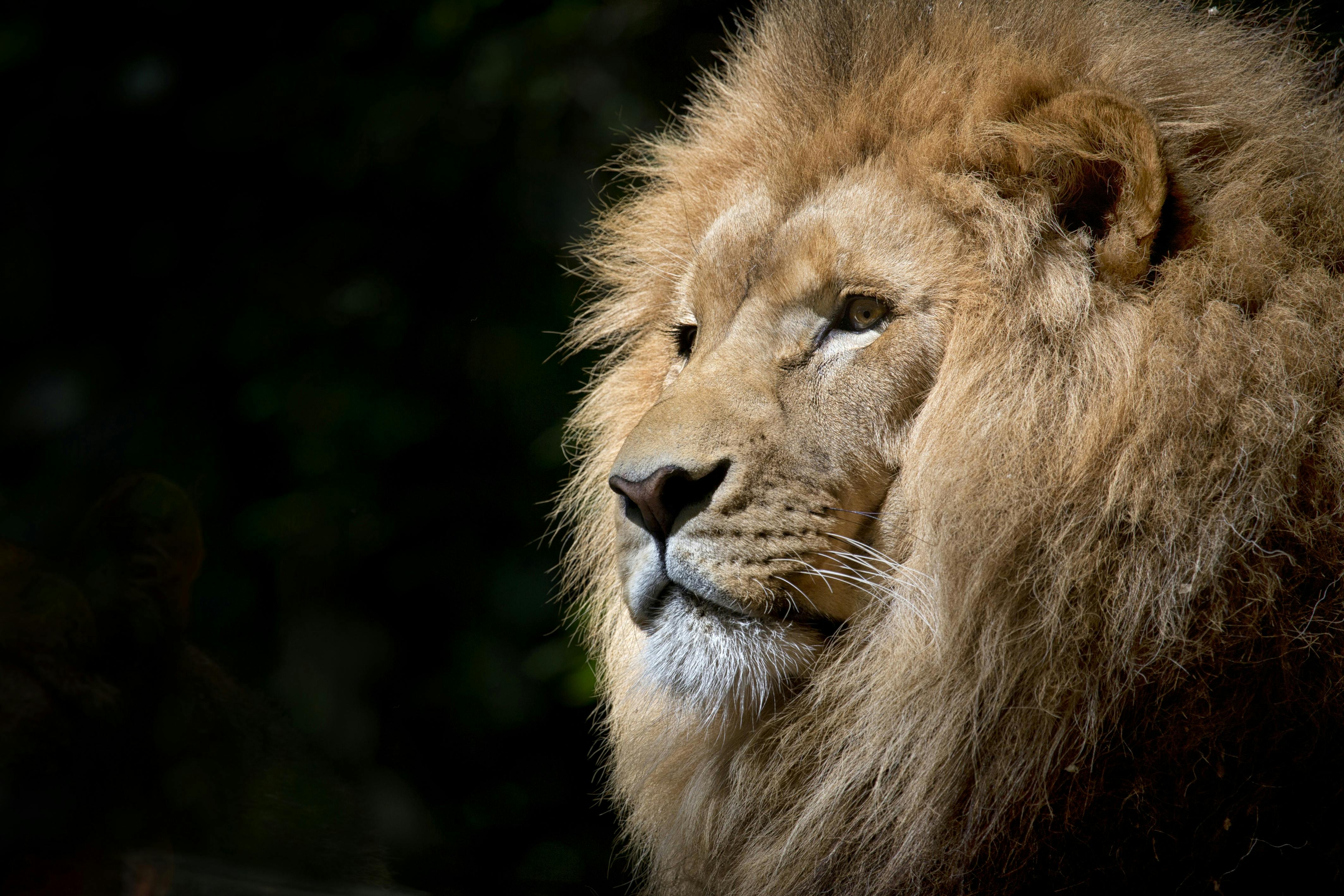
Giant Cats in Literature


Some time ago, I wrote this list about cats through literature, but they were more the cuddly, domestic types. I promised to write a follow-up post with more majestic, giant cats, and this is it. They are certainly imposing, gorgeous and fierce enough to deserve a list of their own. Here are the examples I could think of. At the end, we noticed something quite interesting about all of them.

Richard Parker
He was the Bengal Tiger who became the accidental lifeboat companion of Piscine Patel, the teenage shipwreck survivor in 'The Life of Pi'. This big cat acquired his unusual name as the result of a clerical error at the zoo, when he was mixed up with a human. It's a fascinating read to see how the boy works carefully to establish himself as the alpha animal during their 227 days on the sea together.

Bagheera
This black panther is a Rudyard Kipling character who was born in captivity in an Indian menagerie. He managed to break his lock and chains and escape to the jungle, and later in life assisted the wolf pack who raised Mowgli the 'man cub'.

Shere Khan
While watching 'The Jungle Book' as a kid, I remember the skin-chilling impression I got whenever this name was mentioned. His name probably translates to 'tiger sovereign' and his arrogance is boundless. Shere Khan kept his menacing eye on Mowgli for years, providing the dark element to the story. From a plot perspective, he kept 'The Jungle Book' from becoming too lighthearted at any time. His dark presence was always a threat (and I remember hating him as a sensitive little kid).

Tigger
This bouncing, good-humoured resident of the Hundred Acre Wood represents the sanguine personalities among us. He may also be the poster boy for people with conditions such as ADHD. Think of his tireless exuberance, and how he sometimes fails to realise that his actual skills fall far short of his bubbly confidence. This makes perfect sense, if you buy into the fascinating theory that each of the characters in the Pooh Bear stories have their own forms of personality disorder.

The Pink Panther
Can you read this name without having his theme song play through your head? I remember the cartoons on TV when I was little, and took him on face value as a cool, pink dude with loads of swagger. It came as a big surprise to discover that the pink panther in the movies with Detective Jacques Closeau was not actually a big cat at all, but a rare gem. I was a bit miffed about that.

The Cowardly Lion
He was a member of the foursome who traversed the Yellow Brick Road on their way to consult the mighty wizard at the Emerald City. The poor guy shouldered a shame complex almost as heavy as himself. All he wanted was a dose of courage to help him through life. The perils of their travels demanded confidence and bravery from him many times, but he wouldn't believe he had it all along until he received his little trinket from the wizard.

Simba
Remember when we all fell in love with this cute lion cub in the mid 90s? The whole story was a bit of a family affair, so I'll sum up his relatives too. There were his parents, Mufasa and Sarabi, and his uncle Scar, who was a traitorous Richard the 3rd type of character who wanted the throne for himself. A lot of the plot dealt with Simba escaping death traps from his uncle, along with his playmate Nala, who later became his wife.

Elsa the Lioness
She was the real life friend and companion of author Joy Adamson and her game warden husband George. They brought up the orphaned female cub by hand, treating her like a domestic pet but also trying to instill in her the skills to live in the wild like her peer group. When she was old enough, the couple finally released her.

Alex
He was one of the escapee protagonists from the movie 'Madagascar'. Alex initially had second thoughts about joining the others, since he was self-proclaimed king of the zoo, and a celebrity with lots of attention to boot. Captivity was treating him kindly. It was hard to imagine that returning to the wild could top such a pampered, leisurely lifestyle. His story included coming to terms with his roots, including the heartache of his African father Zuba, when he was first captured.

And my very favourite literary giant cat ...

Aslan
He's the wise and strong king of Narnia, who always has the welfare of his dear subjects firm in his regal paw. C.S. Lewis' wonderful allegorical writing makes it clear who he represents, or if it doesn't instantly, it may dawn on readers down the track. Even before we're introduced to the King himself, he begins to make an impact. Remember when Mr Beaver breathed the name 'Aslan' with such awe, which evoked contrasting feelings in Peter, Susan, Edmund and Lucy. And who could ever forget that culminating scene on the stone table, when he sacrifices himself in the place of Edmund, the traitor?


Do you notice anything interesting about this list? Sure, they're an eclectic bunch pulled from far and wide, but that's not it. My 12-year-old mentioned it straight away when he looked down this list. 'Some of those cats really aren't very cool.' How true! A fair share of these characters, rather than being rulers of the jungle, are very issue-laden. At first I wondered if it's some type of tall poppy syndrome, with story-tellers unconsciously wanting to take these fierce beasts down a peg or two. 

But perhaps what these stories are getting at is something better. If noble, majestic beasts have their struggles and insecurities, then why should we expect any less? We could take them as encouragement to draw upon the dignity, beauty and strength in each of us, no matter what is going on in our lives.

What are your thoughts? Are there any giant cats I've missed, and who are your favourites? 

Friday, December 9, 2016

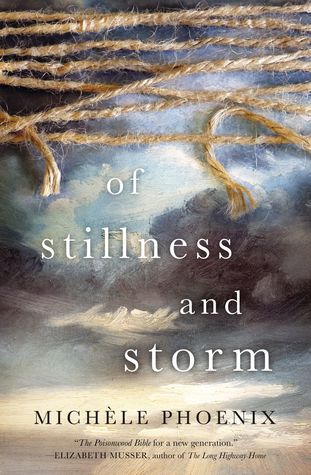
'Of Stillness and Storm' by Michele Phoenix

29492092

“I felt torn between two worlds. Each with its own mystery. One more captivating than the other, but the other more real and breathing.” 

It took Lauren and her husband ten years to achieve their dream—reaching primitive tribes in remote regions of Nepal. But while Sam treks into the Himalayas for weeks at a time, finding passion and purpose in his work among the needy, Lauren and Ryan stay behind, their daily reality more taxing than inspiring. For them, what started as a calling begins to feel like the family’s undoing. 

At the peak of her isolation and disillusion, a friend from Lauren’s past enters her life again. But as her communication with Aidan intensifies, so does the tension of coping with the present while reengaging with the past. It’s thirteen-year-old Ryan who most keenly bears the brunt of her distraction.

Intimate and bold, Of Stillness and Storm weaves profound dilemmas into a tale of troubled love and honorable intentions gone awry.


Genre: Family drama, Christian and secular

MY THOUGHTS:
The heroine of this story is Lauren, who unwillingly lives a spartan lifestyle in Kathmandu, Nepal, teaching English as a second language. Her 13-year-old son Ryan also hates the lifestyle to the point of sinking into such deep depression she can't reach him. They are there because of Sam, their husband and dad, whose missionary zeal is the driving force.

It's all about warning us to take care before getting attached to zealots whose passion far exceeds our own. Sam is like a modern St John Rivers from Jane Eyre. Deprivation is a badge of honour to him, but a pain in the neck to his family. He keeps his conscience clear because he doesn't expect anything from his wife and son that he's not prepared to give himself, but never stops to consider that few people are designed with his tireless ardour. He even worded his marriage proposal like an exam, telling her he didn't want to be the sort of guy who'd lose track of his goals because of his family. Sadly, Lauren didn't recognise the warning and duck out like Jane Eyre, but got attached to him anyway.

Her attitudes and motivations are easy to understand. She grapples with guilt because she knows that compared to him, she's just going through the motions. She finds herself eagerly catching up with her old friend Aidan on Facebook. He offers something she's not getting from Sam, being a free-spirited artist who even disregards the conventions of the English language.

The person I felt for most was Ryan, since kids don't get to choose their parents, then get dragged from pillar to post. The story raises so many questions. Should those with such strong standards for the way they approach mission work even have families, since it's clear they'll be pushed into second place and forced into molds which don't fit them? Maybe people like Sam should follow the example of St Paul, who probably didn't for that very reason. Can we ever force ourselves to take on the burdens of someone else's heart, no matter how much we love them, and should we even be expected to? Can decisions which we make with the shortsighted, rose coloured glasses of youth cast shadows over us for the rest of our lives? In my past, I've come across a few deep and meaningful Sams who I greatly admired, but as I read this novel, I felt grateful that I married my husband instead :)

It wasn't the style of book I usually go for. I'm not a fan of gut-wrenching heartache (of which this book has its share), but sometimes when you're making requests for ARCs based on brief blurbs, you have to accept the risk. I'm a highly sensitive person and also a bit on an empath, which makes it easy to take others' grief on myself. When an author's writing makes me fond of characters, it sticks with me for ages when horrible things happen to them. That's why I'm not giving it full marks, but I know this is a personal thing. Michele Phoenix's writing certainly deserves five stars, and she does warn us herself in the notes at the back of the book that this is a cautionary tale.

Thanks to Thomas Nelson and NetGalley for my review copy

3 stars

Wednesday, December 7, 2016

'Little Women' by Louisa May Alcott


Following the lives of four sisters on a journey out of adolescence, Louisa May Alcott's Little Women explores the difficulties associated with gender roles in a Post-Civil War America.

Genre: Young adult, classics, family stories.

This review is of the first installment of Little Women. It was eventually pulled into one volume with its follow-on sequel, which was initially called 'Good Wives' but I'll review that one separately, since I own distinct old volumes. And I think you'll agree this review is long enough. 

MY THOUGHTS:
This is a beautiful, ever-lasting memorial to the lifestyle the author lived with her sisters well over a century ago, while many men were off serving in the Civil War. I think it's a great book to pull us out of a bad mood. The March sisters all had their cranky moments, but used the attitude tools their parents showed them to move through.

Marmee comes across as the wise, loving mentor they all considered her to be. 'The girls thought the grey cloak and unfashionable bonnet covered the most splendid mother in the world.' What an awesome introduction and tribute. I noticed something interesting this time round, when she spoke to Jo about overcoming her bad temper. I'd always remembered it wrongly, thinking Mrs March had managed to pull off a total personality transformation. But what she actually said was, 'I've been trying to cure it for 40 years, and have only succeeded in controlling it. I am angry nearly every day of my life, Jo, but I have learned not to show it.' Wow, that's different from what I'd thought. Maybe we're being unrealistic whenever we set about trying to change ourselves into someone else. Perhaps our weaknesses are just part of our fabric, and we need to focus on managing them rather than eliminating them altogether.

'Little Women' does get me thinking about the nature or nurture debate. At first sight it seems nature has its way, since the four sisters are so different from one another. Yet it can't be denied that birth order may have a bit of bearing on their family. Beth and Amy were treated a little more leniently and indulgently than Meg and Jo. Those two were referred to often as 'the children' even though there was only four years between all of them. Would Amy have still tried to impress people with her ridiculous, mixed-up words if she'd been born first? Or would Meg have felt the need to deliver quite so many lectures to the others, if she'd been youngest? Interesting to ponder.

I'll be glad to move on to the next book, when Amy's vocabulary blunders have finished. It reached the point where she was coming out with one every time she opened her little mouth, and then like a Pavlovian dog reaction, Jo would always make some snarky, superior correction. I felt like saying, 'Come on dudes, can't you both stop?' When quirkiness moves into predictability, it's not so cute anymore. However, I do remember that on my first reading of Little Women, when I was very young, the comedy was all completely lost on me, since I didn't know the meanings of the real words or Amy's wild guesses either.

It's handy to be familiar with some of the older books the girls refer to all the way through, since they impacted their lives in such a good way. For example, Pilgrim's Progress and Pickwick Papers become the basis for all sorts of games and leisure. It's good to see how the girls used other people's writing to shape their own characters. They didn't even realise they were doing this, since it was all in the name of having fun. So Bunyan and Dickens did for them just what Louisa May Alcott herself does for us. I love this pay-it-forward aspect of a good story.

This time around, I felt my heart leaning more toward Meg than ever before. I remembered her as the know-it-all big sister who seemed to have it all together, but she drops some of the most touching quotes which could come from someone straight out of the twenty-first century. 'I shall have to toil and moil all my days, with only little bits of fun now and then, and get old and ugly and sour because I can't enjoy my life as other girls do.' She also says, 'We go grubbing along, day after day, without a bit of change and very little fun. We might as well be in a treadmill.' My own teenage daughter has said similar things, in different words, and I totally get them.

For a girl who appreciates luxury and leisure as Meg does, her choice of fiance seems sort of counter-intuitive. She knows that agreeing to marry a modest, hard-worker like John Brooke will keep her doing the same things she's always done. If she really wanted the riches and pretty things she admired so much, she might have done better to have chosen the stylish Ned Moffat after all. But common sense and true love win out, and we've got to love her and her choice.

That brings me to Jo's situation, which is my biggest gripe. The first part of the story ends with Meg's engagement and Mr March's return. If I was a fresh reader, I'd be anticipating the budding romance of Jo and Laurie in the follow-up. I'd be assuming Alcott was clearly heading in that direction. That pair had common interests crying out to be noticed. They were both fun-loving with a penchant for generous gestures, a tendency to be impulsive and a love of simple mischief and cheek. They shared a mutual disregard for some of society's more nitpicky maxims and always managed to calm each other down when necessary. Jo was adamant that she'd never be swept off her feet by anyone, yet yearned for 'Teddy' whenever she felt lonely. If I didn't know what was coming, I'd be expecting her to fall heavily for the boy next door. I know many people have felt ripped off over the years, thinking Alcott pulled a mean trick on us all. There's a place for platonic friendships, but these two could have been so great.

The first installment ends this way. 'So grouped, the curtain falls upon Meg, Jo, Beth and Amy. Whether it ever rises again depends upon the reception given to the first act of the domestic drama called Little Women.' Wow, what an outright pitch within the text itself! It definitely worked for Louisa May Alcott, but it would be interesting to see writers try a line like that now.

Even though the writing style may be a bit dated by modern standards, I still want to give it full marks for what it is, because Alcott wrote a fantastic girls' book for a Civil War chick, when there probably weren't all that many others around. I'll get on with 'Good Wives' which takes place three years later.

5 stars

Update: I've now reviewed the second installment of the story, Good Wives.
And here is my review of March, the Pulitzer winning novel written by Geraldine Brooks about their father, and how he fared in the war.


Monday, December 5, 2016

Why don't we leave comments on blogs?


I thought I'd jump headlong into a subject which tends to be the elephant in the room. Bloggers often choose not to mention the number of comments our posts elicit, and I can think of a few reasons why. (When I use pronouns such as 'we' and 'you' in this blog post, I'm speaking generally, and not singling out individuals.)

1) We don't want to come across as needy or whiny by mentioning how few comments we receive. We don't want to be that annoying blogger who does guilt trips on all our friends.
2) We genuinely wish to convince ourselves that it makes no difference. We repeat the mantra that we love our hobby so much that lack of feedback is irrelevant. 
3) We don't want to bring our gripe to the attention of others and be known as the loser with no followers (in case they haven't already deduced this by our lack of comments). 

I wonder if I'm speaking for many of us when I explain what I've come to believe is the truth. Indeed numbers shouldn't be as important as we tend to make them, yet telling ourselves lack of feedback means nothing is just self-delusion. We should definitely strive to reach a point where our need for pats on the back isn't overwhelming, but at the same time, it's pointless to deny we are social creatures. A pastor who preaches week after week to an empty auditorium might eventually reconsider his calling and decide to stay in bed one Sunday. Just because we're talking about cyber-space here, the same thing applies to passionate bloggers. Encouragement, even from a small circle of friends, may one day make the difference between persevering or giving up.

That begs the question, well, why don't we comment more often? Whenever I look at my blog stats, the number of views is always far higher than the number of comments, sometimes like triple figures to zero. So what is it about human nature that holds us back from dropping a quick line or two, which might take a couple of seconds? I believe I've come up with three main reasons. See if any of these resonate with you.

1) We've passed saturation point.
Throughout history, information overload has never been as acute as it is for our generation. I've seen studies which cite that even our most scholarly ancestors never contended with as much information as every one of us do, often before our feet even hit the floor in the morning. Posts and articles zap around the globe and onto our screens non-stop. Annoying pop-ups vie for attention with clever, slick click-bait titles, all screaming, 'Look at me!'

Our attention is a limited resource, like precious oil, and it's easy to reach a point where there's no longer enough to spread around. I once read about a jam factory, which offered consumers so many delicious flavours to sample at a market stall, that most people couldn't make up their minds and walked away instead. In a similar manner, bloggers are lucky if we even skim their posts, let alone take time to comment!

2) We're Commitment-Phobes.
We aren't born this way, but modern western society has this effect on the best of us. There are enough things we have to do without bothering to stick out our necks and do something that's merely optional. Juggling every day bureaucratic red tape and form filling is compulsory for every one of us. How easy then, to ignore something that isn't absolutely necessary. Even if you enjoy your friend's blog enough to keep returning for more, being a lurker is far more convenient than commenting and probably frees up a couple of minutes of our day.

3) We feel shy and inadequate.
This one is possibly my biggest issue, and harks back to my Primary School days, when I used to try to make friendly gestures, which were sneered at or rejected. When you retreat back into your shell and vow never to emerge again, that instinct may still be driving you decades down the track.

We fear that our comments may appear dumb or obvious. Typing something like, 'I love your thoughts,' may come across so lame to us, we choose to say nothing at all. It's easier to wonder forever whether this witty or entertaining blogger has the potential to be a friend than risk putting out feelers and being ignored or cut down.

So here's an idea.
I'm going out on a limb a bit here. Who would be willing to be part of a small accountability group who looks after each other's blogs? I'm not talking about a blog alliance, which is something different and more formal. I consider what I'm thinking of to be more like blog caretakers. We keep a number of blogs on our radars, and without committing to comment on every single post, if we notice them looking a bit neglected over time, we leave an encouraging word or two in the comments. It may sound contrived, but since there's friendship and honesty behind it, it isn't really. If you think it sounds like a good idea, let me know in the comments, email or PM. (By the way, I'm grateful to those who do take the time to engage in my blog comments already. I know and appreciate you all.)

On a personal note, one of my main resolutions for 2017 will be to leave more comments than I already do, whether anyone joins me or not. The thought of commenting on new blogs always makes me nervous, but I can't help thinking it may be a risk worth taking. It may sound like a funny kind of New Year's Resolution, but here's why I think it's a good one.

1) It's a small action that can really make someone's day. Fellow bloggers, have you ever opened your inbox and had your heart leap with anticipation when you've seen a comment or two waiting? Since I've never had a talent for making big gestures, I'll go for this small one, which may well have the same effect.
2) I've convinced myself by this blog post that leaving comments is a sign of uncommon generosity. It seems from what I've said that not leaving comments is the common human reaction. If you want to be an uncommon person, this simple habit sounds like a way to raise ourselves higher than average. What's not to like?

As usual, I'd love to read your comments. That sounds like a bit of an awkward invitation considering the nature of this post, but I'll wait to see what happens, haha.  

Friday, December 2, 2016

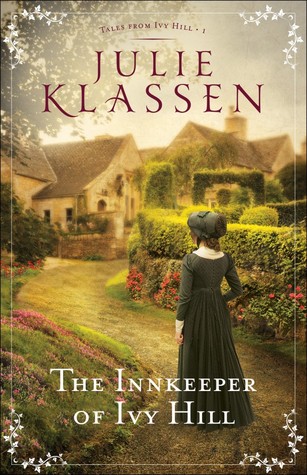
'The Innkeeper of Ivy Hill' by Julie Klassen

28561667

First Series from Bestselling Author Julie Klassen!

On a rise overlooking the Wiltshire countryside stands the village of Ivy Hill. Its coaching inn, The Bell, is its lifeblood--along with the coach lines that stop there daily, bringing news, mail, travelers, and much-needed trade.

Jane Bell lives on the edge of the inn property. She had been a genteel lady until she married the charming innkeeper who promised she would never have to work in his family's inn. But when he dies under mysterious circumstances, Jane finds herself The Bell's owner, and worse, she has three months to pay a large loan or lose the place.

Feeling reluctant and ill-equipped, Jane is tempted to abandon her husband's legacy and return to her former life of ease. However, she soon realizes there is more at stake than her comfort. But who can she trust to help her? Her resentful mother-in-law? Her husband's brother, who wanted the inn for himself? Or the handsome newcomer with secret plans of his own . . . ?

With pressure mounting from the bank, Jane struggles to win over naysayers and turn the place around. Can Jane bring new life to the inn, and to her heart as well?


Genre: Historical fiction, Christian and secular, with romance and mystery.

MY THOUGHTS:
Julie Klassen is known as a Regency romance author, but it's a stretch to call this one. It's more like a village chronicle. These can be really engaging if written well, but tend to get a bit slow and rambling if the author isn't careful. This one is terrific. Julie Klassen nailed it. I could imagine every moment playing out as one of those TV series we all look forward to relaxing in front of.

There's so much going on, but the main framework is the friction between two key characters, Jane Bell and her mother-in-law, Thora. Jane has reluctantly inherited the village Inn from her husband John, who died in a tragic accident. Thora can't help feeling resentful, since Jane was brought up as a gentlewoman, and has no business experience. She hates relinquishing the reins of her family pride to somebody who may well let everything fall apart. And Jane finds that Thora makes her edgy and nervous.

It's discovered that John had recently taken out a huge loan, but nobody can see where he poured the money, or find whatever he might have left over. (That's the mystery!) They have to pull together if they want to save the Inn, let alone live in harmony. This includes Thora's unscrupulous younger son, Patrick. And meanwhile, entrepreneur James Drake is snooping around with plans to set up a flash rival hotel nearby.

At first I thought a lot of the novel focuses on business rather than relationships, until I saw that they're so tightly woven together, the relationships wouldn't be what they were without business pressure molding them. Since there's such a large cast of characters, there are a couple of admirers for both women. They all seem like pretty worthy contenders, and I was happy just to wait for it to unfold, since romance isn't a major feature of the novel.

I love how the story shines a sort of feminist message in a really gentle and powerful way, just because of how things were back then. All the unfairness is shown and not told. Rachel Ashford is turfed out of her family home after her father's death, because properties were always entailed to distant male relatives. Thora has formed pessimistic views about marriage, some from experience, since all a woman's property would instantly become her husband's. Most revealing of all is the collective experience of Ivy Hill's business woman and knitting group. People refused to believe these skilled women were capable of producing good, marketable work, and chose the illusion that it must have been done by a man. Even Jane realised she'd unconsciously regarded members of her own gender this way, to her shock and shame.

My main disappointment with the novel is having to wait for the next one to find out what will happen now. There are so many great characters whose threads may be picked up. I hope Jane will still feature strongly in the sequel. She turned out to be one of those characters whose positive impact sticks in my mind. After all the losses she'd suffered (of which her husband's death is just one), her final, reflective attitude sits well with me. Even though nothing ended up matching the ideal plans for her life she concocted when she was a girl, she decides there's still a lot of good in her world on which to focus.

Thanks to Bethany House and NetGalley for my review copy.

5 stars