Monday, September 7, 2015

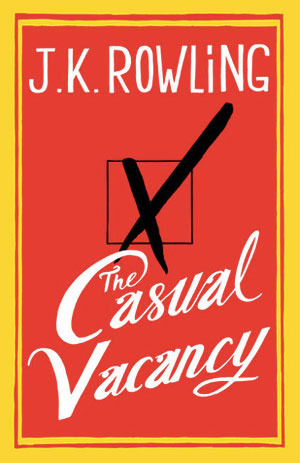
'The Casual Vacancy' by J.K. Rowling


13497818

2015 Reading Challenge, Week 36 - A Book that Scares you.

I didn't know what to choose for this category, as I didn't want to delve into horror or tragedy. It's not worth getting myself totally miserable just for the sake of this challenge. When I saw this book's spine on my library shelves, I knew it would fit the bill. Since it was first published, I've heard people call it deplorable, horrible and dark with no redeeming feature. That's what scared me off reading it in 2012. I even included it on my list of books I was hesitant to read. Having finished it now, I'm glad I read it, although I can see both sides of loving and hating it. 

A BIG NOVEL ABOUT A SMALL TOWN ...

When Barry Fairbrother dies in his early forties, the town of Pagford is left in shock.

Pagford is, seemingly, an English idyll, with a cobbled market square and an ancient abbey, but what lies behind the pretty façade is a town at war.

Rich at war with poor, teenagers at war with their parents, wives at war with their husbands, teachers at war with their pupils ... Pagford is not what it first seems.

And the empty seat left by Barry on the parish council soon becomes the catalyst for the biggest war the town has yet seen. Who will triumph in an election fraught with passion, duplicity and unexpected revelations?


MY THOUGHTS:

Middle-aged Barry Fairbrother, school teacher, town councillor and pillar of his small community, dies suddenly from a burst aneurysm. Everyone presents a sorrowful face, although secret, heartfelt reactions range from devastation to relief and pleasure. He has left a gaping hole in council to fill (the casual vacancy) and some townsfolk are anxious to put their own names forward. The story is all about the chain of events which is set off when they do. 

There are not really any main characters to single out, but rather several. We are introduced to them thick and fast in the first fifty pages or so, and I started writing a list to keep track of them. Before too long, I didn't need the list anymore, as each of these Pagford identities had become very familiar to me.

One thing I found hard to get used to is the omniscient, third person narration, which hops from head to head, and place to place within the one scene (if you can really call it a 'scene' since it hops from place to place). I don't come across much modern writing done like that anymore. 

Swearing and coarse language is applied with a shovel. It raises the question is all this necessary? JKR has always evoked character and emotion very well in the HP books without resorting to foul language. A prime example is Uncle Vernon Dursley's fury expressed toward Harry on numerous occasions. I'm sure she could have done the same with the small town folk of Pagford, even though others may argue that it would compromise the integrity of the novel. The character Sukhvindah Jawanda reflects that her fellow school student, Krystal Weedon uses the f-bomb interchangeably with 'very' and seemed to see no difference between them. Should a novel which aims to present the stark reality of characters such as the Weedons hold back in any way without selling the characters short? Perhaps any reader who dares face up to the harsh, in-your-face themes of the book needs to accept the language as part of the whole.

As for the themes themselves, anyone wanting to write an essay would have plenty to choose from. Some reviewers have commented that it needn't be such a thick book, considering that it's just about sad, sordid people living their normal lives. But beneath the surface, there's domestic violence, rape, cyber-bullying, infidelity, OCD, slashing/cutting, complications from adoption, drug addiction, gluttony, and overall, the secret nastiness and hypocrisy in many human hearts. Teenage characters are shown up as secretive, deep and cynical people who have grown old enough to see through good-looking masks and pretensions which adults put up, so watch out anyone with teenagers in your life! However, even though the teens are judgmental, they're certainly not portrayed as any nicer than the adults.

The novel dwells on the darkness in human hearts. The people who appear the most squeaky clean may be concealing the most unsavoury thoughts and motivations. I was sad at first that out of so many characters, nobody stood out as good and admirable. Everyone was small, petty, cruel and mean in their own way, which I thought a waste, since JKR can clearly invent magnificent heroes. But then I started liking a couple of them. Maybe that's what books like this are all about. In order to like others, including ourselves, we could train ourselves out of expecting perfection.

So overall, no, it didn't have the same magic as Harry Potter. (I couldn't resist throwing that one in.) It wasn't my favourite book of the year. It leaves a bit of a nasty aftertaste. I doubt I'll ever want to think about it or return to it again. However, I was hooked enough to read it fairly quickly, and I definitely don't think it deserves a ranking of one star. I can't help wondering if several of those were from disappointed readers who expected a story that would wow them the same way as Harry and his friends. If the author had been anyone different, they might have ranked it higher too. I wonder if she was sorry not to have chosen a pseudonym for this. It might have gone over better all round from the pen of Robert Galbraith.

3.5 stars     

Friday, September 4, 2015

'A Noble Masquerade' by Kristi Ann Hunter

24856069

Lady Miranda Hawthorne acts every inch the lady, but inside she longs to be bold and carefree. Entering her fourth Season and approaching spinsterhood in the eyes of society, she pours her innermost feelings out not in a diary but in letters to her brother's old school friend, a duke--with no intention of ever sending these private thoughts to a man she's heard stories about but never met. Meanwhile, she also finds herself intrigued by Marlow, her brother's new valet, and although she may wish to break free of the strictures that bind her, falling in love with a servant is more of a rebellion than she planned.

When Marlow accidentally discovers and mails one of the letters to her unwitting confidant, Miranda is beyond mortified. And even more shocked when the duke returns her note with one of his own that initiates a courtship-by-mail. Insecurity about her lack of suitors shifts into confusion at her growing feelings for two men--one she's never met but whose words deeply resonate with her heart, and one she has come to depend on but whose behavior is more and more suspicious. When it becomes apparent state secrets are at risk and Marlow is right in the thick of the conflict, one thing is certain: Miranda's heart is far from all that's at risk for the Hawthornes and those they love.


MY THOUGHTS: 

Sometimes, all I feel like is a light-hearted, amusing romance with a bit of action and some heartfelt moments. That is exactly what I got. For some reason, the Regency Era is the ideal time period to fit the bill. Maybe it's because it was such an age of extremes. While war raged with France right across the channel, an elegant facade was always kept in place on the home front.

I can relate to the heroine, Lady Miranda Hawthorne, as my well-meaning mother used to tutor me on socially acceptable behaviour until I didn't know if I was coming or going. In Lady Miranda's case, it was all to do with 'being a lady.' At least we no longer live in a time period when the expression, 'Be yourself,' was light years away. Miranda provides many moments of comedy, as she's free-spirited and spontaneous but has to rein it in. Even though she's memorised all the right moves, we always know her true self isn't far beneath the surface.

There is lots she has to keep secret, including the fact that she's been writing to her brother's school friend, the Duke of Marshington, since she was eight years old. They are more like journal entries, as she never actually posts them to the boy, even though she's heard rumours that he might be a kindred spirit. The idea of him is enough to help her pour out her heart. When her brother's handsome new valet catches her eye, Miranda mentions those feelings in her letters too. That's about the time when one of her letters accidentally makes it way to the Duke of Marshington for real!

We might imagine that women of her era and station (who couldn't even prepare a cup of tea) lived wonderful lives, but working hard at being ladies of leisure was a 24 hour job I would have found hard to take on. A lady can't even show the world such an unnatural weakness as sneezing if she is to be taken seriously. You can't help wishing a happy ending for her, and I found the hero very swoon-worthy and a perfect match for her. He's had a sad childhood, but is still resourceful and heroic. His sense of humour probably helped a lot.

I hope the future novels in this series focus on members of her family, and especially her two entertaining brothers. I'm sure their stories would be great.

Thanks to Bethany House and NetGalley for my review copy.

4.5 stars.

Monday, August 31, 2015

'Hazel Green' by Odo Hirsch

 1211405
2015 Reading Challenge, Week 35 - A trilogy.

I've fallen back on a well loved family trilogy of ours, which I've read aloud to the kids many times. It's always a pleasure to dig into again. There are actually four, but I've reviewed the first three for this challenge. I think it's one of the best kids' series I've come across, introducing both moral and mathematic concepts in a fun way which is integral to the storylines.  

Book 1 - Hazel Green

This is one of my favourite trilogies for kids by far. While they are kept entertained by the unpredictable goings-on, there's a great dose of healthy, adult-style humour to keep parents turning pages too.

There are two plot threads converging together in this first book.

For the first time in several years, children want to march in a special, huge parade celebrating the birth of a local legend. They are anxious to build the biggest, most impressive float to convince Mr Winkel, the antagonistic organiser, that they deserve their spot. It's a massive, built-to-scale replica of the Moodey Building, where they all live and the famous celebrity was born.

During their hard work, somebody walks past, glances at the plans and predicts that the tower will surely topple during the parade. It's Yakov Plonsk, the strange, new foreign boy who keeps himself aloof from the other kids, as they tease him and call him the Yak. Only Hazel Green has a niggling feeling that they shouldn't dismiss the Yak's predictions, as she knows he has a brilliant mathematical mind. But if she demands to know what he means, will she even understand his explanation, let alone have a chance of convincing the other kids that they need to avert a potential catastrophe?

Hazel has also been accused by her favourite baker, Mr Volio, of betraying him by leaking information about a new, delicious cake, to the rival bakery. It seems only the Yak will be able to help her prove her innocence and catch the real traitor. But she has to tread carefully with him and give him a good reason to believe that she genuinely wants to be his friend. He has had plenty of reasons to be sceptical in the past. The range of wonderful cakes and pastries Mr Volio makes always made us hungry enough to want to stock up on danishes and eclairs while reading the story.

This really set us up to want to get hold of the other books to find our what the impulsive Hazel and reflective Yakov have to solve next.


Book 2 - Something's Fishy, Hazel Green


In many ways, this is my family's favourite of the four Hazel Green novels. The tightly-woven plot is a perfect vehicle for the mixture of hilarity and sensitivity.

Hazel enjoys watching Mr Petrusca, the cheerful fishmonger, fatten up two enormous lobsters for a prized customer, Mr Trimbel. When a thief nicks off with the lobsters and leaves a note in code on their tank, poor Mr Petrusca is more devastated than anybody would expect. It sends him into a tailspin of such deep despair, his indignant friend Hazel is determined to track down the robber.

The first matter is cracking the code, and the only person who could possibly help is her bashful but freakishly clever friend Yakov, aka the Yak. Finding out how the strange and funny aspects of the storyline slot together is great fun. Not one scene in this book turns out to be wasted. The reason why Mr Petrusca initially chooses to do nothing about the letter is understandable and thought-provoking. The method Hazel and the Yak use to catch the thief had us in fits of laughter. That person's identity turns out to be as huge a surprise to readers as it was to the two children.

Once again, Hazel's determination to not accept the status quo but stand up for what she knows is right brings closure and relief. You just have to admire this girl's stubborn persistence.


Book 3 - Have Courage, Hazel Green

The theme of racial discrimination is handled with great sensitivity by author Odo Hirsch, although not necessarily as sensitively by Hazel herself! When she hears respected citizen Mr Davis shouting, 'I hate your type of people' at bashful, gentle caretaker, Mr Ezozian, she's deeply disturbed. Although she doesn't understand why Davis would feel so hostile towards an inoffensive man, she's determined to make the bully feel ashamed of himself. Her ways of going about it are as original and heavy-handed as you might expect from Hazel at this stage, and she drags in her friend, the reticent but equally passionate Yak, to help prove her point.

Characterisation, always excellent in these novels, is ramped up another notch in this book, really showing up the strengths and weaknesses of the main characters. I feel we get glimpses of the type of adults both Hazel and Yakov will become, and their conversations, always sparkling, are even more special. Total opposites on the surface, they share the similarity of being brilliant in their separate ways.

The delicious descriptions of food in Hazel Green novels are as tantalising as usual, this time through delicatessan owners, Mr and Mrs Frengel, who are planning to throw a huge goodwill feast for all residents of the Moodey Building. That's where part of the trouble lies.

5 stars 

Friday, August 28, 2015

When English speakers can't understand each other


When University finished last year, my then 19-year-old son wanted me to drop him off at a mate's place to relax. Some of his friends rent a house in town together, a perfect place for young bachelors, and my son's been known to stay with them for a fortnight at a time. The guys make no plans, but tend to take each day as it comes.

I asked him, "How long are you staying for this time. It'd be nice if you could give us a clue when you'll be back."

"One day," he said, with his head behind the fridge door.

I took that as a definite response, meaning just one day. I thought he'd only stay overnight and be back by tomorrow. I was surprised, but quite pleased. "Good. Thanks."

Half an hour later, we were parked in front of his mate's driveway, and I said, "I'll see you tomorrow then."

He blinked at me and started protesting. "No you won't. I told you, I haven't planned when I'll be back."

Then it dawned on me that he didn't mean those words, one day, the way I'd chosen to take them. He meant them in a vague, cheeky, "When you see me," sort of way.

How easily people can misunderstand each other, even when plain English is spoken clearly and not misheard. I've often thought such communication gaps are a bit of a joke, but this incident reminded me how easily they can happen. I've enjoyed similar misunderstandings when they happen in stories.

I remember reading 'Ramona the
Pest' to my children, about a little girl who was proudly starting school. Her teacher, Miss Binney, was assigning seats and said, 'Ramona, you can sit here for the present.' The young heroine was certain the teacher was promising her a gift-wrapped type of present if she remained seated, and it led to lots of mix-ups at recess time when her friends wanted her to come and play. 'No, if I stay here, Miss Binney's going to give me a present, and I can't wait to see what it is. She's taking a long time though.'

Another favourite character of mine was good old Amelia Bedelia, the weird maid who always took things literally. Her employer once asked her to draw the curtains at
noon, for example, and came home to find hot afternoon sunlight pouring in on her expensive fabric upholstery. It turned out Amelia had executed a perfect sketch of the open curtains and coloured it in. Several times, Amelia Bedelia only managed to keep her job because she was such a good cook.

Some historical misunderstandings have had far more serious repercussions. Jesus' disciples assumed that He was planning to inaugurate a different type of kingdom to the one He really meant. As we know, Judas decided to take matters in his own hands, when he got tired of waiting for the type of political coup he was expecting.

In 'Becoming a Prayer Warrior', author Elizabeth Alves tells a true anecdote of a young mother who complained that her baby's diaper/nappy rash wouldn't respond to treatment. Alves advised her to 'apply the word of God.' This young lady ripped pages out of her Bible to place in her baby's nappy whenever she changed it. The best part of the story is that it cured the rash. 

I wonder if misunderstandings happen more often than we may realise. As English is a crazy old language in many ways, I'm sure they do. Not only do some words have more than one meaning, but they are often fluid and not fixed, as we might expect. I'm often interested watching my kids and nephews communicate with my parents. One of the boys may make a statement such as, 'That's really sick!' and their grandparents believe that they are expressing criticism instead of admiration.
 
Here are some of my recent reading examples which I've enjoyed a lot. 


1) Like a Flower in Bloom, by Siri Mitchell.
Like a Flower in Bloom
The heroine, Charlotte Withersby, was relieved that no gentlemen wanted to marry her. However, she'd accidentally accepted several proposals at the same time, just because she didn't get the terminology they used when they popped the question. A hilarious read.

2) The Book of Strange New Things by Michel Faber


The Book of Strange New Things

 The hero, Peter, is a missionary to aliens on another planet. The extra-terrestrials have learned some rudimentary English, but there is quite a mix-up when he wakes up one morning and tells the tribal chief that he is anxious to 'pass water.' 

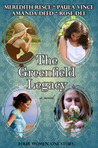
3) The Greenfield Legacy by Meredith Resce, Amanda Deed, Rose Dee and Paula Vince

The Greenfield Legacy

I'm most fond of this one because I had a wonderful time having a go at composing these mix-ups myself. We four authors each wrote from the point of view of one of the four main characters. My character was young Brooke, one of the granddaughters of the matriarch, Mattie. Brooke was forever puzzling over the intended meanings of whatever people said to her, especially Aidan, the young man she was in love with. 'Did he mean it this way or that? Was that supposed to be an insult or a compliment? Am I supposed to respond or let that one pass?' Her mind was always ticking over and the confusion it caused her never ended.

(If you think our collaboration sounds interesting, you might also like to click here.)

I'd have to say that writing Brooke's part in the Greenfield Legacy is probably what helped me realise what a lot of scope there is for misunderstanding each other in English. As it's such a vast and rich language with a long, piecemeal history and speakers from many totally different backgrounds, I suppose it's no wonder. I have more funny examples in this article about waving cat syndrome, featuring times when I was the one who got confused.


Have my examples of this phenomenon sparked off any memories of your own? I'd be interested to hear them. That in itself may be another example. One man may ask, 'Have you heard the news?' and his friend will reply, 'Yes,' meaning that he's read it on Facebook or Reddit, and then the first man will wonder who told him. Where does it end?

Thursday, August 27, 2015

'Simply Tuesday' by Emily P Freeman


23411600

Our obsession with bigger and faster is spinning us out of control. We move through the week breathless and bustling, just trying to keep up while longing to slow down. But real life happens in the small moments, the kind we find on Tuesday, the most ordinary day of the week. Tuesday carries moments we want to hold onto--as well as ones we'd rather leave behind. It hold secrets we can't see in a hurry--secrets not just for our schedules but for our souls. It offers us a simple bench on which to sit, observe, and share our stories.
For those being pulled under by the strong current of expectation, comparison, and hurry, relief is found more in our small moments than in our fast movements. In "Simply Tuesday," Emily P. Freeman helps readers
- stop dreading small beginnings and embrace today's work
- find contentment in the now--even when the now is frustrating or discouraging
- replace competition with compassion
- learn to breathe in a breathless world
Jesus lived small moments well, slow moments fully, and all moments free. He lives with us still, on all our ordinary days, creating and redeeming the world both in us and through us, one small moment at a time. It's time to take back Tuesday, to release our obsession with building a life, and believe in the life Christ is building in us--every day.


MY THOUGHTS:

I've enjoyed other books by this author. She has a way of thinking which is outside the box, turning worldly assumptions on their heads and showing that we often make problems where there shouldn't be any. I appreciate the sort of counsel which helps us celebrate where we are, instead of forever urging us to fix or change something. This book is all about embracing our smallness instead of deploring it by hungering for a bigger impact or reach.

We are conditioned to associate the term 'smallness' with being ignored, humiliated or unrecognised. Instead, Emily Freeman invites us to regard smallness as a blessing. Have you ever heard anyone refer to, 'the gift of obscurity'? I have, and never really got their point until reading this book. But who needs the deadlines, expectations and performance burn-out which so often goes with what we think we crave?

Will the fruit of the kingdom of God even look like success in the eyes of the world? Maybe not everyone is supposed to see much visible growth from our efforts in our lifetime. 'If you build it, they will come,' sounds like it might have been a sentiment from the Bible, but it isn't (ask the prophet Jeremiah). Freeman reminds us that the quote is, in fact, far more modern, from the movie, 'Field of Dreams.'

I was offered a new ways to think about the concept of praying for answers. So often, I've longed for clarity and definite guidance as a result of prayer, and felt disappointment when I've remained as foggy and undecided as before. It gives me a 'so much for that' type of feeling, and doesn't tempt me to pray more. This book suggests that maybe we're not even supposed to figure everything out. What if knowing that God has the birds-eye view of our lives is all we need? Maybe our obsession with building our lives into something we can figure out is just tiring. Being content with the fog is definitely a new challenge for someone like me, who loves a measure of control to gauge how things are going.

We are urged by the prophet Zechariah not to despise the day of small beginnings, and most of us assume an implication that a 'big ending' is on its way. That's not actually promised. Our endings may be small too, and we should be happy with that? Maybe being a 'blip' instead of a 'bang' is all part of the plan for an individual. But then the book challenges us further not to jump to the conclusion that what is considered small by the world is also considered small by heaven's measurement.

I felt refreshed, as I'd hoped. The overall takeaway is that a citizen of an invisible kingdom can refuse to take our behaviour cues from the visible world around us, that says to 'build, grow, measure up and rush to keep up.' It's sad that we feel we need permission to settle down to keep the pace with our small callings, but that is what this book offers.

As a bonus, I'm pleased to live in a part of the world where I can see the Milky Way clearly above me at night. So many big city dwellers in Emily Freeman's part of the world apparently can't.

5 stars


Tuesday, August 25, 2015

'Btooom!' by Junya Inoue

2015 Reading Challenge, Week 34 - A Graphic Novel.

For this part of the challenge, I knew I need look no further than my daughter's shelf. Btooom! is a Japanese Anime, and one among many which Emma (aged 16) loves. Well, if I was expecting something similar to the Archie and friends comics I enjoyed when I was young, I had a lot to learn. These graphic novels open from the back cover, for a start, and you must read the pages from right to left. Surprisingly, that didn't take as long to get used to as I expected. Once again, this is something I wouldn't have chosen to read on my own, but the challenge prompted me to broaden my horizons.


MY THOUGHTS:

Ryouta Sakamoto is 22 and unemployed. To the rest of the world, he looks like an apathetic loner who sits in his room playing computer games. When his mother tries to help him find traditional work, he snaps at her to stop bothering him while he's online (which appears to be always) because he has important priorities which she cares nothing about. In the world of his role play game, Btooom! he is among the cream of the crop, and hopes to secure a job as a game tester with the creator's company, Tyrannos, Japan.

One day, he wakes up to find himself on a jungle island, and discovers that a number of people have been plucked out of their real lives, apparently to play Btooom! for real. Even though survival and self defense come into play, killing people for real is a more sober moral dilemma than simply playing the game online. Along with having to figure out the rules in real life, and the functions of the different explosives (aka Bims) Sakamoto has suspicions about who is behind the whole set-up. Naturally, he wants to escape from the twisted game world, but still has a lot to learn, which gradually unfolds. How did he and the others find themselves there in the first place? Who is the mysterious girl in the high school uniform who seems to possess a good amount of food supplies and Bims?

Even though I'm not the target audience, the graphic novels held my interest and I'm willing to find out what happens further on. The plot has obvious similarities to Hunger Games, but quite a bit of its own intrigue, making us want to get to the nitty gritty and find out who sent them there, how it was done, and what are the personal agendas of several people on the island. It's the sort of story which has room for a bit of character development as well as full-on action. Ryuota Sakamoto isn't the nicest person at the start, but the story has flashbacks to his personal history, which makes the lessons he learns about loyalty and who he can trust more meaningful.

I've only read the three which Emma owns at the moment, and if I want to read more, I have to go online, so I'm not sure how the story will end, although she tells me it's excellent.

My daughter, Emma, cos-playing as the lead female in Btooom! at AVCon recently, including a blonde wig.


Monday, August 17, 2015

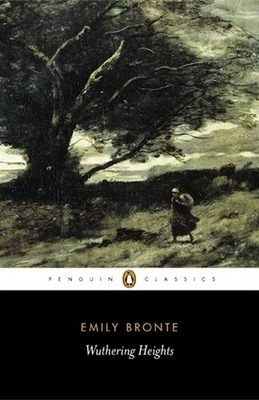
'Wuthering Heights' by Emily Bronte

348914

2015 Reading Challenge, Week 33 - A Classic Romance.
I decided to return to the one which I've considered my favourite since my teenage years. This includes all the dramatic movies I've collected. The earliest old black and white, with Sir Laurence Olivier and Merle Oberon, was a dreadful joke. I haven't seen the most recent, with Juliette Binoche and Ralph Fiennes, but will do some day.

-----------  

Wuthering Heights is a wild, passionate story of the intense and almost demonic love between Catherine Earnshaw and Heathcliff, a foundling adopted by Catherine's father. After Mr Earnshaw's death, Heathcliff is bullied and humiliated by Catherine's brother Hindley and wrongly believing that his love for Catherine is not reciprocated, leaves Wuthering Heights, only to return years later as a wealthy and polished man. He proceeds to exact a terrible revenge for his former miseries. The action of the story is chaotic and unremittingly violent, but the accomplished handling of a complex structure, the evocative descriptions of the lonely moorland setting and the poetic grandeur of vision combine to make this unique novel a masterpiece of English literature. 

MY THOUGHTS:
 
It's an improbable set-up, when you think about it. Would Nelly Dean really take the time to tell Mr Lockwood, a relative stranger, all the deepest, darkest secrets of his landlord? Would she be so free with the histories of the two families she'd been loyal to all her life, to amuse a city slicker who just breezed through? And  would he, in turn, decide to write them down? I'm not convinced, but it's definitely a good, dramatic way of gradually revealing flashbacks. And I really couldn't stand either Heathcliff or Cathy. They were savage, selfish brats who deserved each other. Yet I still wouldn't change my 5-star ranking, because this book taught me such a lot about fiction writing since I first read it as a teenager.

The setting, which was Emily Bronte's own environment, was perfect for the plot. The harsh, freezing Yorkshire moors matched the violence and excessive emotion of the story.

The plot itself had me analysing and daydreaming for a long time. It was so symmetrical and well planned, with each half of the book a mirror image of the other. I love how Bronte had the younger generation inadvertently beginning to re-enact the folly of their parents. And it was interesting how Heathcliff was the one who set these machinations in process, driven by his intense desire to avenge himself on the offspring of his dead enemies. Not a nice fellow.

I'm sure the second generation redeemed the story for me. The younger Catherine showed signs of being a pain in the neck like her mother, but didn't get so bad. And Hareton Earnshaw, Hindley's son, turned out to be more of a proper hero than Heathcliff, even though he was not the usual type we find. I was so interested in the budding romance between these two at the end that I didn't really care what happened to Heathcliff and Cathy.

After all the years since I first read it, I still find my thoughts wandering back to Wuthering Heights. I think part of the draw is to do with the author. Emily Bronte herself was so reclusive, wild and creative, it's easy to associate her with her story. I'm sure it will continue to intrigue readers for years to come.


🌟🌟🌟🌟🌟

(Update: Now a decade after writing this brief review, I've decided to do a more detailed re-read. Check out Delving Deeper into Wuthering Heights.)

This is me, walking up the steep, cobbled lane to the Bronte Parsonage Museum at Haworth. I was 20 years old, and near freezing, although it was spring on the calendar. I was wearing so many layers of clothing I could hardly bend my arms, and still the chill penetrated. Whenever I stopped moving, my toes and fingers turned numb with cold. For Heathcliff and Catherine to run frolicking on the moors in their shirt sleeves, they must have had fantastic constitutions.