Tuesday, April 14, 2015

10 Inspiring Quotes from Books


I was delighted when I saw this week's topic put forward by the Broke and the Bookish. I love jotting down quotes which jump out and resonate with something in my heart when reading books. It's part of what being a reader is all about. This was a matter of limiting myself to just ten, and here they are.

1) 'If you have men who will exclude any of God's creatures from the shelter of compassion and pity, you will have men who will deal likewise with their fellow men.' Saint Francis of Assisi, from Chasing Francis, by Ian Morgan Cron

2) 'This place was made to be beautiful. It is pretty now, but just not how it was meant to be.'
Josia from A Thing of Beauty by Lisa Samson

3) 'I derive delicious pleasure from the two Georges' carelessness about the judgment delivered by smaller hearts and minds than their own.' Rebecca Mead, talking about George Eliot and George Henry Lewes, from her book, My Life in Middlemarch

4) 'The world can be a tough, gritty place. We need to seize beauty wherever we find it.' Luke to Anna, in Beyond all Dreams, by Elizabeth Camden

5) 'Gravy is like happiness. You can't store it up and put a label on it. You've got to learn to take it as it comes, moment by moment.' Aunt Ruby from The Good Day Baking Company, by Adele Wyn Eddy.

6) 'Being content is not a lack of ambition. It's being able to rest and relax and know your worth doesn't come from what others think of you, or even what you think of you.' Chaplain Calhoun from Every Waking Moment by Chris Fabry

7) 'When Laura walked away from our marriage into an affair, her sin was condemned publicly, but for years, my sin has been congratulated and affirmed.' Nathan, from Sensible Shoes by Sharon Garlough Brown.

8) 'If only she could be so oblivious again, to feel such love without knowing it, mistaking it for laughter and bread with only the scent of jam spread over it.' Markus Zusak, The Book Thief

9) 'How could one turn the other cheek to this evil when the cheek being turned was not one's own but that of innocents?' Title character from March by Geraldine Brooks

10) Eliza knew scrutiny was akin to stealing. 'She liked to store images in her mind to be replayed, re-voiced, re-coloured as she pleased. To weave them into wicked stories, flights of fancy that would horrify the people who'd provided unwitting inspiration.'

'The more she wrote, the louder the stories seemed to grow, swirling in her mind, pressing against her head, anxious for release. She understood the power of stories, their magical ability to refill the wounded part of people.' From The Forgotten Garden by Kate Morton

Monday, April 13, 2015

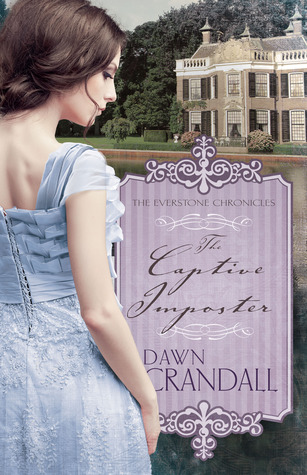
'The Captive Imposter' by Dawn Crandall

 21490845

2015 Reading Challenge, Week 15 - A book by an author you've never read before.
I don't always read the third book of a trilogy first, but this time I enjoyed doing so. I'm looking forward to reading more by Dawn Crandall in the future. 


Sent away for protection, hotel heiress Estella Everstone finds herself living undercover as a lady’s companion named Elle Stoneburner at one of her father’s opulent hotels in the mountains of Maine—the one she'd always loved best and always hoped to own one day, Everston. The one thing she doesn't like about the situation is that her ex-fiancĂ© is in the area and is set on marrying someone else. Reeling from her feelings of being unwanted and unworthy, Estella reluctantly forms a friendship with the gruff manager of Everston, Dexter Blakeley, who seems to have something against wealthy young socialites with too much money, although they are just the kind of people Everston caters to. 


  MY THOUGHTS:
I was invited to read this third book of a trilogy, curious to see if it could stand alone, and maybe even intrigue me to read the first and second books too. From the first page, I had the impression that the heroine, Estella Everstone, had been featured in the two prequels as a younger, more minor character. This time it's her own story, which she tells in first person, with many twists and turns, changing attitudes, revelations and changes in fortune.

I like the Great Gatsby sort of atmosphere the story evokes. It takes place in a similar setting, on America's east coast, in the gilded era time period. Like Fitzgerald's classic, many of these characters have worked hard to achieve the prosperity they're enjoying. Estella is the youngest child of wealthy hotel magnate Bram Everstone, but begins the story travelling incognito as Elle Stoneburner, hired companion to an elderly widow, Mrs Granton. In the course of her duties, she's forced to return to Everston, her favourite of her wealthy father's mountain hotels.

The narrative makes it clear how hard Estella/Elle must work to keep her identity concealed. Her predicaments are often amusing to read about. One on side, she admires the handsome hotel manager, Mr Dexter Blakeley, but senses that his opinion of young women born into fortune isn't very high. On the other side, Jay Crawford, the ex-fiance who broke her heart, is around the place too. As Elle is so busy with this dance between identities, it takes her by surprise to consider that Mr Blakeley may be concealing a few secrets of his own, not to mention the desperate and needy young women beneath his roof.

Talking about him, the heroine's first impression of the hero has to be among my favourites. Through a stagecoach window, Elle notices 'his chiselled, almost statuesque face which consisted of sharp, drastic angles.' It's set off by 'dark hazel, brooding eyes that seemed to cut into everything he turns his gaze upon.' However, at this stage, that's cancelled out by the fact that he has the demeanour of a wild boar. I'm sure many readers will be hooked to find out more about the goings-on of these two from this point.

I think I would be interested in reading 'The Hesitant Heiress' and 'The Bound Heart' to catch the earlier stages of this story.

Thanks to the author for my review copy.

4 stars

Friday, April 10, 2015

'Unoffendable' by Brant Hansen

 22574570

Not entitled to get angry? Really?
It's a radical, provocative idea: We're not entitled to get offended or stay angry. The idea of our own "righteous anger" is a myth. It is the number one problem in our societies today and, as Dallas Willard says, Christians have not been taught out of it.
As it turns out, giving up our "right" to be offended can be one of the most freeing, healthy, simplifying, relaxing, refreshing, stress-relieving, encouraging things we can do.


MY THOUGHTS:

So many people take offense to the point that anger is often seen as a socially acceptable emotion. People spout their so-called righteous anger across social media all the time, and Brant Hansen encourages us to wonder whether this should be the case. As the host of a radio show, he's been the butt of offense many times. I love the irate call from a listener who heard him say, 'The weather will be hotter than it should be for this time of year.' The caller ticked him off, saying, 'God always sets the weather, so it's always perfect.'

'To those who reason, 'God gets angry, so we should be allowed to,' he would say, 'Well, God's entitled to do a lot of things we're not, such as judging and taking vengeance.' When we're as guilty as the targets of our wrath, we're not in a good position to react with strong indignation. And to those who say that it's our duty to get angry at injustice, he'd reply that taking action and fuming with anger aren't necessarily synonymous.

Hansen attempts to get to the root of why humans tend to be so volatile and easy to set off when it comes to taking offense. Situations in which others seem to be getting as much grace or privilege for less work than others may be enough to do it. Insecurity about our positions tend to make us unwilling to show grace. We justify offenses as righteous anger, much like the Prodigal Son's older brother. I like the way he urges us to embrace the 'glorious unfairness' as Jesus has been offensive in these ways for centuries.

He adds that maybe a tendency to take offense is a bit like having an infected limb. Everyone has an ego, but when it's swollen and over-sized, it's constantly being injured and threatened. It's interesting that a book about being unoffendable ends up having as much to say about true humility. He challenges us to see that we place enormous pressure on ourselves in our quests to be significant, and anything that threatens our efforts may make us flare. Truly humble folk are more difficult to offend, because they know that the things we think matter a lot, really don't matter so much.

In spite of Brant Hansen's friendly, easy-going style, I wouldn't be surprised if the content of this book offends a few people, but I'm wondering whether anyone will be brave enough to say so! I'll keep an eye on reviews to find out. I enjoyed and recommend it.

Thanks to Net Galley and Thomas Nelson for my review copy.

4.5 stars

Wednesday, April 8, 2015

Top 10 Characters I'd like to check in with


Today, I'm going with the above topic from The Broke and the Bookish and as always, instead of Top Tuesday, it turns out to be something more like Wicked Wednesday, as we are a day ahead here in Australia. Wondering about the futures of characters in books I've read, and daydreaming all sorts of possibilities is probably what started my own writing in the first place.

Because of the nature of this blog post, there may be plot spoilers to be aware of if you haven't read all of these books and would like to. However, several of them are classics whose endings are probably common knowledge. 


1) Cathy and Hareton from Wuthering Heights (by Emily Bronte)
I've pondered this one, on and off, since I was 15 years old. Can the repercussions of such a destructive force as Heathcliff be softened within just one generation? When I was younger, I might have said no, but now I tend to think yes. With the extra years I've lived, I've come to believe that time is a powerful force. Cathy and Hareton seem to be natural soul mates in all the best ways. Will the young couple really make a difference in their community and become master and mistress of both houses? I believe the answer is yes, but would like to know for sure.

2) Liesel Meminger from The Book Thief (by Markus Zusak)
As I've recently finished reading this one, it is fresh in my mind. How could the little heroine possibly recover from the traumatic scars of her childhood and become a happy wife and mother? I believe in an ideal world, she should have married Rudy and remained living near the Hubermanns. What man could possibly take the place of her best friend? And how did she end up living in Sydney?

3) Scout Finch from To Kill a Mockingbird (by Harper Lee)
This extends to her family and friends, of course. After so many decades, we'll finally get the chance to learn some answers this July, with the release of 'Go Set a Watchman', it's sequel. I'm so looking forward to that. I imagine that if Scout doesn't end up married to Dill, several readers may be disappointed.

4) The whole Harry Potter cast (by JK Rowling)
For a start, JKR has left us with a whole new generation whose shenanigans at Hogwarts are bound to be interesting. Harry's son, Albus, sounds most like him, and I can't imagine that the relationship between him and Scorpius Malfoy will run smoothly.

5) Hazel Green, from the series that bears her name (by Odo Hirsch)
It's one of my favourite children's series. Hazel and her friend Yakov, aka the Yak, have fascinating personality differences, life goals and deep and meaningful conversations. They are truly a perfect blending of polar opposites to create an awesome team. I find myself pondering their teenage years, and all that may happen when hormones kick in. If you haven't read this, and enjoy logic and mathematics, I highly recommend them.

6) Dolour Darcy from the Harp in the South trilogy (by Ruth Park)
She is one of my favourite heroines from Australian classics. The girl has given up her dreams, suffered some devastating losses and fallen in love. She and Charlie plan to move from the slums of Surrey Hills to the country with their ready-made family, to try to make a go of it there. How does it work out for them? I wish them only the best, but times are hard everywhere in the Great Depression.

7) Mary Yellan from Jamaica Inn (by Daphne DuMaurier)
This heroine makes a shock, impulsive decision at the very end of the novel. She was all set to return to the civilised town of Helford she missed so much. Instead, she decides to hitch up with her smuggler uncle's rebellious brother who will take her who knows where. What on earth happens to her? Is love alone enough to tide her through for the rest of her life?

8) Errol Stone from the Staff and the Sword trilogy (by Patrick W Carr)
During the last book of this fast-paced series, the hero has found out the truth about his parentage and is given some leads about his father's relatives to follow up. I can't help wondering if he ends up doing so, and how he gets along with them. Will they be like his father, or more like him?

9) Emma Smallwood from The Tutor's Daughter (by Julie Klassen)
In this novel, the hero's volatile relationship with his stepmother is one of the key features. I can't help wondering how she will react when she finds out that her stepson and heir to the property has proposed to the penniless heroine. Even though the novel finishes on a very high note, there's bound to be more turmoil ahead.

10) The cast from my Adelaide Hills trilogy (by Paula Vince)
I mention my own books because I wrote about something just like this in the final one, A Design of Gold. The hero, Jerome, is so intent on finding out what happened at the end of his favourite book that he will go to any lengths to find the whereabouts of its author, Gareth Edgley. As ADOG was the last in my trilogy, I never pondered about the futures of all the characters, and sometimes wonder if I might one day.

Have you any of your own, or theories of what might happen to any from my list?

Monday, April 6, 2015

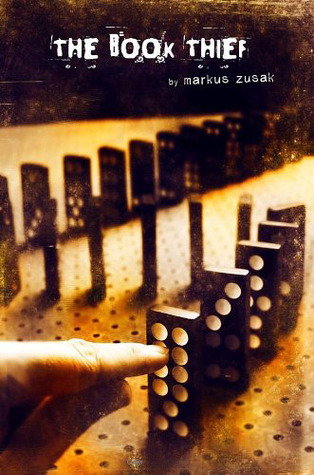
'The Book Thief' by Markus Zusak

19063 

2015 Reading Challenge, Week 14 - A Book which became a Movie.

For a long time, I put off reading this book. It was even on my list of books I wasn't anxious to read. However, now I've steeled myself, I'm glad, although it tore my heart strings as I expected. It was also unique and very easy to get through.

******** 
1939. Nazi Germany. The country is holding its breath. Death has never been busier.

Liesel, a nine-year-old girl, is living with a foster family on Himmel Street. Her parents have been taken away to a concentration camp. Liesel steals books. This is her story and the story of the inhabitants of her street when the bombs begin to fall.

SOME IMPORTANT INFORMATION - THIS NOVEL IS NARRATED BY DEATH

It's a small story, about:

a girl

an accordionist

some fanatical Germans

a Jewish fist fighter

and quite a lot of thievery.

ANOTHER THING YOU SHOULD KNOW - DEATH WILL VISIT THE BOOK THIEF THREE TIMES


MY THOUGHTS:
I started this book with trepidation. Any story set in Hitler's Germany and narrated by death is bound to be grim. However, for a large chunk, it's also full of the things which make life special, written in a whimsical way. There is plenty of humour, although a lot of it is black.

It's a coming-of-age story about Liesel Meminger's childhood between the ages of about 9 and 14. On the heels of a grievous double family loss, she's taken to be the foster child of middle-aged couple, Hans and Rosa Hubermann.

The characters live on the pages. Liesel herself is considered to have dangerous eyes, because they are brown at a time when blue was preferred by the powers that were. The organic nature of how she takes up book thievery prompts us to think about the immense power of words and stories to change lives. Who would believe something as random and unexpected as 'The Gravedigger's Handbook' could spark a love of literature in anyone?

I love Rudy Steiner, Liesel's vibrant and imaginative best friend, who has so much going for him. His athleticism is just the start. What a wonderful future the boy might have had if he'd been born in a different place and time. He has original ideas and isn't afraid to speak up for himself, a dangerous enough combination to cancel out his safer-coloured fair hair and blue eyes.

Another favourite of mine is Max Vandenburg, the young Jewish man the Hubermann family conceal in their basement for a time. Max has a lot in common with Liesel. They dream their nightmares at the same time each night. I love the big brother/little sister sort of relationship they get going, including the gifts she brings him when he's sick, of which one is a cloud. Liesel memorises the sight and writes a description for him. In return, Max gives Liesel some unforgettable written gifts too.

Papa - Hans Hubermann, is surely one of the best father figures in literature. He's described as barely visible to most people, not noticeable, important or particularly valuable. What a tribute to such people that he turns out to be a pivotal hero in the lives of several, including one little girl who needs his uncommonly patient, sacrificial style of love.

The book is written in a most unusual way, which increases our anticipation of doom from the very start. Death turns out to be a bit of a plot-spoilerish sort of fellow, warning us how characters we love will meet their gruesome ends and under what circumstances. He muses that contrary to being his best friend, as people might have expected, War is a hard task-master, keeping him exhausted. Without giving away who dies (from the start, we know he's bound to strike) I finished up so heavy in my spirit over Old You'll-find-out-Who and Young You'll-find-out-Who. However, true to life, those who might have been deemed most likely to die turn out to be those who survive.

To prove that this book is as much about happiness as sadness in the end, I'll finish with one of my favourite quotes about Liesel's times with Papa.

'If only she could be so oblivious again, to feel such love without knowing it, mistaking it for laughter and bread with only the scent of jam spread over it.'

4.5 stars. (Update early 2019, see my review of his new novel, Bridge of Clay)

Tuesday, March 31, 2015

Reading out loud is like Driving - Which side of the book are you?

When it comes to driving a car, I refuse to have my husband as a passenger. Even when I've gone to pick him up from somewhere, I prefer to slip across to the passenger's seat and let him get behind the wheel. This is not because of sexist opinions that the male should always drive. He's just better at it than I am. He has a perfect sense of direction and finely-tuned reflexes. But most of all, when I drive he clutches the sides of his seat and looks agitated, making digs about how bad I am. He's simply the best person for the job. In the same way, when it comes to reading stories out loud, I believe I'm the best person for the job.

When we first got married, we headed off on a holiday with a trilogy of novels to read together. We'd intended to take turns reading, but it quickly became clear that Andrew wasn't the right person to do it. He was too erratic, often pausing to figure out words he felt tough to get his tongue around. Sometimes, he was so busy just trying to read sentences out loud that he had to pause to glance over them again for their sense of meaning which interrupted the flow. It didn't take long for him to decide that as I enjoy reading out loud, I could do it permanently. I was happy with the deal, as I'd been reading out loud to my mum since I was very small.

Since then, I've had years of opportunities, as I've been homeschooling our three kids. To be honest, I'm not keen on being on the other side of the book and listening. I like to have control. I can choose the right inflections to use in different characters' voices and use accents if possible. I get to utilise dramatic pauses at moments I choose, and emphasise whatever I want to, whether or not it's written in italics. I have some degree of control over how I want my listeners to feel about the characters, as it all comes out in the delivery. I love to be the person who knows what's coming, to anticipate the surprise on my listeners' faces, the gasps of shock or bursts of laughter. Not least, I appreciate it when one of the kids comes to me holding the book, saying, 'It's time to hear another chapter.'

This hobby isn't everyone's cup of tea. I had to smile as I thought of three famous novels in which an unwilling young character is coerced (or forced) into reading out loud to an antagonistic elderly person.

1) Little Women. Jo is a hired companion to rich, crabby old Aunt March (who is actually her great aunt). It's a hassle for poor Jo to be pinned down to a seat, reading the dry old books Aunt March wants to hear. The main thing which helps her bear it is that she can duck into the library to find a book of her own choice for silent reading when the old dame nods off.

2) The Book Thief. Young Liesel Meminger manages to soothe the angst and panic of the neighbours on her street, as they huddle in the bomb shelter, dreading what might happen suddenly. She considers herself to be handing out words, but doesn't expect mean old Frau Holtzapfel, who spits on their door, to come knocking, asking for Liesel to come and keep reading to her in the privacy of her own home. To Liesel's dismay, her mama, Rosa Hubermann, agrees, as Frau Holtzapfel promises to stop the spitting, and to hand over her coffee ration in return.

3) To Kill a Mockingbird. Jem Finch is ordered by his father, Atticus, to read to bedridden, nasty old Mrs Dubose. There is no way he can wriggle out of it, as it's ostensibly his punishment for losing his cool and going berserk in her garden. Even though she behaves very strangely during the reading sessions, not until later does Jem discover the real reason for her request. I'm sure his reading probably did help distract her.

Even though these three situations appear less than ideal on the surface, they show the power inherent in reading out loud, evident in the creation of truces and ties which weren't there in the first place. The power of a good story breaks down walls and barriers between people who, on the surface, are very different. The act of a reader and listener sharing an author's intentions and inspiration is an excellent way to promote good feeling between them, even when it wasn't there to start with. And I'm sure Jo, Liesel and Jem would all look back on those reluctant sessions with nostalgia. Jem's little sister, Scout, who went along for moral support, certainly did.


So I like to be the reader, and my husband and children prefer to be listeners. When it comes to reading aloud, which end of the book do you like to find yourselves?

Monday, March 30, 2015

'The Happiness Project' by Gretchen Rubin

6398634 

2015 Reading Challenge, Week 13 - A Book with Bad Reviews

Although this book has had many positive reviews, it's also had critical ones into the triple figures, some of which have been liked by over 1000 others. The themes of most of them are similar. 1) Rubin, living her charmed life in a multi-million-dollar-earning family, has a nerve to think she can tell normal strugglers how to be happy. 2) Some of her advice is trite, such as clear up your clutter and don't nag your spouse. 3) Why does she claim to be unhappy in the first place, given her rosy circumstances?

I'd already written my review before coming across these negative reviews and articles. Although I had the impression from her book that she was well-to-do, I had no idea of the full extent of Rubin's wealth. In her chapter on money, she admits, 'Jamie and I are in the position not to have to worry about our spending habits' or something like that, which turns out to be the understatement of the century. Some critics suggest the book was written in such a way that readers wouldn't find out, which seemed sneaky on the part of both author and publisher. Why bother hiding the fact of an author's prosperity unless they thought it would cause backlash in the book's reception? It got some flak anyway, but would it have happened to the same extent if they'd been straightforward about her luxurious circumstances? 

I admit, I toyed with an impulse to change my review to fit these new facts. I understood the reviewers who wrote that changing her career from law to writing wasn't the sacrifice she made it sound when money was no issue. In her book, she often likes to say, 'I've got to be true to myself and be Gretchen.'  Since the real Gretchen is rolling in dough and she deliberately hides that fact, I get why people may question whether the real Gretchen matches the Gretchen in the pages of the memoir.

But at the same time, I enjoyed the book. I decided not to change my review. Why should the fact that she has lots of money change the overall impression I had when I didn't know? It happened to be a very good impression. Most of the positive tips I picked up will work regardless of our income. Whether or not she and her publisher made a wise move by deciding to conceal it remains a matter of debate.

                                                             ********************

 
Gretchen Rubin had an epiphany one rainy afternoon in the unlikeliest of places: a city bus. "The days are long, but the years are short," she realized. "Time is passing, and I'm not focusing enough on the things that really matter." In that moment, she decided to dedicate a year to her happiness project.

In this lively and compelling account of that year, Rubin carves out her place alongside the authors of bestselling memoirs such as Julie and Julia, The Year of Living Biblically, and Eat, Pray, Love. With humor and insight, she chronicles her adventures during the twelve months she spent test-driving the wisdom of the ages, current scientific research, and lessons from popular culture about how to be happier.


MY THOUGHTS:

The author herself calls this memoir genre 'stunt non-fiction.' They've been abundant in recent years. Their authors spend a year doing something noteworthy and writing about it. In Rubin's case, she decided to boost her happiness level by focusing on a different possible method each month, to determine which worked best. Like many of us, she wasn't clinically depressed but knew there was plenty of room to increase her sense of well-being. I've read quite a few of this genre, and this one turned out to be one of the more helpful and interesting ones. Here's why.

1) She works it around her normal domestic life rather than going off and doing things which would be impossible for many of us. No quitting work or buying rustic old mansions in the country. No pilgrimages to spirituals centres of the world. Her experiences are practical and easy for us to emulate, should we feel inclined.

2) She's not one of those wordy, dry experts in fields such as psychology or cognitive therapy. This means the book isn't crammed with tiny print, waffly language and tiresome graphs, tables and other statistics. The content is lots of memoir and personal anecdote, which I find far more readable and appealing. Instead of expecting us to slough through the heavy stuff, Rubin has done it for us, and made the path far easier to follow.

3) Most importantly for me, she's helped me understand where I've gone wrong in previous happiness attempts. For example, honestly being true to ourselves means we must cross off activities which always sound as if they might be lots of fun, but aren't really designed for us. Rubin mentions having a glamorous wardrobe, fly fishing, steamy jazz clubs, artist studios and collections would be off her list. Mine too. We've got to regret these things, acknowledge that they are not really us and move on. (Personally, I always thought it would be cool to start a non-profit charity or organisation. A book blog, although not half as 'good' sounding, is probably a better fit for me.)

What's more, I unconsciously thought being happy would involve some total personality makeover which I hoped to achieve some day. I'd be happy if I was more out-going and more easy-going, but that cool, chilled character isn't really me. That doesn't mean I can't be very happy my own way, taking into account the levels of introversion and neuroticism with which I seem to have been dealt. In her stories, Rubin repeatedly makes the point, 'I was still basically me.' It's not about changing ourselves but figuring out how we can maximise our personal happiness, given our raw material. That gelled with me.

The eye-openers continued. Through her experiences, Rubin challenged me to see that I shouldn't be deploring my true passions just because they don't strike me as adequate, or seem to yield impressive results. Like her, my main one is books. Reading, writing, blogging, book reviewing, and even the excessive note-taking about apparent trivia which might not seem to interest anyone else. Hey, if it makes me happy, I don't need to excuse it.

This book made me want to chase up some of the references. It made me take too many notes to squeeze into one review. I was left wanting to read over several points again, and buy my own copy. A hard-copy at that. I was actually expecting to scoff a bit at this book, thinking that anyone like Gretchen Rubin, who isn't lacking money or work prestige, isn't really in touch with those of us who struggle with these things. But it turns out the subjects she works on are things any of us can master. I think this book may be life-altering, paradoxically by showing that these changes aren't designed to be life-altering at all, but simply life-enhancing. It deserves full marks.

5 stars.