Thursday, December 28, 2017

'How to Stop Time' by Matt Haig


"The first rule is that you don't fall in love, ' he said... 'There are other rules too, but that is the main one. No falling in love. No staying in love. No daydreaming of love. If you stick to this you will just about be okay.'" 

A love story across the ages - and for the ages - about a man lost in time, the woman who could save him, and the lifetimes it can take to learn how to live

Tom Hazard has a dangerous secret. He may look like an ordinary 41-year-old, but owing to a rare condition, he's been alive for centuries. Tom has lived history--performing with Shakespeare, exploring the high seas with Captain Cook, and sharing cocktails with Fitzgerald. Now, he just wants an ordinary life.


MY THOUGHTS:
I got a lot of good points from Matt Haig's Reasons to Stay Alive, about his personal journey through deep depression. I've discussed it in this article about Reading with Depression. So I picked this novel up with great curiosity, wondering how he'd make his wisdom shine through his fiction, as I was sure it would.

The theory behind the hero's plight actually comes across sounding quite plausible. I'm sure we've all seen true stories about children with a condition called progeria, who age rapidly. Well, Tom Hazard has the opposite condition, 'anageria'. He ages incredibly slowly, at a ratio of one year for every 15, which manifested in puberty. So although he was born in 1581, he only appears to be in his early forties. Tom is about to begin a new job as a High School history teacher, although nobody could possibly guess that he's witnessed many of the events he teaches.

35411685It's all kept strictly hush hush, especially by the Albatross Society headed by Hendrich, who's probably the world's oldest man. They're concerned for their own safety and their loved ones, as history hasn't always been kind to them. Anyone who comes clean, to use Tom's own words, 'is either locked away in a madhouse, pursued and imprisoned in the name of science, or murdered by the servants of superstition.' They refer to themselves as 'albas' after albatrosses, which are very long-lived birds. Normal people are 'mayflies' because our lifespan of 70 to 100 years is over in a flash.

Tom's personal background is extremely varied, and he's rubbed shoulders with many long-passed celebrities. He did a gig with the Lord Chamberlain's men playing the lute for Shakespeare's new play, As You Like It. And there was the time he joined a ship's crew for bit of colonisation, also attended by Captain James Cook.

As you can imagine, Tom considers his condition to be more of a curse than a blessing. There's the horror of always outliving people he cares for by several centuries, and he grapples with grief over human nature in general. Tom has witnessed many horrible mistakes made by mayflies who never live long enough to learn for themselves. He's seen several facts proved, disproved, and then re-proved. And every eight years, he has to completely re-vamp his own identity, as that's about the length of time it takes for others to twig that he never seems to age. What an incentive not to get hung up over yourself and your achievements.

One of Hendrich's main rules is that falling in love is strictly taboo for albas. But of course Tom does, not once but twice. First to his childhood sweetheart Rose, in the Elizabethan era, and about 400 years later, to Camille, a fellow teacher at the school where he works. There's a fair bit of glossing over, owing to the sheer scope of Tom's life, which is compressed into 325 pages. All the jumping around makes the plot feel a bit disjointed and the characterisation shallow at times. I can't shake off the feeling that the story sometimes just skims the surface of what his life would have been like, but it's all in good fun.

I had one main question. Could Matt Haig, a mere mayfly like the rest of us, pull off a character like Tom Hazard, who has centuries of experiential wisdom under his belt? It was an ambitious project, but his knowledge of history and empathetic heart helped him manage it. (At least I trust they did. A real alba might say, 'It wasn't like that at all back in the 1500s,' but I doubt Haig will be challenged.) Tom's a lot like any of us in many ways, reacting with spontaneous jealousy, annoyance or lust, as the case may be. Still, I guess we've all known 80-year-olds who react like 20-year-olds, or even 4-year-olds, so why not a 439-year-old?

He drops some intriguing lines, such as his rationale for choosing to teach history. 'It isn't something you need to bring alive, because it already is alive. Everything we say, do and see is only because of what has gone before.' Tom has more than his fair share of thumping headaches and spaced-out moments, which are side-effects of his longevity. Sometimes I thought his complaints dragged on a little too long. Come on man, we get the picture. Haven't you been around long enough to learn a little fortitude?

He makes some beautiful, lyrical reflections about the nature of music. 'It uncovers emotions that were already there, that you didn't know you had.' In his lifetime, Tom has learned to play guitar, piano, violin, lute, mandolin, cittern and tin pipe.

In typical novels there's character development, but is Tom still young enough to have anything left to learn? The answer turns out to be yes. One of his epiphanies is that the way to stop time is to treat the present as the only moment, and quit fearing the future. For someone like me, whose biggest anxieties have stemmed from dreaded anticipation, that's sound advice. Rumour has it this will be a movie starring Benedict Cumberbatch as Tom, and I'll look forward to that.

🌟🌟🌟½

Saturday, December 16, 2017

I'll be back soon

I possibly won't be blogging anymore until the new year, because the remainder of December is full of different things which will be taking a lot of attention. We will be visiting Sydney for a week, getting our house ready for open inspections, and preparing to move in 2018.

I look forward to returning with my reviews, lists, discussion points and other bookish fun very soon.

Meanwhile, here is a book Christmas tree. I saw this one in a shop window.

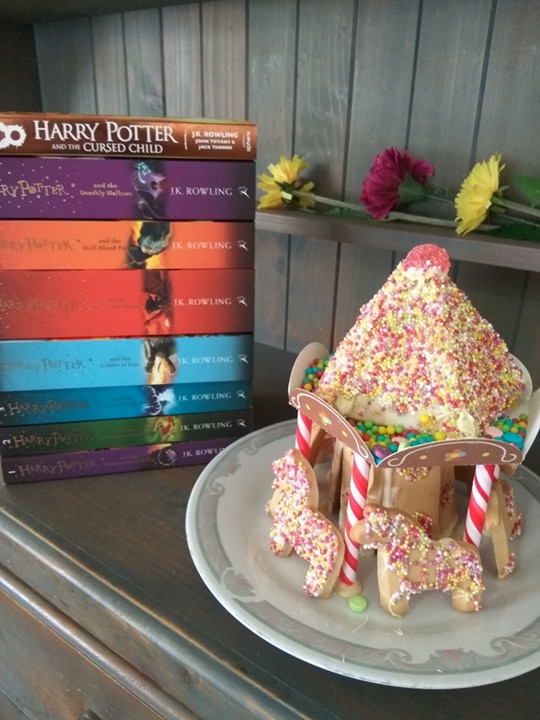
And here's our gingerbread carousel and Harry Potter collection, a festive combination of excellent things. 

Christmas season is the time to bring out the traditional books. This is one of my favourite pictures drawn by my daughter, who is now 19, when she was only 8 or 9. Some things are worth holding on to. It's an age when we may attempt to draw subjects such as donkeys and actually pull it off. 

And finally, we don't forget the reason for the season. From our family to yours, have a blessed and merry Christmas 2017. 


Monday, December 11, 2017

'The Manse' by Meredith Resce

29987017

Kate has a secret she doesn’t want anyone to know, especially the new minister – the man who has taken her father’s position. 

John Laslett has just arrived in Green Valley in his very first appointment as the new parish minister. He has been employed by the patron lady, Vera Wallace, and she has seen to his every need. But there is something strange about the housekeeper she has sent. 
Kathryn is an efficient housekeeper, but John cannot seem to break through the cold exterior. Something is wrong, he is sure, but he doesn’t know what… 

Historical romance set in colonial Australia 


MY THOUGHTS:
This version of Meredith Resce's first novel has been completely re-written to coincide with its twentieth anniversary, and better suit the tastes of more modern readers. First off, I've known the author for several years. She was the first person I asked for publishing advice, and since then I've even worked on a collaboration with her. I was pleased to be offered the chance to read and review this new version, since 1997 was a long time ago. I wondered how it would shape up with my memory, and it turns out to have several of the same features as the many novels she's written since.

For the first time in his life, 24-year-old John Laslett has defied his controlling mother. He's accepted the post as minister at Green Valley, a small rural parish, rather than a more prestigious position in Melbourne she would have preferred for him. But being pushed around by bossy females seems to be his lot in life. John's autocratic patron, Lady Vera Wallace, wants to control him to the nth degree. And his haughty new housekeeper has a chip on her shoulder he can't understand.

Kate is the daughter of the former minister, who's been dismissed in disgrace. (You have to read a fair way in to find out why.) Since he's far from home at the time, she's all alone when she's evicted from the manse. Being homeless long before the days of government support is terrifying for a young woman, so she decides to set herself up as a servant at her own former residence. Kate can't help resenting her father's replacement, who appears to be Lady Vera's puppet.

We wonder how these two can possibly be drawn together, when they have such good reason to misunderstand each other. The story switches back and forth so we can clearly see both points of view. My main thought this time through is how John and Kate are the first in a long line of heroes and heroines readers have enjoyed. It's easy to see why this story has endured for twenty years. When you add plot elements such as hidden identities and secret scandals to the colonial era, it's a good combination. Back in 1997, Meredith Resce noticed a gap in the market for Australian female readers who like solid, clean romances with the promised hook of a happy ending, and she set out to fill it.

If you like this style of uplifting love story, give it a go, and you may find yourself wanting to read the rest of the Heart of Green Valley series too.

I have to say re-reading Kate's plight at this time is significant, since recent circumstances have forced us to look for a new home too. That's one of the great things about reading, when it shows that someone else's situation is always more extreme. I'm looking forward to reading Green Valley, the second in the series, before too long.

Thanks to the author for my review copy.

You may also like the background of how we four authors collaborated on The Greenfield Legacy.

Thursday, December 7, 2017

One Lovely Blog Award

One lovely blog award PIC

Here's a bit of fun. I was nominated by Trix Wilkins from Much Ado About Little Women for the One Lovely Blog Award. Exploring her blog is a treat, since it has a specific focus on Little Women and all things Louisa May Alcott. I love those stories, and Trix has written extensively about them herself. She is definitely the 'go to' person for more on Meg, Jo, Beth and Amy.

Trying to think of 7 interesting facts of my own turned out to be a bit of a challenge, and I decided to keep them book and travel related as much as I could. So here goes.  

Guidelines for the One Lovely Blog Award

* Thank the person who nominated you and link their blog in your post.
* Include the rules and add the blog award badge as an image.
* Add 7 facts about yourself.
* Nominate between 3 and 15 blogs for the award.

1) I nearly slid off the Leaning Tower of Pisa
When I was a teenager, I did a brief bus trip through some European countries with my parents. The sky was teeming when we reached the famous landmark, but that wasn't going to stop me and my Dad from the once in a lifetime opportunity. I was wearing a slippery pair of shoes, which isn't a good idea when the arches plunge straight to the ground, even if the building isn't on a tilt. On one of the upper stories, I felt my feet beginning to slide near the window, and stepped back just in time. I'd be willing to bet it's far safer these days than those slapdash old 1980s, when everyone had to look out for themselves.

2) I played Maria in West Side Story
That sounds like a fantastic claim to make, but it was a High School production of a few selected scenes, and I was only 14 years old. The teacher encouraged us to try to use Puerto Rican accents as best we could, and even though I had no idea what Puerto-Ricans sounded like, I made an effort. My parents said the weird fake accent slid away during the night, and returned at moments when I remembered. Mine wasn't a singing role (thankfully) but the boy who played Tony had a lovely soprano voice, which hadn't broken yet. We didn't speak one single word to each other during all the rehearsals.

3) I achieved top marks in Year 12 English
After a lot of hard work all year, I was one of the students who got full marks in the English exams, and still have the newspaper list containing my name, along with hundreds of others. I thought University English would be a cinch after the great feedback I always got from school, but I was in for a shock. For my first assignment, I received 64%, and was so heartbroken, I went to query the professor about it. He tried to assure me that it wasn't a bad grade, and I hated him! Throughout my three years there, I never did become a straight Distinction student. Promising starts sometimes fizzle out. In retrospect it's not really a big deal anymore, but at the time I had a real identity crisis.

4) I read the Harry Potter books in top secret
It was the early 2000s, and I was caught in the outcry of well-meaning Christians calling these books the devil's work, and warning us not to let our little angels be corrupted by reading them. My eldest son was 5, and I remember the social occasion when one of the other Reception mums said the warnings were a load of rubbish. She thought the books were great, and 'may even become classics'. Knowing her to be a very devout woman, I got hold of the books (only four at the time), and the rest is history. What a valuable lesson to never rely on hearsay. Letting others make decisions for us may rob us of terrific experiences. I've long since lost touch with that other school mother, but still think of her with gratitude, for speaking out an opinion which she knew was unpopular at the time.

5) I thought I saw the ghost of Branwell Bronte 
During my international holiday, we were walking one of the city walls somewhere in Yorkshire, and passed a cute, other-worldly looking young man with bright red hair, painting on an easel. When we said, 'Excuse me,' he just smiled and bowed without making a sound. I whispered to my parents and sister that he looked like the brother of Charlotte, Emily and Anne. Then I peered back to have another look, and he'd disappeared! As it was a high city wall and there was nowhere he could have gone, it gave me a thrill up my spine :) By the time we got to the bottom of the steps, he was back again. The others said he'd probably bent over to pick up his brush, but I preferred to think it really was not just some nineteenth century specter but Branwell himself.

6) I've written nine novels which have been published 
 This was a labour of love over many years. What more can I say? When my older son was at kindy and my daughter was sound asleep in her capsule at the back of the car, I'd park somewhere and write. I was happy to do the work of editing and re-editing until I pretty well knew each line that was coming by heart. I looked forward to seeing how thick those computer pages would turn out to be in book forms. And I would dream about my characters, and hum bars of music which reminded me of them. Those were good times.

7) We were homeless with 3 kids, including a new born baby
 Back in 2004 when we sold our house, we decided to take a great homeschooling journey up the centre of Australia and back down the coast, with our caravan. We had no idea where we'd settle down once we returned to Adelaide, but trusted it'd work out when the time came. It was a great holiday, although there were some awkward moments, such as the time we were pulled over for a routine car check one night by a cop in Toowoomba. He gave us a funny look when he asked our residential address and we told him we didn't have one. It must have looked unconventional, with a 9-year-old, 5-year-old and 2 month-old blinking at him from the back seat. 


Now that it's come to the nomination part, I'm not really much of a pass on the baton type of person, but will try to come up some of my favourite blogs, who I'll contact personally. Meanwhile, if you'd like to give this a go anyway, I'd love to see 7 interesting facts. 

Monday, December 4, 2017

'An Unnecessary Woman' by Rabih Alameddine


One of Beirut’s most celebrated voices, Rabih Alameddine follows his international bestseller, The Hakawati, with a heartrending novel that celebrates the singular life of an obsessive introvert, revealing Beirut’s beauties and horrors along the way.

Aaliya Sohbi lives alone in her Beirut apartment, surrounded by stockpiles of books. Godless, fatherless, divorced, and childless, Aaliya is her family’s "unnecessary appendage.” Every year, she translates a new favorite book into Arabic, then stows it away. The thirty-seven books that Aaliya has translated have never been read—by anyone. 

In this breathtaking portrait of a reclusive woman’s late-life crisis, readers follow Aaliya’s digressive mind as it ricochets across visions of past and present Beirut. Insightful musings on literature, philosophy, and art are invaded by memories of the Lebanese Civil War and Aaliya’s volatile past. As she tries to overcome her aging body and spontaneous emotional upwellings, Aaliya is faced with an unthinkable disaster that threatens to shatter the little life she has left.

A love letter to literature and its power to define who we are, the gifted Rabih Alameddine has given us a nuanced rendering of a single woman's reclusive life in the Middle East.


MY THOUGHTS:
I saw this book recommended by a couple of other readers on Instagram, and found it at one of my local libraries.

It's a stream of consciousness sort of novel. Aaliya is a Lebanese woman in her seventies who lives alone, and has never had any children. Her strong introvert nature guarantees that others don't really get to know her, let alone tap into her fertile inner world. Aaliya has a secret she's kept to herself for over fifty years. At the start of each year, she begins a huge project of translating a beloved classic or philosophy book into her own native language, Arabic.

At the end of each project, she boxes it and moves on with the next, because Aaliya believes that publication is an implausible dream. She has two very good reasons for thinking so.

a) There would surely never be enough demand for such translations to make them worth a publisher's while. In other words, there's no market for what she does.
b) She's only translating from former translations anyway, since her other languages are English and French. This makes her work one extra step removed from the originals which include Russian and German. So her philosophy is 'create and crate,' and the satisfaction it brings is her main spur for continuing year after year. 'Through no effort of my own, I'm visited by bliss.'

She also says, 'I'll be sitting at my desk and suddenly I don't wish my life to be any different. I am where I need to be. My heart distends with delight. I feel sacred.' Is this a good enough reason to plod on with something that is totally unknown to others? I think so. Does it give us permission to persevere with quiet occupations of our own for the same reason? Sure, why not!

An Unnecessary WomanThroughout the book, Aaliya name drops for the best of reasons. It's never in an artificial way to let others know how learned she is, since she rarely speaks to her neighbours. Her musing about the works of great authors is always internal, and she never sets out to impress anyone. Even though she carries the hidden burden of being worthless and superfluous, the authors' words bring her comfort and joy. Her life really shows that one of the best perks about being a bookworm is being able to take on great thoughts and ideas and make them our own, a bit like hydrangea petals taking on blue dye.

It's an eye-opener too. I consider myself to be fairly well read, but I'd never heard of several of the wise sages she mentions. From a quick look at Goodreads, it would appear I share this with many other reviewers, and even characters in the book. (Slight spoiler here, I'm thinking of her neighbour Joumana picking up 'Anna Karenina' and saying, 'Thank goodness I've heard of this one.') But it's evident from the influence which some fairly obscure writers have on Aaliya that you don't have to be well known to be meaningful.

Take this example from one of her philosopher heroes, Fernando Pessoa. 'The only attitude worthy of a superior man is to persist in an activity he recognises as useless, to observe a discipline he knows is sterile, and to apply certain norms of philosophical and metaphysical thought that he considers utterly inconsequential.' Hmm, I might look up more of this guy.

There's such a lot to delve into which I haven't even mentioned, such as history, living in Beirut, war and family dynamics. The story is both simple and complex, one and the same. An interesting side plot is the plight of Hannah, the only friend Aaliya ever truly bonded with. Her story from the past gets us thinking about the nature of self-delusion and fool's paradise, and whether the real truth should make any difference, if you are living a happy life. Very interesting stuff.

Overall, I love the theme of Aaliya's life, that to be meaningful isn't synonymous with being influential. I do understand why we make that assumption. Our reasoning probably goes something like this. If we're here to help others, then we're surely fulfilling our purpose best when we are an actual benefit to them, and when people are talking about us, which won't happen if we stick our work in boxes. But this story encourages us to broaden our definition of meaningful. I followed Aaliya's own example of looking to others and flicked back to Victor Frankl, who's an expert on the subject if anyone is. He declared that we derive meaning from a) our love, b) our work, and c) our suffering. Aaliya's passion for her translations ticks all these boxes, and nowhere does Frankl say that others have to buy into the discoveries we make.

Aaliya is a living epiphany, although she paradoxically hates epiphanies. To her mind, they are sentimental and boring. 'Dear contemporary writers, you make me feel inadequate because my life isn't as clear and concise as your stories.' So even though she comes across a bit cantankerous and cynical at times, she has become one of my personal heroines and role models. From now on when I'm working at my own computer, I'll remember Aaliya, sitting in her spartan apartment, hard at work on her translations. Her non-impact is very impacting to me. Whoever would have thought personal satisfaction could be enough in our day and age to justify the good work we choose to do, but perhaps it really is.

🌟🌟🌟🌟🌟


Thursday, November 30, 2017

Ships that never sailed


I'm talking about ships in the romantic sense here. In case you're unfamiliar with the term, I'll explain. Not so long ago, I was confused if people asked, 'Who do you ship in such and such a story?' I asked my eldest son, who always seems to know a lot about current jargon, but he was baffled too. 'Huh, shipping? It's all about imports and exports as far as I know.' 

My daughter, who overheard, said she couldn't believe how naive we both were. 'It's all about predicting which couples you think ought to end up together. That's all there is to it.' So I learned something new, and it's become part of my bookish vocabulary. In fact, I'd been shipping for years, without being aware of the term. 

One of the first things I learned about shipping is that it's often based on speculation, and readers have the potential to be disappointed as often as not. Authors have their own plans, which don't always match ours. I'll take you for a quick tour through several ships which might have had the potential to be grand vessels, but ended up either grounded or sinking. These are some of my favourite barques which got nowhere. Keep in mind that there'll be plot spoilers, owing to the nature of this list. 

Good Wives1) Jo and Laurie
Louisa May Alcott left many fans devastated when her beloved literary tomboy Jo friend zoned everyone's favourite boy next door, Theodore (Laurie) Lawrence. Especially since she arguably seemed to have been setting them up for a future together from the moment they met. (See my thoughts on what did happen. I've also reviewed Little Women and Good Wives.)

2) Fanny Price and Henry Crawford
The bashful and highly principled Mansfield Park heroine was a prime catch for any man. She ended up with her staid cousin Edmund, but several readers would have preferred her to marry the dashing Henry Crawford, who vowed to win her heart if it was the last thing he ever did. (My review is here. You might also enjoy my thoughts about Fanny's ultimate choice in The Day I was rebuked by Jane Austen.)

3) Marianne Dashwood and John Willoughby
These two were going great together, until he decided to look after his future and propose to a rich heiress. But Willoughby was so heartbroken and remorseful by his own decision, many fans might have wished him a second chance. After all, Colonel Brandon was a bit old, plain and fatherly for the excitable, emotional Marianne, wasn't he? Can you really imagine her happy with him over the long term?

4) Heathcliff and Catherine Earnshaw
These two are often hailed as one of the greatest romances of all time, to the point where she thinks of him as an extension of herself. (Remember the famous line, 'Nelly, I am Heathcliff') But Cathy chooses the refined Edgar Linton of all people, based on money and social prestige. And then Heathcliff fights dirty by seducing her innocent sister-in-law Isabella, to prove that two can play at that game. How off course can it get, even though Emily Bronte hinted that the ship sailed in the next life? (My review is here.)

5) Dorothea Brooke and Tertius Lydgate
A canny reader of George Eliot's Middlemarch might be forgiven for anticipating that the author might be blowing the course of the ship in this direction. Both these main characters had high ideals, great intelligence, and disastrous first marriages. Surely ending up together might have been great for the pair of them, and warmed our romantic hearts too? But no, Eliot had other, arguably better plans. (My review is here.)
Great Expectations
6) Pip and Biddy
Charles Dickens could so easily have pulled off our own great expectations, to many readers' satisfaction. Pip was enthralled by the haughty beauty of the aloof Estella, but wise village girl Biddy always had his back and gave him great advice, even though he sometimes took his frustration out on her. We always get the feeling she'll accept him as soon as he comes to his senses. But when that finally happens, Pip rocks up in town to find Biddy on the point of marrying Joe Gargery. Oh Dickens, why would you do that? He's old enough to be her father. (See here for my review. You may also like my article about a time when one of Dickens' best friends rebuked him for disappointing many shippers.)

7) Marion Halcombe and Walter Hartwright
The Woman in White was a hit of the nineteenth century, and these two characters worked so well together, solving a creepy mystery and holding each other in high esteem. But Walter falls for Marian's half sister, the helpless and hysterical Laura Fairlie. He doesn't seem to twig that beauty is more than skin deep. Drats, he and Marian could have made such a power couple.(See here for my review.)

8) Ivanhoe and Rebecca
IvanhoeThis was a popular ship with a medieval setting. A brave and self-sacrificing young Jewish girl named Rebecca is in love with Wilfred of Ivanhoe, the gallant knight. She nurses him through major wounds sustained in a tournament, and he becomes her hero when she's accused of witchcraft. But Ivanhoe marries his father's beautiful ward, Lady Rowena, who comes across as another of those one-dimensional, damsels in distress. Many readers sigh, not that we have anything against Rowena, but because we can't imagine she could possibly love Ivanhoe more than the unforgettable Rebecca did. Apparently Sir Walter Scott knew he was getting flak from readers, and defended himself by insisting that a marriage between Ivanhoe and Rebecca would have been totally unrealistic for the era. Still, that's no excuse, mate! You're the author!

9) Scarlett and Rhett
An American Civil War setting for this ship. The handsome and self-assured Mr Butler has his sights set on the flighty Miss O'Hara, while she flirts with every other man in their vicinity. Her own heart is stubbornly fixed on married man Ashley Wilkes for a very long time. Even when she marries Rhett, her attitude makes things rocky. By the time Scarlett comes to her senses, Rhett has moved on. 'Frankly my dear, I don't give a damn.'

10) Marius and Eponine
This one's a ship from the French Revolution. Les Miserables is such a long story, there's bound to be a heartbreaking romantic dilemma or two. Marius is a young revolutionary who's in love with Cosette, Jean Valjean's innocent ward. But Eponine, the daughter of a no-good innkeeper, also loves him, to the point where he becomes her guiding light. She's even willing to take a bullet for him. Once again, sweet and innocent seems to trump heart and soul. Oh, why do these nineteenth century authors keep doing this to us?
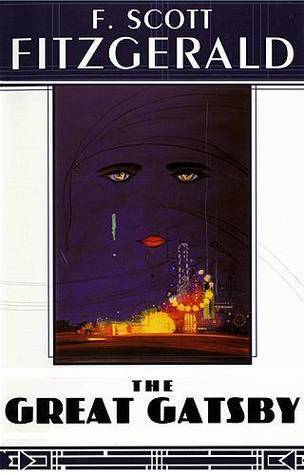
The Great Gatsby
11) Gatsby and Daisy
This American classic has been a beached ship for many readers. Poor Jay Gatsby does everything in his power to reunite himself with his lost love, including becoming filthy rich and throwing super duper parties. It's easy to back these two just because he's put in so much effort, and her husband Tom is a big old, cheating thug. But it's not to be.

12) Luna and Neville
This one might have been sweet for Harry Potter fans. Awkward young Gryffindor hero who's convinced he doesn't have what it takes, and eccentric loner with the ability to see right to the heart of everyone. They each find their inner compass at the same time, while fighting for the same worthy cause. They might've been so great together. As for their future spouses, we simply don't know enough about Hannah or Rolf to sweeten the blow.

The rest of my Harry Potter ships involve just one young lady, Hermione Granger. Wow, this girl was a magnet for romantic speculations.

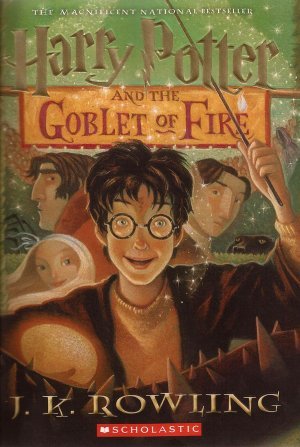
Harry Potter and the Goblet of Fire (Harry Potter, #4)13) Hermione and Victor Krumm
This had serious potential. Even my own daughter wouldn't have minded seeing it happen, at least for a little while. While Ron's busy trying to work out (or deny) his feelings, the studious and taciturn young Durmstrang student is quietly charming the girl in her own territory, the library. While most people's focus is too shallow to see him as anything other than a famous quidditch champion, she has the depth to fathom the deeper man within. And the irony is, she cares least about what he's renowned for. Nice one, J.K. Rowling. But it was not to be.

14) Hermione and Draco Malfoy
This one still has a major following, to the point where some shippers refuse to let go, and they keep their illusions alive in fan fiction. I guess I can understand the appeal. Imagine Draco telling his bigoted, Death Eater father that he's fallen for a Mudblood. But seriously, I could never back this one in a million years. There was never a spark of interest from either side, they were poles apart in their world outlooks and we were never given a hint that it might happen. But it does prove how great a shipper's imagination might be. (You might like my article on bad boys with depth.)

15) Hermione and Harry
Many people might have expected that this was where the series was headed from the very start. Hermione was one of Harry's very best friends, devoted to his cause, and so smart and perceptive, it was impossible for those boys to get along without her. But since their platonic friendship is ideal for a future list about guys and girls who are great friends with no strings attached, I'm happy enough to let it go. In fact, I shipped both Harry and Ginny and Hermione and Ron from early on. Ships which do come to pass often make up for those which don't.

So I've shared several of mine. Do you agree with any of them, or have you any of your own to share that I haven't mentioned? In all of literature and fandom, whose failure to become a couple almost broke your heart? If you enjoyed this list, have a read of a related one, Tales of Unrequited Love. You might also like literature's most awkward marriage proposals.

Monday, November 27, 2017

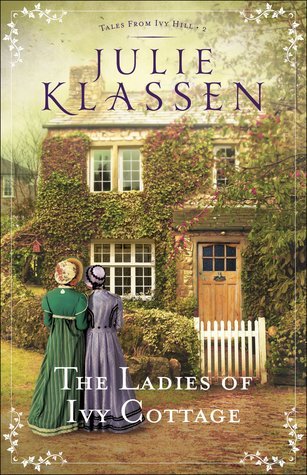
'The Ladies of Ivy Cottage' by Julie Klassen

34020176

Return to Ivy Hill in The Ladies of Ivy Cottage as friendships deepen, romances blossom, and mysteries unfold.

Living with the two Miss Groves in Ivy Cottage, impoverished gentlewoman Rachel Ashford is determined to earn her own livelihood . . . somehow. When the village women encourage her to open a subscription library with the many books she has inherited or acquired through donations, Rachel discovers two mysteries hidden among them. A man who once broke her heart helps her search for clues, but will both find more than they bargained for?

Rachel's friend and hostess, Mercy Grove, has given up thoughts of suitors and fills her days managing her girls' school. So when several men take an interest in Ivy Cottage, she assumes pretty Miss Ashford is the cause. Exactly what--or who--has captured each man's attention? The truth may surprise them all.


MY THOUGHTS:
There's nothing nicer than a well-written village chronicle, and I loved The Innkeeper of Ivy Hill, which started this series off. I was so keen for the chance to grab hold of this next installment, and it didn't disappoint. Julie Klassen has a way of building up our curiosity to fathom several village mysteries. It's good to catch up with many characters we came to love in the first book. Some parts of their stories were neatly tied up, but others left tantalisingly dangling. While the Bell Coaching Inn was the main setting for the first book, this time it's Ivy Cottage, where Miss Mercy Grove runs her girls' school.

Remember Miss Rachel Ashford who moves in with her? She was forced to leave her house penniless, with just the unwanted inheritance of her father's hefty book collection. Someone gives her the idea of using it as a base to begin a circulating library, to help her become financially independent. This provides plenty of scope for interesting happenings. Two anonymous donations of books become page turners (pardon the pun), and stir up a few hornets' nests too.

Mercy steps up to a bigger role in this book. Remember, she's a single woman with a maternal heart which she's poured into her little school until now. But two opportunities arise, to adopt her youngest pupil Alice, and to marry an eligible bachelor handpicked by her parents to tick all her boxes (in their opinion). The pressure is on, since it seems they'll pull the plug on her school if she decides against Mr Hollander. And for anyone who's read George Eliot's Middlemarch, he seems to want a Casaubon/Dorothea sort of arrangement, where she will help him write a great book which is no more than a concept in his mind as yet.

James Drake, the gentlemanly hotel entrepreneur is still working hard, and we get glimpses into his deeper past, revealing another reason why he chose Ivy Hill for his latest venture. That suited me, as he's a dashing and likeable character. And one of the most marginal people in the first book turns out to be most lovable in this. That's Mercy's aunt, Miss Matilda Grove. She knows full well she's regarded as one of those pointless members of society; an unmarried woman who's dependent on her relatives, but she's a kind, cheerful and fun-loving person. Her revelation to Mercy of what keeps her going impressed me a lot.

There is still plenty of my favourite mother and daughter-in-law team, Jane and Thora Bell. Jane is as sweet as ever, still dealing graciously with the disappointments in her life, and the fact that it's dealt her a different hand than she anticipated. I can personally relate to aspects of Jane's history, and understand why she'd be wary not to be hurt again, even when life beckons with its best. I'm glad her brother-in-law Patrick's story develops too, as I liked him a lot.

The cast of characters has its fair share of overbearing, autocratic mothers, including Sir Timothy's, Nicholas Ashford's, and poor Mercy's. It also has its share of ill-fated romantic liaisons. And I'd love to count the number of times something romantic or significant is on the verge of being uttered, when some third party interrupts the moment. I might've counted, if I'd guessed they would keep coming.

Ivy Hill really is a great place for lovers of Thrush Green, Middlemarch, Cranford, and other fictional English villages. I'm already looking forward to the third in this series.

As for good quotes, although Mr Hollander wasn't necessarily the most endearing character, some of the lines he spouts are great. I love his reply when someone politely asks him who his favourite author is, and it gets his hackles up. 'How can one choose a favourite from among one's very confidantes and mentors? I am not some youth with my arm slung around the shoulder of one's chum at the exclusion of others! Each suits at a different time. A different season.' Yeah, you tell 'em, Professor!

Thanks to Bethany House and NetGalley for my review copy.

🌟🌟🌟🌟½