Wednesday, April 5, 2017
'Franny and Zooey' by J.D. Salinger
The short story, Franny, takes place in an unnamed college town and tells the tale of an undergraduate who is becoming disenchanted with the selfishness and inauthenticity she perceives all around her.
The novella, Zooey, is named for Zooey Glass, the second-youngest member of the Glass family. As his younger sister, Franny, suffers a spiritual and existential breakdown in her parents' Manhattan living room -- leaving Bessie, her mother, deeply concerned -- Zooey comes to her aid, offering what he thinks is brotherly love, understanding, and words of sage advice.
MY THOUGHTS:
I chose this book for my 2017 Back to the Classics challenge, for the category of a classic set in a place you'd like to visit. Franny and Zooey is set around New York, which I'd love to visit just once.
This classic is pretty well plot free. It's comprised of three conversations. Franny is at a restaurant with her boyfriend, Lane, trying to explain her disillusionment with their ego-driven society, which he doesn't understand. In the next scene, Zooey is having a bath when his mother Bessie bursts in, and tries to convince him to have a word with his troubled sister. Such a lot of the book takes place from behind the bath curtain, I'd recommend this as a tub read. Finally, he gets out, dries himself off and talks to Franny, where she lies on a couch in the living room. Couldn't get more basic, but the interesting nature of the dialogue kept me reading on.
Franny is a 20-year-old college student with an issue that's easy to understand. 'I'm sick of everyone's ego. Everyone wants to get somewhere, distinguish themselves and be interesting. Just because I'm so horribly conditioned to accept everybody else's values, and just because I like applause and people to rave about me doesn't make it right... I'm sick of not having the courage to be an absolute nobody. I'm sick of myself and everybody that wants to make some kind of a splash.'
She's attempting to resolve her crisis by reciting the Jesus Prayer (Lord Jesus Christ, have mercy on me), which she's read about in a book entitled 'The Way of a Pilgrim.' But her mental turmoil continues, and I found myself looking forward to whatever pearls of wisdom her 25-year-old brother might drop to help her out (and us, by extension).
There were hurdles to get over on the way to finding out. First, Salinger way overdoes the italics! Man, oh man! They just get in the way and become so annoying, It got to the point I couldn't stand the sight of them. Salinger is not only dictating how he thinks the reader should hear the characters' voices, but he makes them sound like duffers in the process, because nobody really adds that much emphasis so consistently. Do you think I'm exaggerating? Just read the book.
He also overdoes all the smoking. The year was 1955, and I know health risks weren't so well known then, but this family could still keep a tobacco company in business all by themselves. Ash trays are everywhere, including the bathroom. What a stale odour their house must have, and I felt as if I was passive smoking through the pages by the time I'd finished.
Thirdly, this is just a funny thing that occurred to me, but I couldn't help wondering if Salinger considered himself smarter than the average bear. He's writing about the Glass family, who were all considered super-intelligent from the time they were infant prodigies, and obviously felt he had enough genius to pull it off. Indeed, Zooey does come across as a very astute young man, well worth heeding. After asking Franny to seriously consider her motivation for reciting the Jesus prayer, he makes some pointed observations, and here are some of my favourites.
a) 'If you're going to do it, at least pray to Jesus as he was, and not as you'd like him to be' (which he says is probably a combination of Jesus, St. Francis of Assisi, their older brother Seymour, and Heidi's grandfather).
b) 'Who else but Jesus in the New Testament really knew which end was up? He knew we're carrying the kingdom of God around with us inside, where we're all too goddamn stupid and sentimental and unimaginative to look.'
c) 'If it's the religious life you want, you ought to know right now that you're missing out on every single goddamn religious action that's going on around this house. You don't even have sense enough to drink when somebody brings you a cup of consecrated chicken soup... How in hell are you going to recognise a legitimate holy man when you see one, if you don't even know a cup of consecrated chicken soup when it's right in front of your nose?'
d) He reminds her how Seymour used to tell them to shine their shoes for the Fat Lady, whose identity used to be unclear in their young minds. 'There isn't anyone out there who isn't Seymour's Fat Lady.'
Overall, it left quite a positive impression. There's nobody quite like a brother for giving tough love. He knows her well enough to pinpoint the ways her mind was truly veering, perhaps better than she knew herself. And when it comes down to it, who else but a brother could be so blunt without her disowning him? As far as the ego question is concerned, he challenges her to focus on the good and sacred aspects of life, which are out there everywhere, and leave God to figure out what is or isn't ego driven. The pair of them remind me a bit of my two eldest kids, who have a similar age gap. It's a bit strange and short, with the feeling of a couple of random events pulled out of nowhere, and the descriptions come across like stage directions, but it's definitely engaging enough to finish.
If you're interested in pursuing the train of thought, some of Zooey's observations remind me of this book here, which was published recently.
Sunday, April 2, 2017
6 Degrees of Separation

I stumbled upon this book meme, hosted by Books are my Favourite and Best and had to have a try. It turned out to be such a lot of fun, I wish I'd done some of the earlier ones too. But at least I can participate in future ones for sure. The official instructions are here.
But here's a bit of background info from the blog. The meme was inspired by Hungarian writer and poet Frigyes Karinthy. In his 1929 short story, Chains, Karinthy coined the phrase ‘six degrees of separation’. The phrase was popularised by a 1990 play written by John Guare, which was later made into a film starring Stockard Channing. Since then, the idea that everyone in the world is separated from everyone else by just six links has been explored in many ways, from ‘six degrees of Kevin Bacon‘ to the science of connections. And now it’s a meme for readers.
Today's starter is Room by Emma Donoghue, so we start with that one, and it's blurb.
To five-year-old-Jack, Room is the world.It’s where he was born. It’s where he and Ma eat and sleep and play and learn. There are endless wonders that let loose Jack’s imagination-the snake under Bed that he constructs out of eggshells; the coziness of Wardrobe beneath Ma’s clothes, where she tucks him in safely at night, in case Old Nick comes.
Room is home to Jack, but to Ma, it’s the prison where she’s been held since she was nineteen-for seven long years. Through her fierce love for her son, she has created a life for him in that eleven-by-eleven-foot space. But Jack’s curiosity is building alongside her own desperation, and she knows that Room cannot contain either indefinitely . . .
Told in the inventive, funny, and poignant voice of Jack, Room is a celebration of resilience-and a powerful story of a mother and son whose love lets them survive the impossible.
Now for my 6 degrees of separation.
1) The Yellow Room by Jess Vallance
It's a chilling Australian domestic drama about Anna, a teenager who finds herself drawn to become friends with her father's ex-girlfriend, Edie. There is more to Edie than meets the eye, and her mental judgment snaps for a short period of time, in which she decides that keeping Anna prisoner in a tiny room, with all her favourite things, is the best course of action for both of them. My review is here. 
2) The Yellow Envelope by Kim Dinan
Both have the word 'yellow' in their title. In this travel memoir, Kim and her husband Brian embark on a journey to travel around the world. They take with them a yellow envelope from a friend, full of money to distribute randomly to deserving people along the way, as they feel led. My review is here.
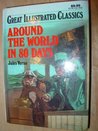
3) Around the World in Eighty Days by Jules VerneIn this classic Victorian novel by Jules Verne, Phileas Fogg and his loyal man servant, Passepartout, do a similar thing to Kim Dinan, and embark on a trip around the world, and they also distribute their fair share of money along the way, although their motivation is different. However, they too experience their fair share of adventures and misadventures. My review is here.

4) Water for Elephants by Sara Gruen
At one stage, Fogg and Co. are forced to hire Kiouni, a female elephant, to help them traverse a certain length of their journey in India. They manage to make quite good friends with her. In this book, Jacob Jankowski forges a special bond with Rosie, another female elephant, when he's given the position of her trainer in a ramshackle circus during the Depression Era.
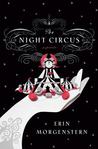
5) The Night Circus by Erin MorgensternThis is another story in which the main protagonists discover that life in a travelling sideshow is not all its cracked up to be. The magical circus operates from sunset to sunrise, delighting the audience, A pair of rival magicians groom their young proteges, Celia and Marcus, up for an intense competition. Little do they know the young pair will fall in love.
6) The Hunger GamesCatniss and Peeta are another young pair who are also forced to be bitter rivals in a cutthroat competition, and also happen to fall in love.
Voila, with just 6 degrees of separation, I've started with characters who are confined to a very tiny space, and ended with characters who are dumped in a wide open space to battle for survival. I'm liking this meme and look forward to next month's.
Thursday, March 30, 2017
'The Yellow Envelope' by Kim Dinan

After Kim and her husband decide to quit their jobs to travel around the world, they’re given a yellow envelope containing a check and instructions to give the money away. The only three rules for the envelope: Don’t overthink it; share your experiences; don’t feel pressured to give it all away.
Through Ecuador, Peru, Nepal, and beyond, Kim and Brian face obstacles, including major challenges to their relationship. As she distributes the gift to people she encounters along the way she learns that money does not have a thing to do with the capacity to give, but that giving—of ourselves—is transformational.
Kim Dinan is a freelance writers and blogger, whose travel blog, So Many Places, receives over 200,000 unique visitors per year and was selected by USA Today as one of the 2014 Best Hiking and Outdoor Travel blogs. Her writing has appeared in OnTrak Magazine and Northwest Travel Magazine, among others, and she was on a speaking tour for Backpacker Magazine.
MY THOUGHTS:
Kim Dinan tells the story of her own true adventure. She and her husband Brian decided to leave the rat race and set out on a journey around the world. They had to sell everything, and sacrifice their lifestyles in order to do so. It's a pipe dream for many of us, so since these guys were prepared to make such a hardcore decision for real, I was happy to grab the book and live vicariously through their experiences.
The yellow envelope was given to them by their friends Michele and Glenn, who wanted to make a tangible gesture toward the trip. They presented the envelope, full of cash, to be distributed along the way to worthy recipients as Kim and Brian felt led.
Whew, the first part wasn't at all like I expected, and I found myself getting irritated by Kim's impossible-to-please attitude toward Brian. The travelogue took the back-burner to whether or not their marriage could be salvaged. She convinced him to quit a job he liked to jump on board with her idea, then decided that maybe what she really wanted was just to be alone, because being regarded as one half of a whole cramped her style! The theme of that chunk of pages was, 'I want to figure out who I am without being defined by you. Just sit in this corner and give me space until I figure it out.'
At that stage, she gave me the picture of a totally self-focused person. Kim does whatever Kim wants to do, and Brian learns that even when he gives up everything and lets her call all the shots, she's still not happy. Whenever she expressed puzzlement over not having as much fun and joy as she expected, I remembered the old saying, 'Wherever you go, there you are.' I think her spiritual crisis was the type we westerners have. From what I've observed, Easterners just seem to get on with their lives, knowing deep in their hearts that there's no point in buying into all the angst about finding ourselves, since we're all part of something larger anyway.
Yeah, her attitude drove me nuts at that point, and all that kept me reading was the fact that she wrote Brian's point of view with sensitivity and understanding too. It gave me hope that she'd discover a new way of looking at things, which is what did happen. She experienced a revelation about the misguided focus of her attitude which revolutionised her way of seeing things and saved their marriage. The second part, when they set out as best friends on the same page, is far nicer to read.
The descriptions of the places they visited were great, although there wasn't enough of them compared to the emotional angst. I love their initial plan, which was to have no plan. The book introduces snippets of the lifestyles of people who are living lives poles apart from most of us, with several interesting culture shock moments. Even day to day greetings show the different mindsets. While Americans and Aussies may ask, 'What do you do?' people in India naturally ask, 'What's your concept of God?'
When they bump into other first world tourists along the way, Kim and Brian figure out the difference between tourists and true travellers. Tourists never actually leave home in their hearts, and demand their usual comforts wherever they are, whereas travellers are driven by a true desire to enter other worlds to the extent that this is possible. It's what Kim and Brian felt they achieved after the experiences of this book take them through Ecuador, Peru, India, Nepal, Indonesia, Vietnam and Mexico.
I do like how she says she found what she was looking for, even though it didn't look like she expected it to. That's something that tends to happen even to those of us who don't travel the globe.
Thanks to Net Galley and Sourcebooks for my review copy.
3 stars.
Monday, March 27, 2017
Tales of Unrequited Love
Today I'm sharing some examples of a romantic literary trope we all know well. I went for just these few, but of course there are many more.
Unrequited love is such a heart-breaking, cringe-worthy, face-palmy and awkward theme, why has it always enjoyed such popularity in stories? Could it be partly because most of us have experienced it, to some extent? In classrooms of 20+ schoolkids all about the same age, Cupid's arrows tend to fly madly in all directions. And does it hurt! Getting immersed in someone else's equally embarrassing fixes can be therapeutic.
I'll begin with a couple of poor, innocent girls who were struck with terrible cases, and didn't know what to do.

Marianne Dashwood
The second sister in Jane Austen's Sense and Sensibility breaks her heart over the thoughtless fortune hunter John Willoughby, to the point where she makes herself sick and almost dies of grief. She's the one who represents 'sensibility' or letting her emotions rule her. The guy she ends up with is arguably not as tantalising as Willoughby, but far more stable, and most importantly, genuinely in love with her.
Caroline HelstoneThis sensitive teenage heroine from Charlotte Bronte's lesser known classic Shirley tries all she knows to get over it, but her heart just won't let her. Her intense love for the young mill owner, Robert Moore is strong enough to consume her, body, spirit and soul. Her love is unrequited by his choice, since he manages to switch off his attraction to her, choosing to focus on his business, believing it's all he has room for in his heart. (My review is here.)

Eponine
I saw Les Miserables live at the Festival Theatre when it was on tour. This poor little street waif sung her heart out for love of Marius, the honourable revolutionary soldier. There was no way her romantic dream could ever come true for her in that time and place, but at least she achieved her perfect death scene, in his strong arms (sigh).
Harriet SmithHer mentor Emma Woodhouse convinces her to fall in love with the local clergyman Mr Elton, who has been particularly attentive to her. However, Elton has ulterior motives for his polite behaviour which takes both girls by complete surprise. Luckily Harriet has the emotional resilience to fall back in love with her former crush, honest farmer Robert Martin.
Scarlett O'Hara
While this Southern belle stomped over the hearts of a long line of men, she really hankered for years after one in particular, Ashley Wilkes, who could never be hers.
Some lovelorn ladies try to force their dreams to happen, and get downright nasty when it comes to unrequited love. They gotta learn, a man's heart just can't be controlled. And you have to wonder whether the fellows concerned are not better off without them.
Potiphar's Wife
She decides that if she can't get her husband's hunky man-servant Joseph to fancy her, or at least to jump into bed with her, she'll have to settle for having him thrown into prison on false charges and doing her very best to ruin his life.
Miss HavishamThis old dame is possibly the biggest villain of Great Expectations. Jilted at the altar by a man she adored, she chooses to spend the remainder of her life wallowing in her grief, wearing her mildewing wedding clothes and staring at her moldy wedding cake. She decides to engineer another unrequited love affair, anxious to mess up Pip's and Estella's lives too, even though they had nothing to do with her plight. Her only reason seems to be that misery loves company. (My review is here.)
Lucy van Pelt
Bossy and used to getting what she wants, she does her best to win the love of her friend Schroeder, but who can compete with Beethoven? She had a go (or several) at destroying his piano. Perhaps that's not the best way to win the heart of a budding musical protege. This girl has a lot to learn.
Just to prove it's not just a girl thing, here are some males who find themselves victims of Cupid's bow too.
King Arthur
He cherishes his wife, Queen Guinevere, but his downfall turns out to be keeping such a dishy right hand man as Sir Lancelot close by him most of the time. Poor Arthur was the powerful ruler of all he surveyed, but her genuine affection was the one thing he couldn't have. I'm sure Guinevere would have given it, if she felt she could. It would have made her life easier too.
John Pendleton
This man presents himself as the town grouch. Sunny young Pollyanna discovers the reason why Pendleton remained grouchy for decades. He'd been madly in love with Pollyanna's mother, Jennie, who married Pollyanna's father instead. Some people just can't move on easily. (My review is here.)
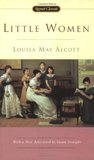
Theodore (Laurie) LaurenceMadly in love with his best friend Jo March, he does everything in his power to make her return his affection, including sulking and sobbing, but to no avail. She never viewed him in a romantic light at all, and made that clear long before she even met the man who did end up stealing her heart. Laurie just has to face the fact that his money and cuteness can't buy him everything. (My reviews are here and here.)
Severus Snape
His love for Lily Evans Potter blooms (or festers) for decades, including the long years after her death, (which he unintentionally helped to cause). To add insult to injury, the man she fell in love with was his old school bully. So Severus ends up taking his grief out on their poor son, who has the misfortune to look like his father, and be stuck in Snape's Potions class. A bad combination for poor Harry. (You might also like Is Severus Snape a good person?)
Dean PriestHe's a cynical, hunch-backed wanderer who loves Emily of New Moon to such an extent that he tries to sabotage her confidence in her writing ability. He honestly believes her literary aspirations will always be his only rival. Alas for him, she realises she's in love with her old school friend Teddy. Dean can't fix that one so easily.
But here's my favourite of all, the ultimate example of handling unrequited love. I can't think of anyone who dealt with it a sweeter way than this gentleman.
Mr Farebrother
He's a kindly chap from George Eliot's Middlemarch, who adores Mary Garth, but knows her heart belongs to the youthful and unreliable Fred Vincy. Instead of getting angry and setting out to win her for himself, Farebrother values Mary's happiness enough to take a different course. He never mentions his own feelings, but concentrates on helping young Fred become the sort of man Mary can be proud of. Who makes gestures this generous? Severus Snape, eat your heart out! (My review is here.)If you have a favourite of your own, for I know they're everywhere, please share it in the comments. Or if you're feeling brave enough, and have a personal unrequited love story you'd be willing to share, go for it! What do you think of unrequited love stories? Cathartic or cringe-worthy? (If you enjoyed this, you might like my related post, Ships that never sailed, or in other words, possible literary romances that never took off. I also had a lot of fun with Literature's most awkward marriage proposals.)
Thursday, March 23, 2017
'Around the World in Eighty Days' by Jules Verne
"To go around the world...in such a short time and with the means of transport currently available, was not only impossible, it was madness"
One ill-fated evening at the Reform Club, Phileas Fogg rashly bets his companions £20,000 that he can travel around the entire globe in just eighty days - and he is determined not to lose. Breaking the well-establised routine of his daily life, the reserved Englishman immediately sets off for Dover, accompanied by his hot-blooded French manservant Passepartout. Travelling by train, steamship, sailing boat, sledge and even elephant, they must overcome storms, kidnappings, natural disasters, Sioux attacks and the dogged Inspector Fix of Scotland Yard - who believes that Fogg has robbed the Bank of England - to win the extraordinary wager. Around the World in Eighty Days gripped audiences on its publication and remains hugely popular, combining exploration, adventure and a thrilling race against time.
MY THOUGHTS:
I'm so glad I've got this classic off my TBR list at last. It's my choice in the 2017 Back to the Classics challenge for a book with a number in the title.
The year is 1872, and the mathematically minded Phileas Fogg is indignant when his friends laugh off his claim that a man can circumnavigate the globe in just 80 days. They offer him £20 000 to prove them wrong, and he accepts the wager, deciding to set off that very night. His new man-servant, Passepartout, is astounded when Fogg arrives home and tells him to pack their bags within ten minutes.
I would have sided with the majority, who believed there was no way Fogg could plan a trip which had to account for every minute, when so much could potentially go wrong. And for these travellers, that turns out to be more than just inclement weather and transport hold-ups (although they have their share of those). They are being trailed by stubborn Detective Fix, who is living under the delusion that Fogg robbed the Bank of England. They also pause to save the life of a young Indian woman, Auoda, who's about to become a human sacrifice. That's just the start of their escapades.
My main issue is that I just couldn't warm to the main man, although I admired aspects of his personality. There's too much Dr Sheldon Cooper in Fogg. Not only are such characters set in their ways, but so full of themselves they insist on forcing their crazy standards on others. At times I try to demand that my kids tidy their bedrooms, but at least that's achievable for mere mortals.
Fogg is overly-inscrutable too. I think Jules Verne intended to keep an aura of mystery about him, because he never shared a glimpse from Fogg's point of view, even though he's supposed to be the hero. We only see him through the impressions of others, such as Passepartout, Fix and Auoda. All we get is his cool, unflappable exterior. And we never have a clue where his vast wealth comes from. He flaps bank note bribes under the noses of people all through the story, but is it earned through work, a family inheritance, or something else?
It's hard to muster much sympathy for a main character we only know from the outside and not the inside. Maybe his surname, 'Fogg' is chosen on purpose, because the connotations are very apt. I watched two movies based on this book, and didn't mind Phileas Fogg as he was portrayed by David Niven in 1956 and Steve Koogan in 2004. But the book Fogg leaves me cold.
What annoys me most though, is that he's too disdainful to do a little sightseeing. He's so set on mechanically carrying out his challenge, he can't even be bothered looking out the window. What sort of boring waste of oxygen gets to see the wonders of the world firsthand, but chooses to draw the blinds and play whist? Verne makes it clear that Phileas Fogg is 'not travelling, but only describing a circumference.' He also points out that he's 'one of those Englishmen who are wont to see foreign countries through the eyes of their domestics.' Give me the train and boat tickets instead, please :)
Sir Francis Cromarty, a passing character, questioned himself as to 'whether a human heart really beat beneath Fogg's cold exterior, and whether he had any sense of the beauties of nature.' I'd answer no to both.
Passepartout is the more likeable character, even though we don't get much of his background either. But he's intrigued by the sights he sees, he's volatile and good natured, and can't help showing his enthusiasm. He's loyal and principled too, refusing to turn on his master, even when he wonders for a while if Fix is right. I wonder whether Passepartout was Verne's favourite character too, because he shared his nationality. It seems like such a British book, beginning as it does with Fogg and his Reform Club cronies in London, so comes as a bit of a shock whenever we remember that Jules Verne was actually a Frenchman.
The descriptions of the different places, which we see mainly from Passepartout's lively point of view, are great. Verne even pokes a bit of fun at the different nationalities through his pointed observations. I wonder how a modern author might handle a similar story, in our politically correct era. Jules Verne might have considered his story an up-to-date tourist guide, but for us, it's a charming old vintage relic from Victorian times. The Afterword in my volume points out that Fogg was a symbol of the scientific optimism that was rife through Europe and America in the second part of the nineteenth century, and I believe that's what provides the good steampunk feeling I enjoyed.
It's fun to read about the food. Phileas Fogg found that the 'native rabbit' he was served in Bombay was far from palatable, but when he tried to pin down the waiters to find out exactly what it was, they eluded direct questions. 'Rabbit from the jungle' was the best he could get out of them. Fogg's normal breakfast in England didn't sound half bad. 'Broiled fish with Reading sauce, a scarlet slice of roast beef garnished with mushroom, rhubarb and gooseberry tart and a morsel of Cheshire cheese.'
I was keeping an eye on all of Fogg's outlay, as he often had to spend big money to get places in the nick of time. It's pretty clear early on that by the time he arrives home, he'll have spent so much money that winning the wager would barely cover costs. However, there is also a good twist or two. It's worth a read, just because it's so famous, and for the sake of Passepartout. But as for Phileas Fogg, I think the man who wrote the Afterword in my book summed it up best. He wrote, 'If it is true that Jules Verne never saw most of the places he described but only imagined them, then it's entirely appropriate that Verne's hero does not see them either.'
Some good quotesPassepartout: Alas! In my hurry, I, I forgot...
Fogg: What?
Passepartout: To turn off the gas in my room.
Fogg: Very well, young man. It will burn at your expense.
Detective Fix: Great robbers always resemble honest folks. Fellows who have rascally faces have only one recourse to take, and that's to remain honest. Otherwise they'd be arrested off hand.
Sir Francis: (surprised) Why, you are a man of heart.
Fogg: Sometimes, when I have the time.
A great smoker can smoke as many as eight pipes a day; but he dies in five years. (In the opium den in Hong Kong.)
It may be taken for granted that, rash as the Americans usually are, when they are prudent, there is good reason for it. (When they're wondering how to cross a rickety old railway bridge.)
Fix: Good, India! We own that! (At one stage when he discovers their whereabouts.)
Wednesday, March 22, 2017
'The Kindness Challenge' by Shaunti Feldhahn

One month to a great relationship…with anyone!
Think of your toughest relationship. Think of a relationship that is good but could be great. Think of a group of people that drives you nuts. You want to show more kindness and generosity, but sometimes you’re just tired, stretched, and frustrated. Besides, would small actions make that big a difference? Yes!
After years of extensive research, Shaunti Feldhahn has concluded that kindness is a superpower. It can change any relationship, make your life easier and better, and transform our culture. But how does it work? And how can you show kindness when you don’t feel like it?
MY THOUGHTS:
This is just what the title says it is, a 30-Day Kindness Challenge, if you want it to be. And if you don't want to take part in anything quite that formal (I'm not a one-size-fits-all sort of person myself), there are tips, anecdotes, suggestions and stats all through the book which you can pick and choose from. I'll just mention some of the ones which stuck out most to me.
One of the most common themes of my reading lately is that we have to watch our thought lives. It's what you put into your mind and focus on that will come out of your mouth. This book is no exception.
It seems many of us might live under the delusion that we are kinder people than we actually are. I can buy that. A few interesting stories indicate that we tend to be more reactive and irritable than we think we are. I'm probably guilty of that around my place at times (very rarely, lol), since family members may pick up on my grouchiness quicker than I even acknowledge it to myself.
Feldhahn talks about the argument that we may need to vent our spleen to let off steam. I'm sure we're all familiar with the line of reasoning. What's inside has to come out, or it festers and swells, and the person eventually bursts with all their repressed annoyances and complaints. That always sounded fair enough to me, but it does seem to contradict the idea that we should always make kindness a habit. I wondered how Shaunti Feldhahn would tackle it. Well, she believes that giving the grumbles head space in the first place is the main problem. Anything we choose to just shrug off and refuse to acknowledge doesn't grow bigger, but withers up and dies for lack of being fed. In other words, when it comes to kindness, 'Fake it til you make it' is a more suitable motto than, 'Better out than in.' It's an interesting view that I quite like.
She addresses the subject of sarcasm, and I was pleased that she distinguished between what she calls good-natured trash talk, and truly ill-natured remarks designed to hurt. It was more realistic sounding than advice to avoid sarcasm at all costs would have been, which I have come across before. My family would suffer if we were never allowed to use sarcasm. I've heard it called the lowest form of wit, but it does cheer us up at times, and defuse tense situations.
Now, can you criticise a book about kindness kindly? The thing with book reviewers is that we're open to finding new ways of not coming down too hard, but I did have a couple of gripes. My first is that are bullet points everywhere. I think there are even bullet points within bullet points. I actually like lists, but they get to a point where they lose their effectiveness and stop being memory tools, when we're inundated with them. And you don't necessarily even need them all. Some self-help books slide into condescension, and this had moments of heading in that direction. For example, do we really need a list of possible ways of giving praise to family members? Surely we know our own spouses and kids better than she does, and have enough imagination to come up with our own praise points.
Some of her points about praise were good though. Some people believe we shouldn't bother saying thanks to a person for things they're supposed to do, because it's their job. But I agree with Feldhahn, that when we do, it's like filling a fuel tank, and prevents those people feeling like they're being taken for granted. It's this sort of small consideration which might actually turn out to make an enormous difference. Overall, it's not a bad read which may make us realise we're not as kind as we thought we were, and offer tips to give us an edge in the art of kindness.
Thanks to Waterbrook Press and Blogging for Books for giving me a review copy through NetGalley
3.5 stars
Sunday, March 19, 2017
A Special Gallery for International Read to Me Day.
Today, March 19th, is International Read to Me Day. All the photos I've featured here are of my dad, reading books with his grandchildren, on various occasions.One of my very earliest memories, at the age of 2 or 3, was lying on the couch while he read with me. Mum would say, 'She's too little to pick it up. You're teaching her too early.' And he'd reply, 'No, she's doing good.'
I clearly remember being able to read the words of stories when nobody knew I could. Dad would read out loud, and I'd skim my eyes down, seeing what was coming. The knack of reading must have snapped into place for me some time when he still didn't realise I'd picked it up. That memory has taught me never to assume I can guess the extent of what any young child will understand.

Many people agree Dad was onto a good thing. Some even read aloud to their unborn babies, propping the books on their big, pregnant bellies. There's no harm getting them used to the soothing meter of your voice, and the flow of a good story. Even if you think those parents are a bit too eager to start, it's better than erring the opposite way. A Primary School teacher once told me that some children come into her classroom not even knowing what a book is, or how to turn pages.

I love reading to anyone who will listen, so my children were fair game. I found it gave me a great, early indication of the ways their characters would develop. My elder son is a witty person who can wield irony and sarcasm like weapons, and he used to chuckle at funny or snarky comments delivered by his favourite characters. My daughter is a hands-on person who always wanted me to read her a particular picture book with actions of different family members doing things around the house. And they both thought it was hilarious when their baby brother would request, 'It's Not Easy being a Bunny' for the thousandth time, until we all knew it by heart and groaned at the sight of it.

There's a bit of self-indulgence in reading aloud for me. I used to enjoy acting on the stage in school drama lessons, so having the chance to assume the different characters' voices and mannerisms is the next best thing. It's such fun when I know a good part is coming, but they have no idea, and I get to anticipate their reactions. That's one of the best rewards for taking the time to read out loud to your kids.
I highly recommend reading to the children in your life whenever you can. It's such an easy thing to do, and there's no bonding experience quite like it. You don't need to spend time and money searching for different components. I went through a stage in homeschooling when I spent hours planning lessons someone else had designed, racing around to shops looking for objects which might work as props, making myself stressed. And so often, all that effort to create fancy memories fell flat, or got laughed at. The best memories turned out to be our reading times, and all we needed was a book! The benefits are huge, carrying on years later. People who are read to learn about the world without leaving their seats, and learn to use their imaginations to put themselves in other people's places. It's a bit like borrowing someone else's brains and becoming a virtual traveller. Even now that my older children are young adults, we still reminisce about the characters we enjoyed several years ago.

If you assume you need to wait until they're older, or until you decide their understanding capacity has developed to certain standard, the small of gap of time you're looking for may pass so quickly, you blink and miss it. Then it may be too easy to decide they're too old to be read aloud to after all. Or when you do try, it may feel too weird all round, if you've never done it before. The time to begin is when they're young enough to make story time second nature for all of you. I still read to my youngest son, who is almost thirteen. Although he's been old enough to read to himself for years, it's still the best way of sharing a story. And not long ago, even my eighteen year old daughter got tired eyes from trying to read a book quickly, and asked me if I'd read some to her for a bit.
Dad died just last month. While sorting through photos to put together a slide show for his funeral, we noticed this wonderful thing I'm showing you now. His habit of reading to young children, which started with his own kids, carried through to the next generation. These photos were all taken at different times, spread throughout the months and years. We never set out to take photos of him reading to the kids. It just worked out that way, because that's how they all loved to spend time with their Papa. There was no way we could miss the theme, since the evidence was scattered all through the albums.
So I've made this picture tribute with two purposes. As well as observing International Read to Me Day, the photos you see in this blog post are a tribute to a loving and involved Papa, featuring four of his six grandchildren, Jarrad, Travis, Logan and Emma. I'm at the stage where the initial shock of his passing is over, and we're all doing life as normal, enjoying the good parts, as he would have liked. But at frequent moments, I'm almost bowled over by waves of sadness as it sinks in afresh that I'll never see him again in this lifetime. But then we remind ourselves how lucky we are to have so many memories like these to draw back on.
Also see related posts, Writers living with kids and kids living with writers.
And of course, there's this post about reading out loud.

Subscribe to:
Posts (Atom)