Thursday, September 22, 2016

'The Birdman's Wife' by Melissa Ashley

30634833

Inspired by a letter found tucked inside her famous husband’s papers, The Birdman’s Wife imagines the fascinating inner life of Elizabeth Gould, who was so much more than just the woman behind the man.

Elizabeth was a woman ahead of her time, juggling the demands of her artistic life with her roles as wife, lover and helpmate to a passionate and demanding genius, and as a devoted mother who gave birth to eight children. In a society obsessed with natural history and the discovery of new species, the birdman’s wife was at its glittering epicentre. Her artistry breathed life into hundreds of exotic finds, from her husband’s celebrated collections to Charles Darwin’s famous Galapagos finches.

Fired by Darwin’s discoveries, in 1838 Elizabeth defied convention by joining John on a trailblazing expedition to the untamed wilderness of Van Diemen’s Land and New South Wales to collect and illustrate Australia’s ‘curious’ birdlife.

From a naïve and uncertain young girl to a bold adventurer determined to find her own voice and place in the world, The Birdman’s Wife paints an indelible portrait of an extraordinary woman overlooked by history, until now.


Genre: Historical fiction, faction, literary fiction.

MY THOUGHTS:
I requested this title not knowing what to expect. It turns out to be faction novel based on the life of nature artist Elizabeth Gould, and told in her own voice. Elizabeth was married to British ornithologist John Gould, and produced hundreds of scientific illustrations for his works, most of which were birds. This novel is not only thick but dense with detail, so don't start it if you're not committed. Having said that, here are all my reasons for ranking it 5 stars.

1) The cameo appearances from other famous historical figures of their time are great fun. There's Edward Lear, shown as a clever, talented young man with a flair for the comical, and Charles Darwin, a celebrated scientist recently returned from his collecting expedition on the HMS Beagle. He inspires John to want to embark on their own, once in a lifetime Australian expedition. There's Sir John Franklin, the governor of Tasmania, and his powerful and scientific wife Lady Jane, who even leads expeditions of discovery.

2) Elizabeth's voice always comes across like that of a nineteenth century woman. She notices the things they'd notice, and doesn't notice things a more modern woman might. This shows how deeply immersed in her character the twenty-first century author must have been while writing it.

3) The husband/wife partnership is interesting to read, and their essential character differences are highlighted. John is depicted with a good natured manner, yet he's still a driven fanatic, and taxing task master to his staff of helpers, including his wife. Elizabeth is kind hearted and endlessly grapples with guilt about having to kill birds and animals in the name of science. 'Few creatures were spared my husband's ambition.' She also admits that even though she's a woman of science, she still enjoys what she calls the 'myths of unenlightened men' including stories, legends, folklore and symbols.

4) It's good to learn the difficulties and expenses nineteenth century artists faced, so we can give them the respect they deserve. Elizabeth used all sorts of rare and wonderful ingredients to make her palette mixes accurate, including the imported urine of Brahmin cows which had been fed special mango leaves. Seriously!

5) The pages of notes by Melissa Ashley at the end shows how this project became her consuming passion. She was already an avid birder, but set herself the task of learning the different, complex art techniques and lithography, to help bring Elizabeth's voice to life. She even became a volunteer trainee taxidermist, to add authenticity. That's commitment!

6) I recorded heaps of quotes, but will choose to share just this one, about our passions and how the things we spend our days doing end up becoming our identity. Elizabeth said, 'I painted, I studied, and in this constant striving, became me.' Although she died sadly young, it can be argued that she'd lived a fuller life than many ladies in their eighties or nineties. Also, I've got to appreciate the way Melissa Ashley gave a voice to this remarkable lady whose name had been eclipsed by her husband's fame for over a century.

7) One of my favourite features of this book is that it helped cure my own wanderlust and discontentment. The Goulds sacrificed so much to travel to Australia, a journey many thought they were mad to undertake. Elizabeth's maternal heartstrings were torn when she had to leave her three younger children with relatives for two years, since the gruelling voyage would likely have proven too taxing for them. Yet when they arrived in Australia, their wonder and delight with the flora and fauna which is so familiar to me is described brilliantly. Nowhere else in the world is like it, and I don't have to go through all they did to appreciate it, since I'm already down here.

The chapters in the story are all named after the different birds that surround me each day. Superb fairy wrens, sulphur crested cockatoos, red wattlebirds, willy wagtails, honey eaters, zebra finches, Major Mitchell cockatoos, just to name a few.  There's some touching reminders that the nation must remain poles apart from the rest of the world. On the way back, the Goulds' healthy specimens perished in transit, including kangaroos, wombats, koalas and possums, as well as birds. Once again, what a wonderful ecosystem we Aussies get to enjoy. I wouldn't have expected a novel named 'The Birdman's Wife' to give my patriotism a boost, but that's just what it did.

Thanks to Simon and Schuster (Australia) and NetGalley for my review copy.

5 stars.


Monday, September 19, 2016

Stories featuring trains and railways


This list is inspired by a visit to the Port Adelaide Railway Museum over the weekend.

 It's always come across as a romantic mode of transport. I'd be willing to bet that's because it's a highly sensual way to travel, often involving all five of our senses. The sight of the engines and carriages themselves are beautiful, not to mention railway tracks disappearing in the distance, making the idea of faraway places very tangible. There's the sound of whistles and clacking movement along the track, the smell of diesel fumes, the feeling of warmth from the fires and steam in the engine, or the flecks of soot getting into passengers' eyes. As for taste, well, not every mode of transport offers dining cars, do they? And rail travel can also inspire great creativity. Don't forget, J.K. Rowling got her inspiration for the Harry Potter series while traveling in a train.

The sensual nature is probably why railway travel features strongly in literature. I sat down to brainstorm my list, and when I finished, something interesting stood out. With just a few exceptions, most of them are kids' stories. I wonder if the authors realise instinctively that train stories will appeal to the sensual natures of young readers. Here they are. Please let me know if you can think of any others. 


1) The Orient Express
I read Agatha Christie's 'Murder on the Orient Express' in my early teens. I remember being keen to keep returning to the diagram with the layout of the train, including the passengers' sleeping berths, to try to figure out who committed the crime. Bad luck for them Hercule Poirot was aboard, or they might have got away with their plan.

2) The Hogwarts Express
I love the sections in Harry Potter stories when the students converge on Platform 9¾ at King's Cross Station to return to school, because something intriguing often happens aboard the train. There's the time in Harry's third year when the dementors gatecrash, to everyone's terror. And at the start of his sixth year, Professor Slughorn sets up his elite 'slug club' in one of the compartments, and then Harry decides to eavesdrop on his Slytherin peer group. Then in the next generation, Albus and Scorpius become the first students who ever manage to go AWOL from the train.

3) The Starlight Express
I never actually saw this live, but love the concept. A toy railway set magically comes to life, and all the engines compete to become the fastest in the world. It would be fascinating to see the actors performing this on roller skates.

4) The Polar Express
I remember watching this with my kids around Christmas Time. The train is on the way to the North Pole, picking up a variety of children who decide they may as well go along for the ride, and there is plenty of drama concerning lost tickets and sights along the way.

5) The Railway Children
I read this story and also saw the movie long ago in my childhood. My memory is sketchy, but there were three siblings, Bobbie, Phyllis and Peter, whose father was wrongfully imprisoned for suspected spy activity. They move to Yorkshire, where they live near the railway and befriend an old man who is eventually able to help prove their dad's innocence. There are several scenes in which the kids walk and play along the railway tracks.

6) The Little Engine who Could
I doubt any pre-school child ever missed out on the story of this brave little guy who encourages us all never to give up. Even when we're huffing and puffing our hearts out as we climb whatever mountains we face in our lives, we'll make it to the top if we don't quit. Although 'I think I can, I think I can,' won't work for every situation, it's not a bad motto for those times when there are daunting tasks we absolutely must complete.

7) Thomas the Tank Engine and friends
Just the thought sends me back in time to the 90s. My eldest son in particular loved these guys. He knew each single one of them, and their character strengths and weaknesses. He also collected quite a number of small merchandise trains from this franchise. And the theme song from the ABC series fills my head as I think about them, along with, 'He's a really useful engine, you know.' Those were the days.

8) Little House on the Prairie
Travel by rail was cutting edge technology in these times. In her book, 'By the Shores of Silver Lake', Laura Ingalls Wilder describes an interesting time when she caught the train with her Ma and sisters to join their Pa, out further west. I'm impressed now, but wasn't at the age of 10 or 11, when I read how scary and fast they found the movement, at 20 miles per hour. I dismissed them as wimps, without making any allowances for the horse and buggy travel they'd been used to.

9) Anne of Green Gables
Even though rail travel isn't featured specifically, it was obviously the most significant way of traveling long distances around Prince Edward Island. In one of the most iconic moments near the start of the story, poor little orphan Anne waits with her scruffy carpet bag at White Sands station, for Matthew Cuthbert to come and get her.

10) The Girl on the Train
I haven't read this recent best seller yet, and don't know if I ever will. I just thought I'd add it to this list, since there's a train in its title. I know the basic blurb. The main character, Rachel, travels by train past her old house, where her husband now lives with the woman who has supplanted her. I'm not sure it appeals to me, but if you've read it, let me know what you thought.

11) Miss Peregrine's Peculiar Children
Train travel becomes very important in this series. In Hollow City, it was urgent for the little gang to board a train bound for London, in a race against time, but they are initially bullied by the snobbish staff at the station. At last Horace manages to purchase an entire first class carriage for them, but they are destined not to board, due to the most dramatic plot twists. When they eventually do get to enjoy their first class travel, you can't help thinking they thoroughly deserve it. But it's not even the end of their terror on the rails, which extends into the final installment, Library of Souls. I love Enoch's line, 'If one more person tries to stop us getting on this train...'


I'll finish off by mentioning the work I'm doing on my grandfather's story, which strongly features trains. His father (my great grandfather) migrated to Australia from Britain with a wife, three small sons, and no idea how they'd support themselves. He found work with the South Australian Railways, where he remained loyal all his life, and all of his sons but one followed in his footsteps. That one happened to be his youngest, my grandfather. But all my great uncles (and there were many more by then) joined their father with the SA Railways, some living interstate for a while, some working at the Islington workshops in Adelaide, and all expressing gratitude for such good work. 

I'm looking forward to sharing it in time.

Friday, September 16, 2016

'The Undoing of Saint Silvanus' by Beth Moore

 29527162

Exciting fiction premiere from beloved New York Times bestselling author Beth Moore.

Only God knew why Jillian Slater agreed to return to New Orleans on the news that her father had finally drunk himself to death. It's not like they were close. She hadn't seen him--or her grandmother, the ice queen--in almost 20 years. But when Adella Atwater, the manager of her grandmother's apartment house, called and said Jillian's expenses would be paid if she'd fly in for the burial, a free trip to New Orleans was too intriguing to resist.

What Adella didn't tell her was that the apartment house wasn't a house at all and, whatever it was, bore the dead weight of a long and painful history. As soon as Jillian meets the odd assortment of renters and realizes that her grandmother had no idea she was coming, she hatches a plan to escape. But the investigation into her father's death quickly unfolds and Jillian is drawn into the lives of the colorful collection of saints and sinners who pass through Saint Silvanus. She soon discovers there is more at stake than she ever imagined. Who is behind the baffling messages and the strange relics left on the steps? Is it possible that her family is actually cursed? Or is it just this crazy old house that holds them all under its spell?


Genre: Contemporary drama, murderer mystery, Christian fiction 

MY THOUGHTS: 
I was one of the unobservant readers who didn't notice the fine print, that this is just a sampler of the whole story. It's the first few chapters, in fact, set to warm us up for the rest. It explains why the blurb sounded so complex and comprehensive for the short read I found on my kindle. If we want the rest, we'll have to hang out for the whole book.

The gist of the story managed to be squeezed in fairly well. Jillian works at an upmarket cafe, and her boss Vince is also her boyfriend. One day she receives news that her estranged father Rafe has been discovered dead with a stab wound. For some reason, Rafe was a scruffy, homeless vagrant, but we don't get to find out his backstory within the scope of this sample. Jillian goes off to visit her grandmother, Olivia Fontaine, who was Rafe's mother. Olivia runs a small boarding house which used to be a beautiful old church.

The first person Jillian meets is Adella, who works for her grandmother and seems to know a lot more of what is going on than you'd expect from the average employee. There is also David Jacobs, one of the tenants, but we don't get to find out much about him yet. We've also been introduced to couple of policemen who may or may not become main characters. There's Sergeant Cal DaCosta, who has a history of heavy drinking, and his close friend and former partner Frank Lamonte. They were among the first on the murder scene.

My impression so far is that many of the characters seem to display more exaggerated and over-stated reactions than circumstances seem to call for. Jillian seems rude and touchy with Adella, considering she's only just met her. And I don't know if this will come out later, but I don't get why Jillian is so adverse to setting foot in a church, especially one which has been re-furbished as a dwelling.

I do get the feeling that the plot will be full of twists and turns, and if somebody offered to tell me what was going to happen, I'd be interested to hear it. But from what we've been given, I haven't warmed up to any of the characters enough to really care much. By this far in to a story, I really like to have someone to identify with, admire and find myself hoping the best for. Since that hasn't happened yet, I really don't know if I'd want to pick up the remainder of the book if given the chance. Especially when I see the total is set to be 480 pages long. That's a long time to spend with characters who might not grow on you.

Thanks to Tyndale House for my review copy

2.5 stars (so far)

Tuesday, September 13, 2016

'Love's Faithful Promise' by Susan Anne Mason

28561662

 A Stirring Story of Love and Faith and America's Great Promise
When her mother suffers a stroke, medical student Deirdre O'Leary makes the difficult choice to put her career on hold to care for her. Dr. Matthew Clayborne is renowned for his amazing results with patients, but when Deirdre approaches him about helping her mother, she finds him challenging and surly. Deirdre has had enough of complicated men in her life. After her fiancE left her, she vowed never to give a man that kind of power again.
Widower Dr. Matthew Clayborne is devoted to two things: his work with wounded soldiers and his four-year-old daughter, Phoebe. He won't abandon either of these priorities to care for one older woman. However, when Phoebe suffers a health scare, they're offered respite at the Irish Meadows farm, where his daughter's weakened lungs can recover--but only if he cares for Mrs. O'Leary.
Matthew intends to hate Irish Meadows, yet he immediately feels at home, and soon both Mrs. O'Leary and Phoebe are showing improvement. But since he has no intention of leaving his life up north forever, and Deirdre has sworn off marriage in favor of her career, how will they deal with the undeniable attraction between them?


Genre: Christian historical fiction, early 20th century fiction

MY THOUGHTS:
I was looking forward to the conclusion of this trilogy, as I loved the first two novels, Irish Meadows and A Worthy Heart.. In this one we get to see more of Connor and Deirdre, who were most often seen as little kids in the background of the earlier books. The O'Leary mother Kathleen suffers a stroke which leaves her partially paralysed, and her nursing student daughter Deirdre commits herself to helping her fully recover. She tries to enlist the help of physiotherapist Matthew Claybourne, but he has his own reasons for refusing point blank to come to Irish Meadows. Meanwhile, Connor is trying to befriend a new employee who has just been hired to work in the stables, but there is far more to this person than he guesses at first.

When you stop to think about it, this novel is brimming with literary conventions and tropes. Grim young doctor who needs to lighten up, sheltered little girl who becomes more robust with the encouragement of good friends, beautiful working woman, pretty girl masquerading as a boy, drunken old dad with a deep-seated mistrust of doctors. Even though it was predictable at times, I really enjoyed it all, which proves that these plots have stood the test of time for a good reason.

All through this trilogy, there have been two romances in each novel, one more dominant and the other more recessive. I feel it worked particularly well in this one. It might have got a bit heavy if the story focused just on Matthew and Deirdre's situation, without the run-around that Jo put Connor through. Their story was my favourite this time round, adding a bit of lightness. It definitely wouldn't have been the same without them. Jo was a spirited heroine who can give men a run for their money, and Connor was a perfect gentleman.

Deirdre's take on whether or not a person should give up on their dreams appealed to me. No doubt we've all seen it presented in an either/or sort of manner. You either go wholeheartedly for your dreams or forget about them. She simply sums up her opinion with two words. 'Dreams change.' It makes sense. A person is a changing entity, always learning and in flux. A single dream isn't necessarily meant to carry us through all our lives, exactly as we conceived it before circumstances made us grow.  The story may help some of us shake off a bit of rigidity.

Also, her dilemma in this novel raises the question of whether it's the right thing to try to help and touch as many people as you possibly can, or focus most of your attention on only one or two. Depending on the individual, there's no right answer, and sometimes the best move may be to simply slow down and focus on just a couple of others who need you most.

There's a bit of trickery and truth stretching in this book, all for very good reasons. Some of it is upfront from the start, such as the trick Jo is playing on Connor, and others take us by surprise down the track.

On a personal note, I was interested to see that Brianna, who struggled so hard for her university education in Irish Meadows, settled happily down as a homeschooling mother. That looked familiar, even though her style doesn't look quite the same as mine. I think Bree's style comes across as the sort we all imagine at the outset, with good-natured, happy children, who are interested in the subject matter, sitting around the table with no resistance.

I think the first two books in the trilogy are my favourites, but having read all three now, it was time well spent. Of the six romances presented, I think my favourite heroes were the O'Leary boys, Adam and Connor, and of course the charming Rylan Montgomery, who never achieved his dream of becoming a Catholic priest. Through all three books, the stern and domineering father, James O'Leary makes his influence felt without ever really mellowing much in his approach, or does he? I love it that by the end, several of his children just shrug off his bluster, saying something like, 'Oh, I'll handle Daddy.'

Thanks to Bethany House and NetGalley for my review copy

4 stars

Friday, September 9, 2016

The freedom of admitting, 'I don't know.'


I grew up regarding this as a cop-out phrase. If you're a student who gives this answer in class, you're a loser. If you're a parent who gives it to young children, you might lose your credibility. And if you're being trained up for anything, you might even be given a little booklet to memorise in the event of being taken off guard, all so you can avoid those three words.

I remember standing under the shower one day as a teenager, trying to remember some multi-step mantra from a self-help book which was guaranteed to provide all the necessary answers for something or other. I was getting really frustrated because I thought had it down pat, but I'd forgotten a bullet point or two. Even though I clearly remember the angst of that day, I can't remotely remember whatever the subject was. I seem to have been living well enough without it for all this time.

I also remember an episode, early on in our homeschooling, when I started thinking about the craziness of blindly accepting the opinions of those who profess to know it all. The postman had dropped off a delivery of kindergarten text books for Emma, who hadn't yet turned five. She was so excited that she went racing through the house, jumping up and down, turning cartwheels, and shouting out, 'They're here! They're here!' Having table work to do like her big brother made her so proud of herself. I'll never forget her wide smile. (That reaction to the arrival of school work soon changed.)

Her brother's response to her excitement stuck in my mind too. Logan rolled his eyes, gave a cynical sort of smirk, and said, 'How can she get so excited over such baby work? It's just colouring in and alphabet letters. She doesn't have a clue how hard it's going to get.'

The significance dawned on me later. His comment was meant to come across so worldly wise, but he was just an eight-year-old doing rudimentary multiplication sums, simple spelling words and one page book reports. Yet he spoke like someone with a wealth of academic knowledge behind him. He didn't have a clue how much he still didn't know.

My question was, Do we all do that?  Is there ever a safe time to assume that our knowledge base is extensive enough? How about the professor who's renowned as an expert in his field? Or the scholar who loves theological debates and thinks he's worked everything out? Or the text book author who seems to love writing long, confounding sentences with big words? We all think they look smart, but are they really just the same as my Grade Three son? From a celestial perspective, we are all just kids who won't figure out all the answers in this life time, no matter how far along the path of knowledge we may consider we've come. I thought it might be a good idea to start reminding myself to relax my expectations that there should be clear answers available for everything.

Since then, I've come across supporting opinions written by a variety of sages that true wisdom lies in being a perpetual learner. Their writing challenged me to wonder whether I'm willing to loosen my grasp on everything I think I know. Could I be satisfied to simply wonder whether something might be true, instead of getting uptight if I can't find out for sure? I wasn't certain I could answer yes to that. Our modern western society shapes us to believe that knowledge equals power. From our early years, we're impressed that our teachers know so much, and we know so little. The term 'learner' is one we'd prefer not to describe us for too long, because we believe it's far better to be a 'knower.' 

'Let's free ourselves from the limits of certainty,' somebody suggested. I forget who it was, but I like it a lot. We've come to a good place when we're simply able to trust the hidden power that undergirds the life we know, without insisting on knowing all the ins and outs, which is impossible. (I like to think of this source of power as the omnipresent, personal and all-knowing God presented in the Christian Bible. I know that while others are different, we all agree that there is something or someone there beyond what we can ever fathom.) This includes being able to say, 'I don't know,' honestly without being bothered by that, or feeling like a flop.

Rainer Maria Rilke once wrote, 'Be patient toward all that is unsolved in your heart. Try to love the questions themselves.'

And thousands of years ago, Socrates said, 'True wisdom is in knowing you know nothing.' I think he might have also added that the truly unintelligent are often recognisable as those who think they know a lot, but it might have been someone else. Still makes a bit of sense.

Image courtesy of Pixabay

Monday, September 5, 2016

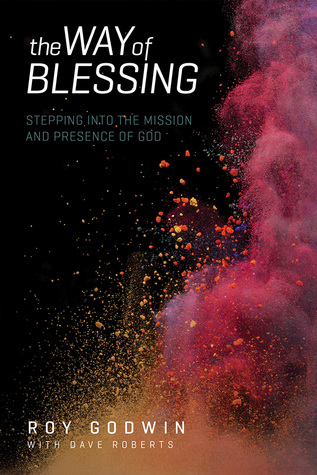
'The Way of Blessing' by Roy Godwin and Dave Roberts

27409678

 You’re invited on a spiritual pilgrimage to the windswept hills of Wales. Within that small, praying community known as Ffald-y-Brenin, the deaf hear, the blind see, and the broken receive healing.

Roy Godwin reveals how God has given believers the authority to bless others. As the executive director of the Wales retreat center, he shares how this ministry began, stories of miraculous healings, and ways you can usher God’s presence into your community. It begins when we stop chasing blessings and become God’s conduit for blessing others.


Genre: Christian non-fiction

MY THOUGHTS: 
I'd read an earlier book by Roy Godwin entitled 'The Grace Outpouring' which described the amazing way in which he and his wife Daphne became directors and overseers at Ffald y Brenin, a Welsh retreat centre. Although God is undoubtedly everywhere, some geographical locations seem to be particularly fruitful when it comes to manifestations of miracles and the supernatural. Godwin has such a matter-of-fact and humble style when it comes to factually reporting many miracles which took place there. I knew I'd be happy to read more.

Once again, he delivers eye-witness reports of wonderful and unexpected things that have happened to visitors and pilgrims to their property. Some of these members of the public have visited on purpose, while others accidentally chance upon them while on the road. Godwin has a habit of offering simple blessings for each of his visitors, and this book continues with the same gentle spirit, emphasizing the fact that most people need more of this and less rebuking. After all, most of us have been trained from childhood to automatically rebuke ourselves all day long.

It's the sort of book that might make you want to visit Ffald y Brenin if you can. Some of the miracles mentioned are huge, and just standing on the same ground would be worth traveling for. They are almost too much to take in while reading. It's way too far away from me, but I've had a look at their website. Judging from the way things take place on the premises, no doubt there's material for future books taking place right at this moment.

Thanks to David C Cook and Net Galley for my review copy.

4 stars

Friday, September 2, 2016

'My Hope Next Door' by Tammy L Gray

29806080

Former bad girl Katie Stone can feel the weight of her reputation settle over her as she drives home for the first time in years. Feeling deeply guilty about her past mistakes, Katie wants to do the right thing for once. But the small town where she grew up is not nearly as forgiving as she’d hoped. Despite it all, she’s determined to help her parents cope with her mother’s recent illness, and Katie finds a surprise ally in the man next door.

Asher Powell never minded being the son of a small-town pastor until a recent breakup leaves him wounded by lifelong members of his church. He remembers his new neighbor as a mean-spirited high school troublemaker, but he senses that her newfound faith and desire for forgiveness are sincere.

Through an unexpected friendship, two people from different worlds find peace, hope, and a second chance they never dreamed was possible.


Genre: contempory, Christian romance

MY THOUGHTS:
Tough, mean kids used to make my school life very hard, so I wasn't sure I'd be able to sympathise with Katie, based on what I read about her in the blurb. When I went to High School reunions, I was always wary of former bullies from my past who now seem to behave as nice as pie. Can people really change their stripes to that extent? That question prompted me to read this novel after all. In a way, I challenged Gray to convince me that it's possible for someone to have a personality transplant. She didn't do a bad job.

After fleeing in disgrace several years earlier, Katie returns to her judgmental home town to help her father care for her ailing mother. The first person she runs into is her controlling, aggressive former boyfriend Cooper, who clearly holds something over her which may be used as blackmail, but we don't find out what it is yet. Her parents are definitely not the most supportive and kind, and it's not hard to feel sorry for her.

Asher is easy to understand too. He's someone who feels he gave his all to his church community, but was deeply wronged by several others. Resentment is a strong force, especially when you're trying to muster friendly feelings toward people you think should never have believed the worst of you in the first place. The feelings he's dealt with as a pastor's kid make an interesting study too. Asher is sick and tired of being regarded as a stereotype.

The plot cleverly gets us wondering about each of their back stories. Katie and Asher are the only two characters whose points of view we get to see, and they're both deeply hurt by events which happened in their pasts. Yet it takes a while for us to get to the bottom of exactly what happened in each case. That's good writing, when we sympathise for characters without being entirely sure what we're sympathising for. Not to mention it keeps us wondering what the big reveals will turn out to be.

I'm sure anyone who picks up this book because they love romances won't be disappointed. Stripped down, it's the same 'exemplary citizen falls in love with former wild child' theme we've surely all come across before, yet it moves steadily and the dialogue is excellent and fun, so I was willing to roll with it.

Finally, if I lived there, I'd attend Asher's father's church based on his character. Brian Powell comes across as an outstanding pastor. He has some good advice for his son about not setting people on pedastals, and also delivers lines like, 'Either be with her and accept the bad with the good, or get out of her life.' I'm not always a great fan of books which drag us into the characters' church culture, with Sunday morning services, home groups, after church lunches and all, but it works okay with this one. Maybe that's because all this just helps to emphasise the huge differences between Katie's and Asher's backgrounds.

I don't know whether their marriage will be completely smooth sailing, but if they can weather what happens in this book, we would hope they'll make it.

Thanks to Waterfall Press and NetGalley for my review copy.

4 stars