Wednesday, September 26, 2018
'The First Four Years' by Laura Ingalls Wilder
This year, I'm hosting a read-along of all of the Little House on the Prairie Books by Laura Ingalls Wilder, which you'll find here. We'd love you to read along and share your thoughts, if you feel so inclined.
Laura Ingalls Wilder is beginning life with her new husband, Almanzo, in their own little house. Laura is a young pioneer wife now, and must work hard with Almanzo, farming the land around their home on the South Dakota prairie. Soon their baby daughter, Rose, is born, and the young family must face the hardships and triumphs encountered by so many American pioneers.
And so Laura Ingalls Wilder's adventure as a little pioneer girl ends, and her new life as a pioneer wife and mother begins. The nine Little House books have been cherished by generations of readers as both a unique glimpse into America's frontier past and a heartwarming, unforgettable story.
MY THOUGHTS:
The manuscript of this story, more the size of a novella, was found in Laura's possessions after her death. It would have been a great discovery for readers who thought it all ended with These Happy Golden Years. 'But wait,' the publishers would say. 'There's more.' My little old Puffin has a terrible looking photoshop job on the cover, but I was still happy to pull it out and get stuck into it again.
The start takes us back to the end of the last novel, when Laura and Almanzo take a buggy ride to discuss their wedding. This time, there's an additional bit that didn't make it into that story. She's decided she doesn't want to marry a farmer after all. (Nice thing to tell a guy when you've been wearing his ring for weeks.) I can understand Laura's train of thought though. It's such a hard life for a woman, because she works so constantly, but is always broke. Meanwhile, the more chilled and relaxed people in town are happily earning money off her family. 'Can't you do something else?' she asks.
Almanzo's reply is along the same lines as his parents' reasoning in Farmer Boy. Farmers are independent, they answer to no man, and have the potential to earn far more than townies if they're willing to work hard. He suggests a three year probation period, and if she's still not happy at the end of it, he'll seek some other vocation. Later he convinces her to extend it to four years. So this little book is all about how it turns out for them.
I like the bold way they begin married life. Laura's courageous nature always impresses me. This five foot tall teenager is game for anything. She scolds a bunch of Indians for standing around in her barn, then hauls off and slaps one in the face. On another occasion she seizes a pitchfork with the intention to scare some howling wolves from their sheep. Luckily the pack has moved further on, but when Almanzo asks her what she would have done, she says, 'Driven them away, of course. That's what I took the pitchfork for.' I wouldn't ever mess with her.
Some more personal, potential personality clashes pop up occasionally, giving the impression that Laura was supporting her position through the pages. Like the time Pa called them crazy for taking newborn Rose out to visit in sub-zero temperature. Laura knows her baby was fine though, because she was well rugged up, and obviously made it unfrozen. She defends herself to generations of readers, whether or not she did to her father's face. At other times she thinks her husband's easy-going nature might be taken advantage of by such people as the neighbour who borrows and wrecks their tools, then fails to return them. More than once, she thinks, 'Oh well, that's Manly's business, and he's not worried.' I can imagine her saying it with an edge to her voice.
Most of all, so many of us relate to her love of books. A kind neighbour brings her a set of Sir Walter Scott's Waverley novels, which Laura credits with helping her through a hard pregnancy. 'She forgot to feel ill at the sight and smell of food, in her hurry to be done with the cooking and follow her thoughts back into the book. She brought some of their magic and music back into the little house with her.' Yes, don't all bookworms know that feeling.
But how about their deal? It seems the great blessing of their daughter Rose's birth is offset by several sudden disasters. A freak hailstorm can ruin a year's good growth of wheat in twenty minutes. When diptheria strikes the family, poor Almanzo exerts himself too soon during convalescence and suffers a stroke that paralyses his legs, so it takes months to regain sufficient flexibility for work. There's the tragic death of their infant son, and a house fire that burns everything to the ground. (Why did that boy die, when he started with such a healthy ten pound birth weight? It was so sad.) Then speeding winds flatten more crops. They've obviously had to fight tooth and claw for every inch they've gained, so how does it all stack up when they reassess at the end of the four year time period?
Somehow, he convinces her to keep going! You might ask how on earth did he do it? Reading between the lines, I think Laura might have caught some of Almanzo's gambling spirit, since their lifestyle is always a bit of a wager. They probably shared an unshakable feeling that giving up might be too soon, since one good year could turn everything right around. Since you never know when that good year might come, you might as well give it a little bit longer. I can see how that sort of gamble could become an addiction. And some people might say that describes all of life.
One thing would've been clear to them, it was nothing personal. Several bad strokes happened to neighbours and complete strangers too, from death to total financial loss, which we hear about in small anecdotes. Although Uncle Sam gave settlers the incentive to go out and tame the rocky, barren country, it was an impossible expectation in many ways. I'm glad I wasn't around to make the attempt in their time and place, but glad they did it, for the sake of reading these books and what we can take on board from them.
And this one sentence is enough to prove that many of the tough times were all worthwhile. 'It was a carefree, happy time, for two people in sympathy can do pretty much as they like.'
Next up will be On the Way Home.
🌟🌟🌟🌟
Wednesday, September 19, 2018
Stories with Chocolate
Books and chocolate are one of those matches made in heaven, but not all the time. I couldn't eat chocolate whenever I read without busting both my budget and waistline. Every so often it's great for your soul to sample both together though, and here is a list of recommendations for those occasions, because many authors and storytellers seem to understand the tantalising pull of delicious chocolate. When I started trying to brainstorm, it occurred to me that stories with chocolate seem to fall into three categories.
Chocolate as Control. In this type of plot, we see the dark side of chocolate, and I'm not talking about dark chocolate! Something so delicious has the potential to be a real bone of contention. It's been used to twist people's arms, bribe them, and even cause occasional violence.
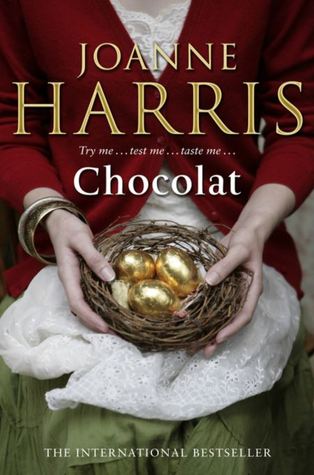
Chocolat by Joanne Harris
There was almost too much chocolate for some of the characters to handle. A young gypsy woman named Vianne sets up a decadent chocolate shop opposite the church in a small French village. Since it's the beginning of Lent, Father Reynaud is trying to keep his flock practicing self-denial. Her arrival is a disaster, and it's clear all through the story that an eventual show-down is inevitable. It's a classic, 'This town ain't big enough for both of us,' scenario, and he was there first. Of course we're drawn to ponder the nature of institutional authority, and question the point behind certain restrictions. The irony is evident, seeing chocolate is now synonymous with Easter, which Lent is leading up to.
The Chocolate War by Robert Cormier
This young adult novel draws us right into conflict with a capital C. An annual school chocolate fundraising sale becomes the scene of a power battle, and eventually outright war. A young student named Jerry Renault dares to stand up to the Vigils, a gang of thugs who try to dictate how many boxes he should sell, for their own agenda. When he refuses to be pushed around, they know their own credibility will be undermined unless they do something drastic and nasty. School politics becomes a mirror for life at large, and chocolate is just the trigger to set it all off.
My Fair Lady
One of the feel-good musicals of all time. When Professor Henry Higgins first accepts his friend's challenge to make a common flower-seller into a genteel lady, Eliza Doolittle refuses to go along with the plan. She's no fool, and realises that almost all of the hard work and frustration will be required from her. But Higgins uses some ingenious, foolproof coercion to make her re-consider. He simply offers her a chocolate. Eliza has tasted enough to have a weakness for this sweet treat, and decides if it's his normal bribe, it might just be worth the hassle of changing her whole persona.
Chocolate as Misunderstanding. I guess it stand to reason that mix-ups can occur in plots about chocolate, since chocolate boxes come mixed themselves.
The Chocolate Tin by Fiona McIntosh
The story is set during World War One, and the Rowntree family have organised a shipment of their famous chocolate tins as morale boosters for the soldiers in the trenches. One day a volunteer packer named Alexandra makes an impulsive, random addition to one of the tins, which comes back to bite her a few years later. I loved the tasty premise, but this wasn't my favourite book. Review is here.Harry Potter
Poor Ron Weasley has a really terrible 17th birthday. Never one to resist a treat, he gets stuck into a box of chocolates in the boys' dorm, but they've been laced with love potion for Harry by one Romilda Vane. And then the antidote itself turns out to have been poisoned, which sends him to the hospital wing lucky to have escaped with his life.

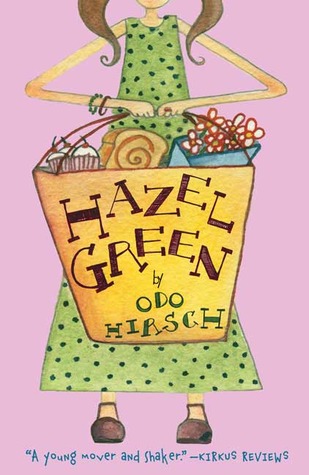
Hazel Green by Odo Hirsch
It's the start of one of my favourite ever kids' series. Hazel's good friend Mr Volio the baker has a top secret recipe he'd like her help to name. It has a shortbread base with toffee, strawberries and custard, all in a delicious layer of chocolate. But when the Chocolate Dipper is christened, he accuses Hazel of leaking his secret to a rival baker, Mr Murray. The evidence against her looks bad, and she must work hard to fix the misunderstanding. Here is my review.
Chocolate as Cure and Treat. This might be the best way to enjoy chocolate in both stories and real life.
Harry Potter
After the chilly, soul-sucking dementors have swept aboard the Hogwarts Express at the start of Harry's third year, the new teacher Professor Lupin has the antidote to drive their awful influence away. Chewing a square of two of chocolate is an instant mood booster. Even muggles understand how dark chocolate contains good endorphins to help fight depression, which has a similar effect to dementors. Wizards and muggles alike are warned to make sure it's used just as a short-term pick-me-up though.
A Tree Grows in Brooklyn
I call this the most touching of all. The night after her beloved husband Johnny dies, Katie Nolan sends their two kids out in the winter night for some fresh air. They return to find she's improvised a hot chocolate treat for them out of practically nothing. It's cocoa and condensed milk made into a paste with boiling water added to it. The loving gesture does make Francie and Neeley feel better, especially when she adds a marshmallow to float in each one. (Review is here.)

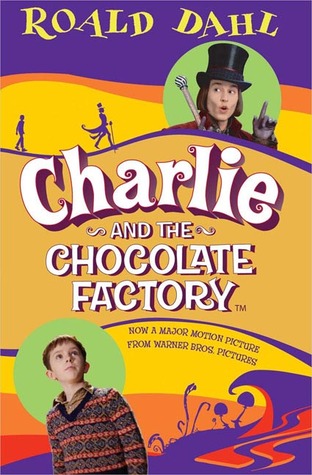
Charlie and the Chocolate Factory
This story must surely be the ultimate celebration of chocolate. The enigmatic Willy Wonka has decided to show five lucky golden ticket winners through his incredible chocolate factory. The tickets are floating around the country in random chocolate wrappers. After the first four are confirmed, Charlie Bucket gets lucky for once in his destitute little life. Later as his four bratty companions are picked off one by one, he and his Grandpa Joe are in for the ultimate chocolaty surprise.
Can you think of any more stories that feature chocolate? That loaded milkshake photo was a creation my daughter made one evening. She offered her brothers a homemade treat, and their eyes popped out of their heads when they saw what it was. Working on this list makes me want to drive to the shop for some right now, but I guess one more incident some of us may choose to forget is that Monty Python scene with the big guy at the restaurant, when they offer him one last after-dinner-mint. If you've seen it, you'll know just what I'm talking about.
Maybe I'll finish with just one more, which was one of my own pet projects. I clearly remember planning this section because I was thinking about chocolate scorched almonds in my car at the time I was working on it, and couldn't get them out of my mind. I decided to write a little bowl of scorched almonds into the plot, as one thing my hero with amnesia tried to jog his memory with. There was something crucial about an incident in which he was eating scorched almonds in the past. But it was too much for him, as he decides everyone loves scorched almonds, so it's not much of a clue as to his identity. As soon as I finished writing the rough draft of this bit, I went to Coles to buy some scorched almonds. (See here for more.)Wednesday, September 12, 2018
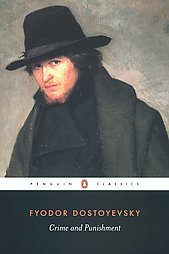
'Crime and Punishment' by Fyodor Dostoevsky
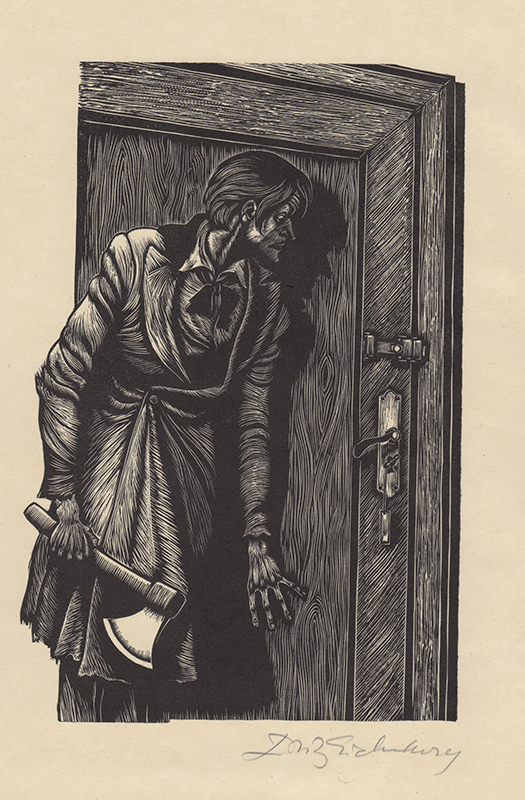
Raskolnikov, an impoverished student living in the St. Petersburg of the tsars, is determined to overreach his humanity and assert his untrammeled individual will. When he commits an act of murder and theft, he sets into motion a story that, for its excruciating suspense, its atmospheric vividness, and its depth of characterization and vision is almost unequaled in the literatures of the world. The best known of Dostoevsky’s masterpieces, Crime and Punishment can bear any amount of rereading without losing a drop of its power over our imaginations.
Dostoevsky’s drama of sin, guilt, and redemption transforms the sordid story of an old woman’s murder into the nineteenth century’s profoundest and most compelling philosophical novel.
MY THOUGHTS:
This is my choice for the Crime Classic category of the 2018 Back to the Classics challenge, and what could be better? I enjoyed The Brothers Karamazov, and psyched myself up for more Dostoevsky.
The title sounds reminiscent of Jane Austen but with a grim twist. That matches the hero, who's a prototype emo kid from the nineteenth century. Rodian Romanovich Raskolnikov is an impoverished Uni drop-out living (or existing) in St Petersburg. He's stand-offish, proud and resists the sympathy of his family and best friend, who all keep loving him anyway. He's perfected his, 'Leave me alone, I'm tired,' line, and even in his good moods, he's like a tinder box everyone is nervous about sparking off. He even looks the part, with his pallid complexion, and dark hair and eyes. But we're told from the start that he's devastatingly handsome.
He has his creepy smile down pat too. It popped up so often, I started making a list. To mention just a few occasions, he gives a distorted smile, a poisonous smile, a thin, ironic smile, a cold and casual smile, an odd, self-disparaging smile, and a vacant smile. He also has a silent, caustic smile, a hate-filled, supercilious smile and a malevolent smile. To cap it all off is his lost and ugly smile. The only sort never forthcoming is a friendly and open smile. So that's our guy, now on with his story.
Raskolnikov's redeeming characteristic is his concern for underdogs who can't defend themselves. But he has too much time on his hands and over-thinks way too much. He devises a terrible plan, which he forces to fit his personal ideology. Not far from him lives a mean old female pawnbroker named Alyona Ivanovna, who Raskolnikov perceives as the embodiment of everything wrong with the world. She preys on the poor and beats her feeble-minded sister. Since she's a louse in his opinion, he decides to kill her, then use her money to help the poor. He hopes to become a folk-hero like Napoleon, a person who the normal restraints of the law no longer apply to. He reasons that he'll be doing the world a favour when he exterminates Alyona. We go along with him for the ride, as he commits the crime and deals with the aftermath, which begins immediately, when her sister unexpectedly walks in.Raskolnikov takes an interest in a girl named Sonya Marmelodov, with clear, quiet eyes, because he sees in her a like mind. Sonya is willing to sacrifice her good name for the sake of others, by resorting to prostitution to help feed her starving family. In the same way, he reasons he's become a murderer to help release the world from tyranny. She's appalled like us when she hears his analogy, but by then she's fallen for that emo charm and handsome face. So there's a romantic thread running through the book too. Sonya has a heart of gold, and some readers might think she deserves better than Raskolnikov, but since he's what she really wants, I guess you can say she earns her reward, even though an axe-murderer wouldn't be every girl's dream man.
Dostoevsky might be hinting that we need a good, sound anchor for our thoughts, especially if they tend to veer on the intense side, and run all over the place. On the last few pages, Raskolnikov starts reading the New Testament, because he respects the kind and awesome person it helped shape Sonya into. So we would hope that it might help set some boundaries and parameters for his genuine, seeking heart. Yet it makes me sad to see that even well into his sentence in Siberia, he still doesn't repent of his crime, and defends his reasons for murdering Alyona. I wonder how often this story might have sparked anything dark in other readers, who took Raskolnikov's reasoning on board and said, 'Heck yeah, I can commit murder and justify it by becoming a philanthropist.' How many readers agree with him that some types of murder should be regarded as more acceptable than others? Or is assuming the right to decide whose life is worthwhile a heinous cheek, however you choose to look at it?
One main theme might be not to get carried away thinking you're anything special, because when you imagine you're different from everyone else, you probably aren't. Raskolnikov learns this in retrospect. I doubt he's even an exceptional baddie, as many terrorists throughout the years have probably shared his train of thought. When we start regarding somebody as a symbol instead of a human being, we get into very murky waters and become dangerous. ('It wasn't a person, but a principle I killed.') Some might see him as a tragic hero, but I'll always think of him as the wiry 23-year-old male who murders a defenseless old lady in her own home. Since he's so passionate about being generous and defending the weak, there's a stinking irony there. If he really wanted to be a people's hero, why not choose a more threatening figure who might have a chance of fighting back?Other characters give us occasional relief from Raskolnikov's head space. There's his doting mother and his sister Dunya, who seems to attract sleazy middle-aged suitors like moths to a flame. Most lovable and loyal of all is his best friend Razumikhin, who has no idea what Raskolnikov has been up to. Razumikhin is cheerful, kind and talkative with some great lines, such as, 'Talking nonsense is the sole privilege mankind possesses over the other organisms. It's by talking nonsense one gets to the truth. Not one truth has been derived at without people first having talked a dozen reams of nonsense.' And after all his friend puts him through, his final verdict is, 'The fact is, that in spite of it all, you're really an excellent chap.'
I'm not sure I completely agree with Razumikhin, but the story kept me turning pages, and had me reflecting that it's all too easy for modern westerners to sit back and judge people who are physically, spiritually and emotionally destitute. Who can say what we'd be driven to do under similar circumstances to these characters? It's a stark, oppressive novel in many ways, yet offers glimpses of optimism. The head of investigation, Porfiry Petrovich (quite a cool character) tells Raskolnikov, 'I know you don't believe it, but I promise you, life will carry you through. You'll even get to like each other afterwards.' Maybe that's what we should all take on board. If there can be a future together for an axe-murderer and a prostitute, I guess there's hope for any of us to shed our perceived labels.
🌟🌟🌟🌟
If you're interested in more, he's also on my list of characters who contemplate murder.
Wednesday, September 5, 2018
The Modest Letter Q
Once I was sitting in my car, filling in time while my young son was at a birthday party by reading a book. I noticed that the letter
Q was typed in a font I'm not familiar with. It had an odd tail squiggle that
ended in a little flourish. Having noticed it once, these quirky Qs started leaping out at me from every second or third page. They were hidden in words such as equivalent, quiet, quilt, question, cheque, equal, quite,
require, inadequacy, consequences, square and quality. As I had time on my
hands, I grabbed my pen and note pad to jot down the words I caught them in.
It surprised me that day that Q is actually such a well-used letter. I would've assumed it was one of the rare, dispensable ones we don't need very often. We groan when we pick up Qs for our Scrabble palettes, because we fear we'll be stuck with them. But to my amusement, I saw that Q is far more versatile and necessary than I'd ever thought. Imagine if those who make the rules decided we need only 25 letters in our alphabet instead of 26, and we had to boot one out. The Q might have been a big contender in my opinion. But if we dispensed with it, thinking that M, T, S, N, C and all the vowels are more important, I could see that we'd soon miss it and regret our low opinion.
That started me relating to the letter Q in a more personal way. As someone who reads, writes and blogs, in moments of discouragement I'd think of myself as a more redundant person whose function isn't as important as those of others. I felt surrounded by the types of people who could be seen more like a D, T, S or N, P, M. Doctors, teachers, social workers, nurses, pastors and missionaries, you know, the vital difference makers. They add practical, positive input to people's lives. Somehow, I'd got the impression from people's luke-warm reactions as well as the solitude of my own craft that I was far more dispensable. But the letter Q shows me that's not true.
We Qs are quite unique. We might be writers, reviewers, artists, dancers, poets, thinkers, reflectors, and general noticers of what others might miss. Our role is more low key, but really vital. Some Qs are more arty and creative than others, but we all add spice to the world in our own ways. We might write material that works on people's heartstrings to amuse and inspire. We might draw deserved attention to what others have written or created. We might encourage people through the powerful medium of stories or images. We offer others valuable reasons to take a break from their everyday lives and bless them at the same time. We may provide the sort of uplift that could be over in a flash but adds flavor and optimism to someone's whole day. We are encouragers, story-tellers and purveyers of beauty. We don't necessarily earn congratulations or thumbs up, and people may gloss over what we do and move on. But if we stopped, I'm sure the world would notice and want us back, because we'd take lots of colour with us.
Our quirkiness and quixotic qualities gives the world a unique burst of fragrance. There are a few Qs in that sentence. Are you a Q too, or do you know somebody who is? We should remember to affirm them when we think about it.
Wednesday, August 29, 2018
'Under the Greenwood Tree' by Thomas Hardy
Under the Greenwood Tree is the story of the romantic entanglement between church musician, Dick Dewey, and the attractive new school mistress, Fancy Day. A pleasant romantic tale set in the Victorian era, Under the Greenwood Tree is one of Thomas Hardy's most gentle and pastoral novels.
MY THOUGHTS:
This is my choice for the 'Classic with a colour in the title' category of the Back to the Classics challenge 2018. My main experience with Thomas Hardy consists of Tess and Jude, which both made me so upset, you'll never find reviews of them on this blog, because I refuse to re-read them. However, Far From the Madding Crowd wasn't so bad, and I'd heard people call this one more of an optimistic read too. I thought it might be a gentle slide back into Hardy, but on the whole, I was glad it was fairly short, since it didn't impress me much.
It's a simple plot with a complex way of being told, and I think I prefer stories to be the other way around. But I've deplored Hardy so often for his tragic tales, it makes me feel a bit mean for criticising him when he writes a more optimistic one :) However, this tale is so non-eventful, I'd challenge anyone to make it to the end without saying, 'Yeah, well, so what?' at least once.
It's all about the impact the arrival of one young woman has on several men within a town. Fancy Day is very pretty, but the most she ever seems to have on her mind is clothes, flirting, and wondering how she appears to by-standers. We know this for a fact because Hardy sometimes lets us glimpse her mental chatter. She reminds me of Dora from Dickens' David Copperfield, yet she's the school teacher! Am I the only one who thinks that's a bit of a worry?
Anyway, three men fall in love with her. So it's not even a lover's triangle, but more of a weird sort of square. There's Mr Shiner, a farmer and church warden in his thirties and Mr Maybold, the new young vicar. And then there's Dick Dewy, the modest son of the local tranter (delivery man) who's in his early twenties. He's obviously the hero we're meant to barrack for.
At the same time, the story follows the course of the male string choir, a proud and passionate group of musicians who have been playing together for many years. When Fancy arrives, they're told their services are no longer needed, all in the name of progress. The vicar and his warden have decided they'd prefer Fancy to play the organ. The poor chaps are forced to accept this, and decide to go out with dignity. I wondered why they couldn't just alternate the style of music from week to week, but I guess when we compare it to current church music, their modern counterparts also choose to move on, rather than cling to outdated forms for sentimental reasons. It's just a pity to see these men sacked from what they love, while their replacement is indifferent to taking on the job. We ask, 'So, is Hardy going to do anything for them?' The answer turns to be nope, it's just a tough call. Bad luck, guys. And as I say ... why is this story material?
It's a tedious read and not an easy one. The book throws us in the deep end of arcane British country dialect. It's not just in speech, but peppered all through the story, as if the narrator assumes all readers will be locals like himself. We need to keep flicking to the glossary at the back, because so many words aren't intuitive. For instance, a 'drong' is an alley or narrow path between walls and hedges. And a 'dumbledore' is a bumble bee. I'm sure the very impressive J.K. Rowling must have known that one when she started planning Harry Potter, so I'm left with a renewed sense of awe for her extensive knowledge base, if nothing else.
It all seems so ancient to us, yet characters often discuss old-fashioned times, as if they're coming from a completely modern standpoint. It gives a strange sort of feeling that our twenty-first century generation is just scraping the surface of history. It also makes me wonder how precise modern authors of historical fiction ought to be. I'm sure many of us don't know a fraction of the words Hardy spouts in this story. You just had to have been there to pull it off. Yet on the other hand, if you nail it too accurately, nobody will understand you. So perhaps in modern historical novels, it's not authenticity we're after as much as a good story.
The descriptions, always Hardy's strong point, are lovely, with all the cloud, light and chimney smoke. He has some good, humorous dialogue too. But I've got to be honest, my final thought was, 'Tough luck, Dick. I get to escape from Fancy now, but you don't.'
🌟🌟½
Thursday, August 23, 2018
Characters who contemplate murder
The main thing these characters have in common is that they carefully contemplate committing murder, and plan how it'll take place. There's no flying off the handle and losing it in heated moments for these guys. Most of them carry it through to the letter, although a couple decide not to. But in each case we get insight into all their deliberation and forethought. We seem to lap up the opportunity as readers, because there's one more surprising fact about my selection. Even though these are murderers or wannabes, every guy on this list receives plenty of empathy, admiration and even outright love from fans. I'll rattle them off, and you can try to help me figure out why.
I'll start with the Bible and Shakespeare.
King David
The ruler of Israel plans it all out to cover his own tracks. He'd slept with the wife of a loyal soldier and made her pregnant. The man, Uriah, won't succumb to the enticing offer of a night at home with his wife before a big campaign. So David feels he has no choice but to bump him off. He orders Uriah to be placed at the front of the army in battle, where he'll surely be killed. It was something only a king could arrange, but David's act isn't the discreet manoeuvre he intended. Ironically, what he planned to be secret is known by everyone familiar with the Bible.

Macbeth
The famous Thane of Cawdor can't forget a witches' prophecy that he'll be King of Scotland. He and his wife hatch up a sneaky plot to kill Duncan, the current king, while he visits their castle. Macbeth has many reservations, but caves in to her pressure. Instead of being a trustworthy host, he carries out the plan to intoxicate and frame the guards, and stab Duncan in his sleep. Macbeth learns the hard way that promoting yourself by evil and violence is no way to thrive.
Hamlet
The young prince of Denmark is out for revenge. He suspects that his uncle, King Claudius, murdered his father to become ruler. Hamlet has it straight from the mouth of a spooky figure who claims to be his father's ghost. He puts it to the test by staging a play in which a murder takes place just as the ghost describes, to observe Claudius' reaction. The result is a green light for Hamlet, but his own murder attempts turn pear shaped, starting from the moment he kills the wrong man behind the curtain. It's one of those snowball tragedies in which not many characters are left standing at the end.
The next pair may represent the shortest and longest examples of planning.
Starbuck
The first mate of the Pequod contemplates a moral murder in a flash, when he sees an opportunity set before him. It's common knowledge that Captain Ahab is a maniac who'll probably kill all his crew in a mad attempt to chase the whale Moby Dick. Starbuck notices his sleeping captain's weapon lying unattended, and knows it could be the perfect moment to finish him off and avert disaster. But a lot rolls through his head in those few seconds, including the ethical dilemma of murdering a superior officer, even to save others. Readers are no doubt torn over whether he decided right in the end. (Here's my review of Moby Dick)
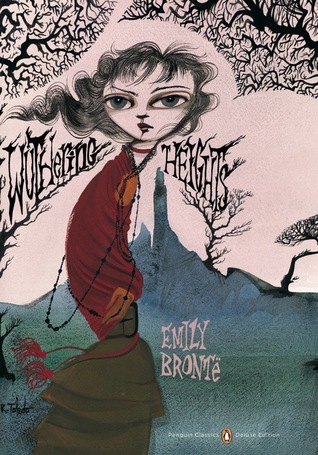
HeathcliffThis might be the most patient example of contemplating a murder. When Heathcliff was a boy, his (sort of) adopted brother Hindley treated him horribly. Young Heathcliff vows to get him one day. That day comes after they've both grown up. Driving a grieving widower to drink, then winning all his property in card games, then quietly doing him in, is proof that biding your time pays off. It takes a bit of reading between the lines in this example, but Emily Bronte gives her readers broad hints that this is exactly what happened. (Here's my review of Wuthering Heights)
The final trio are among my favourite examples.
Frankenstein's Monster
The lonesome beast is devastated that even his scientist creator rejects him. He relieves his grief by planning to murder everyone dear to Victor Frankenstein, including his brother and best friend. After Victor refuses to make him a female companion, he scares him with the threat, 'I'll be there on your wedding night.' So while Victor's busy arming himself with all sorts of weapons, the monster silently carries out his scheme, and murders Frankenstein's new wife, Elizabeth, with his favourite method, strangling. In a way, he's proven that he has a more crafty mind than the guy who created him.
Draco Malfoy
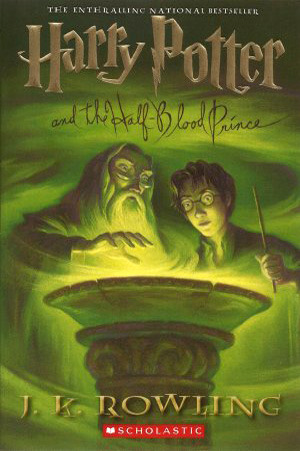
The young Slytherin student has a nasty ultimatum from Lord Voldemort. Kill Albus Dumbledore or watch your family die. So Draco drives himself to the verge of illness figuring out how to do it. Voldy doesn't believe he'll succeed, and plans to use Draco's failure to crush the Malfoys. But we readers know not to underestimate Hogwarts school boys, especially desperate ones. After a few failed attempts with a charmed necklace and poisoned bottle, Draco opens a secret passage for the dark side and stands on the astronomy tower with the unarmed headmaster helpless before him. Only then does he realise what Dumbledore knew all along. He's not the sort of person who can commit cold-blooded murder. At the crucial moment, he doesn't have it in him. It's a heartless reader who doesn't feel sorry for Draco all through The Half Blood Prince.
Rodion RaskolnikovThis gloomy Russian Uni student believes he's concocted the perfect moral murder. Alyona, a mean old pawn broker, lives a worthless life in his opinion. If he kills her, then uses her wealth to help the poor, it should cancel out the crime, right? Hmm, the grey areas are pretty black, but we're stuck in Rodion's head while he figures out exactly how he'll do it, by distracting her with a false pledge and smashing her head in with an axe. At first he changes his mind a lot, opting out of the deed several times. But we know he'll go ahead with it eventually, and when he does, all we can do is tag along and witness the gruesome scene as we turn the pages. (My review of Crime and Punishment is here.)
So there we have them. It's a strange collection. (Who would expect to find King David and Frankenstein's monster on the same list?) Why do they get all the love, especially considering a huge chunk of their victims are decent and harmless people? I personally love some from my list more than others, yet I can understand why each of them has earned himself a bit of a following. Maybe it speaks as much good about us readers as it does about these murderous men. On the whole, we must be a pretty understanding and forgiving bunch, especially when we get a glimpse into what makes a person tick. Perhaps it's to our credit, and the way we're designed for our hearts to reach out to others. (Or do you think it's because several of them are just so dashing or cute.)
Are any of your favourites on my list? Or are there others you might add?
Monday, August 20, 2018
'These Happy Golden Years' by Laura Ingalls Wilder
This year, I'm hosting a read-along of all of the Little House on the Prairie Books by Laura Ingalls Wilder, which you'll find here. We'd love you to read along and share your thoughts, if you feel so inclined.
Fifteen-year-old Laura lives apart from her family for the first time, teaching school in a claim shanty twelve miles from home. She is very homesick, but keeps at it so that she can help pay for her sister Mary's tuition at the college for the blind. During school vacations Laura has fun with her singing lessons, going on sleigh rides, and best of all, helping Almanzo Wilder drive his new buggy. Friendship soon turns to love for Laura and Almanzo in the romantic conclusion of this Little House book.
MY THOUGHTS:
There's a sense that Laura intended this to be the last in her classic kids' series about her youth. It begins as she's off to fulfill her first teaching contract, boarding with strangers far from home, and ends on the evening of her wedding day. Of course there's plenty in between.
But it starts with the dysfunctional family she stays with. Ah, poor Mrs Brewster. As a kid I considered her the villain of the book, and agreed with Laura's verdict that she was 'just a selfish, mean woman.' But this time around, I felt like I was reading between lines Laura might have been unaware she was writing. Mrs B seems to show classic symptoms of deep clinical depression, but it was unidentified as a medical condition back then, so she had no outlet or source of support. What a miserable life she led.
In our times, her antisocial behaviour might be recognised as clues of what it really was. Apathy with her demanding toddler, a tendency to let the housework lapse, and sitting and brooding with unkempt hair, because she simply couldn't muster enough energy or enthusiasm to care anymore. She knew that the next day would be just the same as the last. Being polite to a house guest she didn't even invite was too big a stretch. And at the end of her tether, she couldn't hold back violent outbursts of sadness and resentment. Maybe she even suffered from post natal depression, intensified by being stuck out in a bleak, inhospitable place with no form of entertainment. Sometimes a disagreeable exterior covers lots going on beneath. Mrs Brewster had good memories of her past back in the east, but no relief from her new life whatsoever.
I can't help feeling really sorry for her. Laura was deeply homesick beneath their roof, but it only lasted for eight weeks until her teaching contract was finished. But Mrs Brewster's homesickness presumably dragged on indefinitely, even after her threat to do something desperate, which I see as a cry for help. She had good memories of her past back in the east, but no relief from the monotony of her new life whatsoever. Instead of a villain, she's now a victim in my way of thinking. I wonder whatever became of her.
Another person whose life I'd love to trace was Clarence Brewster, that smart-alec stirrer who could've caused serious trouble in Laura's little school, but decided not to. His character appealed to me, the way it was written. Wouldn't any teenage boy hate submitting to a 5-foot tall girl younger than himself? He seemed to show a good heart in restraining himself and deciding to jump through the hoops after all, especially when he apologised to Laura on the last day. I would've liked to think he ended up doing something great with his life, but a search through Google and other biographies seems to indicate that he was convicted of murder charges later in life. How sad! Another casualty of the harsh lifestyle perhaps, because Clarence never struck me as murderer material, but a young man with great potential.
These new faces are all tied up with Laura's stint at teaching. It's so amazing to modern readers that kids as young as 15 can be sent out as qualified teachers, but we get it when we read the book. The job of teaching seemed far more straightforward than now, in many ways. There were standard text books set by whoever was head of education, full of successive lessons, and that was it. There seemed no need for much creative input from teachers. No curriculum planning, no craft or drama, no marking of long essays or assigning individual projects, no challenge to use their own imaginations. They come across more like glorified baby-sitters, there just to keep discipline and offer a helping hand if anyone couldn't understand the concepts in the books.
It appears the face of education really has changed a lot in the last 150 years or so, even when we think the basic model has stayed the same. Current teachers feel compelled to make lessons fun for their students, but it wasn't the emphasis in the nineteenth century. Students were expected to do the work. They weren't expected to enjoy it. It was simply a bonus when bright sparks like Laura enjoyed it anyway.
The story of Laura's budding relationship with Almanzo is beautiful, from the moment he surprises her by picking her up from the Brewsters' at the end of her first week there. This is among my favourite romances, even though it isn't labelled as one. It's a novel for kids, and Laura comes across too restrained to use the word anyway. The closest she comes to admitting she's fallen in love with him is when she tells Mary, 'We just seem to belong together.' The pair of them seem perfectly suited in many ways, including their affection for horses and dare-devil streaks. Almanzo was a bit of a multi-tasker, who'd combine breaking in frisky horses with seeing his girlfriend. But she was up for it, and it makes a fun read. (This pair is on my list of awkward literary marriage proposals) Laura was quite witty in her reply to his round-about way of popping the question.
Through it all, she shows the same traits we always love about her. Mary pays her sister a beautiful compliment when she says, 'I never see things so well with anyone else.'
But I think the bit of dialogue, to best sum up the series, is when Laura and Almanzo are planning their future, and the home he's building. He says, 'It'll have to be a little house. Do you mind?' And she replies, 'I have always lived in little houses. I like them.' I think she meant this to be the end, but we know it's not quite.
🌟🌟🌟🌟🌟
Next up will be The First Four Years.
Subscribe to:
Posts (Atom)