Monday, August 15, 2016

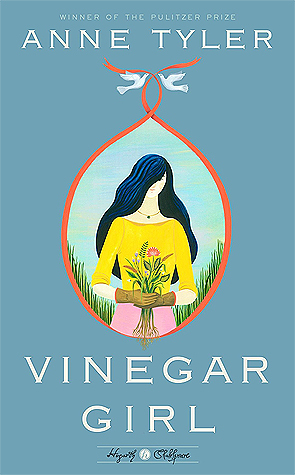
'Vinegar Girl' by Anne Tyler


27070127

Kate Battista feels stuck. How did she end up running house and home for her eccentric scientist father and uppity, pretty younger sister Bunny? Plus, she’s always in trouble at work – her pre-school charges adore her, but their parents don’t always appreciate her unusual opinions and forthright manner. 

Dr. Battista has other problems. After years out in the academic wilderness, he is on the verge of a breakthrough. His research could help millions. There’s only one problem: his brilliant young lab assistant, Pyotr, is about to be deported. And without Pyotr, all would be lost.

When Dr. Battista cooks up an outrageous plan that will enable Pyotr to stay in the country, he’s relying – as usual – on Kate to help him. Kate is furious: this time he’s really asking too much. But will she be able to resist the two men’s touchingly ludicrous campaign to bring her around?


Genre: General, contemporary, women's fiction. Shakespeare knock-offs.

MY THOUGHTS: 
I just found about the Hogarth Shakespeare project when I started this book. It seems Crown Publishing is on a mission to have some of Shakespeare's works re-told by well-known novelists of today, and this contribution by Anne Tyler is based on 'The Taming of the Shrew.' That was a pretty sexist text. Even the title can come across as offensive in our times, whether or not you're a feminist. The male lead character, Petruchio, sets out to make the opinionated Katherina into a more compliant and obedient bride. It's not something I can imagine (or would want) translated into the twenty-first century. I was curious to see how Anne Tyler would handle it.

In this story, Kate Battista (the Katherina character) is the elder daughter of Louis Battista, an intense scientist. She works as an assistant at a childcare centre, because she's run afoul of her supervisors at Uni and feels this is all she can get. Kate's younger sister Bunny (the Bianca character) is the traditional bimbo who aims to attract boys with her prettiness and frivolity. Their father has a young international research assistant named Pyotr Shcherbakov (the Petruchio character) whose visa is about to expire. Since he's the best assistant Louis ever had, the old man cooks up a plan to talk his daughter Kate into marrying him, just so he can keep his protege in the country.

Pyotr is one of the best and most interesting characters in the story, but I was disappointed that Tyler never took him as far as she could have. He's introduced as an orphan, and from time to time he drops brief stories and hints about his lonely, alienated childhood and youth in a country far removed from theirs, This is what begins to warm Kate toward him. But it's never quite enough! I kept expecting more unfolding revelations, helping our own affection for him to grow. I got to the last couple of pages and realised that what we had was all we were getting. It was a bit disappointing, since the potential was there to add so much more.  

I found Kate's work and social dilemmas more interesting than her romantic one. She's a direct and honest person who calls things as she sees them. That sounds like a positive trait, right? Well, in this story, people with power endlessly try to force her to modify her behaviour. Mrs Darling, the pre-school director, threatens to fire Kate unless she develops more 'tact and diplomacy' when dealing with parents and pupils. Kate realises that she's really being ordered to skirt around doling out pleasant sounding half-truths and outright lies, as everyone else does. So the story gets us wondering whether people who say they value honestly really mean it.

In Shakespeare's play, the other characters believe Katherina is someone who genuinely needs to be tamed. In 'Vinegar Girl', we get to question whether Kate's version of 'shrewishness' is a bad thing. She's witty, observant and free-speaking at the start, and I was pleased to find that she was still a witty, observant and free-speaking woman in the epilogue. In Anne Tyler's version, being 'tamed' turns out to be gaining a more understanding point of view toward others, particularly her new husband and other men in his position. This turns out not to be a bad thing.

I found the story a bit too heavy with annoying and difficult relatives. Toward the end I was getting really sick of the silly extended family. They took valuable word space from the main part of the story, which should have been Kate's budding relationship with Pyotr. What was there between the two of them was fun, but it wasn't half enough. As it was, he managed to get her to warm to him with more ease than I think he should have.

However, it was a quick, fairly enjoyable read, with a simple and fun message not to dismiss romance, no matter how contrived the circumstance seems to be. Someone recommended this as a light, holiday beach read, which I'd agree with.

Thanks to Crown Publishing and Blogging for Books for giving me a copy through Net Galley.

3.5 stars

Friday, August 12, 2016

'Heart of the Mountain' by Jeanette O'Hagan

31276257 

 
Twins Delvina and Retza’s greatest desire is to be accepted as prentices by their parents’ old crew when they stumble across the strange abovegrounder. Trapped under the mountain, young Zadeki’s only thought is to escape and find his kin. Will the three youngsters pull apart or work together to save the underground realm?

YA fantasy adventure in the lost realm deep under the mountain.


Genre: Fantasy, YA novella 

MY THOUGHTS:
I offered some feedback on earlier versions of this story along the way, and it's been good and interesting to see how it's evolved.

It's a pleasure to come across stories which are short enough to prove that a lot of skillful world building and characterisation can take place without needing heaps of space or wordiness. This is a quick read (just a 45 page e-book) and yet the racial differences between the mountain people and the abovegrounders comes through strong, along with all the attitudes of prejudice and suspicion. The descriptions are finely honed so it's easy to picture the scenery and characters in just a few well-crafted sentences.

The young twins have a mission to prove themselves and aim to earn their places in their tribe. Stumbling across an injured stranger in need of help was never part of their agenda, but they try to figure out how they can use his presence to their advantage.

Lonesome newcomer Zadeki considers himself in the deepest possible fix. The limitations of his captors gradually dawn on him, so he's able to step up when necessary in the perfect timing, and in a way that only he can do. I like stories in which the supposed underdog turns out to be the only one far enough removed from a bad situation to clearly discern problems which others are blind to.

The story is also about the running and mismanagement of kingdoms. It prompts us to consider how easy it is to accept what we've always known, and to take the questionable words of leaders on board with blind acceptance, because that's how we've always behaved. It's about skirting around problems until you can no longer miss them, and also how corruption can breed on itself.

Altogether, engrossing and thought-provoking. As I said, I've had the opportunity for a thorough read of this story along earlier stages, which makes it more difficult to rank, but I'd expect most new readers to want to give it a 4 or 5.

Click here for an interview with the author, Jeanette O'Hagan, back in 2014. 


Wednesday, August 10, 2016

Kids living with Writers


Three-year-old Blake loved the book bear at a conference where I had a stall.  

I recently shared a post about writers living with kids.
During their growing years, I wrote and published nine novels. After discussing it over with them, I'm going to talk about the subject from their point of view. 

Here's a sample of the events which might be taken as typical occurrences during their homeschooling years.

1) Their father would say, 'One of you come here and act through this fighting scene with me, to show Mum why it wouldn't work the way she's written it. Be careful not to knock anything off the shelf, though.'

2) Family outings could double up as research trips. I might say, 'Let me take a photo of that old cottage. It looks like a place in my novel.' Once we were hiking through a conservation park and discussing whether or not it would be a suitable spot to dump off a body (when I was writing 'Best Forgotten'). My husband said, 'I think it could be perfect. There are plenty of walkers on these paths, but nobody bothers to climb all the way up that steep cliff next to the main road, which is where you'd dump him in the long overgrowth. He could be there for years before anyone finds him.' And Logan suddenly thought to turn around, and said, 'Dad, there are people right behind us. You'd better keep your voice down. What might they think if they overheard this conversation?'

3) Sometimes the kids tried designing covers, and choosing who they thought might be the right people to resemble characters in my novels. We'd have chats about the quality of other writers' covers, taking in font, layout, colours and title. The same applied to analysing other author's plots.

4) They read through the novels or manuscripts of friends or acquaintances of mine. Once, I was helping judge some entries for an unpublished manuscript competition, and offered to get my teenage son to add his opinion to a very up-to-date YA novel set in the world of computer gamers. He came up with a few technical issues to run past the author. She made the changes he suggested, and was kind enough to thank him in her acknowledgements.


This was a cake my daughter baked and designed to match my 'Best Forgotten' book cover, for a launch. She was thirteen at the time.

I didn't twig that my kids' viewpoints might differ from others, until the day I sent Logan off to a one-day session at the library on creative writing for young teens. He came home shaking his head and said, 'I can't believe the hyped-up opinions everyone else around the table had about authors. They think they're really special or something!'

I told him, 'I thought so too, at your age.That's partly what inspired me to want to write novels in the first place. They do create worlds for others to get immersed in, and characters to love, from their own imaginations. That is pretty cool, isn't it?'

He just laughed and said, 'I don't think about them that way at all.'

That's when it hit me that he thinks differently because he's lived with somebody who has kept on writing for as long as he could remember.  

And there was the time when Emma told us about a young acquaintance of hers who wrote a great spiel on social media about how she couldn't think of anything more inspiring and heroic than being a fiction author, sitting in coffee shops with your lap top, receiving fan mail and royalties in the post, changing lives with the words from your own pen. My daughter hummed and hawed, but decided to tell this friend, 'My parents are a writer and a musician, and I was the poorest of all my friends. When I was growing up I remember thinking that I wish they had other jobs because we could never afford things that my friends' families could.'

I've asked them, and on the whole, Logan, Emma and Blake are all unanimous about the following. When they've told anyone, 'My mother has written some novels,' they've come to expect responses like these.

'Wow, you're kidding, right? Has she really? That's fantastic!' (To which they would nod politely and think how they wished that 'Wow' would match their financial experiences)

Or, 'You must be really proud of her.' (To which they'd smile and agree because it was the polite thing to do.)

Or, 'Your mum must be really clever.' (To which they tell me they just grin and keep their mouths shut thinking, Little do you know!


Monday, August 8, 2016

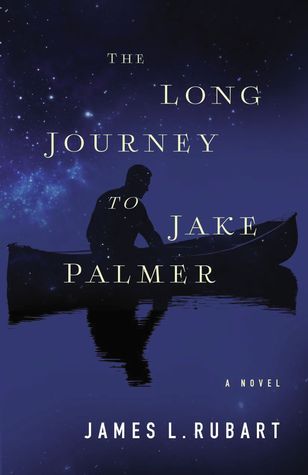
'The Long Journey to Jake Palmer' by James L Rubart

27840666
Corporate trainer Jake Palmer coaches people to see deeper into themselves—yet he barely knows himself anymore. Recently divorced and weary of the business life, Jake reluctantly agrees to a lake-house vacation with friends, hoping to escape for ten days.

When he arrives, Jake hears the legend of Willow Lake—about a lost corridor that leads to a place where one’s deepest longings will be fulfilled.

Jake scoffs at the idea, but can’t shake a sliver of hope that the corridor is real. And when he meets a man who mutters cryptic speculations about the corridor, Jake is determined to find the path, find himself, and fix his crumbling life.

But the journey will become more treacherous with each step Jake takes.

 
Genre: Christian speculative, supernatural. 

MY THOUGHTS: 
Jake Palmer is a life coach and corporate trainer who was involved in an horrific attack which left extensive burns to the lower half of his body. His wife has left him and his rehabilitation was long and arduous. Jake used to believe all the success principles he'd taught so many others, but since his traumatic injury, he found it all a bit cliched and struggled to go through the motions. While staying with friends at a secluded retreat, he hears local rumors of a secret corridor where the deepest longings of a seeker's heart will be fulfilled. Although he scoffs, he makes it his mission to look into it, just in case.

This isn't my favourite novel by James L Rubart. I felt there was sort of a contrived feeling in the holiday house, with many conversations between the couples introduced specifically instead of evolving naturally. Does anybody as consistently good-natured and goofy as Peter really exist? Most of all, I found it difficult to warm up to the main character.  That may sound a bit harsh, considering all he'd been through. I didn't dislike Jake. It's just that over the long term, I grew depressed by his company and his headspace.

Jake is a mopey life coach, which seems to be a bit of a contradiction. He forever focuses on the negatives of his situation, while there are also many positives. He can still walk, row kayaks, ride dirt bikes, swim, water-ski, resume his job, and the upper half of his body is completely burn free, but he never once seems to express thankfulness for all that. I was hoping for somebody to remind him that the outcome of his attack could have been far worse. It never happens to the extent that I thought he deserved. When he isn't snapping at Peter to stop trying to set him up with women, he seems to be wallowing in self-pity that he's all alone. I wondered why so many women seemed interested to get to know him anyway, since he behaved so morose and rude to them.

I usually enjoy a good romantic thread, but reading all the ways in which Jake tries to fob off Ari, even though he's attracted to her, got a bit old. The story is written in such a way that it's easy to predict they'll get it together eventually. Seeing him keep up his insecure teenage boy act just detracts from the more interesting parts of the story.

I didn't think it started to rev up until about the sixty percent point, when Ryan, the supernatural guide, introduces himself. I did enjoy the way Jake's story becomes a parable, and he represents us all. His main issue turns out to be something we can surely almost all relate to, his response to guilt trips, and false and unnecessary grief about the ways he feels he's fallen short. Portals can be quite fascinating, and there are some intriguing thoughts about where fictional characters really exist, between the pages of books or in the individual imagination? So some of Rubart's usual trademark magic did come through. It's just this book seemed to have to wade us through a fair bit more waffle to get there.

I guess every author is entitled to a few misses, and I've had so many hits with Rubart's novels so far that I'll look forward to the next one. I liked the reference to Black Fedora coffee, which featured strongly in his last novel, The Five Times I met Myself.

Thanks to Thomas Nelson and NetGalley for my review copy.

2.5 stars

Friday, August 5, 2016

'A Tapestry of Secrets' by Sarah Loudin Thomas

27066691

This Decade-Spanning Novel of Family and Faith Will Delight.
Now in her eighties, Perla Phillips has carried a secret since she was eighteen years old. When she sees her granddaughter, Ella, struggling for perfection, she decides to share her secret to show that God can use even the biggest mistakes for good. But before she can reveal what happened during that summer sixty years ago, she has a debilitating stroke.
Carrying a secret of her own, Ella arrives back in Wise, West Virginia, to help her aunt Sadie care for Perla. Both know the woman wanted to tell them something, but she's now locked in silence. Together they begin looking into the past, but they may learn more than they expected.
Will they have the courage to share their hearts? Or will the truth remain buried forever?


Genre: Christian women's fiction

MY THOUGHTS: 
This is the third and final in the Appalachian Blessings series. I've also reviewed Miracle in a Dry Season and Until the Harvest.

There is a wholesome, country feeling about the trilogy. I remember studying pastoral plays and poems as a student, and can't help thinking of these as pastoral novels. It's fun when a series following one family gradually changes from historical to contemporary. When we are introduced to new generations who hadn't even been born in the previous novels, it has a way of showing how time moves. 

The heroine is Ella, the daughter of Henry and Margaret from the previous story. She is a fabric artist who returns home to help care for her beloved grandmother Perla, who has suffered a stroke. Ella is recovering from a break-up with her city boyfriend Mark, but finds herself growing interested in two local guys, Richard the new pastor, and neighbour Seth.

One of the main plot threads is a mystery which was touched on in the first book. Anyone who remembers Perla and her little daughter Sadie from Miracle in a Dry Season may also remember that Perla stayed tight lipped about the identity of Sadie's father, choosing to look toward the future rather than dwelling in the past. In this novel, she decides that Sadie deserves to learn the truth, just when her stroke renders her speechless. By this stage, Sadie is middle-aged and her relationship with her mother is a bit strained. Bits and pieces are gradually revealed through Perla's flashbacks, until we find out who he was.

There are other things going on in the community too. I kept asking why did Ella have to stay so determined in her opposition to the sale of the church property? The answer, of course, is that it's one of the other main plot threads, but her fixed attitude got a bit old. As readers, I'm sure most of us can see the other side, but Ella refused to listen, and she hadn't even been living in the town and attending the church in her most recent years. She was trying to force her own sentimentality on the poor congregation members who had to put up with the chilly drafts, dodgy plumbing and all the building's other problems that were mentioned. When you think about it, this made her no different from Mavis Sanders, who was presented as a trouble-maker who refused to consider the other side of the debate. Mavis was an elderly inflexible grouch, and Ella was a young inflexible grouch. Happily, it did come to a conclusion.

Overall, I found this a bit slower moving than its prequels and easier to put down, but I'm glad I've read the whole trilogy, and am up-to-date with the Phillips family. 

Thanks to Bethany House and NetGalley for my review copy.

3 stars


Wednesday, August 3, 2016

'Harry Potter and the Cursed Child' by J.K. Rowling, John Tiffany and Jack Thorne


Based on an original new story by J.K. Rowling, Jack Thorne and John Tiffany, a new play by Jack Thorne, Harry Potter and the Cursed Child is the eighth story in the Harry Potter series and the first official Harry Potter story to be presented on stage. The play will receive its world premiere in London’s West End on July 30, 2016.

It was always difficult being Harry Potter and it isn’t much easier now that he is an overworked employee of the Ministry of Magic, a husband and father of three school-age children.

While Harry grapples with a past that refuses to stay where it belongs, his youngest son Albus must struggle with the weight of a family legacy he never wanted. As past and present fuse ominously, both father and son learn the uncomfortable truth: sometimes, darkness comes from unexpected places.


Genre: Classics, bestsellers, playscripts, adventure. 

Warning - I haven't mentioned any plot details beyond the first few scenes, but background information could blur into plot spoilers, in some people's opinions. If you want to know absolutely nothing whatsoever about the story before reading it for yourself, proceed with caution.   

MY THOUGHTS:
This is the long awaited eighth part of Harry's story which we didn't even realise we were waiting for. It starts off at the moment of that controversial epilogue from 'The Deathly Hallows.' Being a play script, it's obviously different to read than a novel, but this excellent story shows how complexity of character can shine forth with nothing more than dialogue and stage directions if written well.

First, we have two fresh young heroes representing the new generation. They are different from each other, but their strong bond of friendship, based on shared alienation, is excellent.

Albus Potter grapples with what several children of high-profile, celebrity parents have experienced before him. He feels he can never live up to his father's illustrious reputation, and since Harry's exploits included saving the world, Albus has bigger shoes to fill than most. Being sorted into Slytherin house, while his brother and sister carry on the Gryffindor tradition just compounds his resentment. Maybe the sorting hat can be blamed for some of Albus' angst. He's a prickly and sarcastic kid with some wild and original ideas when it comes to blazing his own trail. Some of it includes an illegal time-turner, and the cocky, over-confident little rebel almost repeats Marty McFly's mistake from 'Back to Future' and puts himself in danger of never being born!

His best mate, Scorpius Malfoy, turns out to be a bit of a show-stealer. Scorpius has that wistful way of someone who has had to put up with a lot of vicious, hurtful gossip, but hasn't let it embitter him. He's shown to have a milder, more reflective nature than his father ever did, and fears he's been a disappointment to Draco, who would have liked him to be more forceful. Scorpius' mother, Astoria, must have had a kind and loving heart, to judge from his own character and his reminiscences about her. Being one of those thinkers who hang back and make wry observations, he has some of the best lines. Although he's a natural follower, Scorpius is eventually forced into a position where he has to take control, make firm decisions, think on his feet and stick up for himself. I loved him. 

I found these two outcast Slytherin lads endearing in a completely different way to the Gryffindor golden trio from the previous generation. If we were inclined to harbor a prejudice toward Hogwarts students from this house, this duo smashed it to pieces. (My son actually got upset some time ago when the Pottermore website sorted him into Slytherin, but now he's cool. Being counted among the likes of Albus and Scorpius is a way better thought than hanging out with Crabbe and Goyle.)

Seeing the others as middle aged adults grappling the challenges of parenthood warms my heart too. Harry is his same well-meaning self, but flounders when it comes to trying to understand his surly son, and sometimes sticks his foot in it. Ron drops his usual lines of comic relief at the right moments. And those signs of a nobler spirit that seemed to be stirring in Draco have more room to grow as parenting worries cause him to show his vulnerable side. You can't help feeling deep sympathy for him in this story, for the hard knocks he's had. He's a recent widower and his son means the world to him. There are hints of a romantic back story in which he stood up to his father at last. I always hoped Draco would muster the courage to let his defenses down, since it must have been rough having Lucius for a father. And I love that the other marriages are rock solid. There's some really sweet heart-to-hearts between Harry and Ginny.

I enjoyed the occasional jokes about aging, now the older characters are in their early forties. There are other fun bits too, such as the fact that the Potter family have gone off sugar. At one point, Hermione offers Harry a toffee, which he declines. It would seem that not only the muggle world is keeping up to date with current health trends.  

I think the play may have purposefully set out to debunk or explain some criticisms that might have been leveled at the series, such as the limitations in the extent of help you can expect from time-turners and headmasters' portraits.

It's great to revisit this magical world with its limited technology. At one stage when the two boys have been missing and there's some clue to their whereabouts, Harry tells Ginny, 'I'll send an owl to Hermione and you send one to Draco.' It would seem they still haven't got their heads around the 'fellytone' as Ron used to call it, which you'd imagine must be far quicker and less fiddly. Although the wizards laugh at us muggles, the efficiency of our twenty-first century communication must run rings around theirs in some ways. But at least they don't get nuisance calls from telemarketers. Got to love them.
 
J.K Rowling is reported to have said this is definitely the last we'll see of Harry and co, but can it really be? There may be the vaguest hints of a possible budding romance between Scorpius Malfoy and Rose Granger-Weasley, who comes across as a mini Hermione. Speculations had probably started after the epilogue in 'The Deathly Hallows' when her father Ron joked with her not to ever marry him. If that's exactly what some readers hoped would happen, there's certainly more fuel for their speculations now.

Altogether, a real treat I wouldn't have missed.

I've written more articles about this play. You might like Is Harry Potter a bad Dad?
Or Can sworn enemies ever become friends?

5 stars

To read about the dramas we went through to acquire this book, click here. 
And to read a post about heroes, click here. 
Or one about bromances, click here.
 

Monday, August 1, 2016

The Vince family and the quest for the elusive Harry Potter book


This is the true story of a wild goose chase that took place on Sunday, 31st July, 2016. The characters are me, my daughter Emma, and my younger son Blake. It's the international release day of the play script, Harry Potter and the Cursed Child, which takes place 19 years after the events in the series. The previous night, the screen play opened in London, and the book release is scheduled for the following day. As far as the kids are concerned, waiting for a couple more days is out of the question. Since I'm the last person to complain about visiting bookshops, I agree. 

Stage 1
It's Sunday, and the three of us leave church to head straight down to Big W at Cumberland Park. Emma tells us they'd been advertising $15 copies, the cheapest anywhere. We walk in to see plenty of young people drifting around the aisles in wizard attire. Their job appears to be simply to add atmosphere and mingle with customers. There are plenty of earlier Harry Potter novels on the shelf, but no Cursed Child. Somebody tips us off, 'If you're looking for the new book, it's already sold out.'

We leave crestfallen. Emma tells me we must drive down to Dymocks in the city and pay full price after all, since they will be bound to have plenty in stock. 'They promised on their Facebook page that they'll have thousands and there's no way they'll run out,'  she says.

I wonder why Big W kept their costumed hirelings in the store, raising people's hopes just to be dashed. Wouldn't you think that once they ran out of copies, they'd tell them, 'You guys might as well go home'? We decide to make a stop at the Dymocks bookshop in Burnside Village, because it's fractionally closer than the city.

Stage 2
Even though Burnside Dymocks has a Harry Potter window display, the man wearing the Gryffindor tie behind the counter tells us none are for sale. I ask him, 'Do you know if any are still available in the city store?' He says, 'I just heard from a customer who said they're sold out there too.'

We leave crestfallen again. I'm ready to give up and head for the Hills, but the kids wheedle me into trying the city just in case. By now we are all very doubtful, but since we've come so far already, we decide we might as well.

Stage 3
When we enter the door of the city Dymocks, I catch the eye of Harry Potter himself. He's a young, dark-haired staff member wearing a wizard cloak, round glasses and a jagged lightning scar on his forehead. I ask, 'Do you have any stock left?' knowing I won't have to mention the name of the book I'm after. He says, 'Sorry, they're all sold out,' (which feels a bit ironic coming from a Harry Potter clone). 'But if you go upstairs, leave your name on the waiting list and we'll contact you when the next shipment arrives.' Emma does this, since it's looking like it will be our best shot.

We leave crestfallen for a third time. Emma grumbles that Dymocks made such a massive under-estimation, when they promised the public on Facebook that they would be fully stocked all day.

Stage 4
We search the Rundle Mall K-Mart a few doors up, just in case, but they don't even have a book section.

Blake suggests that we pop our noses in at Target, since it's just across the road from the carpark. Although I expect to find nothing there, I agree we might as well, since we're already down here.

Stage 5
We take a few steps into Target and Emma calls out, 'Look, they have some!'
Sure enough, there's a very small pile near the check outs, and at this stage, we can't believe our eyes. They are $25 but worth every cent. We clutch one as if it's a golden egg and the staff members start laughing at us, because Emma is evidently so excited. We tell them, 'You don't know the run-around we had.'

On the drive back up to the Hills, we're all full of joy, talking about our proof that it's worthwhile to leave no stone unturned. And the kids say, 'Aren't you glad you listened to us, Mum?'

Stage 6
This is the stage which shouldn't have happened.
When we arrive home to Mount Barker, I decide I'll just dash into K-Mart for a few things. And would you believe it, THERE AT THE ENTRANCE IS A LITTLE PILE OF HARRY POTTER AND THE CURSED CHILD FOR JUST $15!!

Does our story have a moral? Maybe it has a couple. Don't go rushing off before you've checked close to home? The places with the most hype aren't necessarily the most reliable. And patience is commendable.

After our run-around, I'm hoping the actual Harry Potter story will be great.

UPDATE: I've now read it, and my review is here.