Friday, August 5, 2016

'A Tapestry of Secrets' by Sarah Loudin Thomas

27066691

This Decade-Spanning Novel of Family and Faith Will Delight.
Now in her eighties, Perla Phillips has carried a secret since she was eighteen years old. When she sees her granddaughter, Ella, struggling for perfection, she decides to share her secret to show that God can use even the biggest mistakes for good. But before she can reveal what happened during that summer sixty years ago, she has a debilitating stroke.
Carrying a secret of her own, Ella arrives back in Wise, West Virginia, to help her aunt Sadie care for Perla. Both know the woman wanted to tell them something, but she's now locked in silence. Together they begin looking into the past, but they may learn more than they expected.
Will they have the courage to share their hearts? Or will the truth remain buried forever?


Genre: Christian women's fiction

MY THOUGHTS: 
This is the third and final in the Appalachian Blessings series. I've also reviewed Miracle in a Dry Season and Until the Harvest.

There is a wholesome, country feeling about the trilogy. I remember studying pastoral plays and poems as a student, and can't help thinking of these as pastoral novels. It's fun when a series following one family gradually changes from historical to contemporary. When we are introduced to new generations who hadn't even been born in the previous novels, it has a way of showing how time moves. 

The heroine is Ella, the daughter of Henry and Margaret from the previous story. She is a fabric artist who returns home to help care for her beloved grandmother Perla, who has suffered a stroke. Ella is recovering from a break-up with her city boyfriend Mark, but finds herself growing interested in two local guys, Richard the new pastor, and neighbour Seth.

One of the main plot threads is a mystery which was touched on in the first book. Anyone who remembers Perla and her little daughter Sadie from Miracle in a Dry Season may also remember that Perla stayed tight lipped about the identity of Sadie's father, choosing to look toward the future rather than dwelling in the past. In this novel, she decides that Sadie deserves to learn the truth, just when her stroke renders her speechless. By this stage, Sadie is middle-aged and her relationship with her mother is a bit strained. Bits and pieces are gradually revealed through Perla's flashbacks, until we find out who he was.

There are other things going on in the community too. I kept asking why did Ella have to stay so determined in her opposition to the sale of the church property? The answer, of course, is that it's one of the other main plot threads, but her fixed attitude got a bit old. As readers, I'm sure most of us can see the other side, but Ella refused to listen, and she hadn't even been living in the town and attending the church in her most recent years. She was trying to force her own sentimentality on the poor congregation members who had to put up with the chilly drafts, dodgy plumbing and all the building's other problems that were mentioned. When you think about it, this made her no different from Mavis Sanders, who was presented as a trouble-maker who refused to consider the other side of the debate. Mavis was an elderly inflexible grouch, and Ella was a young inflexible grouch. Happily, it did come to a conclusion.

Overall, I found this a bit slower moving than its prequels and easier to put down, but I'm glad I've read the whole trilogy, and am up-to-date with the Phillips family. 

Thanks to Bethany House and NetGalley for my review copy.

3 stars


Wednesday, August 3, 2016

'Harry Potter and the Cursed Child' by J.K. Rowling, John Tiffany and Jack Thorne


Based on an original new story by J.K. Rowling, Jack Thorne and John Tiffany, a new play by Jack Thorne, Harry Potter and the Cursed Child is the eighth story in the Harry Potter series and the first official Harry Potter story to be presented on stage. The play will receive its world premiere in London’s West End on July 30, 2016.

It was always difficult being Harry Potter and it isn’t much easier now that he is an overworked employee of the Ministry of Magic, a husband and father of three school-age children.

While Harry grapples with a past that refuses to stay where it belongs, his youngest son Albus must struggle with the weight of a family legacy he never wanted. As past and present fuse ominously, both father and son learn the uncomfortable truth: sometimes, darkness comes from unexpected places.


Genre: Classics, bestsellers, playscripts, adventure. 

Warning - I haven't mentioned any plot details beyond the first few scenes, but background information could blur into plot spoilers, in some people's opinions. If you want to know absolutely nothing whatsoever about the story before reading it for yourself, proceed with caution.   

MY THOUGHTS:
This is the long awaited eighth part of Harry's story which we didn't even realise we were waiting for. It starts off at the moment of that controversial epilogue from 'The Deathly Hallows.' Being a play script, it's obviously different to read than a novel, but this excellent story shows how complexity of character can shine forth with nothing more than dialogue and stage directions if written well.

First, we have two fresh young heroes representing the new generation. They are different from each other, but their strong bond of friendship, based on shared alienation, is excellent.

Albus Potter grapples with what several children of high-profile, celebrity parents have experienced before him. He feels he can never live up to his father's illustrious reputation, and since Harry's exploits included saving the world, Albus has bigger shoes to fill than most. Being sorted into Slytherin house, while his brother and sister carry on the Gryffindor tradition just compounds his resentment. Maybe the sorting hat can be blamed for some of Albus' angst. He's a prickly and sarcastic kid with some wild and original ideas when it comes to blazing his own trail. Some of it includes an illegal time-turner, and the cocky, over-confident little rebel almost repeats Marty McFly's mistake from 'Back to Future' and puts himself in danger of never being born!

His best mate, Scorpius Malfoy, turns out to be a bit of a show-stealer. Scorpius has that wistful way of someone who has had to put up with a lot of vicious, hurtful gossip, but hasn't let it embitter him. He's shown to have a milder, more reflective nature than his father ever did, and fears he's been a disappointment to Draco, who would have liked him to be more forceful. Scorpius' mother, Astoria, must have had a kind and loving heart, to judge from his own character and his reminiscences about her. Being one of those thinkers who hang back and make wry observations, he has some of the best lines. Although he's a natural follower, Scorpius is eventually forced into a position where he has to take control, make firm decisions, think on his feet and stick up for himself. I loved him. 

I found these two outcast Slytherin lads endearing in a completely different way to the Gryffindor golden trio from the previous generation. If we were inclined to harbor a prejudice toward Hogwarts students from this house, this duo smashed it to pieces. (My son actually got upset some time ago when the Pottermore website sorted him into Slytherin, but now he's cool. Being counted among the likes of Albus and Scorpius is a way better thought than hanging out with Crabbe and Goyle.)

Seeing the others as middle aged adults grappling the challenges of parenthood warms my heart too. Harry is his same well-meaning self, but flounders when it comes to trying to understand his surly son, and sometimes sticks his foot in it. Ron drops his usual lines of comic relief at the right moments. And those signs of a nobler spirit that seemed to be stirring in Draco have more room to grow as parenting worries cause him to show his vulnerable side. You can't help feeling deep sympathy for him in this story, for the hard knocks he's had. He's a recent widower and his son means the world to him. There are hints of a romantic back story in which he stood up to his father at last. I always hoped Draco would muster the courage to let his defenses down, since it must have been rough having Lucius for a father. And I love that the other marriages are rock solid. There's some really sweet heart-to-hearts between Harry and Ginny.

I enjoyed the occasional jokes about aging, now the older characters are in their early forties. There are other fun bits too, such as the fact that the Potter family have gone off sugar. At one point, Hermione offers Harry a toffee, which he declines. It would seem that not only the muggle world is keeping up to date with current health trends.  

I think the play may have purposefully set out to debunk or explain some criticisms that might have been leveled at the series, such as the limitations in the extent of help you can expect from time-turners and headmasters' portraits.

It's great to revisit this magical world with its limited technology. At one stage when the two boys have been missing and there's some clue to their whereabouts, Harry tells Ginny, 'I'll send an owl to Hermione and you send one to Draco.' It would seem they still haven't got their heads around the 'fellytone' as Ron used to call it, which you'd imagine must be far quicker and less fiddly. Although the wizards laugh at us muggles, the efficiency of our twenty-first century communication must run rings around theirs in some ways. But at least they don't get nuisance calls from telemarketers. Got to love them.
 
J.K Rowling is reported to have said this is definitely the last we'll see of Harry and co, but can it really be? There may be the vaguest hints of a possible budding romance between Scorpius Malfoy and Rose Granger-Weasley, who comes across as a mini Hermione. Speculations had probably started after the epilogue in 'The Deathly Hallows' when her father Ron joked with her not to ever marry him. If that's exactly what some readers hoped would happen, there's certainly more fuel for their speculations now.

Altogether, a real treat I wouldn't have missed.

I've written more articles about this play. You might like Is Harry Potter a bad Dad?
Or Can sworn enemies ever become friends?

5 stars

To read about the dramas we went through to acquire this book, click here. 
And to read a post about heroes, click here. 
Or one about bromances, click here.
 

Monday, August 1, 2016

The Vince family and the quest for the elusive Harry Potter book


This is the true story of a wild goose chase that took place on Sunday, 31st July, 2016. The characters are me, my daughter Emma, and my younger son Blake. It's the international release day of the play script, Harry Potter and the Cursed Child, which takes place 19 years after the events in the series. The previous night, the screen play opened in London, and the book release is scheduled for the following day. As far as the kids are concerned, waiting for a couple more days is out of the question. Since I'm the last person to complain about visiting bookshops, I agree. 

Stage 1
It's Sunday, and the three of us leave church to head straight down to Big W at Cumberland Park. Emma tells us they'd been advertising $15 copies, the cheapest anywhere. We walk in to see plenty of young people drifting around the aisles in wizard attire. Their job appears to be simply to add atmosphere and mingle with customers. There are plenty of earlier Harry Potter novels on the shelf, but no Cursed Child. Somebody tips us off, 'If you're looking for the new book, it's already sold out.'

We leave crestfallen. Emma tells me we must drive down to Dymocks in the city and pay full price after all, since they will be bound to have plenty in stock. 'They promised on their Facebook page that they'll have thousands and there's no way they'll run out,'  she says.

I wonder why Big W kept their costumed hirelings in the store, raising people's hopes just to be dashed. Wouldn't you think that once they ran out of copies, they'd tell them, 'You guys might as well go home'? We decide to make a stop at the Dymocks bookshop in Burnside Village, because it's fractionally closer than the city.

Stage 2
Even though Burnside Dymocks has a Harry Potter window display, the man wearing the Gryffindor tie behind the counter tells us none are for sale. I ask him, 'Do you know if any are still available in the city store?' He says, 'I just heard from a customer who said they're sold out there too.'

We leave crestfallen again. I'm ready to give up and head for the Hills, but the kids wheedle me into trying the city just in case. By now we are all very doubtful, but since we've come so far already, we decide we might as well.

Stage 3
When we enter the door of the city Dymocks, I catch the eye of Harry Potter himself. He's a young, dark-haired staff member wearing a wizard cloak, round glasses and a jagged lightning scar on his forehead. I ask, 'Do you have any stock left?' knowing I won't have to mention the name of the book I'm after. He says, 'Sorry, they're all sold out,' (which feels a bit ironic coming from a Harry Potter clone). 'But if you go upstairs, leave your name on the waiting list and we'll contact you when the next shipment arrives.' Emma does this, since it's looking like it will be our best shot.

We leave crestfallen for a third time. Emma grumbles that Dymocks made such a massive under-estimation, when they promised the public on Facebook that they would be fully stocked all day.

Stage 4
We search the Rundle Mall K-Mart a few doors up, just in case, but they don't even have a book section.

Blake suggests that we pop our noses in at Target, since it's just across the road from the carpark. Although I expect to find nothing there, I agree we might as well, since we're already down here.

Stage 5
We take a few steps into Target and Emma calls out, 'Look, they have some!'
Sure enough, there's a very small pile near the check outs, and at this stage, we can't believe our eyes. They are $25 but worth every cent. We clutch one as if it's a golden egg and the staff members start laughing at us, because Emma is evidently so excited. We tell them, 'You don't know the run-around we had.'

On the drive back up to the Hills, we're all full of joy, talking about our proof that it's worthwhile to leave no stone unturned. And the kids say, 'Aren't you glad you listened to us, Mum?'

Stage 6
This is the stage which shouldn't have happened.
When we arrive home to Mount Barker, I decide I'll just dash into K-Mart for a few things. And would you believe it, THERE AT THE ENTRANCE IS A LITTLE PILE OF HARRY POTTER AND THE CURSED CHILD FOR JUST $15!!

Does our story have a moral? Maybe it has a couple. Don't go rushing off before you've checked close to home? The places with the most hype aren't necessarily the most reliable. And patience is commendable.

After our run-around, I'm hoping the actual Harry Potter story will be great.

UPDATE: I've now read it, and my review is here.

Thursday, July 28, 2016

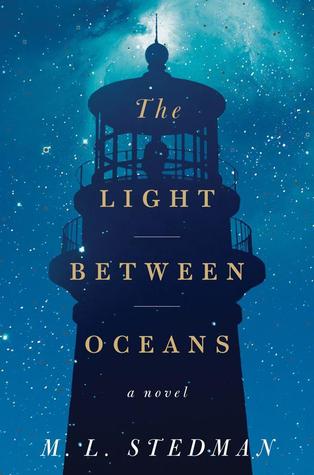
'The Light Between Oceans' by M.L. Steadman

 13158800
I read and reviewed this one some time ago, but since I like to focus on Australian stories and the occasional classic or best seller, I thought I'd add it to my blog. 

 After four harrowing years on the Western Front, Tom Sherbourne returns to Australia and takes a job as the lighthouse keeper on Janus Rock, nearly half a day’s journey from the coast. To this isolated island, where the supply boat comes once a season and shore leaves are granted every other year at best, Tom brings a young, bold, and loving wife, Isabel. Years later, after two miscarriages and one stillbirth, the grieving Isabel hears a baby’s cries on the wind. A boat has washed up onshore carrying a dead man and a living baby.

Tom, whose records as a lighthouse keeper are meticulous and whose moral principles have withstood a horrific war, wants to report the man and infant immediately. But Isabel has taken the tiny baby to her breast. Against Tom’s judgment, they claim her as their own and name her Lucy. When she is two, Tom and Isabel return to the mainland and are reminded that there are other people in the world. Their choice has devastated one of them.

M. L. Stedman’s mesmerizing, beautifully written novel seduces us into accommodating Isabel’s decision to keep this “gift from God.” And we are swept into a story about extraordinarily compelling characters seeking to find their North Star in a world where there is no right answer, where justice for one person is another’s tragic loss.

The Light Between Oceans is exquisite and unforgettable, a deeply moving novel.


Genre: Australian fiction, modern classics, books which have been made into movies.

MY THOUGHTS:
During the aftermath of World War One, Tom Sherbourne decides that for the rest of his life, he only wants to cause good and not harm. For that reason, he applies for the job of lighthouse keeper at remote Janus Island in Western Australia, situated where the Indian and Southern Oceans meet. He'll have plenty of time to ponder and may help save ships from being wrecked. Little does he know he'll soon find himself in a horrible position in which causing happiness for one woman will result in unspeakable grief for another, and vice versa.

Allowing his beloved wife, Isabel, to keep the child she deeply loves, and who seemed to be washed to their shore by providence means sentencing the baby's birth mother, Hannah, to a lonely life of heartache and forever unanswered questions.

Although my heart ached for each of the three adults, I grieved most for little Lucy. When I was little, I used to dread being taken away from my parents, who meant stability and all the world to me. Her confusion and pain was heartbreaking to read. Is this story about the eventual resilience of the human spirit, or would being the subject of this horrific predicament have scarred her for the long term more than the end of the book seems to indicate? I really don't know.


I found myself wondering whether or not Tom's job choice would be a good one. Being on the introvert side of the spectrum, a whole lot of social interaction quickly becomes tiring for me, but I'm not sure I'd like none at all. Tom was happy though, even in those years alone before he married Isabel. He went for stretches of months without ever seeing another person, and they'd only know he was doing his very important job because the lighthouse on the island would obviously go on each night. When I mentioned it to my husband, he said, 'To be honest, I'd love it,' but I'm not sure he was thinking it through.

SPOILER ALERT

I guess some readers may call the ending 'realistic' and others may say that it constitutes a 'literary' rather than 'popular' ending. Still, I would've liked it if twenty years hadn't lapsed before any contact was made. It seemed like a final cruel twist that Lucy eventually showed up one week after Isabel's death. It is definitely a book to help readers treasure those sweet, monotonous times with our own children.


4 stars

Monday, July 25, 2016

Writers living with Kids

I'll start with a bit of background to this post. In winter 2003, I expected to have a lot of time to myself the following year. My son was in Year 3 and my daughter in kindy, soon to begin Reception. But my son became very unhappy at school. I wanted to try a stint of homeschooling, just to see if his spark would return. At the same time, my husband was planning to resign from a job which had bored him for a long time. We intended to take a caravan holiday up the coast of Australia before settling down to homeschooling. Then I discovered I was expecting a third baby! For a while, we wondered if this would throw a spanner in the works, but decided to go ahead with the plans anyway. A newborn baby boy shouldn't make it impossible to live on the road. So we sold our house and for a few months of 2004 we were all five of us homeless travelers. And I've been homeschooling ever since.  

Finding time to pursue writing, my own hobby and craft, was important to me. Over the years, I've been asked how I managed to do it with kids always at home all day long for all that time. I'll try to answer that here.

I've been a homeschooling mother for such a long time, it's morphed into a comfy lifestyle rather than any particular teaching method. Interruptions are just a way of life. Putting aside a specific time for routine quickly became a bone of contention, and eventually a joke. When the kids were engrossed in some pursuit of their own, those were the times I'd work on my own novels. They could be any hour of the day. I'd just snatch it.

Interruptions would blend into each other so we couldn't tell them apart. Was reading them 'Story of the World' an interruption from my writing, or was my writing an interruption from 'Story of the World'? It got to the point where it didn't really matter, because it was all just stuff that we did. So was taking them to archery lessons, dance lessons, art lessons, and currently Japanese lessons for my youngest. And it was the same with nature hikes, allowing my daughter to cook, or letting the three of them loose with the video camera to create their own little current affair or movie take-offs.

But I found having the kids around 24/7 improved my writing habits in a good way. When you have to snatch your moments, you don't get so intimidated by a blank page. I'd think, 'This is probably the only hour I'll have today, so I'm not going to waste it by getting all freaked out or overly serious, as I used to do at Uni. I'll get something on the page to work with later, no matter what it is. If I keep worrying about choosing the right words straight off, and not being good enough, I'll never get anything done at all.' And then surprisingly, I'd get quite a lot done.


Interestingly, I came across something Julia Cameron wrote in her, 'Sound of Paper' that matched my experience. She said that when her daughter was small, she had to make her writing 'portable and doable.' Julia wrote, 'We get a lot done when we give up the dream of writing full time and settle for patchwork squares of time here and there.' Since I've written nine novels and countless blog posts and reflections, I have to agree with her. I'm now well on my way through a tenth book based on some family history. Patchwork squares of time are great.

When I started writing the novel which became 'The Risky Way Home' my eldest son was a crawler busy pulling himself up on the briefcase I used to keep the manuscript in, to practice walking. When I wrote 'Picking up the Pieces', I used to work it on it when I'd dropped him off at kindy and driven around a few blocks to get his baby sister to sleep in the back of the car. Then I'd park somewhere nice and start writing.  It was a good life.


Admittedly, my kids made it reasonably easy. They are all three low-key personalities who have long attention spans and are happy to spend time by themselves. On many occasions, we all welcomed the opportunity to get on with whatever we were doing and not bother each other. I'm not sure how I would have coped with hyped-up, energetic, socially demanding kids. But here's what a couple of other writers have had to say about writing with kids around.


Fay Weldon, when asked why she wrote longer sentences in her later novels, replied, 'As my children grew older, I had fewer interruptions.

Anne Tyler: It seems to me that since I've had children, I've grown richer and deeper. They may have slowed down my writing for a while, but when I did write, I had more of a self to speak from.


Look out for my post next week, when I talk about the flip side of this one, Kids living with Writers. From what mine have said, it can be interesting. 

Thursday, July 21, 2016

Some of literature's most awkward marriage proposals


I understand that guys may have a tense and anxious time when planning how to pop such a vulnerable, potentially life-changing question. Most of these books were written by women who either wanted a bit of a laugh, or to prove that being put on the spot and having to come up with an answer isn't easy either.

There are hundreds to choose from, of course, but I've decided to go for a few of the more well known literary proposals I can remember.

1) Almanzo Wilder to Laura Ingalls
Using the indirect approach and putting out feelers may be fine, but look out for quick witted girls like Laura.

Almanzo: I was wondering if you'd like an engagement ring.
Laura: That would depend on who gave it to me.
Almanzo: If I should?
Laura: Then it would depend on the ring.
(From 'These Happy Golden Years' by Laura Ingalls Wilder)

2) Maxim de Winter to his second wife
Wording your proposal as an ultimatum isn't the traditional way to go, and may lead to confusion. Following up with an insult doesn't help either. 

Maxim: Either you go to America with Mrs Van Hopper or you come home to Manderley with me.
Young Heroine: Do you want a secretary or something?
Maxim: No, I am asking you to marry me, you little fool.
(From 'Rebecca' by Daphne du Maurier)

3) Billy Andrews to Anne Shirley
Guys, however nervous you may feel, please don't do it by proxy. Be man enough to at least ask her in person.

Jane: Anne, what do you think of my brother, Billy?
Anne: I don't understand. Why... I like him, of course.
Jane: Would you like him for a husband?
Anne: Whose husband?
Jane: Yours of course. Billy wants to marry you. He's always been crazy about you, and now father has given him the upper farm in his own name, and there's nothing to prevent him from getting married. But he's so shy, he couldn't ask you himself if you'd have him, so he got me to do it.
(From 'Anne of the Island' by L.M. Montgomery)

4) Jimmy Pendleton to Pollyanna Whittier
This was a delicate situation, and no fault of the hero. Pollyanna was in love with her childhood friend Jimmy, but suspected that his adopted father, John Pendleton, intended to propose to her himself. Since Pollyanna's mother had broken John's heart, she felt obligated not to repeat history. Poor Jimmy didn't know the craziness he was entering into. 

Jimmy: You mean you'd marry him, Pollyanna?
Pollyanna: No! I mean..er... yes, I suppose so.
Jimmy: Pollyanna, you wouldn't, you couldn't. You're breaking my heart.
Pollyanna: I know it, I know it! I'm breaking mine too. But I'll have to do it. I'd break your heart, I'd break mine, but I'd never break his.
Jimmy: Alright little girl, it'll have to be as you say. But surely never before was a man kept waiting for his answer till the girl he loved, and who loved him, found out if the other man wanted her.
(From 'Pollyanna Grows Up' by Eleanor H Porter)

5) Fitzwilliam Darcy to Elizabeth Bennett
Don't ever begin a marriage proposal by telling the lady that it was against your better judgment!

Darcy: In vain have I struggled. It will not do. My feelings will not be repressed. You must allow me to tell you how much I admire and love you.
(Then when she ticks you off as you deserve, don't stick your foot in it even more!)
Darcy: Could you expect me to rejoice in the inferiority of your connections? To congratulate myself on the hope of relations whose condition in life is so decidedly beneath my own?
Elizabeth: You are mistaken, Mr Darcy, if you suppose that the mode of your declaration affected me in any other way than as it spared me the concern which I might have felt in refusing you had you behaved in a more gentleman-like manner. You could not have made me the offer of your hand in any possible way that would have tempted me to accept it.
(Bravo Elizabeth. He's lucky he got another chance.)
(From 'Pride and Prejudice' by Jane Austen)

6) Rhett Butler to Scarlett O'Hara
If you want to propose to a lady, don't go on the very day of her former husband's funeral! She'll consider it bad taste.

Rhett: My news is this. I still want you more than any woman I've ever seen, and now that Frank's gone, I thought you'd be interested to know it.
Scarlett: I... you are the most ill bred man in the world, coming here at this time of all times, with your filthy... and Frank hardly cold. If you had any decency... would you leave this...?'
Rhett: Hush, I am asking you to marry me. Would you be convinced if I knelt down?
(From 'Gone with the Wind' by Margaret Mitchell)

7) St John Rivers to Jane Eyre
Claiming that you speak for God as well as yourself must be the ultimate pressure. This has got to be one of literature's most unromantic proposals. 

Rivers: Jane, come back with me to India. Come as my helpmeet and fellow labourer. God and nature intended you for a missionary's wife. It is not personal but mental endowments they have given you. You are formed for labour, not for love. A missionary's wife you must, shall be. You shall be mine. I claim you not for my pleasure but for my sovereign's service.
(From 'Jane Eyre' by Charlotte Bronte)

8) Valancy Stirling to Barney Snaith
It's a very brave move for a girl to propose to a guy. Expect him to be surprised, and it might help to have something up your sleeve.

Barney: Going home, Miss Stirling? 
Valancy: I don't know... yet.
Barney: I thought I'd run down and see if there was anything I could do for you.
Valancy: Yes, there is something you can do for me. Will you marry me?
Barney: Come now. I knew luck was just waiting around the corner for me. All the signs have been pointing that way today.
Valancy: Wait. I'm in earnest. Of course with all my bringing up I realise this is one of those things a lady shouldn't do.
Barney: But why... Why?
Valancy: For two reasons. The first is I'm crazy about you. The second is... this.  
(From 'The Blue Castle' by L.M. Montgomery) 

I hope you enjoyed this face palming post, brought to you from my memory and a quick bit of flipping back through books.   

Monday, July 18, 2016

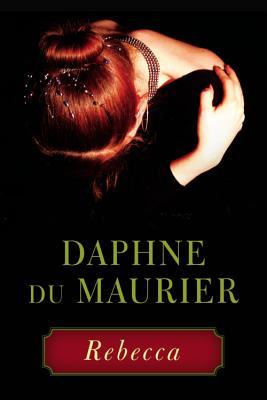
'Rebecca' by Daphne du Maurier

 17899948

"Last night I dreamt I went to Manderley again . . ."
The novel begins in Monte Carlo, where our heroine is swept off her feet by the dashing widower Maxim de Winter and his sudden proposal of marriage. Orphaned and working as a lady's maid, she can barely believe her luck. It is only when they arrive at his massive country estate that she realizes how large a shadow his late wife will cast over their lives--presenting her with a lingering evil that threatens to destroy their marriage from beyond the grave.
First published in 1938, this classic gothic novel is such a compelling read that it won the Anthony Award for Best Novel of the Century.


Genre: Classics, Gothic fiction, 1930s.

MY THOUGHTS: 
My main reservations about this famous book can't be given without spoilers, but I'll clearly mark them down below if you wish to dodge them.

The young narrator starts off as a paid companion to the domineering Mrs Van Hopper. She accepts a shock marriage proposal from Maxim de Winter, a fairly recent widower who is twice her age. His property, Manderley, still bears the strong influence of his former wife, Rebecca, whose beauty, cleverness and charm seem to be legendary. The new Mrs de Winter discovers that trying to stamp her own distinct personality over someone else's life is a disaster, but believes that any attempt to change things would end badly too. It's the worst position for a shy and uncertain person to find herself in. 

The young Mrs de Winter's personality was the best part of the book for me. She captures so accurately the agonising thought processes of a shy person, and I can relate to her.

Shy people are cowardly and brave at the same time. We are too nervous to earn censure by objecting to anyone's demands, yet carrying them out often takes every ounce of courage we have. We're hard on ourselves, judging every minor slip-up as incredibly stupid. I kept wishing she'd stop mentally beating herself up, when she was coping with the circumstances as best she could. Shy people can be too acquiescent, going along with anything for nods of approval. This girl considered buying a whole new set of lingerie just to impress the maid. The danger in this sort of behaviour is that it becomes so easy to relinquish your own personality. People who keep saying 'yes' when they really mean 'no' are puzzles for others. They aim to be low-maintenance, but end up being high-maintenance because their loved ones just can't figure them out.

She omits her name throughout the whole story. We only know that it must have been unusual, since it was rare to find it spelled correctly. So all we know is that she would more likely be a Persephone or Hermione than a Hannah or Jane. I think the purpose might have been to highlight the fact that she considered herself so completely in Rebecca's shadow, she never even ventured her own name. I quite liked her, whatever her name was, because the running commentary in her head shows that she was really a loving and original person with great depth of thought.  And she loved Jasper, the dog. Anyone with such a kind heart toward animals has to have some good in them.

The one thing I didn't relate to was her great affection for Maxim. I couldn't take to him at all, and liked him less the further I read. He comes across with no compassion for his wife. Since he brought her to Manderley, I thought he had a certain responsibility to help her fit in, but he just shrugged off her anxieties with no regard for her feelings. And he treated her like a pesky little kid, putting her in her place so many times. He's the type who can stir the feminist in any woman. Even at his best, it's, 'Pour out my tea, sweetheart, and forgive me for being such a bear to you.' I was hoping she'd throw it at him. Later, when we discover the reason for his dark preoccupation, my first thought was, 'Ha, I never liked him anyway!' That brings me to the plot spoilers.

PLOT SPOILERS

How did he get away with it???

No justification for Maxim's act of murder was really given. I feel Daphne du Maurier copped out a bit by not filling in details. He tells his second wife that Rebecca was completely despicable and vile with no redeeming features, but I don't want to simply take Maxim's word for that. All we see is a headstrong woman who entertains lovers and does as she pleases. Her worst crime, in his eyes, seems to be that she despised him. Well, I didn't like Maxim either, so I concur with Rebecca as far as that goes. Taking it into his head to shoot her in cold blood makes him a murderer, plain and simple.

The new Mrs de Winter's instant support of him had me shaking my head. All she expresses is relief that Maxim hated Rebecca and loved her all along. Come on, get your head straight, girl! I would've thought, 'Gee, I hope I never tick him off during a marital tiff to the same extent.' She should have been more worried, especially when he showed signs of being less than pleased with her. 'You were so aloof. You seemed to have more to say to Frank than to me.' Well, I could tell him why. Frank was a much pleasanter person.

Finally, I found the twists predictable, to the extent that I wondered if I'd ever seen or read 'Rebecca' before and forgotten about it. When Mrs Danvers suggested the fancy dress costume, I thought, 'I bet it'll be something Rebecca wore.' And when we readers are set up to believe Rebecca had been pregnant, I thought, 'Naw, it'll be bound to be some terminal illness which will provide a suicide motive.' I couldn't believe my instincts were right every time. Maybe I'm used to the sorts of events which happen in melodramatic old stories. It was also no surprise when Manderley joined the ranks of gracious old literary mansions which go up in flames.

What a weird story. Rebecca's cousin, Jack Favell, is right in his accusations the whole time, yet it's written in such a way that readers are supposed to take the sides of a murderer and his confidante. Maxim shouldn't have got away with it, but as one commentator mentioned, aren't they getting their just desserts when you think about it? They end up as jumpy, homeless vagrants hanging out in average hotels.

END OF SPOILERS

Overall, it wasn't my cup of tea, although I might have felt differently if I could've mustered more sympathy for Maxim. As it was, when he started kissing his new wife passionately and talking about starting a family, I could only shudder. Would you adore a tetchy grouch who addresses you as, 'Child' and assumes your worst motives over an accident? Best book of the century? No way!

3 stars