Thursday, July 14, 2016

Several perplexing conscience stories

I'm sure we all know the scenario here. A character knows (s)he should speak up about something important, because there may be a lot riding on it for someone else, or it is simply the right thing to do. It's usually something juicy, delicate or with the potential to cause a scandal. But the poor guilt-ridden person hesitates to become vocal, because the stakes are so high, the repercussions of letting the cat out of the bag could be devastating. Where do you turn, when doing the right thing means that you, or somebody dear to you, stands to lose such a lot?

We've probably all been in small situations like this at times in our lives. Reading about people with enormous dilemmas of the same type can be unforgettable. It's the equivalent of having a mental, emotional and spiritual workout, as we ache for these people, and imagine ourselves in their shoes. It's been said that reading fiction increases our ability to feel empathy. No more so than with stories like these.

I tried to incorporate conscience stories into some of my own novels. My heroines, Jasmine and Imogen, try to conceal significant information from heroes Courtney and Asher, in Best Forgotten and Imogen's Chance respectively. You have to make up your own minds whether or not they had grounds for feeling guilty when you read the stories.

Here are some others which spring to mind. They are a pretty varied lot, which proves that conscience issues can rear their ugly heads in all times and places.

Sweet Mercy by Ann Tatlock
Sweet Mercy The teenage heroine, Eve, sees moral issues as clear cut black and white. She's faced with a situation which makes her question whether the response that stands out as clearly correct is actually the kindest move. And should kindness ever trump the law? It's set in the 1920s during the Prohibition Era when bootleggers and moonshiners were doing their sneaky, secret business.  My review is here.
Career Advice for the Lost SoulCareer Advice for the Lost Soul by Rebecca Hayman
The conscience dilemma belongs to Sid, the elderly janitor. A certain instruction from the senior pastor he greatly admires leaves him wondering whether he should keep carrying it through. My review is here.

Anne's House of Dreams by L.M. Montgomery
Dr Gilbert Blythe realises that a certain medical procedure on a patient, Dick Moore, may help restore his lost memory. But since Dick used to be a cruel brute to his wife, Leslie, others, including Anne, try their best to talk Gilbert out of going through with it. He doesn't have to even mention anything at all. What's the right thing for him to do under the circumstances?

The Conscience Case of David Bell by L.M. Montgomery 
Anne's House of Dreams (Anne of Green Gables, #5)This is a short story from her collection, Chronicles of Avonlea. David, the father of the Bell clan, has been very depressed lately, and his family cannot figure out why. At last, he psyches himself up to get the matter off his chest, and everyone can relax again. Would you have felt the same way David did about a similar issue? Every reader is bound to have a different answer.

The Pounamu Prophecy by Cindy Williams

The Pounamu Prophecy

As a girl, the Maori heroine, Mere, takes some drastic action to pay back some oppressors who destroyed her family. Only later does she find out that the thing she's kept silent about for so long reverberated far further than the people she wanted to hurt. Is it ever as simple as tit for tat? My review is here.

The Road to Testament by Eva Marie Everson
The Road to Testament Ashlynne and Will are in the business of journalism on a small country paper. It's not surprising that some moral dilemmas pop up to test them, but this doesn't make it any less comfortable. My review is here.

My Life Next Door by Huntley Fitzpatrick
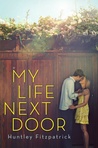
My Life Next Door In this YA novel, the heroine, Samantha Reed, is in a no win situation. Keeping quiet will make it impossible for her beloved boyfriend's family to receive the help they're entitled to, but speaking up means that her mother's political career will be destroyed. No matter what she does, somebody she loves is bound to be hurt. And putting off making a decision is still a decision in its own right. This is a really sensitive conscience story, but comes with my warning that the language gets pretty rough. My review is here.

From this Moment by Elizabeth Camden
From This Moment A certain person who is pivotal to the plot was involved in a boyhood prank that went horribly wrong, and somebody else suffered greatly at his expense. Since then, he's been trying his best to be a model citizen to make up for it, but is a guilty conscience so easily assuaged? My review is here.

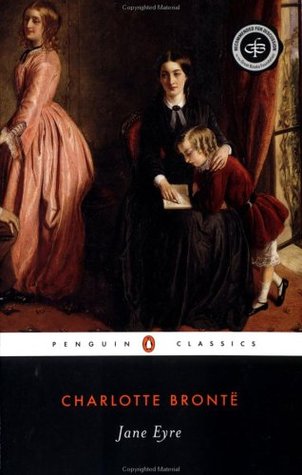
Jane Eyre by Charlotte Bronte
Jane Eyre Edward Fairfax Rochester is trapped in a marriage to feral mad-woman Bertha Mason, but is in love with the placid, intelligent Jane Eyre. He doesn't believe he even has a dilemma throughout most of the book, but readers must ask ourselves whether proposing to Jane is a loving action, or quite the opposite, since he'd be making her a co-partner in bigamy without even knowing it? My review is here.

Now for the drum roll. I cannot think of a story with a more  heartbreaking conscience situation than this one. What an emotional roller coaster. This last one has to be the king of all gut-wrenching conscience stories. 

The Light Between OceansThe Light Between Oceans by M.L. Stedman  
Tom and his wife Isabel have endured the heartache of losing pregnancies, but fate seems to be smiling upon them when a boat containing a dead man and a tiny baby girl are washed up on their lonesome island, where he is the lighthouse keeper. They embrace little Lucy like a gift from above, but when enough time has passed for the bonding to be complete, they learn that their daughter's birth mother, Hannah, is living on the mainland and still grieving her loss bitterly. What do they do? I must add the warning that this story made me cry my eyes out. My review is here.


Monday, July 11, 2016

'Jane Eyre' by Charlotte Bronte

 10210

 Orphaned into the household of her Aunt Reed at Gateshead, subject to the cruel regime at Lowood charity school, Jane Eyre nonetheless emerges unbroken in spirit and integrity. She takes up the post of governess at Thornfield, falls in love with Mr. Rochester, and discovers the impediment to their lawful marriage in a story that transcends melodrama to portray a woman's passionate search for a wider and richer life than Victorian society traditionally allowed.

With a heroine full of yearning, the dangerous secrets she encounters, and the choices she finally makes, Charlotte Bronte's innovative and enduring romantic novel continues to engage and provoke readers.


Genre: Great classics, Gothic fiction, romance. 

Warning: Although I usually take great care to avoid plot spoilers wherever possible, I consider old classics to be fair game. If by any chance you've never read 'Jane Eyre' and would prefer not to have any details revealed, you might want to skip this review. 

MY THOUGHTS: 
I read this novel more than once in my teens and early twenties, and studied it in my English course at Adelaide Uni. I thought it high time I read it again, to see how it strikes me after having been married and raised a family. I loved it more now than then. 

Firstly, Jane herself is a refreshing and interesting heroine, and it's easy to admire her for some of the same reasons she appeals to Rochester. She's an introvert reader's dream, as we probably share some of her best qualities. It's lovely to have a heroine admired for her quietness and caution. What a great role model she is. Serene and peaceful in her outlook, no matter what happens in the daily run of things. Anybody who wants to learn to enjoy their own company just needs to take a leaf from Jane's book.

As for Rochester, I remember deciding that he wasn't my favourite hero when I was a teenager. Back then I thought he sounded too old, ugly and controlling. This time through, I fell for his charisma and charms, and kept wanting to hug him. What ruggedness coupled with vulnerability, which nobody really sees but Jane. He no longer sounds that old, and his physical description is intriguing, in spite of the frequent use of the word 'ugly'.

Their relationship is based on a heart-warming friendship, which I believe all romances should be. They come across as soulmates in the true sense of the word. I love the way he refers to her as his 'little friend'. And when she's staying with her Reed relatives, she sketches Rochester's likeness just so she can comfort herself that she's looking in the face of a friend. This sort of detail shows that they bring out the best in each other, and then when the romance heats up, we can't help loving it and feeling that it's just right.

I don't remember if this question ever occurred to me as a teenager, but this time round I even started to Google it, and the search engine finished asking my question instantly. Why couldn't Rochester divorce Bertha? The procedure wasn't unheard of in their time, and I thought he would have had excellent grounds, with a snarling, fang-dripping wife who was hanging out to set him on fire or rip his flesh with her teeth. The responses that came up didn't seem very satisfactory, the main one being that insanity might not have been seen as a reasonable grounds for divorce. Sounds pretty silly if that was the case, but if it had been easy for him, Charlotte Bronte might not have written her brilliant novel.

I appreciate the way Rochester's possible rival didn't turn out to be a villain or heartless scoundrel, but a great guy in his own way, as well as being Rochester's contrast in many ways. Several of us may have had run-ins with people like St John Rivers, or been related to them. They are living, breathing guilt trips in human form. He has a crusader's zeal, erring on the side of earning his salvation. Doing arduous, sacrificial tasks makes him happiest, and he expects the same of everyone he admires most. Jane was wise, at her young age, in figuring out that St John 'is a good and great man but forgets the feelings and claims of little people in pursuing his own large views.' It's a pity St John couldn't have hooked up with Jane's pious cousin, Eliza Reed. They could have been awesome together.

I was fascinated by the archaic and unusual words Charlotte Bronte used throughout the story. Some of them sound beautiful, and it's a shame they've been pushed out of the modern dictionary. Words like chimera, incubi, charivari, diablerie, cynosure, hierophant and cairngorm. Does anyone have any idea what someone might be talking about who says, 'She has cairngorm eyes'? I certainly didn't, until I looked it up. (No, I'm not telling you. You'll have to look it up yourself.) It's interesting to see Jane mention feeling a 'ruth' for her aunt's or Rochester's great sufferings. I've never seen it used before. Funny how we've kept 'ruthless' but dispensed with 'ruth'.

Needless to say there are a quantity of wonderful quotes from Jane and Rochester, regarding the depth of their love for each other. But one of my favourite lines comes from the cold St John. When Jane mentions the beautiful Miss Oliver's admiration for him, he says, 'It's very pleasant to hear this. Go on for another quarter of an hour.' Then he actually takes out his watch to mark the time. What a guy.

Of course this book hasn't delighted thousands of readers for nothing, and deserves full marks. If only there had been a sequel. Has anyone ever written any fan fiction about Rochester and Jane's son, that baby with his father's dark eyes who was mentioned on the last page? 

5 stars

Jane Eyre also appears on my list of a dozen famous orphans.

Thursday, July 7, 2016

The Middle Stage of Writing and Life


I could have also called this post 'The Three Tenses of Writing and Life.' 

The elderly folk (my parents' generation) get to look back at their lives with a nostalgic, past tense sort of feeling. When we converse with them, they may say, 'This is what I did with my life before I retired.' Living out your twilight years in peace sounds like a relaxing and comfortable place to be, like the athlete who has given an event his all, so he can now sit back and watch the other competitors. The artist has completed his masterpiece, and the author has finished the book into which she has poured so much time and effort. I imagine old age might be a bit like the contentment I've experienced when I've finished writing a book and the final proofs have arrived back from the publisher. I can check through them at a more leisurely pace than the drive which spurred me to work on the project. I've given this my best shot, and here's what I came up with.

The younger folk (my kids' generation) are charged with energy. When we're in our teens to early twenties, we approach life with a future tense, 'This is what I plan to do with my life' sort of feeling. We apply for courses at University, we wonder if chance encounters may be potential marriage partners, we consider the pros and cons of different career paths, pondering which may suit us. This is akin to the initial excitement of planning a book, writing out plot outlines, and daydreaming about possible events. It's all ahead of us, and we're so excited about what it may end up looking like. Yet at this stage, if the rough drafts don't come together quite as we hoped, it's no big deal to just shrug it off and get on with something else. We consider we have time enough to spare.

But how about those of us who others refer to as middle aged? Our kids are becoming young adults, we assume our careers 'should' hopefully be well underway, because people are depending on us, and we're showing some signs of age. What about us? We may feel we haven't really lived long enough to earn the right to say, 'Look what I've done with my life' yet. There are still many years ahead of us to be filled. It's like a manuscript that's only halfway through. Yet if it looks a bit average and trite so far, we feel we've gone too far now to scrap this project and start from scratch. We reach a stage when we ask ourselves what would be the point anyway?

We're told that 90 years seems to be a good innings for a person, and know full well we've clocked 45 or so already. If we were on a boat, we've lost sight of the horizon behind us, but the land ahead still seems hazy. In terms of writing a book, we've passed the point of no return, and if it's looking a bit random and dog-eared, that's sort of terrifying. Sometimes I feel as if I'm arriving at the same stage in my life that I've so often found myself in my book plans. The middle of anything is like a present tense sort of place in the most nerve-wracking sense of the word, when it's only guesswork whether or not things are happening exactly as we hope for.

For anyone who feels you are nearing the halfway point of anything, I think we need to remember to draw on faith and trust here more than ever before. We shouldn't lose sight of the impetus that drove us forward in the first place, even when it seems ages ago. And even though we may begin to doubt that it'll look exactly the way we imagined by the time we get to the end, we can encourage ourselves with the thought that surprises are one of the spices of life, and in retrospect, what we're stressing over now may look even better than we imagined.

Perhaps the middle stage of anything should be the time when we need the most encouragement to keep moving, because we're doing a great job, yet those at the beginning and end sometimes seem to be the ones who get the most accolades, support and congratulations. Anyone who's just plodding along in the middle has been at it for so long, we may get overlooked. But hey, I want to tell you to keep your chins up, and remind you that anything worthwhile needs your dedication for as long as it takes.   

Image Courtesy of Pixabay

Monday, July 4, 2016

Four books about managing our diet

I'm obviously no expert on this subject, and there are plenty of times when I'd rather not give a whole lot of thought about the food I put in my mouth. For that very reason, maybe a list of books on this topic could come over better from a novice like me, who admits I'm clueless, if you feel you can relate to me. 

I'm limiting this list to four because it's so handy to avoid the complication created by the glut of advice out there about what and how we should eat. Rather than delving into any specific regime, these four focus on common sense principles and allow us to craft our own culinary lifestyles. It's confusing for a novice to try and weigh up the pros and cons of the Paleo diet, the Dukan diet, the blood type diet, the Atkins diet, the Hallelujah diet, and the claims of hundreds of others which are laid out step by step. Especially when they all get their fair share of negative exposure, making us wonder what's really going on. I'd rather shy away from the word 'diet' completely because that single word carries ideas of judgement, temporary measures and limitation. I prefer sensible tools that enable us to help ourselves for the long term, over strict formulas, weekly plans and recipes which will help us shape up and then leave us in the deep end.

The advice of an ancient Chinese proverb probably works here. I'm sure these aren't the exact words, but it was something like, Better to give a man a rod and teach him to fish for a lifetime, than feed him fish for a week. These books aim to do that.

1) Think and Eat Yourself Smart by Dr Caroline Leaf
Think and Eat Yourself Smart: A Neuroscientific Approach to a Sharper Mind and Healthier Life This is a well respected scientist's advice about shaping up your lifestyle where food choice is concerned, and empowering yourself with knowledge of what to avoid. Only recently published, it's already gone over well with many readers. I found it a bit technical at times, but that sort of information is right there for people who may appreciate it. My review is here.

2) Kale and Coffee by Kevin Gianni
Kale and Coffee: A Renegade’s Guide to Health, Happiness, and Longevity I got many laughs from this book. The author has a humorous way of expressing himself, and there were also plenty of interesting revelations that I'd never have worked out on my own. They are not just about the food we eat, but 'aha' moments about exercise, genetic make-up, emotions, and other things we may be overlooking. They were the sorts of things I wanted to discuss with others, and I also keep the tips in mind instead of automatically doing my old thing. My review is here.

3) Eat, Move, Sleep by Tom Rath
Eat Move Sleep: How Small Choices Lead to Big Changes This is a slap-in-the-face type of book which may make you say, 'Whoa, my diet and lifestyle really aren't all that healthy,' when you're going along merrily thinking that they're not too bad. I admit, it wasn't one of my favourites. Too brutally frank and overwhelming, perhaps. But Rath presents his advice in bite-sized nuggets which we may dig into whenever we feel we need a little shake up. There's no loophole for us to say, 'I didn't really get it.' My review is here.

4) The Slow Down Diet by Marc David
The Slow Down Diet: Eating for Pleasure, Energy, and Weight Loss This is my very favourite. The author has convinced me that incorporating good eating habits and loving our food is just part of what makes a beautiful life. It's like a poem at times. I never imagined I'd consider a book about diet to be a page turner, but Marc David managed to make it so. I couldn't wait to get to each new chapter. My review is here.

Saturday, July 2, 2016

'Distinctly You' by Cheryl Martin

26266304

Genre: Christian, non-fiction, personal development.
 
For Women Who Want More Than Comparing, Competing, and Coveting
All of creation is content to be what it was made to be except us. Fish flourish in water. Ants are not worried about their size. But we waste time on the three C's--comparing, competing, coveting. We aim at the bull's-eye on someone else's board, pursuing a race we weren't equipped to run.
Cheryl Martin shows women how to develop their God-given uniqueness rather than becoming fixated on what they are not or do not have. "Distinctly You" unveils the actions and attitudes that may be sabotaging women and explores ways women can engage and build up their unique talents, interests, and strengths. Readers will be inspired by examples in the Old and New Testaments of people who were exceptional for God's kingdom. As the author shares her ongoing quest to be distinct for his glory, readers see how God created them to thrive.
Includes end-of-chapter questions for individual or group use.


MY THOUGHTS:
Being an Aussie, I wasn't familiar with Cheryl Martin, but found out she's a well-known American personality in journalism and media. Having read her book, I decided I'm not really the target audience, but younger ladies with a different life focus. Her many personal examples include tips on dating, job interviews and study habits, which may gel more with single millenial girls in their late teens and twenties, than Gen X mothers of young adults who consider themselves to be homebodies at heart. I might have got more out of a book like this if I'd read it in the early nineties.

Her book is quite heavy on giving Bible stories as examples. If these are new, or only vaguely familiar to you, you might find it hits the right spot. However if you've been around enough to hear them many times already, then it may come across as a lot of re-telling what you know so well. Cheryl Martin turns out to be one of those Christian authors who will write, 'God told me...' or some variation, without explaining how that looks to her. So if her intended readers are young or new Christians, she might have done well to explain the phrase with a bit more depth for those who would be inclined to ask, 'Huh, how does that work?'

Some of her main points include the following.
1) Just because you aren't the best, it doesn't mean that you don't have a right to be there or won't be a success. There are a variety of different skill levels in every profession.
2) God is never impressed by our accomplishments or discouraged by our weaknesses, so we assign far too much weight to these things.
3) God never uses somebody else's talents and abilities as a plumb line for our achievements. Getting distracted by what others are doing is pointless, whether or not we believe they are doing better or worse than we are.
4) The 3Cs lead to the 3Ds. Comparing, competing and coveting turn into depression, discouragement and discontentment before we know it.

Overall, I wouldn't want to mark this book down just because I'm not the target audience. I'd recommend reading the different reviews carefully before deciding whether or not this is something you may benefit from.

Thanks to Bethany House and NetGalley for my review copy.

3 stars

Thursday, June 30, 2016

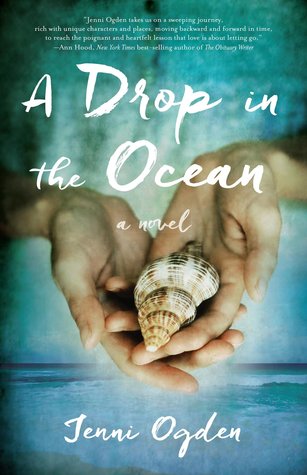
'A Drop in the Ocean' by Jenni Ogden

 27037952
On her 49th birthday, Anna Fergusson, Boston neuroscientist and dedicated introvert, arrives at an unwanted crossroads when the funding for her research lab is cut. With her confidence shattered and her future uncertain, on impulse she rents a cabin for a year on Australia's Great Barrier Reef. However Turtle Island, alive with sea birds and nesting Green turtles, is not the retreat she expected. Here she finds love for the eccentric islanders who become her family; for Tom, the laid-back turtle whisperer; and for the turtles whose ancient mothering instincts move her to tears. But Anna finds that even on her idyllic drop in the ocean there is pain, and as the months fly past her dream for a new life is threatened by a darkness that challenges everything she has come to believe about the power of love. Evocative and thought-provoking, A Drop in the Ocean is a story about second chances and hard lessons learned in the gentlest of ways."

Genre: Women's fiction, contemporary fiction. 

MY THOUGHTS:
It made me a bit nervous when the story turned out to be about a lady from Boston moving to an island in Australia. As an Aussie, I've often groaned out loud about the inaccurate way we are portrayed in fiction for American readers. Writers are sometimes way off when they imagine the attitudes we profess and the spoken expressions we use. It's not something you can just improvise, and sometimes I can't believe they assume the population of a whole country just won't notice. To my relief, this one wasn't too far off the mark. It turns out that Jenni Ogden is an author who has experienced life in both Australia and America, so has knowledge of both cultures.

There were a few aspects which really appealed to me about this novel. The main character, Anna Fergusson, is 49 years old. It's refreshing to have the occasional heroine her age. There are so many young women in their teens and twenties, or elderly ladies looking back on their lives. Those who are in between sometimes miss out, so I was happy to read Anna's story. In the first chapter, she discovers that she will no longer be funded for the grant she'd taken for granted. Unexpected setbacks sometimes happen, and after her initial upset, Anna decides to take a chance on something unlike she'd ever done before. She becomes caretaker at a lonely campground on a tropical island in the Barrier Reef. It sounded like a sea change in all senses of the world, and piqued my curiosity.

After the strong start, the impetus seemed to taper off a little bit when I got into the body of the story. The setting and relationships on Turtle Island are well described, but the story becomes more meandering and reflective than plot driven. Anna spends long sections delving back into her past, journalling and reflecting. Her relationship with Tom the turtle whisperer seems to evolve without too many twists or turns. The descriptions of the native turtle population are beautiful and well worth pondering, but for some time, nothing much happens in the way of a strong story line. This may be brilliant if you're after a quiet read with revelations of nature's beauty. But if you're looking for a page turner in the more exciting sense of the word, it might not fit the bill.

Thanks to She Writes Press and NetGalley for my review copy.

3 stars

Thursday, June 23, 2016

'Think and Eat Yourself Smart' by Dr Caroline Leaf

 26266642

Genre: Non-fiction, self-help, diet. 
Science is beginning to understand that our thinking has a deep and complicated relationship with our eating. Our thoughts before, during, and after eating profoundly impact our food choices, our digestive health, our brain health, and more. Yet most of us give very little thought to our food beyond taste and basic nutritional content.
In this revolutionary book, Dr. Caroline Leaf packs an incredible amount of information that will change readers' eating and thinking habits for the better.


MY THOUGHTS:
Since this book was written by Dr Caroline Leaf, I was expecting the main thrust to be practical thinking tips which help us adjust our diet and lifestyle for the better. She does provide some, but honestly not as much as I expected. In the bulk of the book, she describes with plenty of doom and gloom why we should want to avoid the MAD diet (an acronym for Modern American Diet) in the first place. Those of us who'd pick up a book with this title surely already know western diets leave a lot to be desired, so after a while it came across a bit too much like preaching to the converted.

In Part One, Admit It, Dr Leaf outlines the deplorable state of the food industry and reveals the dominance of several synthetic 'look alike' foods. She explains some secret prolonging tactics which extend the shelf life of foods while destroying their nutritional value. She also delves into why modern farming practices aren't the way nature intended. They include farming only one single commodity, which plays havoc with the world's ecological balance. To wrap up this section's message, the western world's food system is devastatingly dodgy, and humans have been bad stewards who will surely be called to account on the day of reckoning. It's very convicting, and suggested to me that the global food industry is run by people who care more about dollars than health.

Next, Dr Leaf examines specific food types, such as wheat, proteins, sugar and cholesterol. Scientifically minded people who like to know all the ins and outs about what they put into their mouths might appreciate the amount of detail she goes into, but I found myself wanting to skip to the practical tips even more.

That section was short when it came. Being the brain scientist that she is, Dr Leaf encourages us to change our mindsets where food is concerned. Instead of believing it should be cheap, fast and quickly prepared, we can train ourselves to enjoy the more leisurely process of preparing real food from scratch. That's probably the crux of her message, and there you have it.

I found parts of the book a bit overwhelming, although it's clear that she tries hard not to be. Dr Leaf seems firmly in the 'Avoid MAD food like the plague' camp. She comes on a bit strong at times. For example, she gets gobsmacked when people head for the vending machines straight after listening to her lecture about the terrible products which come out of them. 'Processed' is a dirty word in her books. And she strongly advocates backyard vegetables patches, sticking to purely organic foods, avoiding supermarket fresh food sections, which are supplied from chill rooms, figuring out how your cows were treated before they became beef, and other 'guilt-trippy' sorts of things that have the potential to fill our days 24/7.

 I'm uneasy with all this advice because it stirs up memories of fanaticism from my past. Trying so hard to follow such a rigid protocol can take over your whole life. In my case, I ended up burnt-out with anorexia and nutrient deficiencies at different times, all in the name of trying to stay healthy. When I stopped treating chocolate bars and potato chips as the enemy and remembered that statistically, our modern life expectancy has risen in recent decades despite the MAD diet, I could feel it do me good. Dr Leaf's advice about 'real' food is definitely a sound gauge, but I think a more relaxed 80/20 sort of approach instead of going the whole hog sits better with me these days.

Thanks to Net Galley and Baker Books for my review copy.

3 stars