Friday, November 3, 2017

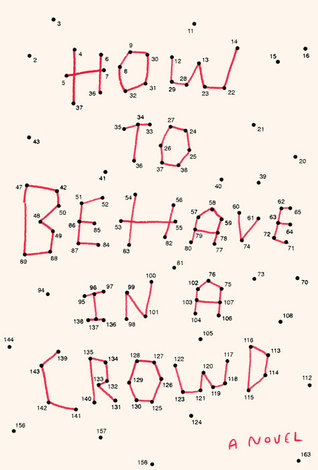
'How to behave in a Crowd' by Camille Bordas

31951323

An absorbing, darkly comedic novel that brilliantly evokes the confusions of adolescence and marks the arrival of an extraordinary young talent.

Isidore Mazal is eleven years old, the youngest of six siblings living in a small French town. He doesn't quite fit in. Berenice, Aurore, and Leonard are on track to have doctorates by age twenty-four. Jeremie performs with a symphony, and Simone, older than Isidore by eighteen months, expects a great career as a novelist--she's already put Isidore to work on her biography. The only time they leave their rooms is to gather on the old, stained couch and dissect prime-time television dramas in light of Aristotle's Poetics.

Isidore has never skipped a grade or written a dissertation. But he notices things the others don't, and asks questions they fear to ask. So when tragedy strikes the Mazal family, Isidore is the only one to recognize how everyone is struggling with their grief, and perhaps the only one who can help them if he doesn't run away from home first.


MY THOUGHTS:
Poor Isidore Mazal is the youngest of six siblings, and the only one who isn't an academic genius. Berenice, Aurore and Leonard are on track for PhDs in their early twenties, Jeremie is a musical virtuoso who plays cello in a symphony, and Simone has been accepted into an elite private college, with aspirations to be a famous novelist. It's hard enough being the youngest, but especially when you haven't lived up to the family tradition and skipped even one grade. What's more, they keep patronising him and calling him Dory, when he'd rather be called Izzie.

This is a character driven novel, and the narrator himself makes it a 5-star read. If it was told by the voice of any other boy I might have put it down, but Dory is a delight. Although he contends with the natural pressure to consider himself inferior to the others, he has something his older siblings lack, which helps him keep his spirits and self-esteem intact. But he doesn't even realise it.

While the other five tend to be stuck in their own brilliant head spaces, Isidore is more outward looking. He notices small nuances about others which his brothers and sisters are too preoccupied to see, giving him empathy and warmth. On the surface, his skill seems unremarkable in the shadow of their mighty brain power. 'I didn't think it meant I cared, remembering all those details about other people. But maybe it did.'

The others may think they're treating him with the condescension older siblings always give, but they're drawn to his perception and interest, even if they don't realise it themselves.

Even though the main character is between the ages of 11 and 14 for the time period of this story, it's not just a book for young adults. There are some adult themes, as he begins to be more aware of his own sexuality. There is a lot of philosophical food for thought for any age group. For example, the small town includes Daphne, the oldest woman in the country at 111. She has some real perspective to tell Dory about the apparent privilege of outliving your loved ones, and even your usefulness.

I love the closeness of the Mazal family, even though they consider themselves aloof entities just going about their own work. When they do venture out into the world, it becomes clear to each of them that blood is thicker than water, as they're the only ones on each others' wavelengths.

The story suggests that the world is not necessarily all it's cracked up to be, even for highly intelligent people, who may appear to have every possible option in the world at their fingertips for the rest of their lives. But where do you turn after the completion of an extremely narrow focused doctorate? What if nobody really gets you anyway? Dory's two oldest sisters go through grief and existential crises which are easy to understand. And I love Dory's relationship with the superior second youngest, Simone, who decides on a very specific future occupation for him. He can be her biographer, because she's bound to become famous.

Finally, a big cheer for their mother, who holds the home front together as well as she can after her husband's death. We can't help getting the feeling that she's more of a 'normal' person, like Isidore, while the others must have got their brilliance from their father. She's well aware of everyone's strengths and weaknesses, including her youngest son's, who she says is perfect just as he is.

Altogether, it's the sort of book which may leave readers asking more of the big questions about life, rather than having any answered. I can see why some reviewers might find that unsatisfying, but maybe it shows they're not as far developed in their maturity as Isidore, who understands that there will always be unanswered questions. I can't help hoping there might be a sequel someday, because I'd be happy reading more of his experiences and thoughts for as long as he cared to share them. Whether or not that will happen, I think his humour, common sense and recognition of goodness where he finds it will always pull him through whatever life throws at him.

Thanks to Crown Publishing and Blogging for Books for my review copy through Edelweiss.

🌟🌟🌟🌟🌟

For other books with child prodigies I've read, you might enjoy my reviews of The Elegance of the Hedgehog and Franny and Zooey. But I've got to say, How to Behave in a Crowd is my favourite.

Wednesday, November 1, 2017

The Trouble with Social Media Stats

Yet another blog I enjoyed reading has recently been discontinued. Sadly, I've seen it happen far more than just once. Enthusiastic bloggers and Instagrammers who seem to be going great suddenly announce their farewell. The main reason they give often amounts to the fact that they don't have as many followers as they'd like, no matter how hard they try to raise their numbers. So they can't see much point in continuing to flog a dead horse. Especially when there are always others with huge followings to compare themselves to. Oh man, I so get where they're coming from, I'm writing this blog post to convince myself as well as everyone else.

Life is too short to get hung up over the sight of numerals beside our names on a screen, because they distort our thinking and make us form crazy priorities. It's all because of what they seem to signify. When we see a tally of likes beside a social media post, it's easy to invest that number with personality or character. Here's an example to show what I mean.

5000 is like a VIP or member of royalty awarding you a knighthood.


500 is like proud parents giving you a thumbs up. You're gratified, although you wish more people would jump on board.


50 is like Oliver Twist. 'Please Sir, can I have some more?'


And 5 is like an arid landscape. Those few must surely be desert animals who don't really count. They are relegated to the 'nobody' we think of when we declare, 'Nobody reads my blog.'


This is disturbing on so many levels. To start with, it's all completely arbitrary and relative, varying from one individual to another. Some celebrity would most likely consider 5000 their Oliver Twist, while it looms as my unattainable award. (Just imagine 5000 followers or likes!!) However many likes we get, it'll always be easy to find somebody with more, keeping our discontentment stoked high. Whenever we get more likes, we probably crank our 'enough' level higher too. It's so easy to distort the sight of a numeral into something that reflects our worth, and forget that it simply indicates random individuals, many of them strangers to us, making clicks that take a second. Why are we inclined to let the sight of these numbers make or break our day?

There's the old lie that the more attention we and our contributions receive from others, the more valuable we must be. No way, the world is full of hidden gems, and that's what keeps it so interesting. (See this post about books and doughnuts) Besides, if we love the content we're sharing, that's the main thing, and any other attention is just a bonus.

I think I'm happier when I remind myself to keep things in perspective. We've got to challenge ourselves, 'Am I so easily crushed just because people I barely know don't see my feed or decide not to click a button? Or am I so easily elated when they do?' Why waste all this angst when we have real people in our lives; spouses, kids, parents, siblings and friends, to spend time with and rack up actual experiences? It's time to stop diminishing our true lives, or taking genuine loved ones for granted, while we let button-clicking strangers determine our worth. Sure, it's nice to get online recognition, but honestly, if we deleted all our social media accounts, for how long would these followers and fans care? The real people who matter are the ones who would come and cry at our funerals, or at least pay their genuine respects :)

The lady who pulled the plug on her blog and social media accounts had a most understandable reason. We book bloggers put so much passion and time into maintaining them, for so little return. And what's more, we provide this service for free, and it's so disheartening to get nowhere. A giver can only give so much. Yes, I can feel and echo her pain! (And I must add, the number of comments her goodbye post received indicated that she probably had more followers than I do.)

But do you think this sort of heartfelt statement reveals our own skewed priorities to us, at least on some level? Why do we do what we do? Is it for financial return, notoriety, recognition, or just having fun? I've worked on my blog with the 'What am I getting back from others?' attitude. It makes me feel really depressed. When we say, 'I do so much for little return,' the best solution may be to change what we consider our return.

The return has to be our fascination for the things we write about. If my blog isn't based on pure enjoyment, my energy for it will sap in no time. I can't be sidetracked by thoughts about money or popularity, or I'll certainly throw in the towel. I have to keep reminding myself what provides my drive. It must be the interesting nature of my reviews, lists, reflections and discussions, and the challenge of expressing them as well as I can, because that's the only true fuel to keep me going.

You might like this related post, Why don't we leave comments on blogs? which ironically got more comments than any other single blog post I've ever written.

Have you been challenged in this area of closely watching your social media stats too?


Monday, October 30, 2017

'Folly' by D.J. Blackmore


It is 1822. The colony bells of Newcastle chime for a wedding but Emma Colchester is uneasy. Her cousin is nowhere to be found. A red satin ribbon unearths the truth, and the family face their worst fears. Fingers of blame are pointed too close to home and Emma's future with Tobias threatens to unravel. The walls of The Folly standing by The Hunter River hold the clue, and Emma risks everything in finding out the truth.

MY THOUGHTS:
This is the sequel to Charter to Redemption, returning us to the drama of colonial Newcastle with a varied cast of characters, including convicts, free men, red-coated constabulary and the handful of ladies brave enough to live among them all. There's even a brief glimpse of the natives of the land. It's always refreshing to see an Australian historical novel written by an actual Aussie. The authenticity can't be faked.

The setting reminds me of visits to tourist colonial villages, but for real with all the sensual details. It would be great to journey back in time to sample the food, including damper, treacle tart, mutton broth and saddle of beef, not to mention experiments of kangaroo meat, which the settlers decide tastes like 'a mouthful of rat.'

Tobias and Emma expected to live happily ever after, but it's never that straightforward in the colonies. Tobias is in a lot of hot water through no fault of his own, but just a lot of circumstantial evidence. Readers of the first book will remember that being a convict wasn't his fault either. Is he the unluckiest man in New South Wales? This time Tobias is heading straight for the noose unless something miraculous happens. An interesting question underlying the story is the extent to which a man's good behaviour and sound values may vouch for him when he needs them to.

The story doesn't turn a blind eye to the gruesome, seamy side of life. The town is reeling with the murder of two women, one young and one old, both strangled with their own hair. And corruption and negligence within the constabulary itself doesn't make things easy. Commander Morriset has his hands full being in charge of the rabble. Adding a bit of comic relief is Tam and his mate Jim, who has a knack of walking into scenes he wasn't supposed to see.

If I have one gripe, it's that the presentation detracts from the story at times, with several typos (such as tying the not instead of tying the knot), dialogue not always easy enough to determine who's speaking, and sentences that could use a bit of tightening. When this occurs enough that I start to notice it, I feel obliged to mention it in a review. A more thorough proofread could have made a world of difference to the overall quality. However, on the whole it flows like a very enjoyable campfire yarn with all the colourful jargon of the times. And the descriptive writing so often puts us right in the picture.

Readers of romance may be assured it's alive and well in the new colony, despite harsh living conditions. Emma's sweet cousin Phoebe and her new husband Rory are expecting a baby, and Emma never gives up hope of a future with Tobias. 'As long as there was love to keep one another warm, a pail could always be found to catch the drips from a leaky roof.'

I wonder if there will be a third to make this a trilogy.

Thanks to the author for providing me with a review copy. 

Monday, October 23, 2017

'The Woman in White' by Wilkie Collins


'In one moment, every drop of blood in my body was brought to a stop... There, as if it had that moment sprung out of the earth, stood the figure of a solitary Woman, dressed from head to foot in white'

The Woman in White famously opens with Walter Hartright's eerie encounter on a moonlit London road. Engaged as a drawing master to the beautiful Laura Fairlie, Walter becomes embroiled in the sinister intrigues of Sir Percival Glyde and his 'charming' friend Count Fosco, who has a taste for white mice, vanilla bonbons, and poison. Pursuing questions of identity and insanity along the paths and corridors of English country houses and the madhouse, The Woman in White is the first and most influential of the Victorian genre that combined Gothic horror with psychological realism.


MY THOUGHTS:
I really wanted to read this classic which shot Wilkie Collins to fame when it appeared as a serial in his friend, Charles Dickens' magazine. Does it still have the power to wow readers two centuries later? I thought I'd put it to the test. Willie Collins lived long before the era of the cinema and creepy background music, but how he would have appreciated it.

Walter Hartright is a 28-year-old drawing master who's been appointed to teach two unmarried sisters watercolour painting. The night before he sets off, he has a spooky encounter with a young woman dressed in white, who pops up from nowhere to ask directions, almost scaring him out of his wits. No sooner does Walter finish hailing her a cab, when a guy appears searching for a woman dressed in white because she's escaped from his lunatic asylum. Oh oh.

Walter discovers that one of his new pupils, Laura Fairlie, is the image of the woman in white, only more beautiful. Her half sister, Marian Halcombe, is much plainer looking but very clever, witty, loyal and energetic. Being a hot-blooded Victorian male, guess which of the pair Walter falls in love with? Yep, pretty and helpless always trumped resourceful and brave back then, for some reason.

Alas, Laura can't marry the handsome art instructor she's fallen for, because she promised her dying father she'd marry the man of his choice... ominous music... Sir Percival Glyde. Even his name sounds like a sinister, swooping bat. (In a similar manner, Walter Hartright's name gives a clue to his character. His heart is right. And apparently Percival's heart is 'as black as the night.') But who should show up in the district to sneak around, trying her best to prevent Miss Fairlie from marrying Sir Percival? It's the woman in white. There are hints that Percival has a horrible Secret (always with a capital S) which she may potentially reveal. However, the machinations have been set in place so long ago, Laura marries him anyway.

The marriage sets some wicked plans in motion, especially when the girls go to live at Sir Percival's place, Blackwater Park, where his dangerous and mesmerising friend Count Fosco is a guest. Both men need the money Laura's inheritance will bring, and will stop at nothing to get it. This part of the story really drew me in. I grew to love Marian and Laura just because they are like a pair of doves taken to live in a wolves' den. Predators are everywhere. All of us feel alone and clueless at times, with no idea where to turn. That's why the situation of these sisters is so compelling to read. The only guardian angel on their horizon, clad in white, is so frail and vulnerable compared with the two powerful men. Page-turning stuff.

I do understand why some people find the book a bit of an eye-roller though. One thing that keeps it verging on melodrama is Laura's character and plight, because she's such a prototype of a damsel in distress. Always playing the victim's role and allowing herself to be manipulated, until stronger people like Walter and Marian come to her rescue. Even these two, who love her dearly, are forever trying to withhold crucial information from Laura because they doubt her nerves will stand it. And although they're probably right, any woman with an ounce of gumption would insist on her right not to be kept in the dark. But Laura is often more like a pretty doll than a woman.

I once watched 'The Perils of Pauline', a spoof about a helpless blonde beauty who kept having terrible things happen to her. Well, Pauline has nothing on Laura, who finds herself at the complete mercy of the baddies. And what terrific baddies they are. Sir Percival is a complete cad and tool, the sort of guy audiences are trained to hiss whenever he walks on stage. But Fosco is a legend, with his charms and contradictions. It's no wonder his reputation grew as large as himself, for he's a corpulent man with beloved tiny pets, such as canaries and white mice. He's hypnotic, manipulative, and clearly the brains behind the villainous duo. He charms ladies, and apparently it even works through pages a few hundred years later, for I couldn't help liking him, even though I knew he was a crook.

At one stage, Laura takes offence when he states that some criminals are very wise, for in her simple-minded way of thinking, wisdom always goes hand-in-hand with goodness.

Laura: You will not find it easy, Count Fosco, to give me an instance of a wise man who has been a great criminal.
Fosco: Most true. The fool's crime is the crime that is found out, and the wise man's crime is the crime that is not found out. If I could give you an instance, it would not be the instance of a wise man.

This sets up the anticipation that his own downfall will be well worth waiting for. As the final showdown between Walter and Fosco approaches, it does have a sort of Harry/Voldemort vibe about it. If you love aspects of the Victorian era at all, it's well worth reading this book, which had Victorians hanging out for the next installment, and rushing to the shops to buy whatever fan merch was available back then. Three cheers for Walter, the modest art tutor turned detective, Marian, the brave heroine who'll stop at nothing to save the day, and Fosco, who played his hand superbly until the final curtain.

🌟🌟🌟🌟½

For more on Wilkie Collins, see my review of The Moonstone

Thursday, October 19, 2017

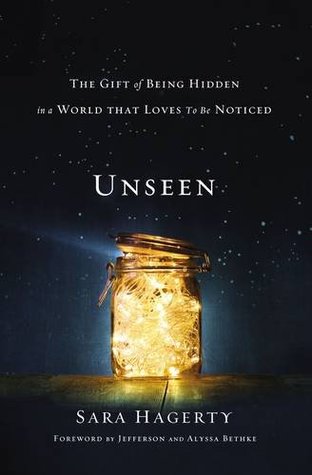
'Unseen' by Sara Hagerty

33098666

Every heart longs to be seen and understood. Yet most of our lives are unwitnessed. We spend our days working, driving, parenting. We sometimes spend whole seasons feeling unnoticed and unappreciated. So how do we find contentment when we feel so hidden?

In Unseen, Sara Hagerty suggests that this is exactly what God intended. He is the only One who truly knows us. He is the only One who understands the value of the unseen in our lives. When this truth seeps into our souls, we realize that only when we hide ourselves in God can we give ourselves to others in true freedom—and know the joy of a deeper relationship with the God who sees us.

Our culture applauds what we can produce, what we can show, what we can upload to social media. Only when we give all of ourselves to God—unedited, abandoned, apparently wasteful in its lack of productivity—can we live out who God created us to be. As Hagerty writes, “Maybe my seemingly unproductive, looking-up-at-Him life produces awe among the angels.”


MY THOUGHTS:
This book has a beautiful cover, matched with one of my favourite themes, the blessedness of being unseen. Sara Hagerty helps us develop a new way to approach being un-applauded, unnoticed and unrecognised. Instead of regarding it as falling short of our potential, she invites us to see that being hidden from sight is often the best place to be.

Hagerty starts off explaining how she was sucked into the trap of thinking the way society prompts us to. When a friend spotted her working in a gift shop, she felt embarrassed to be caught doing something with no scope for impact in her own opinion. Only when Hagerty stepped back to reconsider did she realise the hidden, personal growth she'd experienced in that place had been phenomenal. The quiet gift shop turned out to be the ideal hothouse to nurture her.

Our era reminds me of a garden in which every flower cranes forward for attention, notoriety and applause, and the fact that there are millions of them makes it seem crazy. Well, Hagerty reminds us that we feel this urge for light because God has made us with a desire to be seen and celebrated. We do like to hear our own names and enjoy the flush of satisfaction that follows a flash of attention. It reinforces that we matter in the grand scheme of things, so we needn't feel guilty. Trying to extinguish our desire for praise and recognition isn't the answer, because it isn't a bad thing. Where we err is most often in the direction we tend to look for praise and accolades.

Instead of craving the eyes, opinions and applause of other people, she suggests we simply remember to look to God instead, who knew us from the start, and His kind eye is always upon us. The switch of focus may be enough to relieve us instantly.

But to keep the garden analogy going, Hagerty's book makes it clear that we often tend the wrong plants. We carefully watch the growth of our reputations, success and achievements, and forget about nurturing a good heart - while this, in fact, is the only shoot that really matters. It's a great reminder that God doesn't look at things humans look at, and if we nurture loving hearts, well, that's all we really need to worry about.

Sara Hagerty offers frequent botanical analogies herself, urging us to shift our attention from our showy, leafy branches, where it's so easy to focus our attention, to our hidden roots instead. In other words, we could change the emphasis from our visible work for God to our secret, unseen life in Him. And she has a number of examples where this sort of thinking has played out in own life, with her husband and several adopted children.

Overall, the book left me with the feeling that while some of us may be born to God's showpiece, others are born to be His secrets, and both are equally significant.

Thanks to Zondervan and NetGalley for my review copy.

🌟🌟🌟½ stars

Monday, October 16, 2017

'The Great Divorce' by C.S. Lewis


In "The Great Divorce, " C.S. Lewis's classic vision of the Afterworld, the narrator boards a bus on a drizzly English afternoon and embarks on an incredible voyage through Heaven and Hell. He meets a host of supernatural beings far removed from his expectations, and comes to some significant realizations about the nature of good and evil.

MY THOUGHTS:
This is a convicting parable about the next world, beginning with a flying bus trip.

The departure point is a huge, empty grey city that keeps spreading its borders because quarrelsome people only need to imagine a new house, and it's theirs. Some folk are happy to stay there, since they don't recognise it as a type of hell.

For those who do jump on the bus, their choice to settle in heaven depends on their willingness to give up whatever holds the greatest grip on their hearts. It's really all about our idols, and the passengers are filled with all sorts of attitudes and hang-ups which they're loath to relinquish. There's always something they insist on clutching tight, even at the price of misery.

There's 'Ikey' the businessman, who's determined to take plunder from the heavenly realm back down to the grey city, where he thinks he'll make a killing. He only manages to lift one tiny fallen apple through the sheer force of his will.

There's a pathetic society woman whose earthly finery, which she was so proud of, appeared like rags in heaven. She was devastated, because she felt it was her whole identity, which she'd devoted her life to maintaining.

There's a learned man who believes that the grey hell city could really be heaven, for its 'continual hope of morning and field for indefinite progress.' He's an ex-bishop who has written a book. In fact, libraries on earth turn out to be some of the most haunted places, filled with the ghosts of authors who keep wondering if people are still reading their books.

The plight of creative people in this story is interesting. One artist was stressed because he saw no need to paint anymore, since everything was so annoyingly perfect. It's Lewis' warning to creative folk of the trap of being sucked in to pay more attention to their own work and reputation, rather than what it's all about. 'Every poet, musician and artist, but for grace, is drawn away from love of the thing he tells to the love of telling.' Wow, I guess our world does have a way of honouring the conduit, until it's hard for them to stay humble.

One fascinating person in the new land is Sarah Smith of Golders Green, a lady of 'unbearable beauty and grace' with a procession in her honour. The narrator is anxious to learn her identity, but she turns out to be nobody he would have ever heard of. Just a humble person faithfully doing small things in her supposedly ordinary life. But people are regarded differently in heaven to how they ever were on earth. Great news for anyone who's ever felt overworked, unnoticed and under-appreciated.

The narrator, who presumably represents Lewis himself, gets to meet his hero, George MacDonald, who becomes his guide around heaven. I knew Lewis was a fanboy of MacDonald's (see my review of Phantastes) but what a tribute this is, as he tries to find words to tell him all his writing has meant to him, since his teens.

Overall, it's a great read for anyone who'd like a bite-sized, but meaty bit of C.S. Lewis, for it's short enough to read in one day. It leaves me with the impression that I would've liked being a witness when Lewis actually did meet MacDonald.

Here are some quotes.

'What can be called 'the Sulks' in children, has 100 different names in adults, such as injured merit, self-respect, tragic greatness and proper pride.'

'There are only two kinds of people. Those who say to God, "Thy will be done," and those to whom God says, "Thy will be done."'

'Joy on earth is defenceless against those who would rather be miserable. But in heaven, our light can swallow up your darkness, but your darkness can't affect our life.'

🌟🌟🌟🌟

Monday, October 9, 2017

'Strange the Dreamer' by Laini Taylor


The dream chooses the dreamer, not the other way around—and Lazlo Strange, war orphan and junior librarian, has always feared that his dream chose poorly. Since he was five years old he’s been obsessed with the mythic lost city of Weep, but it would take someone bolder than he to cross half the world in search of it. Then a stunning opportunity presents itself, in the person of a hero called the Godslayer and a band of legendary warriors, and he has to seize his chance or lose his dream forever.

What happened in Weep two hundred years ago to cut it off from the rest of the world? What exactly did the Godslayer slay that went by the name of god? And what is the mysterious problem he now seeks help in solving?

The answers await in Weep, but so do more mysteries—including the blue-skinned goddess who appears in Lazlo’s dreams. How did he dream her before he knew she existed? And if all the gods are dead, why does she seem so real?

Welcome to Weep.


MY THOUGHTS:
I saw this lovely cover several times on my Instagram feed, and then spotted it at BigW for a great price. It's one of those times an impulse buy pays off. I'd hoped for something beautiful and surreal with such a title and cover, and that's just what I got.

The first thing I wanted to know was the sense in which the main character was a dreamer. Does the title refer to Lazlo Strange's hopes and ambitions, or his actual, nocturnal dreams when he's asleep? It turns out to include both, in a very fantastic, colourful, and eventually dangerous way.

Lazlo starts off as a war orphan in the kingdom of Zosma, who is apprenticed to work at the library. He's always been intrigued by tales of the lost city of Weep, although after two hundred years of broken contact, everyone else has dismissed the place as a legend. Lazlo is laughed at and treated like a quirky nerd, until a mighty warrior named Eril-Fane arrives, seeking recruits to help restore his city to its former glory.

He enlists mathematicians, metallurgists, engineers, an explosives handler, and Thyon Nero, the gorgeous but arrogant young alchemist. Even though structural experts seem to be in demand, bashful Lazlo is eager to get himself included in the expedition. He must find a way to convince Eril-Fane that his extensive knowledge of folklore and fairy tales might come in handy.

The quest to dismantle a menacing structure and restore daylight to the city is fraught with more peril than anyone imagined, including the offspring of former enemies who were believed purged. When recent history is revealed, it becomes more unclear whether or not Eril-Fane was a hero or a scourge, since both cases can be argued convincingly. And Lazlo meets the love of his life, who has appeared in his dreams before he even knows she exists.

Part of the plot is the most otherworldly Romeo and Juliet re-telling you could imagine. Shakespeare, eat your heart out. It's all so very romantic, and tied in with the tension between acceptance and rejection, mercy or vengeance.

Many things get turned upside down and prove to be their opposite, including Lazlo's status, since his modesty, gentleness and humility make him truly great. I really love all the scenes between him and Thyon Nero. Suspicious Thyon can't comprehend how a person could willingly offer a bully a helping hand with no strings attached. His thinking reflects our own world of ulterior motives. The young men are a fascinating study of opposites. Thyon has by far the most desirable outward appearance, but Lazlo's inner life is far more enviable. Would you rather look good to other people, or stay humble and enjoy your own good company?

A major theme is how war happens when both sides believe they are good people who were in the right. Hate happens when people close their minds and don't allow themselves to see the other side. 'Good people do the sames things bad people do, but call it justice,' says a character who's in the position to know this as fact.

The book ends at a crucial spot, and I'll be snatching up the sequel as soon as I know it's available. Talk about being backed into a corner! The concept of death was a bit disturbing at times. You seem to either dissipate into the ether or... you'll find out. But a third sort of heavenly alternative, 'Dreamer's Weep' is presented, from Lazlo's own head, and I'd love to visit it.

I hope we see more of Thyon Nero too, in the next story. He's seems to have the 'total package' that gives anti-heroes charisma. It includes looks, intelligence, a grudge, a troubled past, and lots of scope for change.


Here's some of my favourite quotes.

Lazlo Strange is referred to as 'the antidote to vile' which is a perfect tribute for a guy whose dreams become an oasis.

'The rules were different in Lazlo's mind. The truth was different. It was nicer.'

'The library knows its own mind. When it steals a boy, we let it keep him.'

'Fairy tales are reflections of the people who had spun them and flecked them with little truths, intrusions of reality into fantasy, like toast crumbs on a wizard's beard.'

'The library had seemed sentient enough to love him back. It bewitched him and drew him in and gave him everything he needed to become himself.'

I once wrote that I find it hard to get into fantasy novels which are set in a different world from start to finish, but this is one of those great exceptions. I'm beginning to think there may be more than I'd imagined. Although I don't read a huge amount of fantasy, many of my favourite novels happen to be fantasies. See that post here. You might also enjoy my thoughts about stories which lie hidden deep within other stories.

🌟🌟🌟🌟🌟