Thursday, January 26, 2023

'The Happy Prisoner' by Monica Dickens


In this compendium plot, Monica Dickens, with her typical attention to detail, humor and talent for creating vivid characters, explores complicated life stories of the close-knit family and their friends at the end of the war. The Happy Prisoner was first published in 1946.

MY THOUGHTS:

I've read quite of bit of Charles Dickens so felt it high time to give his great-granddaughter's fiction a try. This excellent post-war novel, published in 1946, really hit bulls-eye for me. Protagonists must be people whose head spaces we feel happy in for the duration, and her main character, Oliver North, is a legend. It's a fun insight into his frustrating year, as he lies flat on his back in bed, recovering from a war injury.

Oliver, in his late twenties, is hit by a shell which results in the loss of one leg and also grazes his heart. His indulgent mother manages to get him discharged from the army base hospital to convalesce at home. Now he must either figure out new ways to channel his pent-up energy or go crazy. Having time to ponder his family members more closely than ever before, Oliver decides he can surely manage his sisters' love lives for them better than they can. His off-the-cuff pep talks, sometimes verging on snarky, make me grin.  

Sloppy, perpetual tomboy Violet (my favourite character apart from her brother) is considering a sudden marriage proposal and dramatic, moody Heather is dreading the imminent arrival home of her hubby, freed POW John. Oliver's eye-rolling insight into other people's foibles plus some natural tact makes him a sort of unofficial relationship oracle, although he doesn't always get it right.   

Only the attractive young hired nurse, Elizabeth, remains detached, keeping everyone at arm's length. Ollie would love to figure out why she's such an enigma, and what she thinks of him, but there are hints that Elizabeth has her own private reason for keeping quiet. Is she really as aloof as she seems? 

I really appreciate Oliver's periodic brushes with the black dogs of depression and despair, and how he finds they always pass when he waits them out. He has a wry way of putting it to the test.

 'He would try himself out by thinking of all the most irritating things he knew... if he could contemplate all these things with equanimity, he would look at the day before him to see whether it seemed full of possibilities or a dragging cortege of ticking moments. Then he would think about breakfast. If he could pass all these tests, he would pick up his shaving mirror and see how his face adapted itself to a smile, and then, if it were not too early, reach for the bell.' 

And being a fellow bookworm myself, this passage warms my heart too.
 'He went back, distrustfully at first and then with growing enthusiasm, to authors to whom he'd thought himself permanently antagonised at school. He discovered that Shakespeare, Dickens, Thackeray and Stevenson could transfigure the dreary waste between lunch and tea in which everyone but he seemed able to sleep.' (Notice the subtle shout-out from author Monica Dickens to her great-granddad there.) 
Being set in the forties, there was, of course, no TV in Oliver's room to divert him. That was still about a decade in the future. Oliver really gets proactive about his own, untapped creativity rather than numbing it with the Box. Without even knowing about the modern world, Monica Dickens is a fantastic advocate for reducing our screen time. Because if it'd been our era, I suspect Oliver wouldn't have come out the other side of his crisis with a stimulated imagination and fresh way of thinking. He would've been more inclined to fritter away his days watching mindless sitcoms and scrolling social media. 

Overall, it's an ideal mood-lifting book for any time, but I'd especially recommend it to anyone who has to stay in bed for whatever reason. Our plights are bound to be less dire than Oliver's so his attitude is encouraging. It's the most uplifting tale about an invalid I've come across yet; not a bit sentimental or preachy. And there's something very cool about the way Oliver comes across as the most 'together' sibling, even though he's recently lost a limb. 

What's more, because it's a vintage 20th century British read, we get the benefit of such details as bay windows, watercress sandwiches, Eccles cakes, buttered Marie biscuits and enamel cups with nursery rhymes. I read this in January but already anticipate it'll be one of my top picks for the year. 

🌟🌟🌟🌟🌟

(Update: I'd pair it with this book which I've just read a few years down the track. While The Happy Prisoner was a contemporary novel of its own era, and this other one is fairly hot off the press, being hailed as a joyful historical story, the era, setting, and tone are very similar. Winning combination for me.)

Thursday, January 19, 2023

'Pollyanna' by Eleanor H. Porter


The orphan girl Pollyanna moves in with her strict aunt in New England. Despite a difficult start, Pollyanna's exuberance and positivity affect everyone who meets her, and she spreads joy and love wherever she goes. But when tragedy strikes, Pollyanna finds her optimistic attitude tested, and she must learn to find happiness again.

A heartwarming tale that has become one of the most loved children's stories of all time, Eleanor H. Porter's 1913 best-seller—the first in a long series of Pollyanna novels by the author and other writers—is a beautiful story with a powerful moral message.

MY THOUGHTS:

This book ranked eighth best selling American novel in 1913, second in 1914 and fourth in 1915. It deserves its position as a classic, even though the title character's name has been unfairly maligned in recent decades. Having read it yet again, I'm convinced that those who criticise this delightful heroine must be the very people who haven't read the book. Because she certainly isn't the toxic optimist they perceive her to be. In all honesty, my cheesiness radar barely flickered.

11-year-old Pollyanna, is sent to live with her gruff Aunt Polly after the death of her minister father. Aunt Polly is stewing over a failed love affair from years ago, and seems to think her history of disappointment excuses her for making everyone else's lives miserable too. Being asked to take her orphan niece under her wing seems a huge imposition, but Pollyanna is a cheery soul who manages to transform the gloomy attitudes of not only her aunt but many other townspeople with the 'Glad Game' her father taught her. In every situation, there will always be something to be glad about and searching for it is part of the fun. Whenever we pounce on these elusive goods rather than grumble about whatever is getting us down, we'll weather trials faster. A more old-fashioned way of saying it is that every cloud has a silver lining. But Pollyanna lives the proverb so that it's practical and not hackneyed. 

I think people assume that she refuses to acknowledge the bad side of life at all, choosing to live in a delusional world of denial. That's way off track. Pollyanna never denies the bad. She just chooses to accentuate the good, which seems a healthy way to live. Some of the same columnists, life coaches and psychologists who endorse gratitude journals and blessing jars are the same people who say, "I'm not suggesting that you become a Pollyanna." As a matter of fact, I believe they are. Hey folks, please do your research before slinging mud at a person who is right on board with your key principles. 

There are other characters with great supporting roles. Aunt Polly is surely a product of the austere nineteenth century. I'm glad we rarely come across quite such sourpusses in the twenty-first century. (That's my attempt at the game!) There is Mr John Pendleton, the taciturn gentleman who, similar to Miss Polly, refuses to move on from being turned down by a woman he loved years ago. I appreciate the laugh we get when Pollyanna mentions the skeleton he keeps in his closet.

We get a glimpse into the dour world of the minister, Paul Ford, and share his wonderment when Pollyanna chatters about the Bible's 800 'rejoicing texts' and her father's opinion that since God took the trouble to tell us to be glad so many times, he must really mean it. And there is little Jimmy Bean, the homeless boy who runs away from an orphanage. One of my favourite scenes doesn't even include Pollyanna. It's when Jimmy takes it upon himself to explain to Aunt Polly why she must let Dr Chilton see Pollyanna in her desperate hour of need. 

This time around, I appreciate how Pollyanna defends her downtime, or as she calls it, 'time to just live.' In fairness to Aunt Polly, she certainly allows Pollyanna ample time to traipse around town socialising with all and sundry. But the world of this storybook town of Beldingsville is one with completely no stranger danger. Everyone is an unimpeachable citizen, including grouches with skeletons in their closets, like John Pendleton. They might be cranks, but they're trustworthy, town cranks.  

I've got to add though, Jimmy's plight is deeply disturbing, even in a feel-good story, because it takes months before a stable home becomes possible, and even then it's sort of grudgingly at first. I can't help wondering what his lifestyle looked like in the meantime. What sort of small town turns a blind eye to a homeless 10-year-old boy lingering around, presumably getting more desperate and bedraggled? 

If you follow modern labels, Pollyanna is obviously one of those sunny, sanguine children, a true extrovert who gets her energy from rubbing shoulders with other people and never gets brain freeze. I wish I had her gift of the gab. But even those of us who are introverts and more on the melancholic or phlegmatic scale can take on board the main theme of Pollyanna in our own way. I guess that's another thing to be glad about. Overall, it's satisfying to see others rally around Pollyanna in her time of great need, reminding her of the benefit of her own game when it seems impossible to play. 

I say bring on more. I anticipate that we can only improve our attitudes by reading this series. Next up will be Pollyanna Grows Up 

🌟🌟🌟🌟

Thursday, January 12, 2023

'Gone with the Wind' by Margaret Mitchell (Chapters 48 - 63)


MY THOUGHTS:

I've turned the final page. I reached a stage where I didn't want Gone with the Wind to ever end, but now there's nothing more to do than mop up my tears and get on with life, although part of my heart still lingers in nineteenth century Atlantla, Georgia. This fourth and final section deals with the ill-fated marriage of Scarlett and Rhett, which could've been so great. It begins with their honeymoon in New Orleans where she plans to return to Atlanta with a big splash. 

Scarlett's dream house design is hilariously hideous, and Rhett knows it but builds it anyway. She borrows lavish features she admires from architecture far and wide to create something astoundingly garish. There are cupolas, turrets, towers, balconies, lightning rods and jigsaw work, not to mention coloured panes, Gothic gazebos and iron statues. She sets her heart on owning Atlanta's flashiest mansion, to rub in the noses of anyone who has ever criticised her, whereas in reality it provides them more ammunition. Rhett knows the house is a nightmare and calls it, 'just the sort of house a profiteer would build.' 

The time period of Rhett and Scarlett's early marriage was around the start of America's Gilded Age, which lasted from approximately 1870 to 1900. It was part of an economic boom between the end of the Civil War and the start of the 20th century. Mark Twain coined the name to mean, 'glittering on the surface and corrupt underneath.' Apparently Margaret Mitchell got his vibe. She describes it as an era of waste and ostentation with the trappings of refinement thinly veneering the vice and vulgarity beneath.' It is, however, an ideal environment for her main character to flourish because, 'On the crest of this new wave of vulgarity, Scarlett rode triumphantly, dashingly pretty in fine clothes with Rhett's money solidly behind her.' Still, we read on with a sense that the trough is coming. 

This is a section of sudden realisations. First off, after all the years of idolising Ashley, Scarlett finally figures out his problem. He can only ever look back. In her eyes, adaptability is vital, since nostalgia is a mental express train to grief and heartache. But we readers already know that Ashley keeps alive the memory of the grand old days before the war, because that's when favour shone on him. For Scarlett, this revelation carries the sting that she was never truly in love with the real Ashley, but rather with her own mirage. Although our heroine never had much imagination, apparently she had just enough to dream up an heroic, purposeful version of an Ashley who never really existed. Because the real Ashley was that turtle on his back who needed to be gently turned over by others, to protect him from a too-hard world. 

My book hangover may be even more to do with the spouses, Melanie and Rhett, than with Scarlett and Ashley. What a loyal, principled and admirable character Melanie is. I think Rhett's heartfelt tribute must also be ours. 'God rest her, she was the only completely kind person I ever knew. A very great lady.' 

And wow, I guess I lost my bet with Margaret Mitchell concerning Rhett. (See Part 1.) At least I did if the deepest empathy counts as love. By the end of the book, my heart ached for him for a reason I couldn't possibly foresee. Seeing him stripped back to such vulnerable rawness is especially poignant in such a powerful person who formerly wore his devil-may-care attitude like a cloak. And the fact that Rhett surely wouldn't want to be pitied as poignant makes the effect all the greater. 

I believe the ending is what's known as a 'Pyrrhic Victory.' That is, success which comes with great loss or devastating cost. Scarlett is left with everything she ever dreamed of; a palatial mansion, lots of money, and Ashley all to herself. But at this late stage, she realises these things fall far short of making her happy after all. Consider it poetic justice, reaping what's she sown, or a rude awakening for a unscrupulous heroine who'd never learned to look to simple things for happiness and always taught herself to defer it, it packs a tremendous punch.   

Two questions play on my mind having finished.

1) Do you think Scarlett ever wins Rhett back?

Thousands of fan fiction authors say, 'Yes.' They include Alexandra Ripley, the lady who wrote 'Scarlett,' the authorised sequel commissioned by Margaret Mitchell's estate. (I haven't read it. Based on the plot summary I scanned, I doubt I ever will.) I'm not convinced Mitchell herself would've ever endorsed such a conclusion. Mitchell refused to write a sequel or give away any possible plot points of what might have happened next, but based on what she's left us with, I can't imagine a reunion happening. 

I feel the book ends in such a way that Rhett will be the one thing Scarlett can't get by setting her mind on the challenge with her bulldog tenacity. He is perceptive and insightful enough to realise that Scarlett simply doesn't do relationships well. A deep and original man like him doesn't fall out of love easily. She's broken his heart, and as he says, 'You can't expect to simply say sorry and have it all mended.' Ultimately life choices lead to consequences, and if he takes her back, it'll be a neat unraveling of what all those brilliantly written thousand pages were all about. 

Along with this, I suspect that although Scarlett has had a few blinding epiphanies, at her core she's just the same. Her essence is as consistent as Ashley's. Just as Ashley will always look back, Scarlett will always be mercenary, unimaginative, calculating and manipulative. She'll always shove uncomfortable revelations to the back burner of her mind to reflect on tomorrow. Consider her typical behaviour on the last couple of pages. She's already planning a retreat to Tara to choose her battle tactics in her quest to win Rhett back again. She hasn't taken his assertion that, 'Even the greatest love can die,' at all seriously.  

Personally, I expect he'll stick to his declaration that the horse has bolted. He'll be kind, he'll touch base and offer financial support, but he knows her too well to ever be roped in again.

However, I suspect I may be in the minority here. If you think her stubborn determination will manage to win him back again, please feel free to tell me so.

2) What happens to Scarlett's children?

The end of an epic always makes my mind tick over with possibilities for the next generation. There is ample room for improvement in the lives of Scarlett's two remaining children. The thing about kids is that they haven't lived long enough for crappy circumstances to be their own doings, as is often the case with adults. Nope, it's grown-ups who make children's lives terrible, but if the cycle isn't interrupted it'll be sucked into their mindsets and some day latched onto, taken ownership of and continued as their own. And with a parent like Scarlett, I can't imagine things changing for Wade and Ella anytime soon.

Without saying it outright, Margaret Mitchell seems to hint that Ella was a victim of fetal alcohol syndrome. We know Scarlett consumed lots of brandy on the sly during her marriage to Frank, including that pregnancy. Later she deplores Ella's scatterbrained tendency to dart from topic to unrelated topic like a bird on a twig; a prime symptom of this condition, as is the fact that Ella was a scrawny, odd looking little baby. If this is the case, Scarlett directly causes irreparable damage to Ella's brain, then blames it on the child herself. She even reflects that if one of her children had to die, she could easily dispense with Ella. Charming! 

And as for Wade, how can he possibly throw off twin complexes of fear and abandonment loaded on his shoulders from early on? The nightmare of escaping from burning Atlanta during his toddlerhood may never leave him. And then wherever he begins to extend tentative roots, he's ripped up to another situation. (I'm thinking specifically of when he's forced to leave Tara, where he's bonded with Melly and Will, once his mother marries Frank.)  And since Wade is the eldest child, he bears more social ostracism following his mother's choices than do his sisters. 

By the time we reach the end, he loses his youngest sister and beloved aunt close together, and then Rhett, his hero, takes off, abandoning him along with Scarlett. We don't get to see Wade's reaction to all this, because it's Scarlett's story and she never focuses on her son. But I fear a sensitive soul such as him will not recover easily. Fear, abandonment and bereavement are unfortunate bedfellows, because they tend to keep flowing into each other, and this boy is saddled with the trio. What will the future hold for this 11-year-old at the end of all the drama?

For now anyway,

 We have to be content with where we all knew the story was leading. We're on the third to last page, and Scarlett says, 'But my darling, whatever shall I do without you?'

Let's all finish here by rattling off Rhett's very famous reply, whether we're drawing from book or screen. 

'Frankly my dear........'

🌟🌟🌟🌟🌟


Thursday, January 5, 2023

My Blog Vision for 2023


Here we stand at the threshold of another brand new year. I still maintain that leaving a breadcrumb trail of books we read in the form of feedback and impressions is a helpful and generous gesture. I often track down a book based on curiosity aroused by someone else's review, so returning the favour suits me fine. 

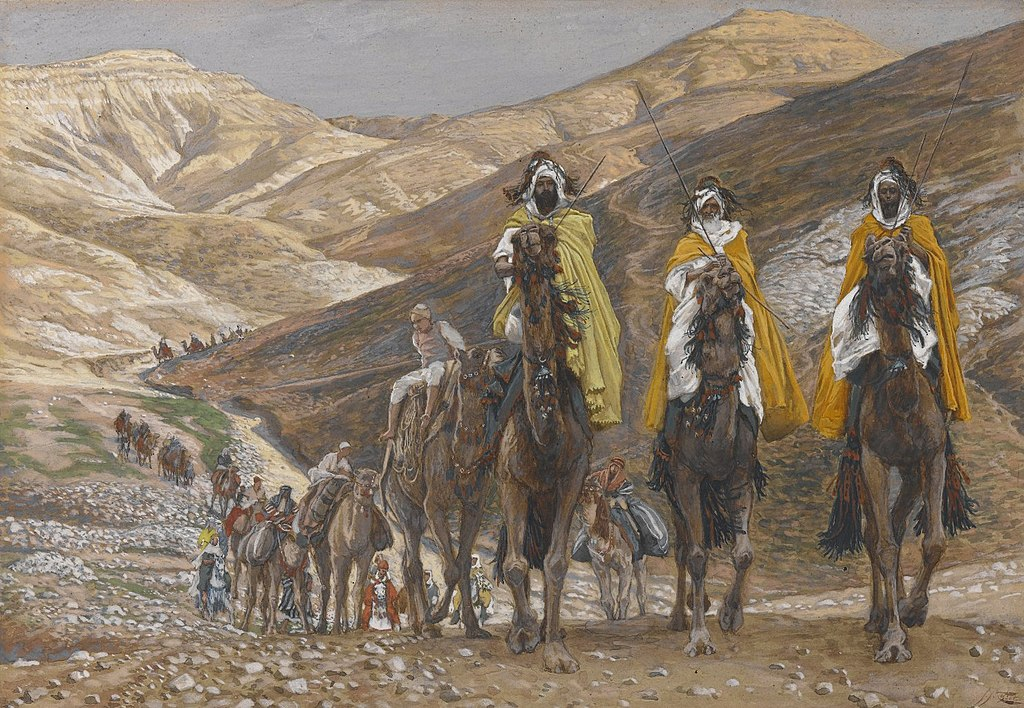
Furthermore, I'm convinced our diligent reading pays off for our own benefit. It's the perfect time of year to compare ourselves to some very illustrious role models; the Magi, aka Three Wise Men. These insightful strangers had their own low-key and patient study to thank for guiding them quietly to the ultimate treasure. Contrary to what Sunday School lessons and Christmas card pictures may have us believe, that star wasn't as in-your-face as a beacon or foolproof as a GPS. If that was the case, Herod and his assassins could've followed it to the Holy family in the exact same way. Nope, those Wise Men read, studied and contemplated their way to the stable in Bethlehem. In a similar manner (forgive me if you think I'm straining the analogy) the a-ha moments we get from reading good books lead us to our own mini epiphanies. I can honestly declare that input from other people's great minds, found in books helps me to keep my own moods on an even keel. Why stop a good thing?

With that, here's my wrap-up and plans for this year.   

 A highlight of 2022 was my Trixie Belden Marathon, giving me even more nostalgic feels than I anticipated from the outset. It was a refreshing treat to hang out with the Bob Whites again and re-reading all 38 I own back to back was a blast. It even highlighted several fun inconsistencies, which I enjoyed swooping down on. For this year's reading marathon I'm making a start on the Glad Books, aka the Pollyanna series, which I've finally collected all of, after forty years of frustration. There are 14 of them which I'll feature every two or three weeks.

I intend to keep reading the occasional tome, or walloping thick classic. I'll probably fit in two of these bricks at the most. Last year I tackled Dombey and Son which was a struggle, and Gone with the Wind which I loved more than I ever anticipated. Given my appreciation of several of Dickens' other works, I expected it to be the other way around, but isn't this how it is with reading? Sometimes our expectations are turned bottom side up. Yet I'm not unhappy to disagree with other reviewers who loved old Dombey, because differences are interesting. All we can do is try to express our views and justify our own positions as clearly as possible. I had the brainwave with Gone with the Wind to break my thoughts into quarterly sections; something that should've occurred to me long ago. I wish I'd thought of staggering War and Peace and Middlemarch. Oh well, we live and learn. 

I'm keen to keep reading some of the bestselling fiction and non-fiction titles from the last 90 years or so. My social media news feed once delivered a list of these, starting from 1930 and ending at 2017, which I'm taking advantage of. I already had some ticked off from long ago.

Plowing through the stack of unread books on my shelves is also a priority, since my household is facing another lean year financially. Both my husband and I are still studying at Tabor College, so won't have space or money for new books. I decided to undertake the TBR 23 in '23 challenge, by Gilion C Dumas at Rose City Reader. We simply read 23 books we already have on hand clogging up our shelves. I certainly have more than enough unread books to fit the brief. I'll just mention that I won't hesitate to DNF books I'm not liking, but will replace them with other unread titles to make up the number. Life is short and there are too many good books to persevere with baddies.

I still have my share of other books on hold at the local library. Finding a message that one has arrived for collection always give me a rush of adrenaline. This year, I'm waiting on a trio of recently published memoirs which sound quite juicy. There is Matthew Perry's, Tom Felton's and Prince Harry's. I wonder how soon they'll come, as there must be a backlog of other readers waiting for their turn too. 

I wonder if I dare indulge myself by including some of my own short writing on this blog from time to time. I'm studying for my Masters in Creative Writing and Communication. Posting the occasional fiction story or creative non-fiction assignment I've worked hard on might be fun.

Finally, a hearty thanks to everyone who engages with my book chat, either here on over on Instagram. Recently some anonymous blog visitor commented, 'What a sorry load of crap,' which needless to say, I did not approve. That sort of feedback is more than compensated for by people willing for a good discussion. Please do subscribe to my feed on the toolbar to get an email notification with each new post, so you don't miss any. They will rarely be more than weekly. Last year I scheduled my posts for Fridays, to give followers something to read for the weekend. This year I'll give Thursdays a try instead, since some people have suggested a good read on the eve of Friday itself might hit the spot even better.

Thanks in advance for more fun reading and good chats. 

Friday, December 30, 2022

'Gone with the Wind' by Margaret Mitchell (Chapters 31 - 47)


Note: I'm well into the story now so beware of spoilers. This will be the third of four parts. 

This section deals with the mop-up these Southerners face after losing the war, and different people's adaptability. It begins with the threat of Tara being sold off beneath the O'Hara family's noses because they can't afford the sky high taxes; and the drastic action Scarlett is determined to take to secure her plantation home, whatever the cost to herself may be. Meanwhile, the Confederates' whipped dog status is taking its toll on everyone. 

We get more of the pitiful inner workings of Ashley Wilkes than ever before. He professes how cowardly he feels, and ill-equipped to adapt to the harsh new reality. His personality was a perfect fit for the old world, when he would float around his father's plantation, looking handsome and thinking bookish, philosophical, cultural thoughts. But now that Twelve Oaks is burned and folk everywhere must turn their hands to new, formerly demeaning occupations, his whole life appears redundant. Ashley fails to fit the new brief, whether it's working the ground at Tara or managing a mill in Atlanta. Rhett rubs it in by calling Ashley the sort of guy who was only ever fit to be an ornament at the best of times. 

But who does Ashley really love; Scarlett or Melanie? I picture him as a 'devil on one shoulder and angel on the other' sort of guy. He seems to ruminate on depressing, non-productive thoughts, and could maybe benefit from some of Scarlett's, 'I won't think about that now,' approach. Margaret Mitchell has presented Ashley as a dreamer in the most negative sense of the word. Yet it's still easy to feel sorry for this fish out of water. He needs a stable, 21st century academic job, that's what Ashley needs.  

Meanwhile, Scarlett adopts a polar opposite approach to the man she professes to love so devotedly. After her resolution to never go hungry again, she will do whatever it takes to be a money magnet, whether it's offering herself to be Rhett's mistress for a loan, stealing Frank Kennedy from her sister Suellen, or becoming a cheating, unscrupulous business woman once she gets her sawmills operating. She taps into entrepreneurial brilliance she'd never have needed if not for the War and its aftermath. 'I've found out that money is the most important thing in the world and I'll never be without it again.' 

Scarlett still carries devotion to her mother's gracious memory, but decides to defer being kind and gentle until she's rolling in greenbacks. Woven through the text is a thorny question. Is being successful in the business world incompatible with being a decent, principled person in the traditional sense? Because as Rhett points out, the 'nice' people are currently living in dire poverty. And Scarlett carries proof that her store and sawmills would never thrive without some ruthless or dodgy moves on her part to maintain momentum. The narrator comments that she was 'undimmed by any realisation that she has no desire to be sweet or kind now.' And as Rhett points out, her kindness muscles have probably jumped overboard and suffered a sea change. Dollar signs and sweetness are so often mutually exclusive.

 Scarlett is a female Ebenezer Scrooge, relegating her nearest relatives to second place. A new baby, Ella Lorena Kennedy, is the price she pays for marrying Frank, but Scarlett is clear that the mills are far more important to her than her children could ever hope to be. The ultimate losers are Wade and Ella, born out of Scarlett's spite and necessity respectively. But even though they're shoved to her periphery, at least now they'll never go hungry. 

We're invited to ponder whether or not choosing the guiding star of money means maternal love must inevitably suffer. I remember a meme that popped up on my news feed once. 'Women are expected to work as if we have no children, and raise children as if we had no work.' Perhaps Scarlett, the only business woman in town, is discovering this impossible conundrum for herself. And she makes her choice clear.

Scarlett is never handicapped by Ashley's style of grief for the loss of art, literature or music, for she doesn't care for any of that sappy stuff. The guys in her life know it. Rhett sometimes shakes his head over her ignorance, Ashley admires her practical 'lack of imagination', and her brother-in-law Will knows she was 'never interested in what was in folks' heads.' It's just part and parcel of who Scarlett is.  

Most of the action of this section takes place in Atlanta rather than Tara, but the bits we do get are intriguing, including the Will and Suellen thread. Without giving too much away, Suellen makes an audacious move to try and attain $150 000 from the Yankees, which backfires and sets the neighbours against her. Will tactfully defuses the murderous tension at Gerald's funeral and proposes to Suellen in the bargain. It's a match with clear benefits for both, but I wonder if they'll grow to love each other. 

This section delivers some disgusting and scary Ku Klux Klan incidents indulged in by 'good' guys. Tony Fontaine kills two men on the basis of frenzied, racist hatred, yet Scarlett questions, 'What can we do with devils who'd hang a nice boy like Tony just for killing a drunken buck and scoundrel scallawag to protect his womenfolk?' The evil KKK is presented as a necessity dreamed up by chivalrous chaps whose sole aim is to be knights in shining armour. The mindsets behind history are nowhere as strong as in novels, so I appreciate Gone with the Wind for attempting to help us grasp the unthinkable. (It's quite hilarious when the men are delivered from arrest by Rhett's quick thinking, but must pretend they were customers at Belle Watling's brothel. That bit does make me laugh.)   

Finally, a couple of ladies make amusing analogies. Grandma Fontaine likens Ashley to a turtle lying on his back. Later, Mammy tells Scarlett that she and Rhett are just like mules dressed up as thoroughbred horses. And Scarlett herself shows a flash of insight when she compares Frank to a timid old brown field rabbit. Perhaps these cool metaphors add to the compelling nature of a book which I still have no idea why I'm enjoying so much. Scarlett and Rhett both make me groan, but I must plow on to find out what will happen now that she's all set to become Mrs Butler. It should be smooth sailing for both reckless opportunists, but we all know his infamous closing line. Stay tuned for my last installment, which will take us to the end of the behemoth er, novel, when I will discuss Chapters 48 - 63.

Friday, December 23, 2022

'In the High Valley' by Susan Coolidge


Lionel Young and his sister, Imogen, set out for the picturesque but remote High Valley in Colorado, leaving their hometown in Devonshire, England behind. Lionel wants to take the share in Geoffrey Templestowe’s cattle business. Imogen, owing to her prejudices against America and the American way of life, finds it hard to adjust to life over there.

Clover Templestowe, now happily married and living in the High Valley, at first finds it very trying to get on with Imogen.
A lot of events ensure in the course of which we meet again with Rose Red, get news from Cousin Helen and of course meet Katy again…

MY THOUGHTS: 

Warning: This is the last book in Susan Coolidge's 'What Katy Did' series. Plot spoilers of events that happened in or directly after the former stories are inevitable, because of where this one picks up from. 

Oh gosh, this is as cheesy a story as you could stumble across, yet a must-read for anyone who has finished the rest of Susan Coolidge's Katy Chronicles, because it provides some lovely closure for the rest of the Carr siblings, wrapping things up nicely for Clover, Elsie, Dorry, Johnnie and Phil. 

First off, I'm a great fan of the Elsie/Clarence match which we're simply dropped into. I'd been a little disappointed when Clover didn't choose him, but this is so much better! I'm certain these two former misunderstood and overlooked kids must have bonded over shared stories about the woes of being younger siblings. That's my guess, but all we're really told is that he swept her off her feet and now they have a baby daughter. Whoa, talk about tantalizing major story gaps. I liked both Elsie and Clarence a lot, even though they each had their difficult moments, as the little we got of them was always larger than life. 

So Geoff and Clarence are still ranch partners in the High Valley, while Clover and Elsie are equally busy on the home front, keeping their communal house beautiful and popping out offspring for the boys. It's quite restful reading about their pastoral lifestyle, sixteen miles from civilization, beneath all those mountains, and among all those fragrant flowers. 

Their nearest neighbours are a young brother and sister duo named Lionel and Imogen Young, who have come all the way from Devonshire. They were neighbours of Geoff Templestowe's family. Lionel has worked as a sort of teenage apprentice with Geoff and Clarence before, and now he's all set to buy into a share of the ranch himself, while Imogen is going to keep house for him. According to the narrator, many sisters make this sacrifice for their brothers, but I can't imagine myself being one of them. 

Imogen is homesick for the British coast and predisposed to look down her nose at all things American. We're also told she's sort of frumpy, a little jealous of Clover, and would have preferred moving to somewhere such as Canada or Australia, for colonial reasons we assume. A bit slow on the uptake, Imogen lets out a lot of unintentional racial gaffes which mildly shock her nineteenth century neighbours and probably appall many of her twenty-first century readers. Put it this way, Susan Coolidge would never get this story past a sensitivity editor in its current state. 

There are visits from several old faces from earlier books, including the awesome (Rose Red), the annoying (Mrs Watson), and the closest family members (Dorry and Johnnie, and later Katy and Papa). Hold onto your hats for the romantic roller coaster at the end. Coolidge justifies all that happens by saying, 'In a retired place like the High Valley, intimacies flourish with wonderful facility and quickness.' I'll say they do, to such an extent that the boys ought to consider setting up their ranch as some sort of love shack on the side, for a secondary income.

It's all good fun, and reminds me a bit of The Enchanted April in some ways. It's probably a two star read, but I'll add another one because of Elsie and Clarence.

🌟🌟🌟 

Friday, December 16, 2022

'Gone with the Wind' by Margaret Mitchell (Chapters 17 - 30)


Note: Since I'll be discussing my thoughts of the book in sections, there will be some spoilers, but I'll still attempt to hedge around crucial points carefully. However, as I've said before, I do consider old classics are fair game. 

MY THOUGHTS: 

The historical drama escalates to a high pitch.

 At the start of this section, it becomes evident the Yankee invasion of Atlanta is inevitable and indeed the Union Troops are moving steadily closer. Scarlett continues to despise Melanie, who is now pregnant. Yet she feels bound by her promise to Ashley to care for his wife. Melanie still has no idea of Scarlett's true feelings toward her. In fact she'd prefer Scarlett to adopt her baby if anything goes wrong, rather than either of Ashley's two sisters. Meanwhile, poor little Wade is terrified by the sound of gunfire and shells, and Rhett asks Scarlett to be his mistress because he admires her pluck and stubbornness. She refuses. 

Whoa, then all hell breaks loose! On the day Melanie's baby is born, the Yankees are moving in and the Confederates are blowing up all their own powder magazines before leaving town. Wounded soldiers prevent the doctor from attending the birth. No sooner does Melanie finish her gruelling labour than they must flee behind a rickety old horse. Rhett starts them on their way and then nicks off to join the army, (leaving it until the last possible second to muster his patriotic fervour, I must say). Unprepared Scarlett finds herself in charge of a wagon full of dependents. It includes depleted Melanie who dodged dying in childbirth by a cat's whisker, Prissy the panicking slave girl, Beau the vulnerable newborn and Wade the terrified toddler.

Scarlett's wild thoughts at this stage include the title of the book. 'Was Tara still standing? Or was it gone with the wind which had swept through Georgia?' Her family has certainly been tragically affected. 

I can't help wondering whether this huge trial will soften Scarlett or harden her even more. I've read that some people under pressure become 'carrots' while others prove themselves to be 'eggs.' In a pivotal moment after their homecoming, Scarlett resolves to survive, and opts for the 'egg' route. She'll be like her ancestors who have 'taken the worst fate can hand them and hammer it into the best.' A certain hardness is inevitable, if she's to maintain Tara. Scarlett decides she needs to be brusque and demanding with everyone. Vulnerability would open a floodgate that must remain closed, so postponing her own feelings of devastation becomes a survival tactic. 'I won't think about it now. I'll think about it later.' Hmm, does this sort of deferral ever end well?

Scarlett vows, 'As God is my witness, I'm never going to be hungry again!' (Personally, I think she's drawing from the same sense of bitterness that guided her to marry Charles. This time it's directed at the Yankees instead of Honey Wilkes and Melanie. Yet the narrator remarks that few of the returning soldiers are bitter. They'd fought a good fight and lost. We're told, 'they left bitterness to their women and old people.')

Another interesting observation is how Scarlett shrugs off the values of kindness and gentility her mother had spent pains teaching her. She decides that Ellen's standards were obviously wrong and way out of touch for the real world. Yet even the narrator remarks that they were fine for the era they were just emerging from. Ellen could not have foreseen the complete and sudden collapse of the civilisation in which she had raised her daughters, requiring an abrupt shift of standards. And Scarlett couldn't see that her mother's code of femininity and kindness was perfect in its place. (I'm thinking it probably wasn't hard for Scarlett to shrug off Ellen's values in crisis time, since she'd only ever donned them as a veneer anyway.)

Meanwhile, I see Melanie, who nurtures her nephew and son, as doing vital groundwork for the next generation. Her own baby, Beau, is largely oblivious at this stage, but I'm concerned about the impact all this trauma and fear will have on Wade's psyche for the future.   

Being 'Gone with the Wind' there's always plenty of dirty racism to raise our hackles. Gerald O'Hara's butler, Pork, refers to his fellow slaves as 'trash' for deciding to leave with the Yankees, yet he's loyal to a family who treats him with abominable imperialism to the slightest detail. They save all the fresh meat from a fresh killed hog for themselves, and only throw the chitterlings (intestines) to their negroes. It fascinates me to see so many family slaves, embodied mostly by young Prissy's viewpoint, are terrified of the Yankees and believe they're coming to 'get' them. They seem to have no idea that the opposing army is fighting for their rights. What crazy times down south they must have been. 

The final chapter in this section introduces Will Benteen; a returned soldier who the family care for when he's sick. He's a 'Cracker' or small farmer far below their station, but social stigma has 'gone with the wind' at this stage, along with so much else. Margaret Mitchell has already set Will up as a legend, even though we've just been introduced to him. With his 'patient, mild eyes and wooden leg' this plain young man has become a natural sounding board for everyone's grievances. I like him a lot after his brief introduction. 

Ooh, what's just happened? The war is over and Ashley has just staggered home. And Scarlett still intends to steal him from Melanie if she possibly can! That girl still has such a one-track mind after all that's gone down. Is she going to stoop to something sneaky and malicious?

Excuse me while I get on with the next section. I'll be back when I can to discuss Chapters 31 - 47.