Friday, February 25, 2022

Trixie Belden series 4 - 6

4) The Mysterious Visitor

Honey and Trixie are concerned about their classmate, Diana Lynch, who's grappling with an awkward problem. Di's parents have recently made a fortune, and her long-lost Uncle Monty has shown up on their doorstep from out of the blue. Now he's a permanent house guest, and an overbearing, controlling nuisance, which compounds the angst Di has been dealing with, coming to terms with her family's sudden wealth. Suspicious circumstances lead Trixie and the Bob Whites to wonder whether Uncle Monty is on the level. If he's not who he claims to be, what are his reasons for sweeping into the Lynch family? And how can they unmask him? 

* I sense Diana is more prone to melancholia and blues than Trixie and Honey. She's a non-academic, pretty girl, but she's no fool. Di recognises physical beauty for the transient asset it is. Some of her remarks and her general attitude indicates low self-worth and social anxiety. Sometimes she just feels bewildered, as the fringe-dweller who doesn't get the 'in' jokes yet. She craves acceptance and belonging, which she's beginning to get with the Bob Whites.

* Jim thinks that Diana has a phobia about being rich. I guess it takes one to know one, since Jim tends to be a bit sensitive about his own reversal of fortune, especially when he's nettled.

* Di is simply disillusioned by the pomp and pretentiousness of the new lifestyle that's been thrust upon her. She was never born to it like Honey, so all the showy bull dust is a source of grief and great loss to her. Especially now that all of her old school acquaintances (including Trixie until now) have shunned her because of the gaping difference. Although Trixie rebukes her for being depressed that she's rich, it's far more complex than simply getting over it. But Trixie doesn't really understand all the identity angst and bereavement involved. It's short-sighted of her to tell Diana how she should feel, however well intended. Trixie can be such a know-it-all at times.

* Trixie and Diana both have good reason to envy each other. Each of them has all sorts of things which the other wishes they had. It adds unspoken tension, even though they are genuinely good friends.  

* Regan is a legend! I wondered why the kids get so anxious he'll resign as Wheeler's groom, just because some opinionated stranger breezes in to give his opinion. But I think I get it. They suppose that Uncle Monty is a horse expert, and fear Regan will quit out of pessimism and insecurity if his methods are questioned. Naw, he's made of far cooler stuff than that. 

* Trixie is her over-confident, know-it-all self. Tom Delanoy warns her not to go exploring a seamy section of Sleepyside unless her brothers accompany her. So what does Trixie do? She heads straight to dodgy Hawthorne Street alone. What an eye roll. 

* As far as I see it, Trixie owes Mart big time. He saves her life! (He surely has issues of his own, feeling unconsciously lower in the Bob White hierarchy than Brian and Jim. That's probably one motivation behind his large vocabulary. It's attention seeking behaviour. And in the same vein, wearing his hair in a crew cut rather than letting it curl like Trixie's and Bobby's is all a grasp for individuality.) 

* Some of the recurring cop characters are introduced for the first time. We get Spider Webster, the popular guy, and Sergeant Molinson, who seems to be just a regular officer at this stage. Spider's crucial role in this story dates the series a bit. It was written back in the time when policemen still stood at intersections, directing traffic on foot. 

* Wow, Tom and Celia are jolly lucky to be given a free trailer! What an over-sized reward for a very small tip-off. Surely it should be more of a permanent loan than an outright gift. In my opinion, Tom should gradually pay off its new owners. (Can't identify who they are without being too big a plot spoiler.) 

* We are told the Lynches fire Harrison the butler toward the end of the book. I'm guessing that must change before long, because I clearly remember his presence in later books in this series. But seriously, do they really need a butler?

* There is perhaps a slight continuity glitch, but nothing major. The story has skipped to late October, yet there's still a feeling the Bob Whites have only just returned to school. The last book ends in late August, when they were discussing their imminent return. Now, this story clearly needs to be late October, to include the infamous Halloween party, but I think it might have worked better without the inclusion of the school assignment about how they spent their holidays. 

* Bring on more! You can surely see I'm loving all the implicit psychological subtleties motivating the Bob Whites. Who even needs to discuss the actual mysteries. 

5) The Mystery off Glen Road


Fierce gale winds destroy the roof of the Bob Whites' clubhouse in the week leading up to Thanksgiving. Only Brian has saved enough money to pay for necessary repairs, but everyone knows he'd intended to purchase a secondhand car from Mr Lytell - a once-in-a-lifetime sort of bargain. Trixie thinks hard to come up with a solution enabling them to fix their roof without Brian's sacrifice. It partly involves some gamekeeping work on Mr Wheeler's estate, since the current gamekeeper has quit in a huff. Trixie and Honey stumble across evidence that a sneaky poacher may be at work. What's more, he seems to be a weird, elusive character who rides a unicycle. How will they pin him down?

* The car that Brian plans to buy from Mr Lytell is a jalopy, a term I was unfamiliar with. It turns out it's simply what I know as an old bomb. 

* I don't really like the idea of Mr Wheeler setting up a huge game reserve where lots of lovely animals can be fed and feel at home just so he can blast through and shoot them when he feels like it. The whole set-up strikes me as very Watership Down, and this guy has more of a British Squire vibe the more I hear about him.

* Trixie's plan to win back Brian's car involves some hilarious, fake romantic play-acting on her part. Chapter 6 in particular is laugh-out-loud funny, and I actually did laugh out loud. 

* We are introduced to a new recurring character, Mr Maypenny, a senior gentleman who lives a semi-reclusive lifestyle on a small patch of land surrounded by the Wheelers' game reserve which his own family has actually owned for generations. 

* Honey's cousin, Ben Riker appears again. Although most people get browned off with his practical jokes, he's really not a bad guy, and seems to get saddled with way more than his fair share of looking after Bobby Belden, as far as I see it.   

* Oh oh, Trixie and Honey are already at it. That is they make occasional condescending remarks about Di Lynch, along the lines of, 'Oh, she's not good enough to come with us, so let's think of something else for her to do, to make her feel important.' (Not in those words of course, but that's the gist of it.) Sometimes their treatment of Di is no different from the way they'd fob off Bobby. And then, they assign her a few arduous jobs to take the pressure off themselves! (Entertain Ben and babysit Bobby.) If that's their tactful way of making Diana feel valued, it serves a double purpose. In effect, they're using her and telling each other they're doing her a favour.

* Mr Lytell has the hots for Miss Trask. I don't think that one's going to launch. 

* For quote of the book, I choose the moment when Brian discovers his sister's schemes on his behalf and says, 'Of course I'm mad, you lame-brained idiot. Mad with joy.' 

* It's a satisfying ending all round, but did this mystery itself manage to launch? Or did it fizzle out? I can't quite decide. Anyway, it doesn't matter, because I thoroughly enjoyed it.  

6) The Mystery in Arizona

It's almost Christmas time and Diana's REAL Uncle Monty makes good on his promise to host the Bob Whites on his Dude Ranch in Arizona. But they arrive to discover that the majority of his staff has just disappeared without notice. It was one family unit he hired as a whole, and now they've taken off. The Bob Whites offer to pick up the slack with cleaning, cooking and waiting on tables. The place isn't short of mysteries to solve. Is the resident cowboy a phony? Is there something suspicious about Rosita, the young Indian housemaid who has just acquired a job? And how about three very problematic guests who are reluctant to leave their rooms? Most of all, why the heck did the Orlando family shoot through like that? Trixie overhears suggestions that they were threatened.

* I had to google the term 'Dude Ranch.' Turns out it's a ranch that's oriented toward paying guests, and therefore part of the tourism industry. What a great place to visit. 

* The tension of the subplot can be cut with a knife. Trixie is struggling with a couple of school subjects, and Brian and Jim have volunteered to spend time tutoring her so she won't have to miss the trip to Arizona. Friction escalates, because Trixie thinks they're too demanding and they're convinced she's slacking off. This really garners reader sympathy for Trixie, who sheds some frustrated tears over the boys. Her insecure schoolgirl persona is refreshing. 

* Aha, put your money where your mouth is, Honey! She insists that she won't go riding in the Arizona desert herself if her best friend Trixie has to miss out and swot. But when the moment really comes... it's a whole different story. 

* There is now some cohesive inner structure within the Bob Whites. Jim and Trixie are co-presidents, Honey is vice president and Mart is secretary and treasurer. But what's Brian's role? (And Diana's, for that matter?) 

* I first read this book as a young teenager in the mid 1980s. Since then, my corner of the world must have grown far more international. Back then, I had no idea what tortillas, guacamole and pinatas were, and this story probably enlightened me. Now I wonder how I could possibly have been ignorant! They're now quite common sights on menus and at parties. 

* Avocadoes are called 'alligator pears' for obvious reasons. I like it a lot! 

* At this stage, Di is certain she wants to become an air stewardess like Babs, who they befriend on their flight west. (And Trixie suggests that she's not smart enough! Di cops a lot of straight talk from Trixie.) 

* I like all three challenging guests; rich, bossy Mrs Sherman, lonely, sullen Miss Jane Brown and wistful, sad Mr Wellington. Jane Brown discovers that reality may not live up to rosy expectations, but decides that you have to work at having fun, along with everything else. Fun doesn't necessarily just fall in your lap. Who says you can't learn good life lessons from books such as the Trixie Belden series? 

* We learn lots of other interesting trivia too, such as the many uses of a cowboy's bandanna.

* Jim always laughs and pretends to be meek when he's actually fuming. The others have grown to recognise danger signs that he's getting hot under the collar. He always cools down quickly, but Jim can be an angry young man. His moods are very entertaining.

* Are we getting an early sign when it comes to choosing square dance partners, of how these kids may pair themselves off in the future? 'Jim grabbed Trixie's hand, Brian crooked his arm at Honey, and Mart bowed low in front of Di.' 

* As for my quote of the book, I love it when Mart challenges the girls to come up with the correct answer to the 'Peter Piper picked a peck of pickled peppers,' tongue twister, and Di responds that Peter Piper couldn't have done it anyway, because, 'peppers don't grow pickled, they're pickled after they're picked.' Brilliant, yet this girl considers herself to be dumb. 

* The festive season is described beautifully, Julie Campbell, the initial creator, wraps up her input in the series. She's set up strong characters, taken them through six months, from June to late December, and now she's passing the baton on. From now on, the pseudonym 'Kathryn Kenny' will comprise several ghost authors willing to have a shot at writing a Trixie Belden mystery or two. Bravo, Julie Campbell! I noticed no continuity issues as a kid, but that was a long time ago, and I'll soon find out how smooth the transition really is. 

Catch my thoughts from last month on books 1 to 3. 

And please join me next time for books 7 - 9 in the series.  


Monday, February 21, 2022

Minimalism for Pleasure

The academic year is about to begin, and three of our household will be studying full time. My younger son is off to start his Bachelor of Languages, my husband will be studying a Master of Teaching and I'll be commencing a Master in Creative Writing and Communication. Our new Covid culture is behind my husband's change of direction. He had built up his own business as an entertainer of elderly citizens at nursing homes but because of all the new restrictions, appointments have declined to the point where we can't make ends meet. This coming year will be characterised by tight purse strings, but as our daughter remarked, that's what we've always been used to. Having too much month left at the end of the money has long been a way of life since our three kids were small. 

 Practising a sort of grudging minimalism has been necessary since the nineties. 'Come on kids, we can't afford that. It's not that I don't want to get it for you. We just don't have the money!' There were always snazzy items on our want lists, and loads of household improvement ideas being permanently postponed. It's easy for frustration, anxiety and even envy and bitterness to take root, even though we know that compared to many others in the world, we have nothing to complain about!  

But there's a deeply ingrained drive in the western world to keep buying things. Apparently a chap named Edward Bernays, now long gone, helped start our ball of restless consumerism rolling, and it hasn't stopped since. He worked on propaganda campaigns during World War One, and had a light bulb revelation that the minds of millions can be easily manipulated through advertising. He gave his concept the positive sounding name of 'aspirational marketing' in the 1920s. Essentially, his big epiphany was that possession gives us a sense of identity and worth. Now one hundred years further on, the digital era makes it easier still to play on that collective uneasiness that we must own X, Y and Z if we aren't to lose face. Millions of people work full time just to ensure that people who can't really afford it keep opening their wallets whenever possible. How unsustainable and potentially crushing for those who really can't afford it. Yet the machine grinds on.      

I'm delighted that in more recent years, I've come across a more joyful, voluntary minimalism in the pages of books, which has impressed me a lot. The authors have proven to their own satisfaction that keeping their purse strings tight, even when they don't have to, has tremendous payoffs that lighten their hearts. They can't possibly be considered miserly, for it's all in line with the principles that give their lives great meaning. 

In her book, 'This One Wild and Precious Life', Aussie author and entrepreneur Sarah Wilson describes her conviction to keep her lifestyle as spartan and clean as possible. She feels certain consumerism is one of the beastly, insidious ideologies behind all that's wrong with the world, leading to planet crises of all sorts. Since change begins with the individual, she has set herself a series of challenges to buy nothing but staple groceries for as long as possible. Pulling it off even when she doesn't expect to gives her a real buzz. 

She says: 'Let's say I get the urge to buy a new pair of undies. It's time. I'm down to three pairs, all jowly in the gusset. New knickers would be nice. I map out a day to head to the shops. But then I get a bit lazy. I can't be stuffed doing the schlep. At this point I game-ify. I put off going to the shops a week, then another week. It becomes fun to see how long I can delay the gratification of shiny new knickers.'

Next she mentions how the stoics used to do the very same as a form of character training, (not necessarily in regard to knickers but hey, maybe). They would eke out the days in which they'd be content with the cheapest and scantiest of fare for as long as possible. And Wilson finds that like these illustrious philosophers, she relishes the freedom which results from jumping off the 'more, more, more' treadmill. Playing frugality is a game for now, but she'll take it in her stride should it ever become a necessity. 

The 'Frugal Hedonists', married couple Annie Raser-Rowland and Adam Grubb, also chime in with the fun of taking on this lifestyle. I love these two for their candid admission that since life is short, they aim to fill theirs with gratifying activities such as reading, hammock swinging, leisurely walks and peaceful siestas. For this reason, they're each satisfied with part time jobs that pay miniscule salaries, and pack their whole book, The Art of Frugal Hedonism, with hacks for making it work. 

Here's an excerpt from an occasion when Annie actually went out to buy a few things on a shopping list she'd written, including a slotted spoon and a metal ladle. 'Approaching the cash register, Annie felt an odd aversion to buying the two utensils. A little voice in her head was saying, "Life has actually been great without those things in it for years now, so why get them? Sure, you put them on a list because there were a couple of times where you thought, 'What we need right now is a slotted spoon.' But you got around it just fine on those occasions.' She returned the utensils to the shelf and left the shop empty-handed, which felt surprisingly nice. The two utensils would have cost a grand total of $1.98, so it definitely wasn't price that prevented her from buying them. It was the pleasant lightness that came with recognising her true lack of need for them.' 

Wow, a low-maintenance, well-ordered household in which you can place your hand on exactly what you need when you think of it must be a huge benefit indeed, to neutralise sacrifices such as this. Surely tidying time must be cut in half, shortage of storage space must be far less of an issue, and mental clarity must be crystal clear. After our most recent house move, which was almost four years ago, I was determined not to gradually accumulate a small glut of possessions yet again, for it doesn't take long for clutter to make me overwhelmed. But retail therapy does make creeping inroads over time. Bargains from second hand shops are hard to resist, especially if they're lovely, cute or flattering, as the case may be. 

Happiness coach Domonique Bertolucci adds a bit of advice, in her succinct manner, to prevent impulse buying. She says: 'Don't confuse the pleasure of looking at beautiful things with the desire to acquire them. You don't need to buy something to enjoy a shopping trip. Think of it as visiting a gallery or museum. You can have a lot of fun window shopping, enjoying all the visual delights of your favourite stores, and come back home with your money still safe in your wallet.'  

Cool, then perhaps I did the right thing when I didn't splash out on a beautiful terrarium shaped like a turtle, with the glass dome for his shell. I thought how great it would look on the coffee table in our single loungeroom, but decided it doesn't get enough natural light for any little plants to benefit there 24/7. 

The spirit of Bertolucci's brief paragraph is compressed into a pithy, single line from John Ortberg, and I think it was in his book entitled 'Soul Keeping.' He said, 'You can admire without having to acquire.' 

I won't ever become a full-on Wilson, Raser-Rowland, Bertolucci or Ortberg, but the fact that people are keeping their purses closed because it gives them a buzz gives me a buzz. And I'm aiming to start the new year with a little bit of their zeal. Have you ever been impacted by sensible wisdom such as this too?


Monday, February 14, 2022

Austen Characters Whose Marriages I Hope Will Last


For this Valentine's Day, I decided to think beyond the famous Jane Austen couples we know and love so well. She also devised several marriages which we suspect might crash and burn. Some are potentially big mistakes. Others are jaw-dropping surprises, some of which were entered into with murky motives on at least one side. Here is my list of newlywed couples whose marriages I sincerely hope can go the distance, although other readers may have their doubts. But I wish happily ever afters for each of the following pairs. 

Robert Ferrars and Lucy Steele

This pair of impulsive pains in the neck stun everyone with their sudden nuptials. Vulgar Lucy is the girl who threw a wrench in poor Elinor Dashwood's hopes and dreams. She'd formed a childhood pact with Edward Ferrars, the love of Elinor's life, and clung to it like a barnacle, knowing full well he'd outgrown it, and that she herself didn't really care for him as she should. But until a better offer comes along, she refuses to release him. Robert is Edward's smug younger brother and their mother's pet. He knows Edward was disowned for his engagement to Lucy, but is confident enough in their mother's favouritism to trust that he won't suffer the same fate, or at least not for long. Even though Austen hints that they're already beginning to tire of each other by the end of Sense and Sensibility, I hope they'll muddle through somehow, for everyone else's sake. For as long as they're tied up annoying each other, they'll annoy nobody else.  

William Walter Elliot and Mrs Penelope Clay

Sure, Mr Elliot is an unscrupulous opportunist whose heart has been said to be as black as the night. But for Mrs Clay's sake, I hope he'll settle down to make a reasonably sound husband. She never comes across to me as the bad person Anne and Lady Russell make her out to be. Sure, she's a social climber and sycophant who hoped to worm her way into Sir Walter Elliot's affections, but when we consider the callous era in which she lived, can we really blame her? Plain, friendless widows such as Mrs Clay found themselves starving on the streets unless they could find others willing to look after them. Anne's harsh attitude toward Mrs Clay always disappointed me, for it's none of her business who her father re-marries, and at his age, surely he has the right to please himself anyway! I like to imagine this marriage of convenience between the younger Mr Elliot and Mrs Clay softening into a friendship. It would surely temper Mr Elliot's hypocrisy should that happen, which would benefit everyone he knows.

Louisa Musgrove and Captain James Benwick

This relationship is a true attraction of opposites. Before her accident on the shore of Lyme Regis, Louisa was a brash, energetic and extroverted young woman. Captain Benwick is a sensitive and emotional introvert struggling to recover from the death of his former sweetheart. Their surprise attraction also releases both Anne Elliot and Captain Wentworth from the unwanted attention of either one of them. It's highly desirable all round, and I would have loved to see Louisa and Benwick together in the story. It's lovely to think that Benwick's poetic influence is already bringing a more thoughtful and reflective side out of Louisa, and I'm sure her sunny nature will also temper his melancholic side. Go Louisa and Benwick! 

Charlotte Lucas and Mr William Collins

Poor pragmatic Charlotte goes into this farce of a marriage with her eyes open. She thinks her husband-to-be is pompous and tiresome (which he is)! But she's weighed the pros and cons and decided that a rare opportunity for financial security, motherhood and social approval will be worth putting up with him for. She's already in her late twenties with no interest from other men, so the only alternative is being a lifelong drain on her parents and brothers. Mr Collins considers himself a great catch, but he'll soon be disillusioned, for she can't maintain her brave act forever. Already she's arranging their household to keep him far from her sight. Call me sentimental, but this is the sort of arrangement I like to see change for the better. The remainder of their lives is a long time, and it would be a relief for these two to warm to each other with the passing years. (In Janice Hadlow's book The Other Bennet Sister, this is just what happens.) If Charlotte can help make her husband even a smidgen less ridiculous to the world at large, many people will thank her.  

Harriet Smith and Robert Martin 

The meddlesome Emma Woodhouse tries her best to deflect young Harriet's attention away from the humble farmer who loves her dearly, and Harriet is so pliable that she almost succeeds. Not only is Emma's choice for Harriet, Mr Elton, a deplorable idea, but it seems Harriet has burned her bridges when she refuses Robert's proposal. Accepting the second marriage proposal from this cool and modest young farmer off her own bat is the first decisive move this girl ever makes. It's also the first time she doesn't consult anyone else. Hopefully it marks the start of a long and happy relationship. I always suspected Harriet's wishy-washy temperament might stem from her long history of living in institutions. You don't get to be pin-up girl at a school like Mrs Goddard's by expressing a mind of your own. I get cross when Mr Knightley says that a blank slate like Harriet needs a good man like Robert to help shape her opinions. No, what she needs is encouragement to think for herself. From the little we see of Robert, I think he'll be the sort of guy to encourage her to excavate her own opinions. 

Frank Churchill and Jane Fairfax

I know many readers consider this match to be a total train wreck, for how can such a sensible, down-to-earth, hard-working young woman possibly fall for such a shallow, flippant, immature fop? Doesn't she deserve far better? Emma Woodhouse is speaking truth when she says, 'The fortune is all on his side and the virtue is all on hers.' Still, I can't help hoping Frank and Jane will suit each other excellently in the long run. Frank's toughest critics tend to overlook the fact that he's been pampered by wealthy guardians from boyhood, he's chafing because his autocratic aunt has been so demanding, and he's still in his early twenties; young enough not to be set in his ways. Who better to teach him sensitivity toward those less fortunate than a wife who has endured hard times herself? In return, his cheerful, jocular disposition is already adding an overdue dash of lightheartedness to her days. And marriage to him will enable her to support her dependent elderly relatives without having to eke out a pittance ever again. Sounds like a fair enough trade-off to me.

Lydia Bennet and George Wickham

Whoa, these two may be the ultimate troublemakers, and readers far and wide probably regard their marriage as a ticking time bomb. They go their own merry way, causing friends and relatives huge embarrassment and financial distress. This quality of selfishness and indiscretion isn't the type renowned for sticking together through thick and thin. But, I hope Lydia and Wickham do stick it out, just to prove to their critics that they can! If Darcy shakes his head, thinking he's poured money into a lost cause, I hope Wickham will give him a pleasant surprise. And when the elder Bennet sisters roll their eyes and mumble about that willful, naughty Lydia, I hope she'll prove to them that her marriage will be as happy as theirs. For if there's one thing I love, it's naysayers being proven wrong. I doubt Lydia's and Wickham's will ever be a marriage marked with deep and meaningful conversation, but that doesn't mean they can't be happy in their own way, painting the town together. 

So there we have it. Are there any couples on this list who have your best wishes too? Also, if you can think of any others, please mention them in the comments.  

And happy Valentine's Day!     


Monday, February 7, 2022

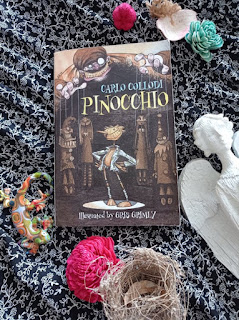
'Pinocchio' by Carlo Collodi


A classic tale of mischance and mischief.

A naughty wooden puppet gets into trouble, disobeys his father, forgets his pomises, and skips through life looking for fun. Just like a "real boy." Until he learns that to become truly real, he must open his heart and think of others.

MY THOUGHTS:

I'm on a roll with my reading of old kids' classics. Carlo Collodi's original tale of Pinocchio is said to be 'picaresque.' I admit I had to look that one up, and discovered it refers to an episodic style of fiction which deals with the adventures of a rough and dishonest, yet appealing hero. Ah well, our wooden boy always seeks immediate gratification, even though that's not how the world works. He's both naive and stubborn. He's easily led astray by other unscrupulous rascals. And he can be very thoughtless, such as when he sells a hard-earned spelling book purchased by his father to pay his fare into a travelling show. He fits the bill of anti-hero indeed.

Pinocchio turns out to be both the unluckiest and luckiest puppet to be found anywhere. He's unlucky because some of his adventures are truly the stuff nightmares are made of! Believe me! Yet he's lucky because somehow, he keeps managing to slip out of these horrendous predicaments. 

I picked this old kids' classic off the shelf not knowing whether I'd enjoy it or not. Sadly, unlike other gems such as Charlotte's Web, I give it the thumbs down overall. 

Firstly, this original story is not the sanitised version Walt Disney made of it, but far more dark, unsavoury and disturbing. Instead of an essentially innocent little puppet with cute, finely-chiselled features, the original Pinocchio is more crudely formed and sometimes violently reactive. For example, there is a talking cricket, but his name is not Jiminy. He's just a well-meaning insect who starts giving Pinocchio some advice and gets squished against the wall with a hammer for his pains! Yes, Pinocchio tends to be that sort of act-now-and-think-later guy. But what I object to even more is the hidden agenda permeating the plot. 

It's hard to see much charm in a load of Industrial Revolution/Protestant work ethic propaganda written to keep kids toeing the line. Over and again the same theme is hammered into us readers; the value of hard work. It's either shown scarily through graphic incidents in the story or stated outright through the voices of moralistic mentor characters. Then just in case we still haven't got it, it's shown and told to us yet again. Sober and responsible wins the day while lazy and disobedient lands you in all sorts of hot water. 

Modern messages such as figuring out how to work smarter rather than harder were way in the future. It seems to be written especially to keep the masses of blue collar workers in their place. And cutting through all the quirkiness is a grim and unforgiving tone. Although making mistakes is an inevitable part of growing up, you wouldn't believe it to read this book. Poor Pinocchio has long stretches of working very hard and earnestly, yet every momentary lapse into seeking fun or shirking his dour duty is severely paid out. 

Circumstances force him to wear the consequences of his weaknesses and transgressions for all to see and shame. He tells a few lies and his nose grows longer. He joins some friends at a funloving commune, and first their ears become pointed donkey ears, and then they turn into donkeys outright! The awful karma stuff gets a bit much. At one point Pinocchio reflects, 'Ever since I've been in the world, I've never had a happy quarter of an hour.' I found that very poignant, because it seems to me his dogmatising author wished to keep it that way.

Even Pinocchio's happy ending is all to do with conforming to be just like everybody else. From the very start, he hates the limitations of being a puppet and dreams of becoming a real, flesh and blood boy like those he attends school with. We're meant to rejoice with him when his fondest dream finally becomes a reality, and he presumably gets to join the line of poor plebs like his father Geppetto, either starving in silence or working their fingers to the bone for a crust. If I'd been a friend of Pinocchio's, I would have kept reminding him that real little boys are a dime a dozen, but a talking, eating, emotional puppet made from a sentient block of wood is something really rare and special. If you're looking to inspire your kids with a book about cherishing their own uniqueness, this is not it.  

Still, the incidents can be vaguely fun to read just to see the stereotypical, typecast badness of the villains who show up. Take the supposedly lame fox and blind cat who suck Pinocchio in, seducing him with tales of the fake Field of Miracles because they want to rob him. Pinocchio falls for their too-good-to-be-true tales with characteristic naivety, but Collodi challenges readers to be wiser, just because of who they are. A fox and a cat. Hmm, you wouldn't expect these guys to possibly be a bit crafty and predatory now, would you?

I'll finish with this amusing advert enticing fools to the Land of Boobies which hundreds of lazy boys aged between 8 and 12 couldn't possibly resist. 'On Thursdays there is never school, and every week consists of six Thursdays and one Sunday. Only think, the autumn holidays begin on the first of January and finish on the last day of December.' 

Heavy handed, but hey, that still appeals to me. Sounds almost worth becoming a donkey.  

Bottom line: The character Pinocchio is likeable but the story Pinocchio not so much. 

🌟🌟½   

Friday, January 28, 2022

Trixie Belden Series 1 - 3


This is the year in which I re-read this beloved, nostalgic mystery series from my past to see how they hold up. Please join me if you have them on hand. I plan to share three books every three weeks.   

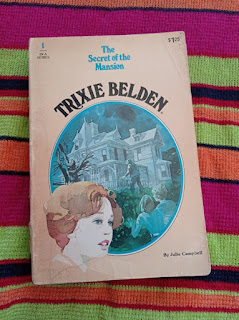
1) The Secret of the Mansion

Here's the little book that set the huge ball rolling. It's summer holidays and Trixie is feeling frustrated and lonely because her two older brothers are away at camp. But then their miserly old neighbour, Mr Frayne collapses and is rushed to hospital. There are rumours that he's hidden a fortune somewhere inside his atrociously run-down house. At the same time, the Manor House on the other side is finally occupied by a wealthy family with a daughter Trixie's age. The girls strike up an instant friendship, even though Honey Wheeler seems a bit faint-hearted to Trixie. They stumble across a red-haired boy named Jim, who claims to be Mr Frayne's sole heir. Jim has run away from his cruel and unscrupulous stepfather, who would love to get his hands on any dough lying around. Trixie and Honey resolve to help Jim acquire what is rightfully his.    

* The setting, along the Hudson River in New York state, is well established from the get-go. The Belden family lives two miles out of Sleepyside village at Crabapple Farm, the only cosy, modest household in a cluster of three. The other two are mansions; one being the grand Manor House, recently bought by Matthew Wheeler the millionaire, and the other being Ten Acres, the run down home of elderly Mr Frayne. The nearest large town seems to be White Plains. 

* Trixie is a lovable, what-you-see-is-what-you-get type of girl, but it's soon clear her weaknesses include impulsiveness and overconfidence. She's game to try daring feats with total confidence that she'll pull them off perfectly first time. She also has a way of accidentally offending people with her straightforward approach. 

* Her little brother Bobby comes across as demanding and a bit spoilt. Everyone loves him to pieces but hangs out for other family members take their turns amusing him. It's easy to see why. Who wants to bother reading Peter Rabbit fifty times? His family seem to follow the path of least resistance and cave in to his demands rather than standing up for themselves and calling the shots occasionally.

* It seems to me their parents put a heck of a lot of responsibility on 13-year-old Trixie's shoulders. It's school holidays, yet she babysits Bobby, cares for chickens and spends hours helping tend the veggie garden in drought conditions. Fair enough, they're helping her earn money to buy a horse, and when her two older brothers are home, they divvy the load between them. But still, what a responsible young lady!  

* Don't get me wrong, I like Mr and Mrs Belden. They're very cool parents who actually develop rounded characters of their own.  

* Honey is as sweet as her name. Wistful, tactful and always intuitively figuring out how others feel. That's more than enough to make up for her anxious streak. 

* Jim is the sort of determined boy whose hard luck, David Copperfield style story wins him the devotion of the target audience. To this day when reminiscing about the series, several middle aged friends say, 'I had such a crush on Jim.' He's a nice guy, even under stress, if a bit gruff at times.

* There are mixed messages about the Beldens' religious affiliations. On the one hand, they don't appear to be a church-going family, since Trixie always cycles to Mr Lytell's general store to pick up the newspapers from New York on Sunday mornings. Yet Mrs Belden listens to Bobby say his prayers each night, when he sometimes blurts out 'secrets' to God, such as what Trixie bought her for Christmas. 

* We're told the Belden family struggle to make ends meet, since their father's salary earned from working in a bank must spread to cover the pending demands of college tuition for four kids. Yet it seems they can still afford to have their laundry done outside of home. (We know this because Honey almost collided with a laundry truck turning into the Belden driveway while she was learning to ride a bike. Perhaps the driver was looking for Manor House and accidentally made a wrong turn. After all, the Wheelers had just moved in down the road.) 

* We get some good background on a few staff members at the Manor House who will turn out to be key recurring characters. Regan the groom is a friendly, easy-going guy with a murky past as a runaway orphan in his teens. And Miss Trask, the neat, grey-haired governess was once Honey's math teacher, and accepted the new position after they established a bond together. It's suits her because the higher salary can help her care for her invalid sister. 

* I'm pleased that there aren't many descriptions that can date the story too badly. The kids all run around in generic T-shirts and jeans, while Mr Belden drives a simple station wagon. No popular contemporary music or revealing brand names are mentioned. Sure, they use a landline telephone and it's set clearly before the days of internet. Perhaps this could occur anywhere between its original publication date of 1948 to the mid 1990s. My gut feeling tells me late seventies to mid eighties is a good fit.

* Sadly, I wouldn't really consider this one an ideal mystery story. Trixie, Honey and Jim don't really solve anything by deduction, but rather have a tendency to barrel into significant revelations by total accident. I know from my past enjoyment that this doesn't set a precedent for the rest of the series, but if this was my first reading, I might be a bit worried.   

* And what's with the snarling yellow dog? I thought he'd turn out to have a far more significant role and was saddened by his fate in this book.

* Yet on the whole, so far so good. Thumbs up. 

2) The Red Trailer Mystery  


This story picks up directly where The Secret of the Mansion finishes. Trixie and Honey are off to look for Jim, who has taken off unaware that he is now heir to a fortune of half a million. They decide to seek him first at some of the boys' camps where he planned to enquire about work opportunities. Miss Trask is their willing driver, and they take the Wheelers' luxury silver trailer to sleep in. (As an Aussie, I know them better as 'caravans'.) An evasive, ragged family seem to own the luxurious red trailer parked next to them at the first stop-off point. Their hangdog demeanor doesn't seem to match their flash vehicle, and they certainly aren't in holiday mode. What's more, the girls discover there are crooks in the area, stealing trailers, stripping their contents for the black market, then abandoning them. Can the weird family have anything to do with the racket? And most importantly, how will Trixie and Honey find Jim?

* I love the rural, upstate New York setting. It reminds me of National Park areas and caravan parks where I live. A good story makes the world seem smaller. 

* The first book makes it sound as if the state was suffering drought conditions and people's dams and tanks were struggling to muster a trickle. Yet in this story, torrential downpours occur just a matter of a few days later. I'm happy to roll with that, but funny nobody mentioned what a welcome relief the change was.  

* Taking two dogs along strikes me as such a bad idea. Reddy and Bud cause havoc, and the fact that they're allowed to roam freely through the area dates this book for me. In modern times, pets can't run rife through environmentally protected areas. And rightfully so! They're no longer even allowed at most decent caravan parks. Trixie and Honey are arguably pests too, for insisting that these nuisances come along.  

* Riding in the trailer while it's moving also dates the story. That's strictly illegal now. Also, I'm amazed how many car and trailer owners walk off and leave their keys in the ignition, practically inviting thieves to steal them. What a blast from the past. Were people really ever so trusting of their fellow men? 

* We get to meet the first extended family member who appears throughout the series. It's Honey's cousin, Ben Riker, who is staying at one of the camps for part of the holidays. He's a practical joker and can be a pain in the neck, judging from the reminiscences about their shared childhood at their grandmother's. 

* Jeff, the careless and malicious waiter at the park headquarters gave me a few laughs.

* We get the first mention of the Lynch family, but revealing why would be a spoiler for this book.

* Honey finally gets her adopted older brother, who coincidentally looks a lot like her red-haired father. How cool is that! Yet having said 'finally', the action of Books 1 and 2 takes little over a week in total.

* Trixie mentions in passing an old tenant house on Honey's property at home. Heads up, this will be an important factor in the third mystery. 

3) The Gatehouse Mystery  

Trixie, Honey and little Bobby set off to explore the old gatehouse where visitors in carriages were welcomed to the Manor House in days long past. Bobby trips over and cuts his knee on a sharp, glassy looking stone which Honey identifies as a stunning diamond. Trixie convinces her not to hand it over to her parents immediately, as she wants a crack at solving the mystery of how it got there. That decision attracts jewel thieves on the girls' tails instantly, especially when an eavesdropper overhears exactly what they've done with it. Meanwhile, Trixie's brothers Brian and Mart arrive home from camp at last, and make great friends with Jim and Honey, like Trixie before them. Together, the five of them attempt to solve the diamond mystery and also form a club, the Bob Whites of the Glen. 

* Brian and Mart at last, hooray!!! The fun and wisecrack level soars to a new high when these two arrive home. I always remember all the banter with as much nostalgia as the mysteries themselves.

* We find out Regan is only 22! Virtually a kid himself in my books. To think I used to relegate him to the world of staid of old adults. He comes across at least ten years older.

* Trixie and Mart are regarded as 'twins' for the month of May, since he was only 11 months old when she was born. Her birthday is May 1st and his is June 1st. That's worth mentioning in case it comes useful for records.

* The Wheelers keep a large staff, including a cook, a laundress, three maids, Regan, Miss Trask, a new gardener named Nailor and a new chaffeur named Dick. This time around, their pomp amazes me, since they have members of staff actually wait on them at dinner time. A cook I can understand, but isn't this taking it a bit far? Come on guys, get over yourselves! You're just wealthy, not royalty or nineteenth-century gentry. Surely you can plate up for yourselves.

* Although we haven't seen much of Honey's mother yet, whenever we do see or hear of her, she strikes me as a pampered princess. I prefer Mrs Belden's style by far. 

* It's fascinating how Jim proves that two different people's impressions may vastly differ. When they first see Dick the new chaffeur, Trixie sums him up as weaselly looking while Honey thinks he's quite attractive. They consider the shade of his car different colours too. We shouldn't ever assume the person next to us is taking in the same scene we are. 

* Mart remarks that he has no idea why pickpockets are referred to as 'dips'. Come on Mart, a smart boy like you should be intuitive enough to figure out that it's because they dip their fingers into other people's pockets. 

* Miss Trask enjoys watching the wrestling on TV! I'm afraid that makes me laugh. It's very easy to believe that Regan is such a fan he'd be glued to the screen. But Miss Trask! It takes a huge stretch of the imagination. 

* This final observation probably shows my age. Trixie had no right to hold on to that diamond for a single minute. She was being very naughty and waaaay overstepping herself. Honey and the boys became culpable for agreeing to go along with her. I'm especially surprised at Jim. If they'd handed it straight to the police as they should have, it would have made its way straight back to the lady who owned it, and a lot of shady drama at the Manor House would have been avoided. However, perhaps the crooks wouldn't have been caught, or at least not as quickly. That's surely how Trixie's staunchest fans would defend her.

* Okay, this is actually my last observation. My favourite line in the book comes from Regan. It occurs soon after he scolds Trixie for withholding the diamond. Brian comments that their father will be mad at all of them. Then Regan asks, 'How do your parents stand you kids, anyway?' I guess he'll have the opportunity to ask that question many more times to come. 

Whew, that was great fun. These dudes have had three mysteries already, all within the final weeks of their summer holidays. Please join me at the end of next month for the next three books in the series. Full marks for pure enjoyment and great memories so far.   

Next up will be Volumes 4 - 6

Friday, January 21, 2022

Great Survival Stories (and why we love them)


Who can resist stories with characters in desperate situations? Whether or not we consider ourselves fans of survival stories in general, we're bound to have read a few. They make compelling page-turners because they feature one or two brave souls who face seemingly impossible odds against nature. Although we'd hate to be in their shoes for real, we're happy enough to place ourselves in their mindsets for as long as we're reading. 

Several of my choices feature just one key character alone against the elements. Perhaps that appeals to the introvert side of my nature. Or perhaps there's nothing quite as satisfying as cheering for an intrepid underdog, and who could be more deserving than a loner who prevails against the pitiless elements? 

1) Robinson Crusoe

I had to read this classic for Uni and found it exceedingly dull, to be honest. Yet Daniel Defoe's famous hero has made his stamp on our western cultural consciousness for generations. He's the quintessential Brit who cannot be subdued by decades on a desert island. Crusoe adapts to what's around him but retains the faith and proud nationalistic spirit he was born with. By modern standards, his imperial attitude of superiority and dominance isn't the most admirable characteristic. But boy, did it work for our friend Robinson!

2) The Martian

The brilliant and creative astronaut Mark Watney is accidentally stranded on Mars where his crew mates leave him for dead, but manages to keep himself alive with basically nothing but his own desperation and ingenuity. I guess he can thank his seed potatoes, botanical background, self-fertilising toilet habits and seemingly never-ending roll of duct tape. Most of all, Mark proves that an offbeat sense of humour is a strong survival tool. His attitude is always, 'This new development is very bad, and I have no idea what I'll do yet, but I'll think of something or I'm history!' (My review is here.)

3) Life of Pi

Piscine Molitor Patel is a resourceful teenager who not only finds himself stranded in a lifeboat on the vast Pacific Ocean but shares it with a group of zoo animals including Richard Parker, a fierce Bengal Tiger. Pi has to assert himself as the dominant animal on the boat or die. In short, this high school boy must embody the superiority of the human spirit just to stay alive. (See my review.)

4) Piranesi

Not only does this young man have a whopping case of amnesia but he lives in a mansion full of statues and rising tides with the potential to drown or starve him any time. Our boy figures out how to develop his fishing and record keeping skills, and this takes all his time so he can't despair. And it sure helps when he chooses to think of the House as a friendly setting he's cooperating with rather than an enemy he's fighting against. (I've raved about it here.)

5) The Long Winter

There were six members of the Ingalls family in this true story, but they made one unbeatable family unit. These guys were stuck in an isolated town buffeted by blizzards. They were slowly freezing and starving, because the supply train couldn't push through until spring. Electricity to houses was way in the future, so they had to improvise ways to produce heat and food out of practically nothing for month after month, surprising themselves by their ingenuity with buttons and straw. (I've written more about this compelling true story here.)

Whew, now that I think of it, what a great stack to read back to back. If you had to choose just one setting to be dropped into, which would it be? Scorching desert, barren red planet, daunting ocean, frozen snow plain or weird house? I think if I had to choose, I'd join Piranesi in the neverending series of halls with all the statues. Even though it's a horrifying prospect, something about it appeals to me. 

Have you any favourites you could add to my list?  

Friday, January 14, 2022

'The Lincoln Highway' by Amor Towles


The bestselling author of A Gentleman in Moscow and Rules of Civility and master of absorbing, sophisticated fiction returns with a stylish and propulsive novel set in 1950s America

In June, 1954, eighteen-year-old Emmett Watson is driven home to Nebraska by the warden of the work farm where he has just served a year for involuntary manslaughter. His mother long gone, his father recently deceased, and the family farm foreclosed upon by the bank, Emmett’s intention is to pick up his eight-year-old brother and head west where they can start their lives anew. But when the warden drives away, Emmett discovers that two friends from the work farm have hidden themselves in the trunk of the warden’s car. Together, they have hatched an altogether different plan for Emmett’s future.

Spanning just ten days and told from multiple points of view, Towles’s third novel will satisfy fans of his multi-layered literary styling while providing them an array of new and richly imagined settings, characters, and themes.

MY THOUGHTS:

This is my first book finished this year. I wrapped it for myself and put it beneath the Christmas tree, having enjoyed A Gentleman in Moscow so much. At first I assumed Amor Towles was going to reverse his scope from close confinement in one building to an expansive road trip. The title turns out to be a smidgen misleading, since this is less of an actual travel tale and more about the snags and shenanigans which interrupt characters from potential road trips they intend to take. Lots of the action takes place in New York city.

It's about three 18-year-old men who became friends within a juvenile work farm where they were all serving time. Emmett Watson is on his way home to Nebraska. He'd been sentenced for unintentional man slaughter, and while there his father dies, leaving him the sole guardian of his 8-year-old brother, Billy. The bank has repossessed the family home, and the brothers now intend to start a new life west in California. However, it turns out Emmett's two mates, Duchess and Woolly, stowed away in the warden's car, and they intend to go east to New York. Although he sensibly plans to part from them ASAP, wily Duchess has his devious ways of making sure that doesn't happen.    

The characterisation is excellent. In contrast to Emmett's earnest, grounded determination to be a quiet, hardworking citizen for the sake of his little brother, his two friends are completely different personalities. Woolly is a gentle, lost soul who drifts through life at a slower pace than others, easily overwhelmed by life's details. Yet his observations sometimes plumb depths the multi-tasking masses overlook. And energetic, disarming Duchess is a street-smart, manipulative charmer with rigid notions about pay-backs and retribution. He's the sort of guy who desperately needs a true friend, yet hopelessly complicates the lives of whoever he grows close to. Distancing oneself from him always seems by far the wisest choice, yet he's so charismatic, that's far easier said than done. 

Shifting perspectives enable plenty of cliffhangers at the ends of chapters and sections. I read an interview with Amor Towles, who revealed his original intention to share all the scenes between Emmett and Duchess alone, yet several other voices insisted on having a say too. I'm glad of that, because without Woolly's thoughtful, eccentric observations, it would be a way less quirky book. And sure, the additions of voices such as Ulysses and Pastor John make the whole book more far-fetched and less credible as a whole, yet is that such a bad thing? They arguably make it more Dickensian and lyrical. It's the sort of book for suspending disbelief and going with the flow.  

I can't help wondering why Towles chose to use third person perspective for Emmett and first person for Duchess. Does he intend for readers to feel more closely connected to that impossibly presumptuous ratbag? I'm guessing many people do and it's easy to understand why. You'd have to be pretty hardhearted not to warm to him when you discover his backstory. I found myself liking Duchess more with each page I turned, even though his sheer cheek often astounded me. Yet young men with kind hearts and sound principles always appeal to me, for which reason Emmett never stopped being my favourite of the boys. 

He's not necessarily my favourite character altogether though. To me, the most awesome character is Sally, Emmett's next door neighbour. She's a strong-spirited young woman, firm in her conviction to use kindness and common sense as her compasses, no matter how crazy the world seems to grow. Her father calls her wilful, a nurser of furies, contrary and prone to speak her mind. He means all that as a pointed put-down but she takes it as a compliment. Sally's feisty presence lifts the quality of every scene she's in, and she's in far too few. My favourite chapter of the whole book is a personal reflection in which she defends her feminine household arts when she suspects the boys tend to blow them off. It's precisely because they're old-fashioned, time-consuming and unnecessary that she does them.  

The ending is abrupt and shocking. It winds up one part of the plot perfectly with some brutal poetic justice, yet I still can't help demanding, 'Is this really all we get?' Some seemingly important loose ends are left waving in the wind, including the strong purpose behind the Watson brothers' joint decision to choose California as their ultimate destination. Even more frustrating, a certain person gets to escape the 'unfinished business' that seemed to be pursuing him all through the story. I realise I'd been hanging out for that encounter, so it's the hardest rub which makes me long for a loophole. Must we accept that last page with absolute finality? If only there's a little room for ambiguity, I'll take it. 

Overall, I think the story is all about the complications of getting involved with other people's messes, inviting us to consider the extent to which the threads of different people's stories converge and blend into one. It's sprawling, ungainly, tangential and all over the place, but always strangely compelling. Laughter comes often, and I never even got started on the endearing, innocent genius of young Billy. I found it a perfect read for that lazy final week of the year beginning with Boxing Day, and would recommend it to anyone who's interested in reading it.

But although I can forgive the bizarrely far-fetched moments, I can't really forgive and forget the frustration of those loose ends! In fact I'd go so far as to say that Towles has let his readers down by letting these threads peter out, when he'd gained our interest so strongly and seemed to intimate they'd be main plot points. It's enough to remove a whole star from what might have been my final ranking. 

🌟🌟🌟🌟