Thursday, November 30, 2017

Ships that never sailed


I'm talking about ships in the romantic sense here. In case you're unfamiliar with the term, I'll explain. Not so long ago, I was confused if people asked, 'Who do you ship in such and such a story?' I asked my eldest son, who always seems to know a lot about current jargon, but he was baffled too. 'Huh, shipping? It's all about imports and exports as far as I know.' 

My daughter, who overheard, said she couldn't believe how naive we both were. 'It's all about predicting which couples you think ought to end up together. That's all there is to it.' So I learned something new, and it's become part of my bookish vocabulary. In fact, I'd been shipping for years, without being aware of the term. 

One of the first things I learned about shipping is that it's often based on speculation, and readers have the potential to be disappointed as often as not. Authors have their own plans, which don't always match ours. I'll take you for a quick tour through several ships which might have had the potential to be grand vessels, but ended up either grounded or sinking. These are some of my favourite barques which got nowhere. Keep in mind that there'll be plot spoilers, owing to the nature of this list. 

Good Wives1) Jo and Laurie
Louisa May Alcott left many fans devastated when her beloved literary tomboy Jo friend zoned everyone's favourite boy next door, Theodore (Laurie) Lawrence. Especially since she arguably seemed to have been setting them up for a future together from the moment they met. (See my thoughts on what did happen. I've also reviewed Little Women and Good Wives.)

2) Fanny Price and Henry Crawford
The bashful and highly principled Mansfield Park heroine was a prime catch for any man. She ended up with her staid cousin Edmund, but several readers would have preferred her to marry the dashing Henry Crawford, who vowed to win her heart if it was the last thing he ever did. (My review is here. You might also enjoy my thoughts about Fanny's ultimate choice in The Day I was rebuked by Jane Austen.)

3) Marianne Dashwood and John Willoughby
These two were going great together, until he decided to look after his future and propose to a rich heiress. But Willoughby was so heartbroken and remorseful by his own decision, many fans might have wished him a second chance. After all, Colonel Brandon was a bit old, plain and fatherly for the excitable, emotional Marianne, wasn't he? Can you really imagine her happy with him over the long term?

4) Heathcliff and Catherine Earnshaw
These two are often hailed as one of the greatest romances of all time, to the point where she thinks of him as an extension of herself. (Remember the famous line, 'Nelly, I am Heathcliff') But Cathy chooses the refined Edgar Linton of all people, based on money and social prestige. And then Heathcliff fights dirty by seducing her innocent sister-in-law Isabella, to prove that two can play at that game. How off course can it get, even though Emily Bronte hinted that the ship sailed in the next life? (My review is here.)

5) Dorothea Brooke and Tertius Lydgate
A canny reader of George Eliot's Middlemarch might be forgiven for anticipating that the author might be blowing the course of the ship in this direction. Both these main characters had high ideals, great intelligence, and disastrous first marriages. Surely ending up together might have been great for the pair of them, and warmed our romantic hearts too? But no, Eliot had other, arguably better plans. (My review is here.)
Great Expectations
6) Pip and Biddy
Charles Dickens could so easily have pulled off our own great expectations, to many readers' satisfaction. Pip was enthralled by the haughty beauty of the aloof Estella, but wise village girl Biddy always had his back and gave him great advice, even though he sometimes took his frustration out on her. We always get the feeling she'll accept him as soon as he comes to his senses. But when that finally happens, Pip rocks up in town to find Biddy on the point of marrying Joe Gargery. Oh Dickens, why would you do that? He's old enough to be her father. (See here for my review. You may also like my article about a time when one of Dickens' best friends rebuked him for disappointing many shippers.)

7) Marion Halcombe and Walter Hartwright
The Woman in White was a hit of the nineteenth century, and these two characters worked so well together, solving a creepy mystery and holding each other in high esteem. But Walter falls for Marian's half sister, the helpless and hysterical Laura Fairlie. He doesn't seem to twig that beauty is more than skin deep. Drats, he and Marian could have made such a power couple.(See here for my review.)

8) Ivanhoe and Rebecca
IvanhoeThis was a popular ship with a medieval setting. A brave and self-sacrificing young Jewish girl named Rebecca is in love with Wilfred of Ivanhoe, the gallant knight. She nurses him through major wounds sustained in a tournament, and he becomes her hero when she's accused of witchcraft. But Ivanhoe marries his father's beautiful ward, Lady Rowena, who comes across as another of those one-dimensional, damsels in distress. Many readers sigh, not that we have anything against Rowena, but because we can't imagine she could possibly love Ivanhoe more than the unforgettable Rebecca did. Apparently Sir Walter Scott knew he was getting flak from readers, and defended himself by insisting that a marriage between Ivanhoe and Rebecca would have been totally unrealistic for the era. Still, that's no excuse, mate! You're the author!

9) Scarlett and Rhett
An American Civil War setting for this ship. The handsome and self-assured Mr Butler has his sights set on the flighty Miss O'Hara, while she flirts with every other man in their vicinity. Her own heart is stubbornly fixed on married man Ashley Wilkes for a very long time. Even when she marries Rhett, her attitude makes things rocky. By the time Scarlett comes to her senses, Rhett has moved on. 'Frankly my dear, I don't give a damn.'

10) Marius and Eponine
This one's a ship from the French Revolution. Les Miserables is such a long story, there's bound to be a heartbreaking romantic dilemma or two. Marius is a young revolutionary who's in love with Cosette, Jean Valjean's innocent ward. But Eponine, the daughter of a no-good innkeeper, also loves him, to the point where he becomes her guiding light. She's even willing to take a bullet for him. Once again, sweet and innocent seems to trump heart and soul. Oh, why do these nineteenth century authors keep doing this to us?
The Great Gatsby
11) Gatsby and Daisy
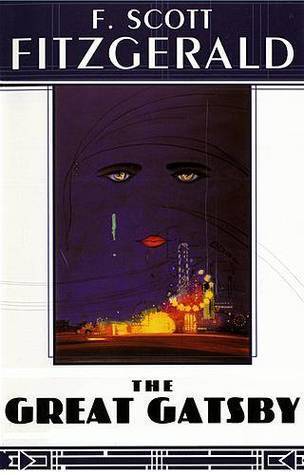
This American classic has been a beached ship for many readers. Poor Jay Gatsby does everything in his power to reunite himself with his lost love, including becoming filthy rich and throwing super duper parties. It's easy to back these two just because he's put in so much effort, and her husband Tom is a big old, cheating thug. But it's not to be.

12) Luna and Neville
This one might have been sweet for Harry Potter fans. Awkward young Gryffindor hero who's convinced he doesn't have what it takes, and eccentric loner with the ability to see right to the heart of everyone. They each find their inner compass at the same time, while fighting for the same worthy cause. They might've been so great together. As for their future spouses, we simply don't know enough about Hannah or Rolf to sweeten the blow.

The rest of my Harry Potter ships involve just one young lady, Hermione Granger. Wow, this girl was a magnet for romantic speculations.
Harry Potter and the Goblet of Fire (Harry Potter, #4)13) Hermione and Victor Krumm
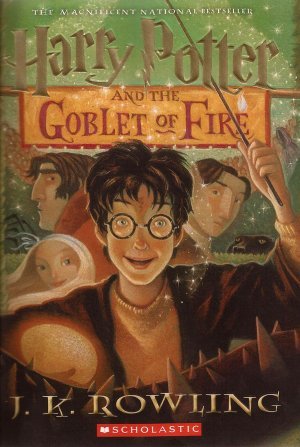
This had serious potential. Even my own daughter wouldn't have minded seeing it happen, at least for a little while. While Ron's busy trying to work out (or deny) his feelings, the studious and taciturn young Durmstrang student is quietly charming the girl in her own territory, the library. While most people's focus is too shallow to see him as anything other than a famous quidditch champion, she has the depth to fathom the deeper man within. And the irony is, she cares least about what he's renowned for. Nice one, J.K. Rowling. But it was not to be.

14) Hermione and Draco Malfoy
This one still has a major following, to the point where some shippers refuse to let go, and they keep their illusions alive in fan fiction. I guess I can understand the appeal. Imagine Draco telling his bigoted, Death Eater father that he's fallen for a Mudblood. But seriously, I could never back this one in a million years. There was never a spark of interest from either side, they were poles apart in their world outlooks and we were never given a hint that it might happen. But it does prove how great a shipper's imagination might be. (You might like my article on bad boys with depth.)

15) Hermione and Harry
Many people might have expected that this was where the series was headed from the very start. Hermione was one of Harry's very best friends, devoted to his cause, and so smart and perceptive, it was impossible for those boys to get along without her. But since their platonic friendship is ideal for a future list about guys and girls who are great friends with no strings attached, I'm happy enough to let it go. In fact, I shipped both Harry and Ginny and Hermione and Ron from early on. Ships which do come to pass often make up for those which don't.

So I've shared several of mine. Do you agree with any of them, or have you any of your own to share that I haven't mentioned? In all of literature and fandom, whose failure to become a couple almost broke your heart? If you enjoyed this list, have a read of a related one, Tales of Unrequited Love. You might also like literature's most awkward marriage proposals.

Monday, November 27, 2017

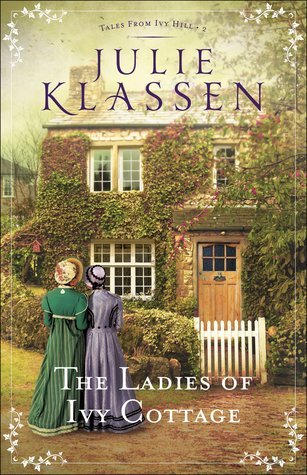
'The Ladies of Ivy Cottage' by Julie Klassen

34020176

Return to Ivy Hill in The Ladies of Ivy Cottage as friendships deepen, romances blossom, and mysteries unfold.

Living with the two Miss Groves in Ivy Cottage, impoverished gentlewoman Rachel Ashford is determined to earn her own livelihood . . . somehow. When the village women encourage her to open a subscription library with the many books she has inherited or acquired through donations, Rachel discovers two mysteries hidden among them. A man who once broke her heart helps her search for clues, but will both find more than they bargained for?

Rachel's friend and hostess, Mercy Grove, has given up thoughts of suitors and fills her days managing her girls' school. So when several men take an interest in Ivy Cottage, she assumes pretty Miss Ashford is the cause. Exactly what--or who--has captured each man's attention? The truth may surprise them all.


MY THOUGHTS:
There's nothing nicer than a well-written village chronicle, and I loved The Innkeeper of Ivy Hill, which started this series off. I was so keen for the chance to grab hold of this next installment, and it didn't disappoint. Julie Klassen has a way of building up our curiosity to fathom several village mysteries. It's good to catch up with many characters we came to love in the first book. Some parts of their stories were neatly tied up, but others left tantalisingly dangling. While the Bell Coaching Inn was the main setting for the first book, this time it's Ivy Cottage, where Miss Mercy Grove runs her girls' school.

Remember Miss Rachel Ashford who moves in with her? She was forced to leave her house penniless, with just the unwanted inheritance of her father's hefty book collection. Someone gives her the idea of using it as a base to begin a circulating library, to help her become financially independent. This provides plenty of scope for interesting happenings. Two anonymous donations of books become page turners (pardon the pun), and stir up a few hornets' nests too.

Mercy steps up to a bigger role in this book. Remember, she's a single woman with a maternal heart which she's poured into her little school until now. But two opportunities arise, to adopt her youngest pupil Alice, and to marry an eligible bachelor handpicked by her parents to tick all her boxes (in their opinion). The pressure is on, since it seems they'll pull the plug on her school if she decides against Mr Hollander. And for anyone who's read George Eliot's Middlemarch, he seems to want a Casaubon/Dorothea sort of arrangement, where she will help him write a great book which is no more than a concept in his mind as yet.

James Drake, the gentlemanly hotel entrepreneur is still working hard, and we get glimpses into his deeper past, revealing another reason why he chose Ivy Hill for his latest venture. That suited me, as he's a dashing and likeable character. And one of the most marginal people in the first book turns out to be most lovable in this. That's Mercy's aunt, Miss Matilda Grove. She knows full well she's regarded as one of those pointless members of society; an unmarried woman who's dependent on her relatives, but she's a kind, cheerful and fun-loving person. Her revelation to Mercy of what keeps her going impressed me a lot.

There is still plenty of my favourite mother and daughter-in-law team, Jane and Thora Bell. Jane is as sweet as ever, still dealing graciously with the disappointments in her life, and the fact that it's dealt her a different hand than she anticipated. I can personally relate to aspects of Jane's history, and understand why she'd be wary not to be hurt again, even when life beckons with its best. I'm glad her brother-in-law Patrick's story develops too, as I liked him a lot.

The cast of characters has its fair share of overbearing, autocratic mothers, including Sir Timothy's, Nicholas Ashford's, and poor Mercy's. It also has its share of ill-fated romantic liaisons. And I'd love to count the number of times something romantic or significant is on the verge of being uttered, when some third party interrupts the moment. I might've counted, if I'd guessed they would keep coming.

Ivy Hill really is a great place for lovers of Thrush Green, Middlemarch, Cranford, and other fictional English villages. I'm already looking forward to the third in this series.

As for good quotes, although Mr Hollander wasn't necessarily the most endearing character, some of the lines he spouts are great. I love his reply when someone politely asks him who his favourite author is, and it gets his hackles up. 'How can one choose a favourite from among one's very confidantes and mentors? I am not some youth with my arm slung around the shoulder of one's chum at the exclusion of others! Each suits at a different time. A different season.' Yeah, you tell 'em, Professor!

Thanks to Bethany House and NetGalley for my review copy.

🌟🌟🌟🌟½


Thursday, November 23, 2017

Reading is Virtual Tourism


I once read a long essay by Anna Quindlen entitled, How Reading Changed my Life. She described her childhood, when she had no means of getting anywhere new or different, and curling up in a chair with a good book made her feel like a world class traveller. Years later, when she became a successful author with many opportunities to travel widely, she figured out something surprising. It turns out she enjoyed the actual experience no more than the virtual travel she took from her armchair when she was young. 

My favourite quote from that essay is, "I went to Tara and Manderley and Thornfield Hall, all those great houses with their high ceilings and high drama, as I read Gone with the Wind, Rebecca and Jane Eyre." (You may also like my thoughts about literary houses that perish.)

I get what she meant. When I visited England in my youth, seeing the wonderful spread of London's buildings from the air as we approached Heathrow airport felt surreal. It seemed like a homecoming, even though I'd never been there. At the time, I wondered if the British blood of my ancestors was stirred by the sight. But in retrospect, I think it seemed so familiar already because I knew the sights through reading books. They looked like the streets where Wendy and her brothers lived in Peter Pan, or Michael and Jane in Mary Poppins. And I was to find that boarding the underground tube trains was like entering a Monopoly game or classic novel.

That strange sense of recognition has occurred at other times too, with places there is no way I could possibly have any blood ties with. Mere words on a page seem to have wedged them into my psyche. To mention just a few, there was a fantasy trilogy which reminded me first of Spain and later the Middle East, which I've never visited. There was also a story about a brother and sister who travelled from New Jersey, on the east coast of the United States, to Portland on the west. I recognised the changing features of different states they passed through, purely from reading, hearsay and television. I've never been to America for real, and probably never will.

With all this in mind, I came across an article entitled, 'Your Brain on Books.' It tells us that reading about a place or incident is almost the same as living it. Our brains actually believe they have experienced the things we read about. They make no distinction between reading about something and actually living it. In fact, whether you are reading about a place or standing there in the flesh, the same neurological regions of the brain light up when examined. Wow, that's pretty convincing proof that the worlds of novels can enter our thoughts and feelings so that they become part of us.

I've got to admit that given the choice, I'd still rather visit fantastic, exotic, far-away places than just read about them. I'd pack up a suitcase and leave in flash if I could. However, since that's unlikely to happen, I'm glad it's been shown that reading is a far, far better substitute than I'd ever imagined. Experts tell us to write about what we know. And it turns out that each of us, especially if we're readers, may know far more than we ever thought.

It's very cool. The quote that says, 'I read not because I don't have a life but because I choose to have many' may be truer than we think. And Emily Dickinson, who lived for years as a recluse in her own house, wrote, 'There is no frigate like a book to take us to lands away, nor any coursers like a page of prancing poetry.' I'm sure she knew that very well through personal experience. And as for the places in the signpost above, the fact that our imaginations can whiz us straight to them is stunning. The signpost is in the bookshop of my new local shopping centre, and I thought how great it is that I can say I've been to many of those places. (You may also like A Good Story Belongs to Everyone.) 

Where are some of the best places you've visited through the pages of a book? 

Monday, November 20, 2017

'Wonder' by R.J. Palacio


I won't describe what I look like. Whatever you're thinking, it's probably worse.

August (Auggie) Pullman was born with a facial deformity that prevented him from going to a mainstream school—until now. He's about to start 5th grade at Beecher Prep, and if you've ever been the new kid then you know how hard that can be. The thing is Auggie's just an ordinary kid, with an extraordinary face. But can he convince his new classmates that he's just like them, despite appearances?

R. J. Palacio has written a spare, warm, uplifting story that will have readers laughing one minute and wiping away tears the next. With wonderfully realistic family interactions (flawed, but loving), lively school scenes, and short chapters, Wonder is accessible to readers of all levels.


MY THOUGHTS:
I've been slow to jump aboard this runaway bestseller, but now that the movie is soon to hit cinemas, my curiosity got the better of me at last.

Basically it's a very simple plot. Young August Pullman was born with a serious facial abnormality. He's undergone several remedial surgeries in his short life, and after years of homeschooling, he's about to start middle school. While some fellow students are willing to get to know the person behind his shocking exterior, others respond with fear or cruelty. The story is written in sections with different points of view, so we can also delve into what his friends and family are thinking and feeling.

If you really want to pick the plot apart, not a lot happens, but it's powered by high octane honesty and emotion from start to finish. Auggie is a very endearing main character who knows that he's as 'ordinary' as everyone else in every respect but the appearance of his face. And he knows that because of the face he presents, this will never dawn easily on anyone else.

I was pleased to see other characters treated with sensitivity as well as just August. He understands that an initial, split-second double-take is a natural reaction and doesn't take offence. In fact, he gets tired of how people's glances quickly slide away, as if they assume it's the tactful response. He would like to tell them, 'It's OK. I understand why you want to stare.' That sort of detail is among the strengths of the story.

But is the writing always perfectly executed? Well, I have to say not really. For a start, the humour is applied pretty thickly at times. To take one just one example, how much mileage can you get out of poor Mr Tushman's name? This is the book equivalent of one of those studio audience placards demanding that the audience laugh. Readers keep running into the message, 'In case you haven't twigged, this is a joke.' I prefer a more subtle humour that individuals can choose to take or leave. Anything that's so clearly explained is not as funny. In a similar way, small talk tends to drag on at times. This heavy-handedness is not really a feature you'd expect from bestsellers, but just shows how much may be forgiven and overlooked if only a story has heart.

Auggie's relationship with his sister Olivia, a.k.a Via, really touched my heart. There is potential for sibling resentment on both sides, and they both know it. She's the one with the attractive face, and he's the one whose needs have always had first priority. Via knows that she tends to be defined by who her brother is, and he's sensitive to her moods. But when it comes to the crunch, none of this really matters, because they're right on the same page, as loving family members should be.

After receiving the heady joy of a standing ovation, August decides everyone should receive one at least once in their lives. But there's a type of hero that never get their standing ovation, and I think part of their heroism is that they don't even expect to. Some of the excellence of this book for me was identifying these hidden heroes. There's August's non-academic friend Jack Will, who doesn't get an award at the ceremony like the smart kids, yet displays a lot of superior character traits that went under the radar.

Most of all, there's Isabel and Nate, August and Via's parents. I loved these guys. The fact that their son has tapped into inner strength, kindness and wisdom instead of bitterness and fear is greatly because of their influence, without a doubt. They were as unforgettable as August himself, proving that our input in just one life can make us heroes. They deal with carer's exhaustion, trying to spread themselves thin and often being in the firing line from both their kids. But even though Via criticises them at times, they are perfect role models. And because of them, August has the security of knowing that whatever he faces during the day, there will be nothing but love and support behind his own doors. That's worth a standing ovation for sure.

So when it comes to ranking, it's one of those stories that makes you think hard. Although I felt it was far from perfect in the ways I've mentioned, I still think it deserves almost full marks because of the strength of the impression it left.

🌟🌟🌟🌟½

Tuesday, November 14, 2017

'Matthew Flinders' Cat' by Bryce Courtenay


Billy O'Shannessy, once a prominent barrister, is now on the street where he sleeps on a bench outside the State Library. Above him on the window sill rests a bronze statue of Matthew Flinders' cat, Trim. Ryan is a ten-year-old, a near street kid heading for all the usual trouble. The two meet and form an unlikely friendship. Appealing to the boy's imagination by telling him the story of the circumnavigation of Australia as seen through Trim's eyes, Billy is drawn deeply into Ryan's life and into the Sydney underworld. Over several months the two begin the mutual process of rehabilitation. Matthew Flinders' Cat is a modern-day story of a city, its crime, the plight of the homeless and the politics of greed and perversion. It is also a story of the human heart, with an enchanting glimpse into our past from the viewpoint of a famous cat.

MY THOUGHTS:
After reading several British and American books this year, I felt a craving for something completely Australian, which is just what this is. I picked it up at a second hand shop.

Billy O'Shannessy is a drunken ex-barrister who has become a street bum. He still keeps an eye on the world around him and writes letters to the Sydney Morning Herald, because he believes 'alcoholism and writing have a long history together.' He wants to write convincing essays about Australian history and ecology, but never stays sober long enough. However, he does try to do his bit for our country by culling the pesky mynah birds which have overrun and threatened the native species. He has a past which partially explains his dramatic lifestyle change, but desperately tries not to think about it.

Ryan Sanfrancesco is a bright young boy who gets Billy talking about the statue in the library window above his park bench, which happens to be Matthew Flinders and his cat, Trim. Drawing from his knowledge of this legendary ship's cat, Billy intrigues Ryan with true stories from Flinders' own memoirs, that become inspirational to both of them.

I love how appearances can be deceiving. Billy presents the face of a hopeless alcoholic, but deep down, he's an educated, entertaining storyteller. On the surface, Ryan is a street-smart brat with a bleak future, but really he's an innocent young boy who responds to goodness and heroism when it's presented to him in legends.

Alas, there are those who are suspicious about the friendship between the pair, and even worse, the story delves into a seamy, horrific part of Sydney culture which I won't spoil by mentioning straight out. Suffice to say, it gets to a point where only deep concern for Ryan's welfare is enough to get Billy to clean up his act, since he's really the only hope the boy has. In the process, Bryce Courtenay exposes some abysmal organised crime which is shocking to read about.

Some interesting, fairly recent history is revealed in this novel too, such as the government's attempt to shift undesirables out of the city to Surfers Paradise in the lead-up to the 2000 Olympics. Who would've thought? I really appreciated the glimpse into the vast goodness of charities such as the Salvation Army, in the lives of so many helpless sufferers. It's great to have their quiet heroism featured in stories, when it might otherwise slip under the radar for those of us who don't experience it directly. I felt like giving them a standing ovation.

I noticed that not all reviews of this book on Goodreads and Amazon are positive. That seems to be partly because of the disparate threads. Those interested in following Billy's journey to sobriety might find the Trim stories long and irrelevant, while people who were drawn to the title and cover might just want stories about Captain Flinders' adventures aboard the Investigator, and not care so much about the drinking and crime themes. Yet I think Courtenay really did draw them together. Even though it's a thick book, it's easy to get through the pages quickly, which is a sign of a good flow.

Examining history can reveal a lot about our own attitudes and actions, as Billy discovers when he prepares the different installments of the story for Ryan. The famous cat shows qualities he wishes he could've adopted in his own life, and becomes his inspiration. I found all the different stories interesting and well-written.

Finally, as a fellow cat lover, I love Billy and Ryan partly for their mutual affection for Trim. I quite understand why Ryan would return to the park bench for the second time, to tell Billy, 'I've come about the cat.' The cover of my copy appeals to me. Something about the memory of 200-year-old Trim overlooking the Sydney Harbour seems sort of haunting.

🌟🌟🌟🌟

To my surprise, I discovered we have our own statues of Matthew Flinders and Trim here in Adelaide. That's very fitting, since we have our share of landmarks and places named after him, both in the city and around the coast where he navigated. It includes Flinders University, and I took these photos at some remote part of the campus which I doubt I'll easily find again. 

You might also like this blog list, Books with cool literary cats.

Saturday, November 11, 2017

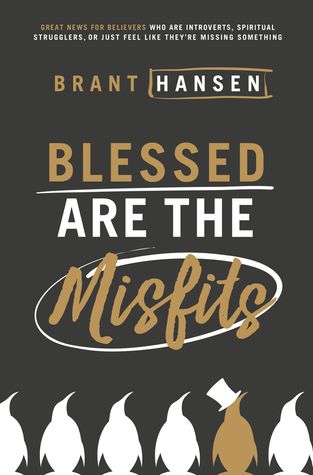
'Blessed are the Misfits' by Brant Hansen

34460639


In his unique style, Hansen looks to answer questions that millions of people carry with them each day:

If I don’t relate to God as emotionally as others do, is something wrong with me?
How does one approach God, and approach faith, when devoid of the “good feelings” that seem to drive so much of evangelical church culture?
How does God interact with those who seem spiritually numb?
Is the absence of faith-based emotion a sign of that God has moved on or was never there?
What if we aren’t good at talking to people about our faith, or good at talking to people at all?
What if I’m told I’m too analytical, that I “think too much”?
Where does a person who suffers from depression fit in the kingdom? Is depression a sure sign of a lack of faith?
This book is good news for people who are desperately looking for it. (And for their loved ones!)

It’s also for those who want to believe in Jesus, but inwardly fear that they don’t belong, worry that don’t have the requisite emotion-based relationship with God, and are starving for good news.


MY THOUGHTS:
A huge thanks to Brant Hansen for writing this book, because the sort of misfits he's talking about are probably more common than any of us realise, but each keep quiet to save face. We hesitate to confess our misfit status because we may feel inferior, and imagine that we lack some sort of spiritual backbone. Even when we've prayed, striven and tried hard to fix ourselves for years, the deficiency still seems to be connected with us failing to measure up. Especially when we see our outgoing, full-on and super-spiritual friends and family doing what seems to come so naturally to them.

This book is for the sorts of Christian misfits, oddballs and introverts who often feel we don't fit into what he calls the typical American church culture (or Australian by extension, in my case). When people talk about sensing God's loving arms wrapped around us during worship... well, some people just don't. Preachers and counselors urge people to 'open up to the spirit' or 'stop leaning on our intellect' but some can't effect any change. And when they pray, it's a bit like talking into a dead walkie-talkie. Hansen is a Christian radio personality who can relate to all this, and his book convinces us to stop feeling as if we belong on the 'Island of Misfit Toys of the kingdom.' Quieter, head thinking types of Christian can honor God just as faithfully as our more emotionally switched-on friends. What a relief.

He drops the names of some surprising people who counted themselves among the unfeeling faithful. Their lives bore real fruit, which is not the same as incredible spiritual experiences, wordy prayer times or impressive ministries. It's simply love, joy, peace, patience, kindness, goodness, faithfulness, gentleness and self-control.

I appreciate how Hansen gently puts to rest some issues which may have the potential to give us colossal guilt trips, such as failing to live up the the Great Commission or being unable to aspire to warrior type prayers. In a nutshell, Mark 16:15 wasn't necessarily meant the same way for everyone by Jesus, and even fumbling, ten-second prayer efforts have great potential. Reading this may be like balm to your guilt-heavy soul.

There's some lovely encouragement for the unnoticed, who may think they're consequently not worth as much as those in the spotlight. It's a reminder that we needn't look where everyone else is, because God operates a lot in the margins, and tends to nurture unobtrusive mustard seeds, sparrows and lilies of the field, while we're admiring lions and peacocks on the stage.

Lifting this weight of false guilt and unnecessary expectations off our shoulders is a great enough reason to read the book, but Brant Hansen also gives sound tips about how to face it whenever it creeps back, as it inevitably will. Developing the habit of ignoring our harsh and false inner monologue, and even challenging it as a liar, may do us a world of good. With the help of friendly books like this, I dare to believe it is possible. This is one I'll be dipping into many times.

Thanks to Thomas Nelson Publishing and Net Galley for my review copy

🌟🌟🌟🌟½

Wednesday, November 8, 2017

Famous Toy Heroes


First off, I must tell you that I had a crowd of these in my own bedroom when I was little. When my Dad used to come up to say goodnight, he would tell me stories about what my toys had been up to all day while I was at school. Dad was a toy whisperer. He'd hold their mouths to his ear, and they'd mumble things to him. Deep in my heart I guessed it was all pretend, yet the part of me that wanted to keep an open mind had a lot of fun.

It was cool to think that when they heard my bedroom door open, they'd all scurry back to their spots and freeze. Sometimes I wondered why they'd take such care to keep their lives a secret from the children who loved them so dearly, and I wasted a lot of time trying to coax their stubborn little mouths to speak back to me. It whetted my appetite for more stories about toys set in other people's houses too. Since they are made to represent living beings and be loved by kids, it easy to see why there are so many. We've probably thought how wonderful it would be if they were all true. Although there have been scores of them written over the years, here are ten of my favourites from my own past.  


1) Naughty Amelia Jane
She was the big curly-haired doll who always made a point of throwing her weight around and picking on other, more defenseless toys. But the others, led by Golly and Teddy, often paid her back in sneaky ways. And Amelia Jane wasn't so bad at heart. I used to love reading Enid Blyton's toyroom politics.

2) Winnie the Pooh
The toys in the 100-Acre Wood belonged to Christopher Robin, and part of their appeal way into adulthood is surely because they each have recognisable personality traits (or disorders). There's little Piglet with his anxiety issues, hyped-up Tigger, clinically depressed Eeyore and control-freak Rabbit. Not to mention Owl with his delusions of grandeur, and Pooh Bear himself, who has the most stable outlook, but still tends to be a binge eater. Someone once suggested that perhaps Christopher Robin is the most disturbed of all, for persisting in talking to them :)

3) Pinocchio
Everyone knows the little wooden marionette was made by the lonely carpenter Gepetto to stand in for a real son. Pinocchio magically comes to life and eventually achieves his dearest wish, to become a real live boy. Not only was it denied for ever so long, but his wooden nose grew longer whenever he told a lie. He was a product of the moralistic fairy tale era he was written in.

4) The Doll's House
This beautiful classic from the fifties is about Tottie and her family, who were owned by a pair of small sisters named Charlotte and Emily. The girls made them a special shoe box home, but one day a snooty celluloid doll named Marchpane is brought to live with them, which is really like putting the cat with the pigeons. The tale is a bit of a tear jerker, but very memorable. (This tale by Rumer Godden is not to be confused with 'A Doll's House' by Henrik Ibsen, which is completely different.)

5) Miss Happiness and Miss Flower
It's another offering from Rumer Godden, who must have loved toys. The title characters were two little Japanese dolls sent to England to live with Nona and her cousins. The dolls are very homesick, but that makes them the perfect gift for Nona, who is separated from her family and homesick too. While her cousin Belinda dismisses the dolls as being too boring, Nona carefully researches the features of Japanese houses, so she can construct a replica one for her dolls. This delights Miss Happiness and Miss Flower, and helps Nona come out of her own shell. I loved reading this as a little girl.

6) Teddy Robinson
He was a very special teddy bear owned by a little girl named Deborah, who took him on all sorts of great adventures with her. They had a whole series of fun things happen to them, and the one that sticks in my memory is Teddy Robinson accidentally being left in the garden overnight, and getting soaked through with dew but meeting lots of interesting nocturnal critters.

7) Paddington Bear
He's one of the fictional characters who always evokes nostalgia for my long-ago trip to London. He's found by the Brown family at Paddington Station in his duffel coat and hat, sitting on his suitcase with a note saying, 'Please look after this bear.' It seems the first Paddington Bear stuffed toy was made by Mr and Mrs Clarkson in 1972 for their son Jeremy. Yep, none other than the future Top Gear host. It's amazing what bits of trivia I learn when I compile these lists.

8) The Steadfast Tin Soldier
Hans Christian Andersen's fairy tales were often very depressing, and this was no exception. The poor hero was maimed to start with, since he was the last of 25 soldiers to be cast. They ran out of metal, so he stood on only one leg. But he shared that in common with a paper ballerina, who he fell in love with, setting off the jealousy of the jack-in-the-box, who has the little soldier shoved out of the window. After many adventures on a scary canal, he makes his way home again, only to be thrown into the fire. But at least his true love blows in with him.

9) The Velveteen Rabbit
It's a heartwarming short classic about the nature of true love. The little stuffed bunny, forgotten by his young owner, longs to be a real rabbit instead. He later becomes the comfort toy when the boy falls sick, and needs somebody soft to cuddle. But the poor velveteen rabbit is eventually ordered by the doctor to be burned, because by then he's a major germ carrier. As the poor little bunny cries a tear of grief, a good fairy comes and turns him real, since the love of the boy, resulting in his humble shabbiness, earns him that right. Awwww.

10) Toy Story
These movies were a great feature of the nineties. Woody, the little cowboy doll, had been Andy's favourite toy until he was given the spectacular spaceman Buzz Lightyear, who did all sorts of cool things when you pushed his bells and whistles. Poor old Woody couldn't help feeling shoved aside, but their subsequent adventures together proved that there was plenty of room in their master's heart for all his toys. And I wouldn't be surprised if every kid's bedroom was filled with replica toys from Andy's toyroom for quite some time.

Can you add any of your own favourite toy heroes to my list? Did the toys in your own bedroom or toyroom used to come alive too?