Friday, February 26, 2016

'The Martian' by Andy Weir

18007564 

Genre: Contemporary, Science Fiction, General Market, Popular Culture.

Six days ago, astronaut Mark Watney became one of the first people to walk on Mars. Now, he's sure he'll be the first person to die there.

After a dust storm nearly kills him and forces his crew to evacuate the planet while thinking him dead, Mark finds himself stranded on Mars' surface, completely alone, with no way to signal Earth that he’s alive — and even if he could get word out, his supplies would be gone years before a rescue could arrive.

Chances are, though, he won't have time to starve to death. The damaged machinery, unforgiving environment or plain-old "human error" are much more likely to kill him first. But Mark's not ready to quit. Armed with nothing but his ingenuity and his engineering skills — and a gallows sense of humor that proves to be his greatest source of strength – he embarks on a dogged quest to stay alive, using his botany expertise to grow food and even hatching a mad plan to contact NASA back on Earth.

As he overcomes one seemingly insurmountable obstacle after the next, Mark begins to let himself believe he might make it off the planet alive – but Mars has plenty of surprises in store for him yet.

Grounded in real, present-day science from the first page to the last, yet propelled by a brilliantly ingenious plot that surprises the reader again and again, The Martian is a truly remarkable thriller: an impossible-to-put-down suspense novel that manages to read like a real-life survival tale.


MY THOUGHTS:
It's a cool, ultra-modern take on 'Robinson Crusoe'. On a mission to the surface of Mars, astronaut Mark Watney is believed dead by his five crew mates, and therefore abandoned. When he comes to, it appears he'll have to figure out how to keep himself alive on the barren, hostile red planet until the next mission from Earth is due to arrive. A great chunk of this novel consists of the log book he keeps. Wow, if you think you have problems, it's good to spare a thought for Mark.

Although he considers he's involved in a fight against time and the elements, I get the feeling that what he's doing more of is figuring out how to understand and cooperate with them. The way he's forced to get back to basics is inspiring. He gets a mood lift whenever he has a breakthrough to help him stay alive, because ultimately, another day in which you figure out how to keep breathing and eating is a good day. It's so easy to forget that in our world, where the basics are a given and we're so distracted with other things.

He writes with humour, and you can't help laughing quite often. There are funny parts, such as the bureaucratic red tape he deals with when he establishes contact with Earth, even though he'd already spent such a long time relying on himself. On one level, he's got the support of the whole world behind him, but on another, he's totally alone.

You can't help thinking of the hundreds of millions of dollars expended during this story, to save just one man. It's true he's doing a great (if accidental) service to mankind, providing detailed data about long-term survival on Mars, but it's great to see so many people coming together to save him. He makes the point that basically, it's the instinct of a good human to help if they are able. As a race, we can't help caring, even about people we've never met in person. Basically when it comes to the nitty-gritty details about staying alive, we're all one. And I love that.

In all honesty, it's not the sort of book I usually read. I didn't always grasp the maths and science aspects, but kept reading because I really liked Mark. I think that's a given, as I doubt anyone who doesn't like Mark would bother sticking with the book. He probably deserves to become a classic, pin-up character for the triumph of human ingenuity. I like the way he refuses to panic, taking one thing at a time. His main refrain seems to be, 'OK, that's a total pain, and I can't think of a solution yet, but I know I'll have to think of something soon, or I'll be dead.' And of course he always does.

4 stars (I'd probably have boosted it to 5, if I'd been the sort of person who's intrigued by lots of maths and science detail)

Wednesday, February 24, 2016

'Cure' by Jo Marchant

25430578

 
 A rigorous, skeptical, deeply reported look at the new science behind the mind's surprising ability to heal the body

Have you ever felt a surge of adrenaline after narrowly avoiding an accident? Salivated at the sight (or thought) of a sour lemon? Felt turned on just from hearing your partner's voice? If so, then you've experienced how dramatically the workings of your mind can affect your body.


MY THOUGHTS:
I requested this book with a bit of trepidation. The concept that our minds are huge tools in our arsenal against disease has been close to my heart for a long time, but I got the feeling from reading Jo Marchant's bio that she wasn't going to just nod and accept it without a lot of probing around. Still, at least she embarked on her personal quest with an understanding that the mind/body connection shouldn't be shrugged off by the cynical as hogwash. Since it's widely agreed by medical experts that negative mental states such as stress and anxiety have detrimental effects on the body, why not consider the flip side, that positive, happy states can be beneficial? I'll mention her findings which I found most interesting.

1) Marchant came up with evidence that continued stress may accelerate premature aging. Although external problems don't damage our bodies directly, our long term psychological responses to the stressful circumstances can certainly harm us. Marchant's subjects were worn-out mothers who are the primary carers of children with severe intellectual disabilities. Some of the them even noticed effects such as suddenly greying hair.

2) The emotion of fear takes a severe toll on people. Although it's been suggested over the years that positive and negative stress have similar results on the body, Marchant has come to believe that their effects are way different. People with stressful childhood histories react far quicker to stress, and chronically stressed people find that small hassles escalate to full-blown anxiety far faster than others. These are measurable in the way the brain is wired, helping to explain why the effects of early adversity can persist long after others think it should have stopped.

3) My favourite part was Marchant's discussion with the young father Gareth Walker who suffers from M.S. He made a personal discovery that a lifestyle of regular quiet time and living in the moment has helped him halt the process of his disease more than he'd believed possible. The conscious decision to change his thought patterns changed him from a reactive, fear-driven person who dreaded his future to a calmer man who recognises his thoughts as mere background chatter which he doesn't have to buy into. His is a philosophy I admire.

Overall, I can't help wondering if Marchant has walked into her project with a closed mind, even though she tries to be impartial and fair. She says things like, 'I usually try my hardest to avoid religious ceremonies. I get uneasy about the idea of substituting reason and clear understanding for robes, incantations and mysterious higher powers.' She comes across as the sort of person who finds it impossible to accept a miracle on face value without scrabbling around for some measurable way to explain it. Anybody who wants to read this book should be aware that the author never considers the divine as a possible explanation at all. That's just not the sort of person she is.

At the end, I'm left with the same feeling I get after watching current affair documentaries. After waiting for what seems to be advertised as promised breakthroughs, the journalists end up cautiously sitting on the fence, unwilling to commit themselves one way or another. And after all the words in this book, Jo Marchant seems to be doing the same thing. Still, it's interesting to read some of the direct results of her research, in spite of her not wanting to make a firm stand for the mind/body connection.

I think my favourite book which delves into the mind/body connection written by a medical doctor is still The Fear Cure by Dr Lissa Rankin.

Thanks to Crown Publishing and Blogging for Books for giving me a copy through NetGalley.

3 stars

Monday, February 22, 2016

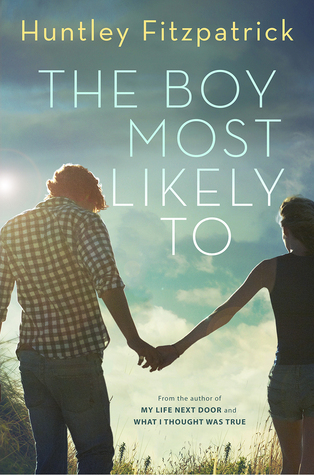
'The Boy Most Likely To' by Huntley Fitzpatrick

 18392495

Not long ago, I read the prequel to this novel. 
Genre: YA, general market, romance, some strong language and adult themes.
*    *    *

Surprises abound and sparks ignite in the highly anticipated, utterly romantic companion to My Life Next Door

Tim Mason was The Boy Most Likely To:
- find the liquor cabinet blindfolded
- need a liver transplant
- drive his car into a house

Alice Garrett was The Girl Most Likely To:
- well, not date her little brother’s baggage-burdened best friend, for starters.

For Tim, it wouldn’t be smart to fall for Alice. For Alice, nothing could be scarier than falling for Tim. But Tim has never been known for making the smart choice, and Alice is starting to wonder if the “smart” choice is always the right one. When these two crash into each other, they crash hard.

Then the unexpected consequences of Tim’s wild days come back to shock him. He finds himself in a situation that isn’t all it appears to be, that he never could have predicted . . . but maybe should have.

And Alice is caught in the middle.

Told in Tim’s and Alice’s distinctive, disarming, entirely compelling voices, this return to the world of My Life Next Door is a story about failing first, trying again, and having to decide whether to risk it all once more.


MY THOUGHTS:
Hooray, Tim Mason from My Life Next Door is back as the hero of his own story. He was the alcoholic, drug addict, school dropout who swore like a trooper all his way through Samantha and Jase's story. I'd started off assuming he was marked to be the anti-hero, but then he started working his way into our hearts. In this new book, he has even more of a chance to keep stepping up, which is exactly what he does.

Tim's story is paved with temptations to revert back to his former ways, and it's never written with the impression that his struggles are too easy. It's plain how heartbreaking and challenging his hurdles are, taking every ounce of strength he has, and I think he makes an excellent literary role model for any young readers who face similar challenges, as they possibly share his low self esteem issues. It's enjoyable to read the story from his point of view, because along with the quick wit and sassy comments we've come to expect from him, we now have access to the sensitive depth hidden underneath. His sections are written in a very skillful way. It's obvious to the reader from his narrative that Tim is very talented, bright and admirable, although that keeps escaping his own notice.

As for Alice, I've come across girls like her in real life. They are older daughters of large families who automatically fall into the role of parents' stand-in, so their own childhoods and youths are absorbed in adult responsibilities before their time. She adds nursing studies to home burdens, and there's the ongoing pressure of dealing with her father's accident and all the financial repercussions, so it's no wonder she has carers' burn-out. Alice needs a break, and it's great to see Tim become the supportive man who can soften her attitude. 

The Tim/Alice relationship was excellent. I found their romance more satisfying to read than the Samantha/Jase one, which was all about the innocence and freshness of first love. It may be initially because we've already met them both, and also because Tim and Alice come across as such opposites. While she's a bit of a control freak, he has a history of stuffing up everything he touches. Although they are young too (he is only 17 throughout most of this story), Tim and Alice are both battle weary, scarred by life's knocks and worn-out. That makes their mutual attraction all the sweeter. I'm sure many young females would want to see Tim get a hug or two, so it's great to see them come through Alice, who turns out not to have a heart of tin after all.

I'd better mention a bit about his problem from the past, without giving spoilers, since it constitutes a major part of the plot. All the characters in the story thought it was the last complication he needed at the stage of his life, yet like many things in life, an unexpected hassle can turn out to be a benefit. The situation distracted him from his other challenges and helped him to grow, after all.

What will be next? A book from Tim's twin sister's point of view? Nan is a complex, issue-ridden person who's nowhere near getting her own head space sorted out at the end of two books. I'm wondering whether her jealousy and sneaky ways may have alienated too many readers to make that happen, but it's easy to understand that it all comes from her struggles to feel good enough. I'd like to see her learn that this type of well-being must come from within her own heart rather than from others' feedback (and where's the satisfaction, if you have to set up personal victories which aren't even real? If you've read the first book, you'll know what I mean.)   

Anyway, it was a good place to leave Tim and Alice. They both need to spend a lot of time just chilling out and enjoying each others' company, and the book leaves us with the impression that this is just what they're going to do.

5 stars

Friday, February 19, 2016

The Importance of Jesters, Clowns and Fools


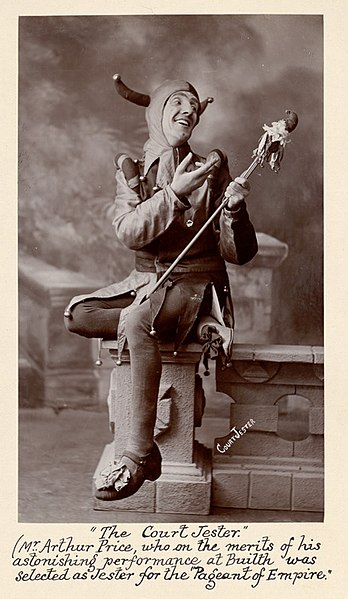
File:Court jester stockholm.jpg
These guys and girls provide far more than the mere comic relief we may assume is their only role.

Late last year, I read a YA philosophical novel by Jostein Gaarder, entited, The Solitaire Mystery. As part of the fantasy element, an island populated by a deck of cards comes to life. Members of the four suits tend to stick together and automatically assume the roles they're born to fulfill, such as baker, confectioner, gardener or silversmith. Only the joker stands apart, wandering around the island freely, since he doesn't really belong anywhere specific. This guy is one of the sharpest and most admirable characters in the story. He doesn't really fit in to his society, but decides he wouldn't really want to anyway. He would have to sacrifice his freedom of observation, and give up his habit of forming his own conclusions about the nature of the world, and that would be too high a price for him to pay.

Being treated with contempt or brushed off by others is something the joker has learned to just shrug off as part of the deal. In the part of the story that takes place in the normal world, the young hero's Dad collects jokers from decks of cards. In several instances, he taps random card players on the shoulders and asks if they'd mind giving him their jokers. In many cases, they say, 'Sure,' and hand them over without another thought, as they're deemed fairly worthless. Hans Thomas' Dad flips through his impressive collection and tells his son, 'You do get people thinking you're weird, but it's well worth it.' Then Hans Thomas realises that his intelligent, philosophical and original Dad identifies with the joker in the card decks. He decides, 'I want to be a joker too.'

As I read the book, I found myself nodding with the sudden impact that it's all true, and I've probably always known it deep down. Shakespeare knew it too, as his variety of jesters and fools show. There's Falstaff, Touchstone, Puck, Costard, Feste, and the list goes on. Even though other characters in the plays disparage and insult them, it's clear that their wit is sharp as knives and they see things others miss.

The day I finished reading 'The Solitaire Mystery', I was watching the Adelaide Christmas Pageant on TV with my youngest son. Since the kids have grown older, I prefer staying home to getting up early to drive down into the city and elbow our way through the thick crowds. Anyway, as I switched my attention between the TV screen and the book, the behaviour of the clowns stood out to me with fresh significance. They rush around, weaving between floats, having fun and generally making people smile. The kids in the audience grin at them, but probably don't get the significance of the ancient tradition the clowns are part of. Those clowns are free to roam along the length of the pageant course, taking in more sights along the way than other story book characters who are stuck with their own floats. They are just like the joker on the island. Their weird get-up, the bright, frizzy hair, floppy shoes and painted faces no doubt originally set them aside as weirdos and non-conformists. The fact that it's become their universally recognised uniform may show that deep down, we all hanker for their free spirited lives. I was glad the pageant coincided with me reading this book.

Now that my eyes were opened for it, I came across more blasts from the past emphasing all this. Think of the lyrics of John Lennon's 'Fool on the Hill'. It says, 'Nobody wants to know him, but the fool on the hill, sees the sun going down, and the eyes in his head, see the world spinning round.'

For anyone who wants to get serious about studying their Bible, it doesn't take long to figure out that many of the Old Testament prophets were regarded by others as jesters, clowns and fools. Think of Ezekiel, lying on his side and cooking over his coals of dung, or Jeremiah, buying real-estate in a doomed city and writing prophecies the king burned without a thought. Since they knew that was how they were regarded, it doesn't seem sacrilegious to compare them to the other fools I've been talking about. In fact, mentioning them might even bring a sort of holy dignity to the role others have held in the centuries since.

File:"The Court Jester" (4540421737).jpgWhen he was 16 years old, I took my oldest son to an appointment with his allergist at the hospital, and a couple of free-roaming clowns from the Starlight Foundation decided to make a spectacle of him in the waiting room. While he face-palmed, they went through the motions of writing out a little postcard for him.

'Now, how do you spell Logan?'

'Just the usual way,' he mumbled.

They shouted out across the huge waiting room, 'Hey, is anyone else here called Logan? Are there any Xs or Zs or Qs in it? We know he's a teenager, and teenagers are smarter than us, so we've got to get it right.'

In the end, even he had to laugh.

So here's to smart fellows like them, who are not really fools at all, but astute and far-sighted, often with more real insight and wisdom than the average person. I wouldn't mind being a joker either.

Wednesday, February 17, 2016

Introducing - Susanne Timpani and 'Twice Stolen'


It's a pleasure to welcome this author and her new release to The Vince Review today. I've known Susanne Timpani for some time, since we are both fiction authors who live in Adelaide, South Australia. She's been working hard on this novel for several years, and to hear her tell the story, the research alone was immense. It was great to attend her book launch, along with fellow members of 'Christian Writers Downunder' on Sunday afternoon, and share the celebration, especially since I've already read and enjoyed 'Twice Stolen'.

MY THOUGHTS:

 The ancient backdrop of outback Australia is ideal for this evocative novel, full of deep secrets. Dimitri and Leah choose to hide disturbing facts from each other, but there are far older secrets, tied in with their personal identities, they have yet to fathom. Ignorance and passage of time never erase our secrets but simply conceal them. The experiences of the characters in this novel reveal the importance of not keeping our stories to ourselves. A fascinating tale full of beauty and spirit.

As an Aussie reader and writer, I like to look out for stories with gripping plots and complex characters which also bring our wonderful continent to life. I haven't found as many as I think there should be, but this one fits the bill.

And now I'll let Susanne tell her own story.


Twice stolen: a Valentine's Day release
By Susanne Timpani
Twice stolen is a multi-faceted story with subplots and a number of key themes. These include the Aboriginal Stolen Generation, Solomon's Song of Songs and Medical Romance.

The conception of the Aboriginal theme in the novel commenced after hearing stories of disconnection and pain from Aboriginal co-workers and community members. This sparked a desire to learn more about the experiences of Indigenous Australians. A flurry of reading Fiction and Non-Fiction works authored by Aboriginal writers, watching documentaries, talking to Aboriginal people and attending cultural events developed a desire in me to integrate what I had learned into my writing.

As the story unfolded I wanted to express spiritual themes in a way that was unique and creative. The characters, Dimitri and Leah had developed a romantic relationship. What better place to find the combination of romance and spirituality than the Word of God?

I remembered discovering Solomon's Song of Songs in my youth when flicking through the bible. Full of passionate words and imagery it fitted perfectly with the flavour of Twice stolen. Aboriginal spirituality is so closely linked with imagery from nature that the two themes connected perfectly.

Writers are encouraged to write about what they know. I am a registered nurse, midwife, nurse educator, child and family health nurse with community health experience in a remote setting. I have written about my experiences in a number of published non-Fiction stories and articles. The medical themes in Twice stolen flow naturally from the everyday experience of my work.

Once I had the main elements of Twice stolen; Indigenous Australia, Solomon's Song of Songs and Medical Romance, the story fell into place.

In 2011 the unpublished manuscript won the CALEB prize in that category. Since that time I have been supported by mentors and reviewers and the novel has been reshaped, polished and finally published with Armour Books. Anne Hamilton, founder and publisher has provided a significant role during this process.

Released Sunday, February 14th, 2016, Twice stolen is a novel published in God's perfect timing. I hope readers will find it an encouraging, informative and inspiring read.


Bio:
Susanne is married, has four beautiful children and works as a community nurse with families. Themes of her work and her faith appear in her writing. 

Susanne is the author of the blog, 10 Minute Daily Retreat. These twice weekly reflections on scripture can be viewed through


http://susannetimpani.blogspot.com.au/ 

or

https://www.facebook.com/10MinuteDailyRetreat


Further information on Susanne's website: http://www.susannetimpani.com.au/

Twice stolen can be purchased from:
https://www.booksinstock.com.au/twice-stolen.html

Monday, February 15, 2016

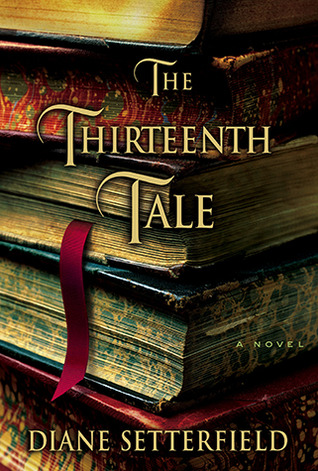
'The Thirteenth Tale' by Diane Setterfield

40440
I borrowed this book from the library, after seeing it pop up several times on lists for book lovers which shouldn't be missed.

Genre: General market, mystery, Gothic contemporary.


 Biographer Margaret Lea returns one night to her apartment above her father’s antiquarian bookshop. On her steps she finds a letter. It is a hand-written request from one of Britain’s most prolific and well-loved novelists. Vida Winter, gravely ill, wants to recount her life story before it is too late, and she wants Margaret to be the one to capture her history. The request takes Margaret by surprise — she doesn’t know the author, nor has she read any of Miss Winter’s dozens of novels.

Late one night while pondering whether to accept the task of recording Miss Winter’s personal story, Margaret begins to read her father’s rare copy of Miss Winter’s Thirteen Tales of Change and Desperation. She is spellbound by the stories and confused when she realizes the book only contains twelve stories. Where is the thirteenth tale? Intrigued, Margaret agrees to meet Miss Winter and act as her biographer.

As Vida Winter unfolds her story, she shares with Margaret the dark family secrets that she has long kept hidden as she remembers her days at Angelfield, the now burnt-out estate that was her childhood home. Margaret carefully records Miss Winter’s account and finds herself more and more deeply immersed in the strange and troubling story.

Both women will have to confront their pasts and the weight of family secrets... and the ghosts that haunt them still.


MY THOUGHTS:

Miss Vida Winter is a famous novelist who has always kept quiet about her past, although journalists have been pleading for the chance to find out. Toward the end of her life, she contacts a quiet young woman, Margaret Lea, to write her biography, and promises that this time, she will tell the truth.

The Bronte sisters and their classics were referred to so many times in this novel, it gave the impression Diane Setterfield was trying to copy their methods in her story, and it wasn't subtle. She used the same flashback method of Wuthering Heights, with Vida Winter narrating the story to Margaret Lea, but it fell way short. The characters from her previous generations were quickly summed up as beasts and monsters, acting on their animal instincts without a glimmer of human kindness. Instead of being shown their points of view, we're merely told by Miss Winter, 'she was eccentric', or 'he was thick.' When every main character is a bit feral and wooden, it's hard to maintain the interest level to keep reading.

Take Charlie for example. He has a pivotal role in the story, but Setterfield treats him like a prop. Never once do we get a glimpse into his psyche, to see if we can understand what makes him tick. We're merely told about his weird, incestuous fixation, and then he stomps around, grunting like a mountain troll until his part is done. If he was supposed to come across like some tragic Hindley Earnshaw sort of figure, she could have at least given the guy some lines.

I guess Margaret was meant to be our identification character, but her own obsession got a bit old. She never even knew she lost a twin at birth until she was ten years old, but once she found out, her life instantly became a tragedy in her own eyes. She started her cycle of, 'Now I realise she was the one person I can't possibly function without,' when she'd been doing fine to that point. Then all her sensing of ghosts, faint spells and morbid, introspective behaviour took hold, and never stopped. Yes, it was a terrible thing to have happened the day she was born, but when an event is over and done with, you can't even remember it personally, and nothing can be done to change it, you move on! Not Margaret though. Have you ever been irritated by a person who keeps insisting that you wallow with them in some long-ago grief? That was how it felt, to the point that it was a relief to turn the last page and be finished with her histrionics.

The mystery itself is sort of cleverly written, although Margaret pieced it together with not much to go on. The twist was unforeseeable, but at that stage, I'd guessed the whole story was leading to something shocking and over the top, so I would have been more surprised if it wasn't as far-fetched as it turned out to be. There was also plenty of description of sickening, macabre detail which didn't seem integral to the plot, but merely there for shock value.

I did find some characters were okay, such as Hester, John the Dig and Aurelius, (the more normal characters in the book), but they weren't strong enough to save it for me. I couldn't shake the feeling that the whole tale was playing out like some melodramatic, B-grade movie almost the whole time I was reading. 'Anyone who loves books will love this book,' I kept reading over and over. It just goes to show that hype doesn't always measure up.

2 stars

Friday, February 12, 2016

A dozen orphans

Why do we love reading about orphans so much? Literature is bursting with them. They've filled our classics, establishing themselves as some of our favourite characters for centuries. Yet the word 'orphan' itself carries connotations of being lost, unkempt, neglected, driftwood, unclaimed baggage. In fact, it's been banned by adoption agencies, as they think it's negative adoption language. So I repeat, why do we love orphans so much in stories?

I agree with what author Lorilee Craker suggests in her book.. No matter what sort of family we belong to, we can relate to them, because we probably all feel we've carried the orphan spirit at some time in our lives. Maybe we've been ignored, snubbed, left behind, or found ourselves unable to make some grade or win some competition. I remember feeling alienated and alone each day at school, even though I had a family of blood relatives to return to at home each evening. Story book orphans simply take what we've all suffered up to the next level. Since we all relate to main characters, we cheer when we finally see them find a place to belong. It's the next best thing to finding our perfect niche ourselves.

So without further ado, here are some of the most famous classic orphans I could think of. There are so many, many, many more, I won't even attempt to fit them all. I'm going with the first ones that spring to mind.


Anne of Green Gables (Anne of Green Gables, #1) 1) Anne Shirley
Before being shuffled off to the Hopetown Orphanage, she'd lived with a number of different families who exploited her to work hard for them. She'd never have found her perfect home with the Cuthberts if there hadn't been a mistake, since they initially wanted a boy to help with farm chores.

2) Orphan Annie
Hmmm, another red-haired Anne. I remember going to the movies with my dad to see how she sung her cheerful way out of the orphanage and into wealthy Daddy Warbucks' heart and home.

Oliver Twist 3) Oliver Twist
Daring to ask for more gruel at the orphanage got him into a load of trouble, until the tide finally turned. It's another book-cum-musical with songs which stick in my head.

4) Pip from Great Expectations
Another Dickens boy. His parents were dead, and he lived with his harsh sister, who didn't really appreciate the extra mouth to feed. Fortunately, her husband, Joe Gargery, was a softer touch.

Harry Potter and the Deathly Hallows (Harry Potter #7) 5) Harry Potter
He was orphaned the night his parents died trying to save his life. For his first 11 years, all he knew was a wretched life with his aunt, uncle and spoiled cousin Dudley. Rather than a bedroom, he slept in a broom cupboard beneath the stairs.

6) Luke Skywalker
Well, he thought he was an orphan. Given the way his father turned out, living on the barren planet Tatooine with his aunt and uncle wasn't too bad.

7) Tarzan
The classic feral child who'd been tragically orphaned, but found family in a warm and unexpected place.

8) Mowgli from The Jungle Book
His situation had similarities to Tarzan's.

9) Jane Eyre
Some orphans have nice aunts to live with and pleasant boarding schools to attend. Poor Jane wasn't one of them. Hers were unimaginably bad.

10) Pollyanna
She wasn't wanted by her crotchety Aunt Polly, but managed to work the situation to her favour because of her bright personality. I love the incident when Aunt Polly sent her up to her bedroom with a pamphlet to read as a punishment, and Pollyanna thanked her for the treat.

Cinderella 11) Cinderella
Lucky for her she had such tiny feet, or her nasty stepmother and stepsisters might have always kept her under the thumb. Having a fairy godmother is a good thing for an orphan too.

12) Heathcliff
I've added him just to show that there is a certain risk involved in taking an orphan beneath your roof, because you've no idea where he came from or how he's going to turn out.

Have you any favourite orphans of your own to add to my dozen? One of my favourite fictional orphans I've come across in recent years is Errol Stone from A Cast of Stones by Patrick W Carr. And I've been reminded that several little girls love Elsa from Frozen, as all the merchandise sold in shops would prove. I'd love to know who yours are, and why they've stuck in your heart.