Thursday, May 28, 2015

'The Best' is very subjective


Jane Austen wrote the following paragraph in her personal papers, about people's reception to her books. I loved stumbling upon it on an Austen website.

'Cassandra liked 'Emma' better the 'Pride & Prejudice' but not so well as '
Mansfield Park.' Mother found 'Emma' more entertaining than 'Mansfield Park' but not so interesting as 'Pride & Prejudice'. Mr Cockerelle liked 'Emma' so little, Fanny wouldn't even send me his opinion. Mrs A Bramstone thought 'Sense & Sensibility' and 'Pride & Prejudice' downright nonsense, but decided 'Mansfield Park' is the worst.'

Having written nine novels at this stage, I found I could relate to her. If I relied on public opinion to help me decide how I'm going, I'd be very confused. Some people have said they prefer 'Picking up the Pieces' to anything else I've written, because of the strong forgiveness theme. Others think 'Best Forgotten' is the best, for the mystery thread, while a few even choose 'A Design of Gold,' including one man who was touched by my hero's past as it was similar to his own. Others say my latest, 'Imogen's Chance' drew them in more than all the others.

The only clear conclusion is that 'the best' is subjective. I follow a reviewer from
America whose opinions I often agree with, and she shocked me last week by writing a harsh review about a book I loved. To add to the confusion of opinions, any person's feelings can change down the track. I once read Beverly Cleary's 'Ramona' books with my kids. I remembered them as a series I vaguely enjoyed as a kid, when I identified with the heroine. To my great surprise, years later I found myself identifying strongly with the mother as well as both daughters, and loved the books!

Differing opinions may be explained partly because all readers process books according to their own unique attitudes and life experiences. Last year, I read a memoir by a lady named Rebecca Mead who followed the footsteps of George Eliot. She wrote, 'My 'Middlemarch' is not the same as anyone else's Middlemarch', and not even the same as my 'Middlemarch' of twenty-five years ago.'

It would seem that in spite of what we may expect, the experience of any given book isn't something that simply strikes a generic impression into every heart. Life would be pretty simple if this was so. What if each reader brings part of his or her own personality to the experience of reading our stories? That's why differences of opinion can be poles apart. It also means that not only the writer's character and way of expression is responsible for good impressions, but the reader's too. This leaves us free to simply shrug and accept random reports that a particular person hated our work. We needn't believe that we're bad authors just because we didn't strike a chord with Jane Doe.

On the flip side, I'm well aware that whenever a reader thanks me for a good read, it's more than just a throw-away compliment. It means that while they read my novel, something deep in their heart responded to something in mine. Imagine if somebody with admirable, heroic qualities ever attribute them partly to reading our books. Now, there's a thought.

Monday, May 25, 2015

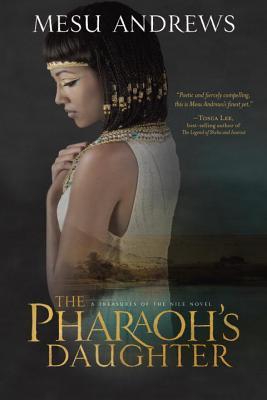
'The Pharoah's Daughter' by Mesu Andrews

22570814
2015 Reading Challenge, Week 21 - A Book that was based on a true story.
This one, of course, is based on very ancient Biblical history. 
  
Anippe has grown up in the shadows of Egypt’s good god Pharaoh, aware that Anubis, god of the afterlife, may take her or her siblings at any moment. She watched him snatch her mother and infant brother during childbirth, a moment which awakens in her a terrible dread of ever bearing a child. Now she is to be become the bride of Sebak, a kind but quick-tempered Captain of Pharaoh Tut’s army. In order to provide Sebak the heir he deserves and yet protect herself from the underworld gods, Anippe must launch a series of deceptions, even involving the Hebrew midwives—women ordered by Tut to drown the sons of their own people in the Nile.
     When she finds a baby floating in a basket on the great river, Anippe believes Egypt’s gods have answered her pleas, entrenching her more deeply in deception and placing her and her son Mehy, whom handmaiden Miriam calls Moses, in mortal danger.
  As bloodshed and savage politics shift the balance of power in Egypt, the gods reveal their fickle natures and Anippe wonders if her son, a boy of Hebrew blood, could one day become king. Or does the god of her Hebrew servants, the one they call El Shaddai, have a different plan—for them all?


MY THOUGHTS:
I've been told about the sight of the wonderful, life-giving River Nile lying in the scorching Egyptian climate, the only strip of blue. And I've been fascinated with the lavish pyramids and burial sites of Egypt. This story takes us there, to the time period of the first few chapters of Exodus. Anippe is an Egyptian princess who was forced to make a political marriage to Commander Sebak and move to the Delta, with its grain fields and Hebrew slaves. This is the story of how she becomes the adopted mother of Moses, when she went down to the river to bathe and discovered his basket. 

This time and place takes the phrase, 'Our lives have never been our own' to a crazy level. So many characters find themselves forced to do what's regarded as expedient for their people and country. Even those who make cruel decisions are shown to have been victims of the same phenomenon in their own lives. My heart ached for Tut, the confused ten-year-old boy who was forced into marriage with an older woman, even though I hated the cold-hearted monster he becomes later in the story when he made his edict about the Hebrew boy babies. I guess when you consider that Ancient Egypt was a place with so many gods for everything you could think of, it's no wonder trying to determine the person at the top got a bit confusing. How creepy that Anippe, who grew up alongside her brother, honestly came to believe that his emotional state translated as turmoil in the natural elements.

Mesu Andrews took quite a bit of poetic license with the plot, giving characters such as Puah and Shiphrah, the two midwives, their own stories of intense drama, tying in with that of the Egyptian princess. I can't help thinking of the flak certain biblical movies such as 'Noah' have received in recent years, making me wonder whether she 'Hollywood-ised' this story to some extent (such as the deal made between Puah and Anippe). The ruses Anippe goes through to claim the son she rescued from the River Nile is put forward as very tricky and underhanded in this novel. What a lot of personal and political intrigue gets drawn out of one simple passage in the Bible about young Moses being retrieved from the River.

I think the biggest strength of this novel was also the greatest weakness for me. The author did such a lot of research, the authenticity makes it harder for me to bond emotionally with any particular characters. Even 'good' guys, like Sebak, come across as a bit harsh. The ancient Egyptian mindset, which I'm sure Ms Andrews has nailed, leaves me cold, and thankful that I escaped being born into that time and place. 

So overall, although this novel has all the hallmarks of another brilliantly researched Mesu Andrews novel, it's not my favourite title of hers. However, this won't stop me reading more.
Some of my favourite quotes.
'Mered (Puah's husband) didn't understand Egyptian gods and symbols and legends, but neither did most Egyptians... At least El Shaddai was unchanging, though many Hebrews had given up hope of his ancient promises.'

Thanks to WaterBrook Multnomah and Blogging for Books for my review copy

3 stars

Wednesday, May 20, 2015

10 novels in which deceased people are main characters


For this week's Top 10 (which, being an Aussie, I've posted again on Wednesday instead of Tuesday, as we're always a bit ahead) we were given free reins to choose our own topic. I'm going with this one, for reasons you'll see below. Thanks again to The Broke and the Bookish for hosting these Top 10 weeks.

 
I got the idea because I'm researching the life of my grandfather, who died before I was born. It made me wonder whether it's really true that when we pass away, the spot we occupied simply closes over without leaving a mark.

 Soren Kierkegaard said something like, 'A tyrant's influence ends when he dies, but a martyr's influence begins when he dies' (or words to that effect). I don't believe you have to be a martyr for the influence of your life to keep making ripples long after you are no longer living it. Rather than being completely forgotten, our loved ones live on in our memories, and in the results of their influence and actions, which become part of a greater tapestry. 

The ten books I mention here are from a variety of genres, authors and eras. The main thing they have in common is that one character, who has clearly died before the story begins, still wields great significance to the point that they are clearly main characters, despite being deceased. These are just a sample of books I've read within the last few years. Let me know if you can think of any others.


A Man Called Ove 1) Sonja from A Man Called Ove (by Fredrik Backman)
Ove's wife, Sonja, passed away about six months before the story begins, but the loving hold she has on her husband is still huge, to the point where he wants to join her as soon as he can figure out a way. He still has the house set up as she left it, talks to her and prioritises his visits her gravestone. We see from flashbacks what a truly good person she was, whose attitudes and way of living shine from the pages. My review is here.


The Guernsey Literary and Potato Peel Pie Society 2) Elizabeth from The Guernsey Literary and Potato Peel Society (by Mary Ann Shaffer)
In this story told by letters, Elizabeth McKenna comes through in reminiscences as a heroine in a million. It's obvious that even though she's no longer with her friends and family, having been killed as a result of her acts of bravery, many of the good things they're enjoying wouldn't have been possible without her input. My review is here.


Making Marion: Where's Robin Hood When You Need Him? 3) Daniel, aka Henry from Making Marion (by Beth Moran)
The heroine, Marion, has beloved memories of her father who died when she was a child. He was the polar opposite of her mother, who traumatised and almost ruined her life. The reason Marion is in Sherwood Forest is to learn as much as she can about his youth. The details she discovers make him a very touching main character. My review is here.


Still Life 4) Julian from Still Life (by Christa Parrish)
A plane crash takes this hero's life at the very start of the book. We learn a lot more about Julian through flashbacks. His young wife, Ada, discovers more about just how loving her husband was as the story progresses. My review is here.


The Prayer Box 5) Iola-Anne from The Prayer Box (by Lisa Wingate)
This elderly character is discovered dead in her bed by fellow heroine, Tandi, who later turns her life around as a result of a wonderful discovery. Iola-Anne has left stacks of old diaries beginning from her girlhood. Their contents show that people generally misjudged this wonderful lady. My review is here.


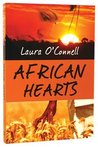
African Hearts 6) Marcus from African Hearts
In this Australian novel, the heroine, Gina, is called to Africa, as the result of her brother, Marcus' death. To her shock, she's inherited her brother's worldly goods, and custody of his son, Justin. We learn more about Marcus' good work and vision for his adopted country, along with Gina.

Book of Days 7) Jessie from Book of Days (by James Rubart)
Cameron's beloved young wife, Jessie, died in a tragic accident a long time before the start of the book. Cryptic challenges she left him are so compelling that they send him on an extreme search for a very important book. My review is here.


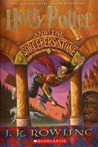
Harry Potter and the Sorcerer's Stone (Harry Potter, #1) 8) James and Lily from the Harry Potter series (by J.K. Rowling)
The fact the these two are dead is at the crux of the whole series, to their orphan son's regret. They died trying to protect him, and the further we read, the more we discover how crucial the Potter couples' role was in the whole intriguing story.


The Kitchen Daughter 9) Ginny's parents from The Kitchen Daughter (by Jael McHenry)
This couple, who looked after their Aspergers daughter, died at the beginning of the book, but are there in spirit, and she discovers more about their hidden lives after they are dead than she did during their lifetimes. My review is here.


Imogen's Chance 10) Hayden from Imogen's Chance (by Paula Vince)
This novel is one of mine, which I'm pleased to fit into this category. The character was 'Dad' to Asher and 'Uncle Hayden' to Imogen. I'll leave it to you to decide whether or not he was good. No matter what you decide, you'll see that even though he died five years before the novel's start, he's still large as life in my protagonists' decisions and thought processes.


Tuesday, May 19, 2015

'Deception on Sable Hill' by Shelley Gray

24426919
"The World s Fair is nearing its end, but the danger in Chicago lingers."

It s mid-September of 1893, and Eloisa Carstairs is the reigning beauty of Gilded Age Chicago society. To outsiders she appears to have it all. But Eloisa is living with a dark secret. Several months ago, she endured a horrible assault at the hands of Douglass Sloane, heir to one of Chicago s wealthiest families. Fearing the loss of her reputation, Eloisa has confided in only one friend. That is, until she meets Detective Sean Ryan at a high-society ball.

Sean is on the outskirts of the wealthy Chicago lifestyle. Born into a poor Irish family, becoming a policeman was his best opportunity to ensure his future security. Despite society s restrictions, he is enamored with Eloisa Carstairs. Sean seethes inside at what he knows happened to her, and he will do anything to keep her safe even if he can never earn her affections.

Eloisa longs to feel normal again in the midst of the danger surrounding the Chicago World s Fair, but a killer is on the loose. In the last month, three debutants have been accosted in the city by an assailant wielding a stiletto. As the danger in the city increases, and as Eloisa and Sean s romance blossoms, they both realize they want to be seen as more than how the world views them. But will they catch the killer before all their hopes come tumbling down?"

 
MY THOUGHTS:
The premise of this novel sounded intriguing. A criminal known as the Society Slasher is at large, committing crimes that sound like an inverse of Jack the Ripper. His victims tend to be elegant women who are the cream of Chicago society in the Gilded era.

Irish working class policeman, Sean Ryan, finds himself falling for Miss Eloisa Carstairs, who he's attempting to protect in the line of duty. His partner, Owen Howard, a man of noble birth, is having the opposite problem, as he's attracted to Sean's younger sister, Katie, who doesn't believe she'll ever be suitable for him. All the while, the Society Slasher keeps committing his gruesome deeds. I really wanted to get stuck into the story, but in several ways, it didn't meet my expectations. I'll try to explain why.

It's not the sort of interactive mystery in which readers get to have a go at trying to figure out the Slasher's identity, because we aren't given many clues. We are not introduced to a range of key suspects or society men. The main male characters are the two cops, who are, of course, above suspicion. It got to the point where I didn't care who the crook was, as he was obviously somebody who was not given much page space. And Sean and Owen, who were supposed to be on the case, seemed to spend more time pondering their romantic dilemmas than trying to put together a list of possibilities. Parts of the story seemed to drag a bit, as neither of them had any more clue than I did.

The romances were a combination of fast and slow to me. Fast in that both attractions seemed to be instantaneous and based on first impressions, and slow in that they were full of the sorts of deliberate misunderstandings that tend to crop up in these stories of unequal social yoking. Hero snaps at heroine, believing it's for her own good, and she goes off devastated, determined to forget that she ever gave him a thought, but we know that the misunderstandings will be ironed out in the end. 

Now, here's what redeemed the book a bit for me. The ways in which each social class tended to judge the other as inferior was handled very well. Eloisa's snobbish parents are stereotypical as we may expect (they even have a butler named Worthy), but the attitude of Sean's older sister, Maeve, toward Eloisa reveals a lot. When Eloisa volunteers to help at Maeve's charity house, Maeve is quick to sum her up as a shallow princess type with time on her hands who simply wants a reason to give herself a pat on the back. It really shows that even when people wanted to reach out to others, it was often impossible, as their motives were questioned. It makes me glad that we've come so far, and not the least that the police force is now a more respected profession, as it deserves to be.

So for me overall, it was thumbs down for the mystery, thumbs down for the romances, but thumbs up for the social commentary. Perhaps if I hadn't expected a mystery in the Agatha Christie sense of the word, I might have felt differently.

Thanks to Net Galley and Zondervan for my review copy

2.5 stars

Monday, May 18, 2015

'The Kitchen Daughter' by Jael McHenry

11911197 
2015 Reading Challenge, Week 20 - A book from the bottom of your 'to read' list.
I dug down to my first TBR page on Goodreads, which as you can imagine was started a long time ago. This is the first book from it which arrived at my local library, so this was the one it turned out to be. I'm so glad, as I loved it! 

After the unexpected death of her parents, painfully shy and sheltered 26-year-old Ginny Selvaggio seeks comfort in cooking from family recipes. But the rich, peppery scent of her Nonna’s soup draws an unexpected visitor into the kitchen: the ghost of Nonna herself, dead for twenty years, who appears with a cryptic warning (“do no let her…”) before vanishing like steam from a cooling dish.

A haunted kitchen isn’t Ginny’s only challenge. Her domineering sister, Amanda, (aka “Demanda”) insists on selling their parents’ house, the only home Ginny has ever known. As she packs up her parents’ belongings, Ginny finds evidence of family secrets she isn’t sure how to unravel. She knows how to turn milk into cheese and cream into butter, but she doesn’t know why her mother hid a letter in the bedroom chimney, or the identity of the woman in her father’s photographs. The more she learns, the more she realizes the keys to these riddles lie with the dead, and there’s only one way to get answers: cook from dead people’s recipes, raise their ghosts, and ask them.


MY THOUGHTS:

Ginny Selvaggio is a 26-year-old with Asperger's Syndrome whose parents have died suddenly in an accident. Cooking is her stress outlet, and quite by chance, she realises she can summon ghosts when she cooks from recipes written in the person's own handwriting. But she only has a short time with each of them before the fragrances of their dishes waft away, and visits are limited to once only.

My heart warmed to Ginny straight away. She couldn't avoid a complex that she lacks something essential, since people treat her different from others. It's easy to shun what we don't quite understand, but this book makes it clear what a lot we may miss when we don't make the effort. I like Ginny's 'Normal Book' in which she tries to convince herself that she really is the same as everyone else, and most of all, I enjoy the way she perceives people's voices in terms of food and drink. Amanda's is like orange juice, sweet but sharp, Dad's sharp and round like tomato juice, David's dark and muddy like coffee left on the burner, and Mum's, like regular spearmint but with a laugh like popping bubble gum. From those descriptions, I could certainly hear them. 

How interesting that Amanda was cast as the antagonist, since she seems pretty 'normal' to me. Perhaps she represents a side of most of us which we flinch from facing. It's easier to criticise somebody else than acknowledge it. The desire to want to run the show has definitely surged up in me at times. I hated the way Amanda fobbed her sister off whenever the subject of the house sale came up, yet as this story is told from Ginny's point of view, Amanda is bound to show up as domineering and controlling. It's obvious from the things she says that it's a different story from her own vantage point. Maybe it's a bit of a worry that so many of us are ready to come down so hard on a frazzled young mother who has just lost her parents.

In the author interview at the back of the book, Jael McHenry states that agents advised her not to include the Asperger's aspect, thinking it might be harder to sell the book, but she stuck to her guns. I'm so glad she did, as the Asperger's theme was definitely a highlight, and it would've been a poorer book without it.

The story leaves us with the comfortable feeling that just because people may not understand us, doesn't mean we're bad. It's about keeping our wits about us, because when well-meaning people like Amanda 'put a word on us' it may mean the difference between whether we prosper in own unique way, or cave in to the labels which are thrust on us. And so many us really don't fit at the top of the bell curve when it comes to definitions of normal. Let's not think harshly of ourselves for not fitting neatly into the world's narrow definition.

David: What have you got?
Ginny: A personality.

I'll be careful to give no plot spoilers here, but the part near the end where Ginny makes the hot chocolate - I'm sure many of us figured out what was happening before she did. I groaned out loud. I wish that part of the story could have worked out differently, but it's a neat wrap-up for all that, and I consider it an upbeat book in spite of everything.

It's a story I recommend to all foodies and anybody with an Asperger's diagnosis in their family.

5 stars

Saturday, May 16, 2015

'Travelogue of the Interior' by Karen Dabaghian

25238172
Most travel tales begin and end with the book in your hand. Not this one.

As Karen Dabaghian shares the adventure of her year in the Psalms, you’ll embark on an ancient journey for those hungry to know God more intimately.

The Psalms were the hymnbook of the Hebrews, Jesus, and the early church. Today, we tend to pluck a verse here and there for a word of encouragement, but we have lost the Psalms as a guidebook for spiritual formation.

You can rediscover the Psalms as a traveler. Explore the terrain where your interior life and the Word of God intersect. Begin speaking to God with raw honesty. Listen as God replies with personal, life-giving words.

Above all, discover at the feet of the poet-king how to “taste and see that the LORD is good.”

 
MY THOUGHTS:
 
Some books are best read slowly and reflectively. This is one of them. Karen Dabaghian was invited by her pastor to attend a course he was running on David's Psalms. Participants were to study them along with the corresponding narrative in 1 and 2 Samuel, then write their own poems of lament and praise in response. She expected to feel out of her depth, but it turned out to be an amazing and enlightening time of personal growth.

Dabaghian is convincing in her appeal that we should all write poetry. She believes that if she can rise to the challenge, anyone can. She wishes poetry were not the 'exclusive domain of the intellectual elite', because this scares ordinary folk from believing that we too may capture the ebb and flow of our lives, if we only dare try. Each reflective chapter ends with a beautiful and heartfelt poem which almost does encourage me to have a go.

Here are just a few of her interesting musings inspired by the Psalms.

1) She ponders the chicken and egg conundrum with regards to faith and works; which comes first? We assume that God has a master plan which we need to figure out like clues in a mystery novel, but what if the process is actually more malleable, and our perspectives and desires shape God's heart, as well as the other way around?

2) She challenges us to consider our motives to be sure why we even want to worship God. Is it because He gives us good things, or simply because of who He is? And she looks at the problematic aspects of using exclusively male terminology when referring to God.

3) If joy is the sensation we have in the presence of God, then what if the term 'worship' simply covers the spontaneous things we do in response to this. It would follow that these will be way different for everyone.

4) She tackles what I think of as 'the big question' stemming from what seems to be taken as a given in many Christian books. What does the prolific phrase, 'God told me...' really even mean? Since people generally agree that it's not audible conversation, could our personal feelings be signposts along the way? They seemed to be springboards for David in his writing.

5) Then she gets into another 'big question' about sin. Could it be hardwired into our cells and tissues, making it impossible to ever completely squelch? I took notice because I'd just finished reading a science article which told me our selfish impulses are wired into the brain. But even if this is true, isn't it what the Gospel is all about? I have to say, it's refreshing to see a Christian author tackle the sacred cow of creationism versus evolutionism, making us wonder whether it's even worth arguing about.

There were personal lessons for me too. At first as I read, I got the impression that Karen might be the sort of person I hate to find myself stuck with in small groups. Just from random remarks she made, I pictured her as the type who monopolises sessions with questions and comments while others can't wedge a word in. There's usually at least one in every crowd. I might be totally wrong here, but my feelers were waving. Yet as I got used to her style, I came to love her depth, honesty and wisdom. Even as our methods of approach may be different we're pretty similar in many ways. Personal doubts about our own worth, depression and feelings of floundering may be common to all types of personalities, although we wouldn't believe it of others who appear to be going along just fine. I love the appreciative way she writes about her family and friends.

What are my favourite parts of this book?

Honest, probing quotes, such as, 'The only thing we could safely say when asked, "What would Jesus do?" is "Probably some option I'm not even considering at the moment."'

Overall, the beautiful, over-arching sense of God watching over our lives, not so that He can fix what is broken, but simply because He delights in us. Kudos to Karen Dabaghian for writing this, and I hope she has more to come.

Thanks to David C. Cook and Net Galley for my review copy.

4 stars

Wednesday, May 13, 2015

Marginalia - love it or hate it


Defined on Wikipedia as 'The scribbles, comments and illuminations in the margin of a book,' you come across this practice everywhere. Marginalia is generally handwritten by readers who believe they have something to add to an author's words, or simply wish to remember them. For such a simple habit, I was amazed by the polarising opinions expressed by the general public in a poll I saw.

I'll get the negative out of the way first. Some people seemed to react as if they were being asked about murder. Since some book lovers consider their books to be living friends, maybe that makes sense. Others tend to treat it like graffiti. Vandals who may consider themselves artists deface public property, in the same way that disrespectful or know-it-all readers deface the pages of books. Since some profanity and coarse language is probably bound to make it into this sort of writing at times, they may have a point. However, I believe that if we're willing to think outside the square (and I realise that's a sort of pun), there's lots of good to be said about marginalia.

For a start, old books with marginalia may retain something of their former owners' presence, giving you a buzz, or even a bit of insight when you come across it. In Lucy Maud Montgomery's 'The Golden Road', the Story Girl receives a Christmas present from the Awkward Man. (Montgomery's tendency to give people labels as names really comes out in this book.) It turns out to be an old book with a great many marks on its pages. The Story Girl's pretty and worldly cousin, Felicity, accuses the Awkward Man of being cheap, and the Story Girl quickly sets her straight, saying she'd rather have her friend's marginalia than a dozen brand new books. She used different words, but that's the gist of it.

It's more likely remarks scribbled down as marginalia will be honest, heartfelt reflections which might benefit others, otherwise the person who wrote them wouldn't bother. For the same reason, they are often witty, interesting and well worth adding. Spontaneous and fluent thoughts are often the best, and they are what we so often get with marginalia.

If you can call it a hobby, it's a good, cheap one. All you need is a nice sharp lead pencil. Personally, I think this is stretching it a bit, and wouldn't recommend that we go jotting margin notes all over library books, calling it our hobby. In fact, if you think a book is worth lots of marginalia, you might as well get a writing pad, jot it all into a longer article and make it a book review.

Edgar Allen Poe wrote, 'In getting my books, I have always been solicitous of an ample margin ... for the facility it affords me of pencilling in suggested thoughts, agreements, or brief critical comments in general.' If I came across that in an actual book, I'd be tempted to underline it and write a margin note saying, 'Yes, I agree!'

Perhaps the saddest bit of marginalia, as mathematicians would surely agree, was written by Pierre de Fermat in a text book entitled 'Arithmetica'. He wrote, 'I have discovered a truly marvellous proof which this margin is too narrow to contain.' And Fermat's Last Theorem remained unproven by fellow mathematicians for another three hundred years.

To prove that this practice shouldn't be marginalised (hey, another pun), I'll mention three novels, including one of mine, in which a bit of marginalia turns out to be integral to the plot.

1) The Kitchen Daughter, by Jael McHenry
The Kitchen Daughter One of the main characters, David, jots a little margin note in the heroine, Ginny's, cookbook. It's simply that she should add a pinch of ancho powder to her hot chocolate to improve the flavour, but the effect is devastating. You have to read it. My review is here.

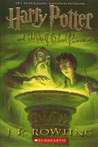
2) Harry Potter and the Half Blood Prince, by J.K. Rowling.
Harry Potter and the Half-Blood Prince (Harry Potter, #6) In this sixth book in the series, Harry finds himself in accidental possession of a second hand Potions text book. The former owner had filled it with all sorts helpful additions, jottings and advice. In the short term, this marginalia helped Harry shoot to the top of the class in Potions. Only later does he learn the cost of owning the Half Blood Prince's book.

3) A Design of Gold, by Paula Vince
A Design of Gold I wrote this novel in 2009, long before I'd heard the term, marginalia. While planning this blog post, I was really pleased to remember this, as you can imagine. My characters, Piers and Casey, discover a book owned by their son, Jerome, in which he has scribbled all sorts of margin notes, giving them vital clues about how troubled he has been in his mind, and why. 'A Design of Gold' contains a lot about the enormous impact a random book may have on the life of the individual who happens to find it. I'd love it if you'd read that one too.

I'm sure there are many other novels, such as mystery stories, in which marginalia features strongly. If you can think of any, please let me know in the comments. I'd also love to hear any interesting true stories about marginalia you might have come across, not to mention your own feelings about the subject.