Wednesday, July 2, 2014

'Burning Sky' by Lori Benton

Burning Sky
Abducted by Mohawk Indians at fourteen and renamed Burning Sky, Willa Obenchain is driven to return to her family’s New York frontier homestead after many years building a life with the People. At the boundary of her father’s property, Willa discovers a wounded Scotsman lying in her path. Feeling obliged to nurse his injuries, the two quickly find much has changed during her twelve-year absence—her childhood home is in disrepair, her missing parents are rumored to be Tories, and the young Richard Waring she once admired is now grown into a man twisted by the horrors of war and claiming ownership of the Obenchain land.

When her Mohawk brother arrives and questions her place in the white world, the cultural divide blurs Willa’s vision. Can she follow Tames-His-Horse back to the People now that she is no longer Burning Sky? And what about Neil MacGregor, the kind and loyal botanist who does not fit into in her plan for a solitary life, yet is now helping her revive her farm? In the aftermath of the Revolutionary War, strong feelings against “savages” abound in the nearby village of Shiloh, leaving Willa’s safety unsure.

Willa is a woman caught between two worlds. As tensions rise, challenging her shielded heart, the woman called Burning Sky must find a new courage--the courage to again risk embracing the blessings the Almighty wants to bestow. Is she brave enough to love again?


MY THOUGHTS:

First of all, I've got to mention the excellent way this book came to me. I won it by commenting on a blog, and it was delivered by the postman the very morning I was keeping track of the 2014 Christy Awards on live feed. Just as I was unwrapping it, this book was given a triple honour, winning two categories and book of the year. I couldn't ask for a better time to receive it.

Willa Oberchain was abducted by tribal Indians aged 14 and re-named Burning Sky. Twelve years later, her Indian family are all lost because of war or sickness, and she returns to her birth parents' property, to find them missing and presumed dead. There are several unforeseen roadblocks in the way of claiming her rightful inheritance. It's a well-researched story about the lonely, bereft young woman who feels she fits in nowhere, and the two men who love her.

There was no typical lovers' triangle, in which there is a clear favourite. Both men are God-honouring, sincere and lovable guys. The first we meet is Neil McGregor, the young Scottish botanist who was once almost scalped by Indians and lost his ability to read and write. The other is Joseph Tames-his-Horse, Willa's tribal 'brother' who would have had romantic intentions if she hadn't been assigned to his clan all those years ago. I appreciate it that, all through the story, these two can't help regarding each other with grudging like and respect, even though they view each other as rivals for Willa's affections. Actually, for a great part of the story, neither of them expected her to choose either of them, as she insulates herself from possible affection, having suffered so many hurts and tragic losses in her past

I like the way she identifies with the Indians and their culture as much as with the white settlers, since she'd spent almost half her life with them. But she knows that in the view of others, instead of belonging two places, she belongs nowhere. Having what I'd call 'David Bowie eyes' (different colours, one brown and one green in her case) may accentuate her impossible situation of being split between two totally different peoples and ways of life.

If there's ever a sequel dealing with the young siblings, Matthew and Maggie Kershaw, when they grow up, I'd read it for sure. I'd like to know what becomes of Francis Waring too, and Anni's two sets of twins. There are certainly several characters who hold our interest. Even the 'bad guy' is easy to regard with a bit of sympathy until the very end, when we find out exactly how low he is prepared to stoop.

4 stars

Burning Sky: A Novel of the American Frontier available from Amazon

Monday, June 30, 2014

Interview with Patrick W. Carr


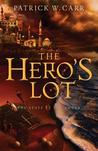
A Cast of Stones (The Staff and the Sword, #1)A Draw of Kings (The Staff and the Sword #3)The Hero's Lot (The Staff and the Sword, #2)


Today, I'm delighted to welcome a special guest, Patrick W. Carr, the author of the Staff and the Sword trilogy.  'A Cast of Stones', the first book in his trilogy, was a finalist in two categories of the 2014 Christy Awards. Both 'A Cast of Stones' and 'The Hero's Lot' are finalists in the Speculative category of the Carol Awards, which will be announced in September. He's also a High School Maths teacher and father of four sons. Thanks for coming to speak with us today, Patrick.

1) Your main character, Errol Stone, is one of my favourite heroes. His transformation from village drunk to national hero is phenomenal. But if you had to choose just one of his attributes you’d hope readers would take away from the series, which would it be? 

 I loved writing Errol. In more than a few ways, he becomes the man I’d always hoped I would be. I think if we could all display his grit for getting through difficulties without surrendering to despair, we would find that we’re capable of so much more than we ever dreamed. I see the same thing in my classroom. I’m fortunate to teach at an academic magnet, but there are always students who struggle with Geometry. The subject matter is so different from the Algebra => Calculus track. But each year there’s always a few students who capture my heart and it’s never the ones who breeze through the course. It’s those who never quit, who steadfastly refused to surrender despite struggling on every single quiz, test, or project. I admire them so much and they teach me the meaning of grit. That was one of the things I wanted to capture with Errol.

2) You’ve created a vast and complex fantasy world. The kingdom of Illustra is full of unique provinces, and surrounded by equally distinctive foreign nations. Did you take time to map all this out before you ever put pen to paper? If so, how long did it take? 

 I have to confess that I cheated a bit. I’ve had more than a few people complain that I didn’t include a map with the books. I actually had one drawn up, but the publisher thought it looked a bit too much like Europe. In reality, it was Europe. By the time I signed the contract for “A Cast of Stones” I’d already completed the manuscript and in its first incarnation it was written as an alternative history of Europe. So the provinces are very close to Europe’s countries and the surrounding nations are similar as well. With my new book series I’m creating a world from scratch. So one of the things I’ll be doing this summer while school is out is getting some map-making software and putting the ideas down in a publishable form. I hope the readers like it.

(Wow, that may explain why each province and nation seemed reminiscent of places I was familiar with. I'm guessing the Green Isle with its capital, Erinon, might have represented Great Britain and London. Now I wish I could ask another question. Whereabouts on the map was Callowford, the country village where Errol and Liam were born?)  

3) Your cast of characters is extensive and well-rounded. Apart from Errol, can you single out two or three as your personal favourites?

  I have an deep and abiding love for Cruk, Rokha, and Waterson. Every time I brought them into a scene, they had a way of stealing the dialogue with their dry, cynical wit and unencumbered view of life. I can’t tell you how many times I’d be in Starbuck’s and start to cackle when they would say something. They are so funny. And they’re intensely loyal as well, but it’s on their own terms.

(I loved those three too.)

4) The Church of Illustra relies hugely on the casting of lots as a main source of guidance from God (or Deas, as He’s known in the stories). This is a fascinating part of the plot. Can you tell us how you thought of it? 

I was reading a paraphrase version of the Bible and came across a verse that said “God is in the lot.” My mind started to turn that over and like I usually do, I started to play with the idea. What if lots were still in use past the Old Testament? What if the Church depended on them instead of the Holy Spirit to divine God’s will? What would be the limitations, political implications of having access to that much information? By the time I’d asked those questions I knew I had the makings of a very cool story. The challenge then became whether I  could do it justice on the printed page.

(You must be delighted with the result.)

5) I’m glad I was able to read the trilogy straight through without stopping. The series contains plenty of unfolding revelations, keeping us on the edges of our seats. Was it difficult to refrain from giving plot spoilers during those times between the release of each book of the trilogy? 

Horrendously difficult, especially during interviews. I had to keep in mind that a lot of people hadn’t read the first book yet. Even now I get emails asking me to explain some of the allegorical or symbolic references hidden in the story. I always respond, but I ask the recipient not to share it online because I know there are people who are re-reading the series trying to figure those things out for themselves. I wouldn’t want to spoil it for them. In a few years, I’ll probably put a page up on my website with a big “Spoiler Alert” and lay out everything that I placed into the trilogy. A lot of people have picked up quite a bit of it, but so far nobody has gotten it all. I think it makes for a fun read.

6) What was your favourite part of the writing of the trilogy, and what was most difficult? 

My favorite part was framing the characters and then just letting them run away with each scene. So many times they did or said something that caught me completely off-guard and only did I realize later that it was perfectly in character. That’s how life is. Husbands, wives, children, or friends will do something that surprises us, but we look back later and realize we should have seen it coming. The hardest part was keeping the story to the length the publisher required. I signed a contract that said each book would be 135,000 words and managed to come in close to that with the first two books. “A Draw of Kings” was another story. I knew it would be tough given the three different plot lines and I wasn’t wrong. I blew right through the word limit and had to spend three months cutting the manuscript to size. It felt like pulling porcupine needles out of my skin. In the end we settled on 142k, but I would have liked and fifty thousand words even so.

(I can imagine how hard that must have been. I admit I would have liked that story to go on and on.)

Patrick Carr was born on an Air Force base in West Germany at the height of the cold war. He has been told this was not his fault. As an Air Force brat, he experienced a change in locale every three years until his father retired to Tennessee. Patrick saw more of the world on his own through a varied and somewhat eclectic education and work history. He graduated from Georgia Tech in 1984 and has worked as a draftsman at a nuclear plant, did design work for the Air Force, worked for a printing company, and consulted as an engineer. Patrick’s day gig for the last five years has been teaching high school math in Nashville, TN. He currently makes his home in Nashville with his wonderfully patient wife, Mary, and four sons he thinks are amazing: Patrick, Connor, Daniel, and Ethan. Sometime in the future he would like to be a jazz pianist. Patrick thinks writing about himself in the third person is kind of weird.

Here is my review of A Cast of Stones
I've also written reviews of The Hero's Lot and A Draw of Kings but recommend that you don't read these until you finish the book which came before, as they contain plot spoilers from the prior stories. 


Cast of Stones, A (The Staff and the Sword) available from Amazon
 Hero's Lot, The (The Staff and the Sword) available from Amazon
  Draw of Kings, A (The Staff and the Sword) (Volume 3) available from Amazon

Sunday, June 29, 2014

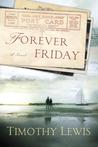
'Forever Friday' by Timothy Lewis

Forever Friday: A Novel After a devastating divorce leaves Adam Colby heartbroken, he is not sure how he can put the pieces of his life back together. He wonders if even God can make sense of the mess that remains-until a package of mysterious postcards that direct Adam to the story of Gabe and Huck Alexander. Drawn by her desire to find a true soulmate, Pearl "Huck" Huckabee breaks a turbulent engagement with her fiancé to marry Gabe Alexander, a man she's known just a few short weeks. Wanting to celebrate and protect their love, Gabe mails her a meaningful postcard every week-beginning in 1926-for the next sixty years. Designed to arrive on Fridays, each postcard not only contains an original poem, but holds precious truths, the sum of which answer the universal question: what makes a marriage last? As Adam begins to uncover the Alexanders' secret, he records Gabe and Huck's extraordinary romance. It's a process that will change his life forever.

MY THOUGHTS:

This struck me as a very different novel from the norm, but at first I couldn't figure out why. After some thought, I decided it was because of the instant, intense 'love-at-first-sight' theme between Gabe and Huck, the two main characters. I'd just finished reading a string of novels in which the romantic duo were antagonistic toward each other until the plot drew warmer feelings out of them. As that scenario may be what we come to expect from romances, I was wondering why 'Forever Friday' seemed to work. I've heard stories of love at first sight in real life, but would have expected it to come across as a bit bland in a story context, without the emotional drive to keep us wondering how they will end up together. In a way, we had it handed to us on a platter. Boy meets girl when he serves her at a fish market, and wow, sparks fly. What's the fun in reading that?

It's very well written as a historical story. The details of life in that 1920s flapper/jazz period made me feel drawn straight into that decade, especially its colourful, fun aspects. In some ways, it's more like reading the fond biography of somebody's grandparents rather than a novel.

Perhaps our interest is maintained by the other main character, Adam, whose story takes place in a later time period. He's a recent divorcee, still caught up in sadness and regret, who discovers a pile of old postcards which reveal Gabe, Huck and their love story. The intrigue comes as we wonder what he's going to do with this historical find, and how he'll let it shape his life. I was definitely wondering what he was going to learn from this old couple.

I'm certainly glad I read it, as it challenges me to think outside of the box when it comes to the appealing factor without relying on normal story structures we may be accustomed to.

Thanks to Net Galley and Water Brook Multnomah Publishers for my review copy.

3.5 stars

Forever Friday: A Novel available from Amazon

Thursday, June 26, 2014

'The Book of not so common Prayer' by Linda McCullough Moore


Do you want to pray deeper, longer, more fervently? Do you want to move from the same old, same old prayer routine to a radical, challenging, and inspiring prayer life? Do you want to put more meaning and effort into your conversations with God?
The Book of Not-So Common Prayer is a handbook that combines spiritual insight with practical action steps you can take to change your prayer habits—and change your life. In describing her own transformation from a person who prayed on the run to a person who prays four times a day, Linda McCullough Moore builds a compelling case for a life founded on prayer. Drawing inspiration from the ancient practice of meditation, Moore shows how any time spent in prayer will transform the time you spend with your family, at work, or in play. She then delivers a well-supported methodical process you can follow to experience more depth, meaning, and joy in your prayers. A masterful blend of useful models and stories of transformation, this beautifully written, evocative, and intelligent handbook will inspire you to embark on a new adventure in faith . . . one step at a time.
MY THOUGHTS:
Linda McCullough Moore was inspired by the life and habits of Brother Lawrence to ramp up her prayer life, and shares the results in this interesting and varied book. None of us want to utter routine prayers. We all long for heart engagement, and she's full of ideas of how to achieve this.

I like her emphasis on the fact that God does not bless us based upon our personal efforts but completely because of who He is. It takes a burden off us that we shouldn't have ever taken on. She urges us to view prayer as a spiritual connection with our living God, rather than pulling teeth. For those who face prayer as a chore to get over and done with, she challenges us to see that it should be approached as natural, because it's the way human beings were wired.

Moore shares her creative ways of going about it. She collects prayers of the saints, she prays scripture, she sings, contemplates, meditates, and uses the written word, candles and charts.

Some of her advice will suit those searching for something practical, such as telling us to accept that our 'to do' lists will never be complete, so while we're whittling away at them, we'd do well to keep our main focus on our relationships with God and others. She recommends ways to make time for prayer and reflection, when it already seems to be full of other things.

Every so often she made statements which made me think, such as suggesting that instead of commiserating with people who tell us that they've been too busy to pray, we should encourage each other to keep pushing in. It should be the most important aspect of life, which she backs up by quoting 1 Samuel 12:25, 'I would never sin against the Lord by failing to pray for you.'

It's an easy, helpful read with moments of sudden conviction.

I received a copy from Net Galley and Abingdon Press in return for an honest review.

3.5 stars

The Book of Not So Common Prayer: A New Way to Pray, A New Way to Live available from Amazon

Wednesday, June 25, 2014

'Invisible' by Ginny Yttrup

Invisible: A Novel
Ellyn DeMoss -- chef, cafĂ© owner, and lover of butter -- is hiding behind her extra weight. But what is she hiding? While Ellyn sees the good in others, she has only condemnation for herself. So when a handsome widower claims he’s attracted to Ellyn, she’s certain there’s something wrong with him. Sabina Jackson -- tall, slender, and exotic -- left her husband, young adult daughters, and a thriving counseling practice to spend a year in Northern California where she says she’s come to heal. But it seems to Ellyn that Sabina’s doing more hiding than healing. What’s she hiding from? Is it God? Twila Boaz has come out of hiding and is working to gain back the pounds she lost when her only goal was to disappear. When her eating disorder is triggered again, though she longs to hide, she instead follows God and fights for her own survival. But will she succeed? As these women’s lives intertwine, their eyes open to the glory within each of them as they begin to recognize themselves as being created in God’s image. 
  
MY THOUGHTS: 

 I love it that the four main characters are instruments of healing to the others, even though they each battle with grief and shame in their own ways. Ellyn the chef loves her food, especially gorgeous globs of butter, and wonders whether she loves food more than she loves God. Sabina is dealing with depression, and even though staying in bed is no longer satisfactory, she can't muster a spark of energy for anything else. Twila is a young woman recovering from anorexia and trying to deal with the hurt that triggered it. Miles is a doctor who couldn't save his wife's life.

I found myself challenged by the notion of what it really takes to be a good friend. It may mean we need to behave in a way which annoys the other person. It is easy to choose the path of least resistance, wanting to come across as 'nice' by going along with our friends and letting them do what they claim they want to. But true friends risk objections, annoyance, rejection, and coming across as pushy. It takes intuitiveness and a willingness to be unpopular. This comes across in the friendship between Ellyn and Sabina especially.

Some readers may think this is a book about 'nothing', because each woman's heartache goes largely unseen by the wide world. Those who don't understand may think, 'Why don't they just snap out of it and use a bit of will power?', but although the characters' behaviour may seem trivial, their issues have the potential to ruin their lives. They may cause and prolong their problems by the patterns of their thoughts, but this makes it no easier to stop.

It's interesting to see how food is all tied up with the emotions. Hurting people, such as overweight Ellyn and anorexic Twila, may use it to try to control or help deal with their issues.

The overriding theme is that everyone is made in God's image (Imago Dei) and carries their own inner beauty which should not be concealed. For example, the story makes it clear that Ellyn's excess weight does not detract from her beauty at all, and is only a potential problem as far as her health and self-concept is concerned. It shows that part of being created in God's image is reflecting Him to others, yet it's hard to do this when you're mired in your own pain. Although we may have different manifestations of hurt, the underlying issues may be highly similar. For this reason alone, the book would probably strike a chord with every readers and deserves a high rating.

'He wants you for Himself. He wants to enjoy you, lavish you with His love, and complete the good work He's begun in you.' That goes for all of us who read the book.

4.5 stars

  Invisible: A Novel available from Amazon

Monday, June 23, 2014

Interview with Lynne Stringer


Today, it's my pleasure to introduce Lynne Stringer, the Australian author of an intriguing fantasy trilogy. The first of her trilogy, 'The Heir' has recently been awarded the literary classics seal of approval (see here). I asked Lynne the following questions.

1) The genre you write is enjoying lots of popularity – young adult fantasy series which may especially appeal to teenage girls and young women. What, in your opinion, sets your Verindon series apart?

The Verindon trilogy shares common elements with other stories in this genre, with themes such as forbidden love mixed in with sci-fi/fantasy and people who aren’t what they seem on the surface. I think every author faces the task of making their take on what are usually established elements and making them his or her own.
I think the nature of one particular group of people in my story gives it an edge that isn’t like anything I’ve seen in this scenario (I can’t go into specifics – spoilers!) and I have put plot twists in all three books to keep the audience guessing. The trilogy does seem to have a broad appeal; I have teenage fans and also some grandparents who are fans, so its reach is multigenerational. Hopefully that means I’ve done something right.

2) The three books in your trilogy were published reasonably close together. Did you have the entire plot determined in your head before you started work on the first? Or did some developments in ‘The Crown’ and ‘The Reign’ surprise you, even after the publication of ‘The Heir’?

I had the major plot development – the relationship between the two leads – sorted out before I sat down to write The Heir. However, other elements took me by surprise. While much of The Heir was worked out in my head before I wrote it, a great deal of The Crown was written off the cuff. The second half of The Reign was also a late development, to such an extent that I didn’t realise one particular character was going to die until I was writing that scene.

3) What was your inspiration for the trilogy?

My husband thinks cheesy pick-up lines are funny, not that he ever uses them on anybody. (Lucky for him!) One day when we were driving to the Sunshine Coast for a holiday, he was trying to make me laugh by telling me his favourites. I was trying to think of some too, but I’m not good at that kind of thing. The only one I could think of was the line where the guy says to the girl, ‘you are the only reason I was put on this planet’. As I thought about that, I started to think about what it might mean if someone said that to a girl and meant it literally. He really was only on that planet because of her. Before I knew what was happening, the story was swirling around in my head and I spent most of our holiday thinking about it.

(That's such a romantic inspiration. I love it.)

4) There have been many discussions about the benefits of using writing tools and programs such as Scrivener. Did you keep your stories filed tidily with the aid of something like this, or do you tend to store it all in your head or notebooks?

No, I don’t even like writing outlines! I usually create the majority of it in my head, at least as far as major plot developments go. Some of the minor stuff takes me by surprise, but I always know exactly who my characters are and what motivates them before I start writing. 

(Glad to hear I'm not the only one.)

5) Have you based the appearances or personalities of any of your characters on anybody living? Do you keep images of what you believe they look like?

Dan, the male protagonist, is entirely a work of fiction, but Sarah, the female protagonist, is based on myself. When I originally thought of the idea I enjoyed imagining how I would behave in that circumstance. This may be a major reason why I wrote the books in first person from Sarah’s point of view.

6) Your main character, Sarah, is introduced to readers as a fairly reserved person, even though her mind is always racing. It’s great to see characters like her, especially as introverts are getting more positive and empathetic exposure in the media than ever before. Is her personality one you can relate to personally? What strengths do you think introverts bring to the world?

Yes, she’s pretty much me, although I think she’s braver than me. She’s also been through a lot more trauma than I have, and still comes out strong in spite of that. I think it’s important that people see introverts in that light; as people who are brave, although perhaps not always in the conventional way we see bravery.

(I completely agree. She's an excellent heroine.)

7) Finally, I believe you are a prolific reader. How has reading impacted your life?

It has had a profound impact on my life. I’m a writer and my father is also a writer. My brother writes a little too. So where did this talent come from? Obviously, somewhere in my father’s line. However, his parents, who lived in England, were from a poor socio-economic background. They didn’t have the opportunities that I had or that my family now has. In fact, a little further back, we know for a fact that some of my ancestors were illiterate. More than likely, my talent for writing comes from one of them, and I mourn for the stories that they probably told, but I will never get to hear, because they spent their lives digging holes to earn enough to feed the little ones waiting at home and never learned to read and write.
Learning to read and write is of utmost importance. Not only does it allow communication and learning on a higher level, it also allows these stories to be captured so that future generations can enjoy them. It’s wonderful to think that, the more people learn to read and write, the less likely we are to lose their stories.  

(Several of my British ancestors from the 1800s were illiterate too. It's good to be reminded not to take the privilege of being able to read a good book for granted.)

Lynne is offering a free copy of 'The Heir' to one commenter, who will be chosen randomly.


Lynne Stringer has been passionate about writing all her life, beginning with short stories in her primary school days. She began writing professionally as a journalist and was the editor of a small newspaper (later magazine) for seven years, before turning her hand to screenplay writing and novels. Lynne currently works as a professional editor and proofreader. She lives in Australia with her husband and young son.
The Heir available from Amazon
 The Crown (Verindon Trilogy) available from Amazon
The Reign available from Amazon

Thursday, June 19, 2014

'Oath of the Brotherhood' by C.E. Laureano

Oath of the Brotherhood (Song of Seare, #1)
In a kingdom where the Old Ways hold fast and a man's worth lies entirely in his skill with the sword, Conor Mac Nir is a scholar, a musician, and a follower of the forbidden Balian faith: problematic for any man, but disastrous for the son of the king.When Conor is sent as a hostage to a neighboring kingdom, he never expects to fall in love with the rival king's sister, Aine. Nor does he suspect his gift with the harp (and Aine's ability to heal) touches on the realm of magic. Then his clan begins a campaign to eliminate all Balians from the isle of Seare, putting his newfound home in peril and entangling him in a plot for control of the island that has been unfolding since long before his birth.Only by committing himself to an ancient warrior brotherhood can Conor discover the part he's meant to play in Seare's future. But is he willing to sacrifice everything--even the woman he loves--to follow the path his God has laid before him?

MY THOUGHTS: 

Interestingly, I began this book shortly after reading a few articles by authors who claim to have observed a self-focused, entitled tendency among young people today. Conor, although brought up as Crown Prince, is the least entitled young man you could find. He knows very well that he must adapt to his circumstances rather than expecting them to cave in to him, and his circumstances get rough. Being raised in the school of hard knocks stands him in good stead for the Firein brotherhood, who certainly never mollycoddle anyone. He earns respect with his hardworking, diligent attitude, especially since, by nature, he'd prefer to be a scholar and musician.

Aine initially comes across as more sure of herself and confident than Conor; mature in her outlook for a teenager, but she has a lot of responsibility, being gifted as both a seer and a healer. She's celebrated as the Lady Healer of Lisdara. What I appreciated most about her story is her discovery of the balance she needs to find in her life, between exercising her special gifts and seeking the face and love of the Source of them. 'She needed to spend her time in prayer and study of Scripture, and quiet reflection, so that she could hear Comdiu's whispers among the cacophony of other demands.'

 This story is a good example of why fantasy can be the perfect vehicle to tell a Christian tale. The things that happen can paint a very vivid picture, such as the way in which Conor and Aine deal with the Sidhe (evil spirits) on different occasions. There are also several descriptive passages about how God (or Comdiu, as he is known), chooses to communicate with his followers. Lord Balus' words to Aine could be meant for us all. 'Have faith in me, seek my wisdom, accept my guidance, it is not for you to know what is to come.'

The huge cast of characters may be hard to keep track of, if you don't either keep referring to the glossary at the back of the book or write your own. New people are introduced thick and fast, sometimes every few pages, until well past the halfway mark. As many have similar, hard-to-pronounce names, you must keep a record somewhere. There are hundreds of members of the brotherhood alone, and sometimes I felt we were introduced to every single one of them. The same goes for the people back in the kingdoms.

There are lots of lyrical lines, such as Conor's reflection that calling both himself and Meallachan musicians was like classifying both a raindrop and an ocean as water. I like the respect paid to the arts, such as music and storytelling. "All good stories are true. Even if they were completely made up by the storyteller, there is something in them that resonates with us."

I received a copy from Net Galley and Tyndale House in return for an honest review

3.5 stars

Oath of the Brotherhood: A Novel (The Song of Seare) available from Amazon